Executive Overview
The modern human impulse to explore is as vast as it is ancient. From the snow-capped summits of the Himalayas and the oxygen-rich canopy of the Amazon rainforest to the unfathomable, crushing darkness of the Mariana Trench, the world remains a remarkably diverse and fragile theater of life. Humanity has always been drawn to the wild: watching elephant herds thunder across the golden plains of the Serengeti, learning ancestral forest traditions from indigenous communities, or marveling at the kaleidoscopic reefs of the Coral Triangle. For generations, travel has served as our primary vehicle for wonder, connection, and cross-cultural understanding.
Yet, in an era marked by rapid globalization, digital saturation, and climate consciousness, "ecotourism" has devolved into a ubiquitous corporate buzzword. Today, the term is casually co-opted to market virtually any holiday that takes place outdoors. It is routinely slapped onto luxury resorts that carve up vital wildlife corridors, cruise lines that dump greywater near fragile archipelagos, and high-impact excursions that disrupt vulnerable fauna and exploit indigenous cultures. This widespread "greenwashing" masks destructive practices, misleads well-intentioned consumers, and systematically undermines the foundational goals of true ecotourism.
This reality forces a critical, urgent question: What is ecotourism, really?
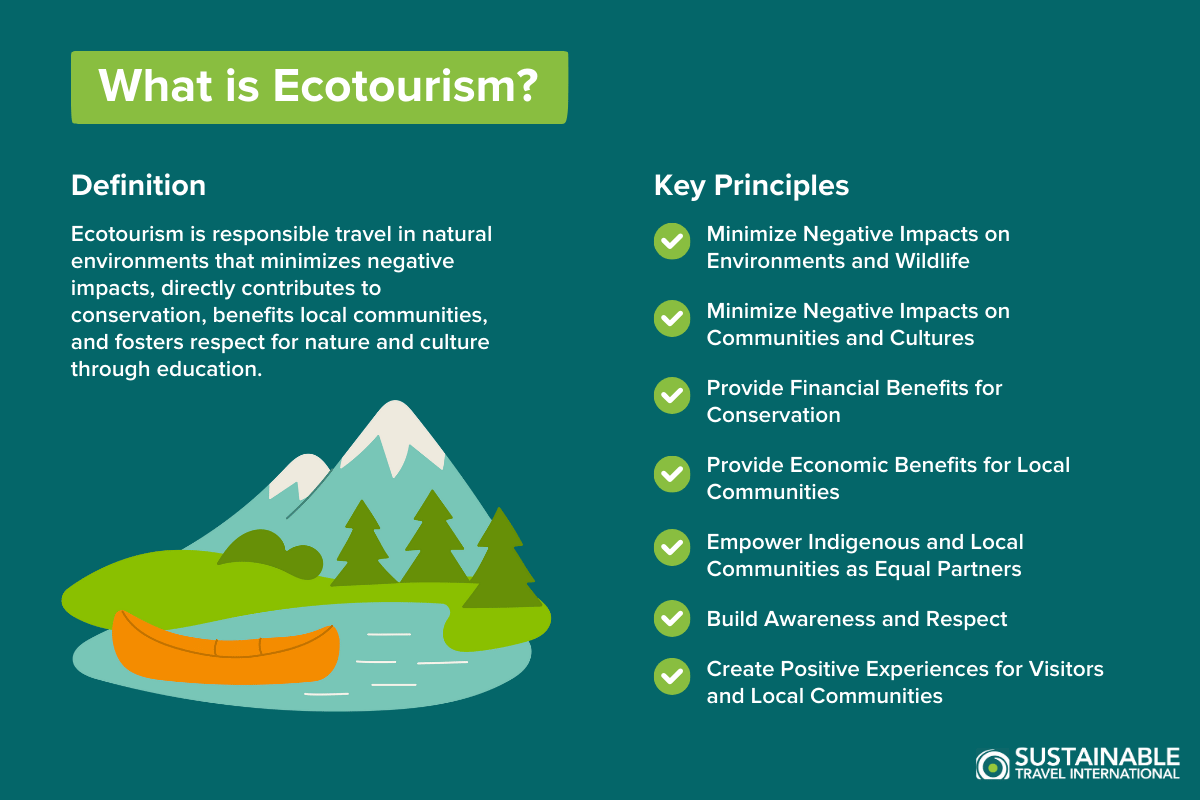
Genuine ecotourism is not merely about vacationing in a scenic environment. At its core, it is a disciplined, highly intentional form of responsible travel to natural areas. It requires the active protection of those fragile ecosystems, tangible economic and social support for the local communities that call them home, and the cultivation of a profound, respectful appreciation for the landscapes and cultures that make each destination unique.
As the global travel industry experiences an unprecedented rebound, understanding the distinction between superficial marketing and true ecotourism is no longer optional—it is an ecological imperative. This comprehensive guide explores the definition, history, core principles, and global applications of ecotourism, offering a roadmap for travelers and industry professionals alike to navigate the complex landscape of sustainable adventure.
Detailed Chronology: The Roots and Rise of Responsible Travel
To understand where ecotourism is heading, one must trace its deliberate, decades-long evolution from a niche academic concept into a multi-billion-dollar global movement.
The 1980s: Conception and Definition
While travelers had long sought out remote natural areas, the formal term "ecotourism" was coined and conceptualized in the mid-1980s. Mexican architect, ecologist, and environmental planner Héctor Ceballos-Lascuráin is widely credited with defining the term. Ceballos-Lascuráin sought to describe a revolutionary approach to travel: low-impact excursions to relatively undisturbed natural areas designed to study, admire, and enjoy scenery and wild plants and animals, while concurrently promoting conservation, fostering active socio-economic involvement of local populations, and operating at a low visitor impact.
His vision was brilliantly straightforward yet transformative. He posited that outdoor activities like birdwatching, hiking, and wildlife observation could provide sustainable economic livelihoods for rural communities, replacing destructive industries like logging, poaching, and slash-and-burn agriculture without degrading the landscapes upon which those livelihoods depended.
The 1990s: Institutionalization and Global Awareness
Throughout the 1990s, the concept graduated from conservationist circles into mainstream international development discourse. As global carbon emissions climbed and biodiversity loss accelerated, governments and non-governmental organizations (NGOs) began looking at tourism not just as an economic engine, but as a potential tool for environmental management. The establishment of organizations like The International Ecotourism Society (TIES) in 1990 provided a unified framework for practitioners, setting early benchmarks for what constituted authentic eco-friendly travel operations.
2002: The United Nations Milestone
A monumental turning point occurred in 2002, which the United Nations designated as the International Year of Ecotourism. This global summit formally recognized ecotourism as a pivotal driver of sustainable development. Governments worldwide began integrating ecotourism guidelines into national policy, establishing protected area networks funded directly by park entrance fees and permits, and acknowledging indigenous land rights as a cornerstone of successful conservation strategies.
The Modern Era (2020s and Beyond)
Today, ecotourism stands as one of the fastest-growing and most scrutinized sectors of the global travel and leisure industry. Driven by a post-pandemic surge in demand for nature-based experiences and a heightened awareness of climate change, travelers are increasingly demanding transparency. The sector has transitioned from a loose set of ethical guidelines into a formalized industry supported by rigorous certification standards, satellite monitoring of protected reserves, and data-driven impact metrics.
Supporting Context and Metrics: The Economic and Environmental Landscape
The appetite for authentic, nature-based travel is expanding at an exponential rate, bringing both immense financial opportunities and profound ecological responsibilities.
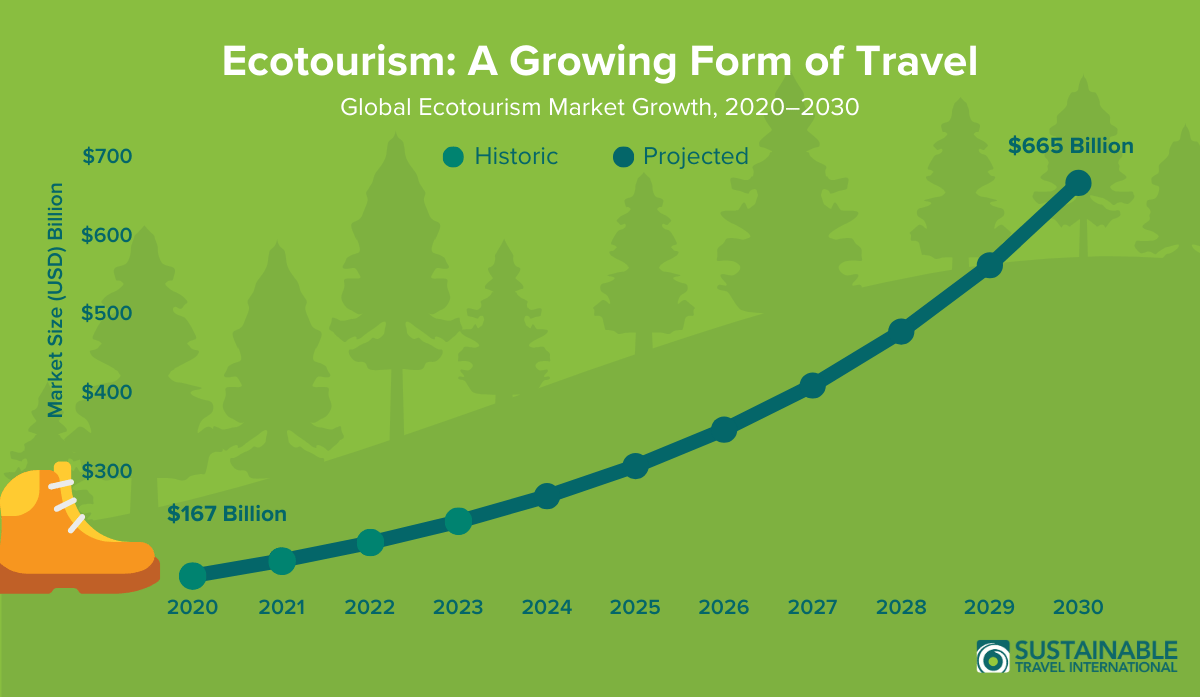
According to comprehensive market analysis by Grand View Research, the global ecotourism market was valued at approximately $167 billion in 2020. Propelled by shifting consumer values and a systemic rejection of mass-market overtourism, the sector is projected to skyrocket, exceeding $665 billion by 2030. This nearly fourfold increase over a single decade underscores a massive cultural shift: travelers are no longer content with passive consumption; they want their journeys to yield positive ecological and social dividends.
Global Ecotourism Market Growth Trajectory:
2020: $167 Billion
  │
  ├────────────────────────────────► (Rapid Post-Pandemic Acceleration)
  │
2030 (Projected): $665 Billion
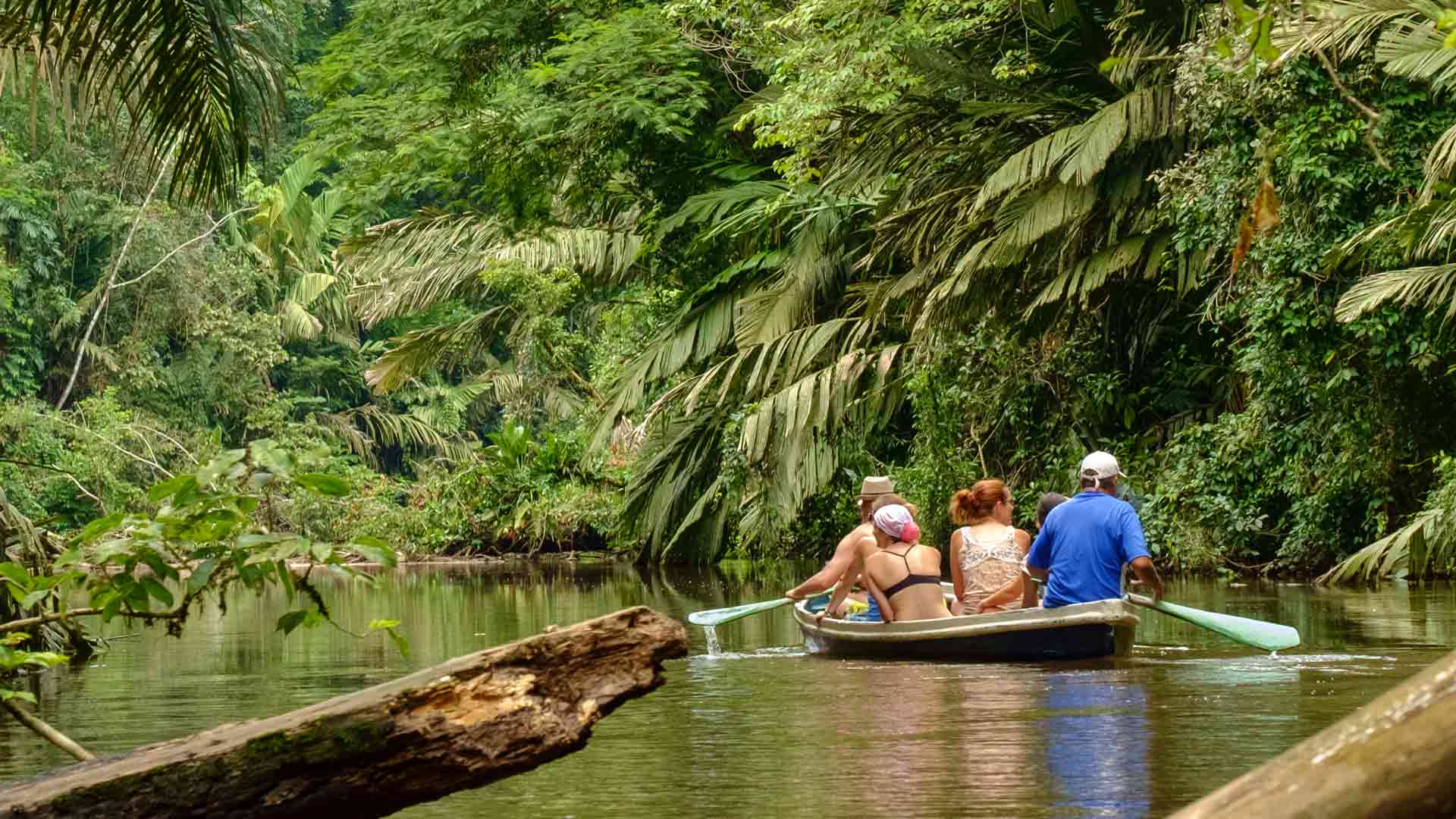
However, this explosive growth carries inherent risks. Many of the world’s most visually breathtaking and ecologically vital destinations are simultaneously its most fragile ecosystems. Consider the rainforests of Costa Rica, which pulse with unmatched biodiversity and shelter endangered species like Baird’s tapirs, or the kaleidoscopic coral reefs of Raja Ampat, which are under acute stress from warming seas and ocean acidification.
When travel is executed without strict oversight, it leaves an aggressive imprint. Unchecked tourist growth leads directly to overtourism: severe overcrowding, unchecked waste generation, habitat fragmentation, water scarcity, and the disruption of wildlife behavior. Ecotourism serves as the structural antidote to these destructive forces. By enforcing strict carrying capacities, funding park ranger salaries, and channeling tourist dollars directly into community coffers, ecotourism transforms travelers from environmental liabilities into active conservation assets.
Official Statements and Definitions
To prevent the dilution of the term through greenwashing, major global conservation and tourism authorities have synthesized a unified, rigorous definition of ecotourism. According to joint frameworks recognized by TIES (The International Ecotourism Society), the IUCN (International Union for Conservation of Nature), GEN (Global Ecotourism Network), and UN Tourism:
"Ecotourism is responsible travel to natural areas that conserves the environment, sustains the well-being of the local people, and involves interpretation and education."
This definition rests on several non-negotiable pillars:
- Minimization of Impact: Reducing the physical, carbon, and cultural footprint of the traveler.
- Direct Conservation Funding: Ensuring that a significant portion of tourism revenues flows directly into habitat restoration, wildlife monitoring, and anti-poaching operations.
- Community Empowerment: Guaranteeing that local and indigenous communities hold decision-making power and receive fair, equitable economic benefits.
- Transformative Education: Fostering a deep, lasting respect for nature and local cultures through guided interpretation, ensuring travelers return home as advocates for the planet.
Ecotourism vs. Sustainable Tourism vs. Nature Tourism
It is vital to distinguish ecotourism from adjacent concepts that are frequently confused or used interchangeably:
- Nature Tourism: This describes where travel takes place—specifically in natural environments and landscapes (e.g., hiking in a national park or whale watching). Crucially, nature tourism is not inherently sustainable; unmanaged nature tourism can easily destroy the habitats it relies upon.
- Sustainable Tourism: This describes how travel is conducted across the entire industry. It is a broad umbrella concept aimed at balancing economic viability, environmental health, and social equity. Sustainable tourism applies to urban centers, theme parks, museums, and beach resorts, focusing on waste reduction, energy efficiency, and fair labor practices.
- Ecotourism: This sits at the precise intersection of nature and sustainability. It is a specialized form of nature tourism that is strictly governed by sustainable practices, explicitly designed to yield positive conservation outcomes and support local communities.
- Regenerative Travel: The newest frontier in travel philosophy, regenerative tourism goes a step further than sustainability. Instead of merely doing "no harm," regenerative travel focuses on actively healing, restoring, and revitalizing the destinations visited, leaving them demonstrably better off than before.
| Category | Definition | Destination Scope | Core Impact |
|---|---|---|---|
| Nature Tourism | Travel dependent on and taking place in natural environments. | Natural environments only. | Can benefit or harm ecosystems depending entirely on management. |
| Sustainable Tourism | Travel that balances economic, social, and environmental health. | Universal (Natural, urban, cultural, industrial). | Minimizes negative impacts and builds systemic operational efficiency. |
| Ecotourism | Responsible travel in nature that actively drives conservation and community well-being. | Natural environments. | Actively strengthens conservation, protects wildlife, and empowers local populations. |
Ecotourism in Practice: Global Case Studies
Theory transforms into reality through tangible, ground-level execution. Across the globe, pioneering regions have operationalized ecotourism principles with remarkable success.
1. Costa Rica: The Pioneer of Biodiversity Protection
Costa Rica remains the global gold standard for ecotourism. Recognizing the catastrophic economic and ecological cost of deforestation in the late 20th century, the nation made a bold commitment to protect its natural heritage. Today, over a quarter of Costa Rica’s total land mass is legally protected within national parks, biological reserves, and wildlife refuges.
Costa Rica pioneered the Certification for Sustainable Tourism (CST), a rigorous auditing system that evaluates tourism operators on their ecological footprint, waste management, and community integration. Today, over 400 businesses adhere to these strict standards.
- In Monteverde, expert-guided birdwatching walks through the misty cloud forest provide sustainable livelihoods for local farming families while generating the funds necessary to maintain pristine avian migration corridors.
- In Tortuguero, community-led sea turtle monitoring programs transform former poachers into paid conservation rangers. Tourism revenue funds night patrols that protect nesting green and leatherback turtles, drastically reducing egg poaching while educating visitors on marine biology.
2. Raja Ampat, Indonesia: Marine Conservation in the Coral Triangle
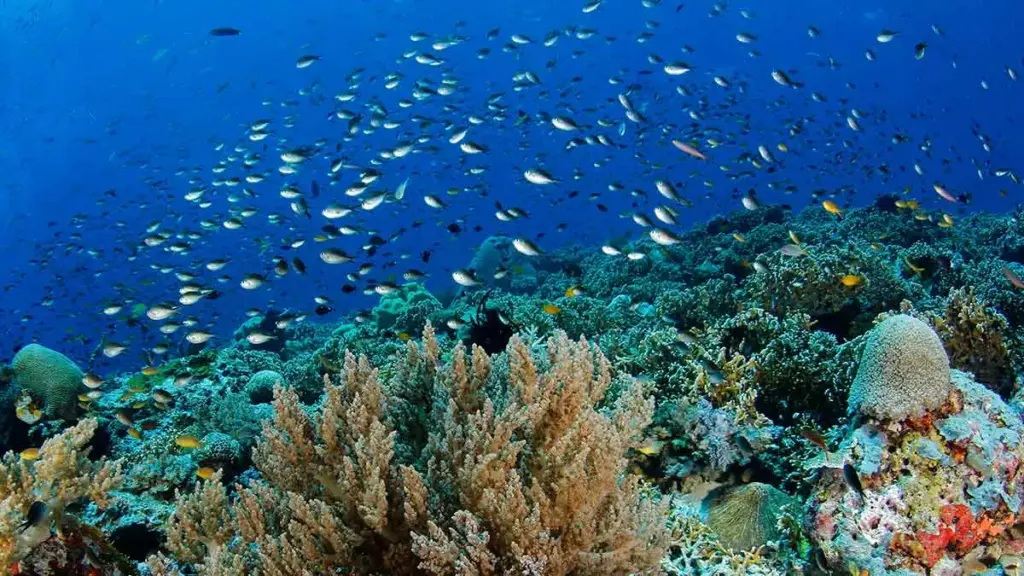
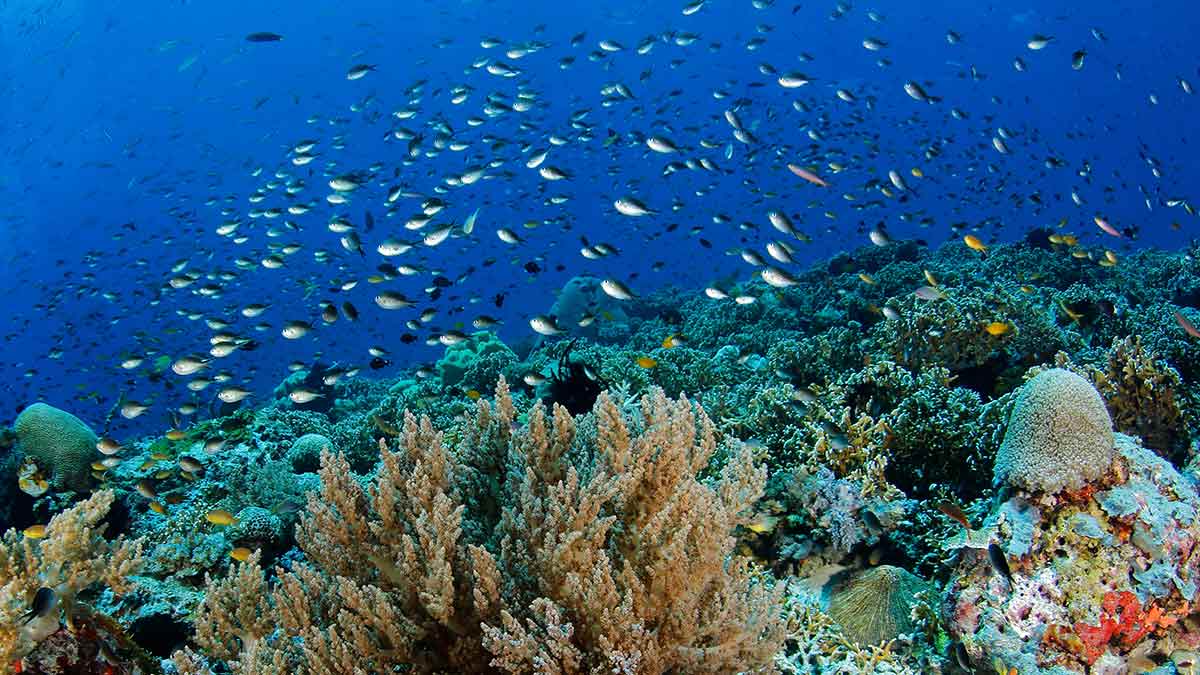
Tucked away in the eastern reaches of Indonesia, the Raja Ampat archipelago sits squarely within the Coral Triangle—the global epicenter of marine biodiversity, often referred to as the "Amazon of the Seas." Its crystal-clear waters shelter over 1,700 species of fish and an astonishing 76% of all known coral species on Earth.
Through strategic ecotourism initiatives, the region has established marine protected areas spanning over 4.9 million acres (2 million hectares). A prime example is the private island resort of Misool, situated in a remote southern sector of the archipelago. Misool transformed a 300,000-acre marine reserve from an area plagued by destructive shark-finning and dynamite fishing into a strictly enforced, no-take zone.
Independent scientific studies reveal the breathtaking impact of this model: within a decade of establishing ecotourism-funded marine reserves, local fish biomass increased by over 250%, shark populations multiplied twenty-fivefold, and coral cover rebounded by 60%.
Misool Marine Reserve Recovery Metrics (Post-Ecotourism Implementation):
┌─────────────────────────┬────────────────────────┐
│ Fish Biomass            │ ──► Increased >250%    │
├─────────────────────────┼────────────────────────┤
│ Shark Populations       │ ──► Multiplied 25x     │
├─────────────────────────┼────────────────────────┤
│ Coral Cover             │ ──► Increased 60%      │
└─────────────────────────┴────────────────────────┘
3. Bhutan: High-Value, Low-Impact Governance
The Himalayan Kingdom of Bhutan has long rejected the mass-tourism model, opting instead for a strict policy of "High Value, Low Impact." Through partnerships with initiatives like the UNDP Biodiversity Finance Initiative (BIOFIN), Bhutan has integrated conservation directly into outdoor adventure sectors. Certified river-rafting guides, for instance, act as active environmental monitors, patrolling riverbanks to clear waste, monitor water quality, and protect critically endangered species such as the white-bellied heron.
4. Kenya: The Birthplace of Community Conservancies
Kenya shattered traditional colonial conservation models by inventing the community conservancy movement. Today, more than 200 community-owned conservancies protect nearly two-thirds of Kenya’s large mammal populations living outside government-run national parks.
At the LUMO Community Wildlife Conservancy, multiple local ranches united to protect vital elephant migratory corridors while continuing sustainable cattle grazing. Once degraded by overgrazing and poaching, the rangelands have experienced a dramatic ecological recovery, now safely supporting lions, cheetahs, leopards, and rare antelope species. Tourism revenue generated from guided walking safaris, photography expeditions, and community-run camps funds local schools, clean water projects, and healthcare clinics, proving to rural landowners that wildlife is worth vastly more alive than dead.
Future Outlook: The Road Ahead for Eco-Friendly Travel
As the global ecotourism market races toward its projected $665 billion valuation by 2030, the industry stands at a critical crossroads. The coming decade will determine whether ecotourism can scale up to meet consumer demand without diluting its core principles into meaningless marketing jargon.
Several key trends will define the future of the sector:
- The Rise of Regenerative Tourism: Moving beyond sustainability, future ecotourism frameworks will demand that every journey actively rebuilds degraded ecosystems, sequesters carbon, and invests directly in indigenous land sovereignty.
- Strict Certification and Digital Auditing: To combat pervasive greenwashing, third-party verifications aligned with the Global Sustainable Tourism Council (GSTC) will become standard prerequisites for operators. Blockchain and satellite telemetry will increasingly be used to verify that tourism dollars actually reach community conservation projects on the ground.
- Decarbonization of Travel Logistics: Long-haul aviation remains the Achilles’ heel of global travel. Future ecotourism will place a heavier emphasis on regional travel, slow-travel itineraries, electric transport infrastructure within reserves, and transparent, high-integrity carbon offset projects (such as the Yaeda-Eyasi initiative in Tanzania).
Ultimately, ecotourism is not a fixed destination or a checklist of approved activities; it is an active, evolving mindset. It challenges both travelers and industry leaders to view the natural world not as a commodity to be consumed, but as a living, breathing community to be respected, protected, and preserved for generations to come. By demanding authenticity, supporting community-led conservation, and traveling with profound awareness, we can ensure that the wondrous corners of our planet remain vibrant, wild, and resilient long into the future.