

Executive Overview
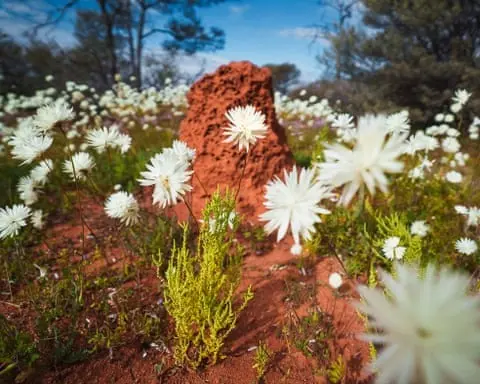
Deep within the remote, rust-red expanses of the Mid West region of Western Australia, an extraordinary seasonal metamorphosis is once again captivating botanists, Indigenous custodians, and astrophotographers alike. On the traditional lands of the Wajarri Yamaji people, early winter rains have triggered a breathtaking ecological spectacle: vast, undulating carpets of native wildflowers bursting into vibrant life.
This year’s blossoming carries a unique juxtaposition, unfolding directly beneath the towering structures of Inyarrimanha Ilgari Bundara—the Commonwealth Scientific and Industrial Research Organisation’s (CSIRO) Murchison Radio-astronomy Observatory. Here, humanity’s quest to unravel the oldest mysteries of the universe shares space with some of the most resilient and ancient flora on the planet.
Less than 0.2% of the total observatory site has been disturbed for cutting-edge radio astronomy infrastructure, allowing a remarkably pristine ecosystem to thrive alongside global scientific breakthroughs. As carpets of white, yellow, and purple blooms stretch toward the horizon, they offer a powerful reminder of the delicate balance between high-tech scientific advancement and the preservation of irreplaceable natural and cultural landscapes.
+-------------------------------------------------------------------------+
|                         QUICK METRICS & FACTS                           |
+--------------------------+----------------------------------------------+
| Location                 | Murchison Radio-astronomy Observatory, WA    |
| Traditional Custodians   | Wajarri Yamaji Nation                        |
| Operating Body           | CSIRO (Inyarrimanha Ilgari Bundara)          |
| Site Land Disturbance    | Less than 0.2%                               |
| Primary Catalyst         | Early winter rainfall events                 |
+--------------------------+----------------------------------------------+
Detailed Chronology: From Parched Earth to Botanical Wonderland
The transformation of the Western Australian Mid West from an arid, sun-baked desert into an ocean of color is a finely tuned choreography orchestrated by meteorological patterns and evolutionary biology.
The Dry Summer and the Catalyst
Throughout the searing Australian summer months, the Murchison landscape appears dormant, almost lunar in its starkness. Temperatures frequently soar past 40°C (104°F), baking the red iron-oxide soils and driving native fauna and flora into states of dormancy or seed preservation. For seeds buried beneath the surface, survival depends on enduring months—sometimes years—of searing heat and severe drought.
The turning point arrives with the shifting of southern cold fronts during the late autumn and early winter months. Unlike predictable tropical monsoons, the Mid West relies heavily on episodic, frontal weather systems sweeping up from the Southern Ocean. This season, those systems delivered crucial early winter rains. The moisture penetrated the baked crust, waking dormant seeds that had bided their time beneath the earth, triggering a rapid and synchronized germination process.
The Burst of Biodiversity
As temperatures slowly rise toward the spring equinox, the subterranean explosion manifests above ground. The landscape transitions through distinct ecological phases:
- Early Shoots (Late Winter): Hardy perennial shrubs and ephemeral annuals rapidly push green shoots through the red soil, taking advantage of the fleeting moisture trapped in the topsoil.
- The Peak Bloom (Current Season): Delicate white everlastings, golden pom-poms, and rich purple vetches blanket the earth. The blooms create a stark, mesmerizing visual contrast against the deep crimson of the Wajarri Yamaji terrain and the gleaming white radio telescope dishes pointed toward the cosmos.
- The Pollinator Awakening: The sudden abundance of nectar triggers an immediate biological response among native insects, marsupials, and avifauna, which arrive in droves to feed and facilitate cross-pollination, ensuring the cycle continues for generations to come.
Supporting Context & Metrics: Science, Land, and Culture
To fully appreciate the wonder of the Murchison wildflower bloom, one must understand the unique intersection of geography, Indigenous heritage, and modern astrophysics that defines Inyarrimanha Ilgari Bundara.
Inyarrimanha Ilgari Bundara: Sharing Sky and Soil
In the Wajarri Yamaji language, Inyarrimanha Ilgari Bundara translates to "sharing sky and stars." This name captures the essence of the observatory, which serves as a dual sanctuary: a pristine radio-quiet zone free from terrestrial radio frequency interference (RFI) for astronomers, and a protected expanse of native bushland for the Wajarri Yamaji people, who have managed and cared for these lands for tens of thousands of years.
The site is home to some of the world’s most sophisticated radio telescopes, including the Australian Square Kilometre Array Pathfinder (ASKAP) and future infrastructure for the global Square Kilometre Array (SKA) project. These instruments listen to faint whispers from the early universe, probing the formation of the first stars and galaxies.
Environmental Stewardship and Footprint Metrics
Constructing multi-million-dollar scientific mega-projects in fragile ecosystems presents profound environmental challenges. However, the development philosophy at the Murchison observatory has prioritized minimal ecological disruption from its inception.
| Infrastructure Category | Approximate Land Footprint | Conservation Status |
|---|---|---|
| Telescope Arrays & Pads | < 0.1% | Low impact, localized foundations |
| Access Tracks & Roads | ~ 0.08% | Strictly managed unpaved corridors |
| Support Facilities | < 0.02% | Centralized operational hub |
| Total Disturbed Area | < 0.20% | Over 99.8% pristine natural habitat |
By restricting infrastructure to less than 0.2% of the total land area, CSIRO and its partners have ensured that native flora—including delicate ephemerals, acacia shrublands, and rare endemic wildflowers—can complete their life cycles uninterrupted by widespread construction, soil compaction, or invasive weed introduction.
Official Statements and Expert Perspectives
The convergence of world-class science and delicate natural beauty has drawn commentary from scientists, land managers, and cultural custodians alike.
"When the winter rains align just right, the transformation out here is nothing short of miraculous," notes a senior environmental management officer affiliated with the CSIRO observatory site. "People often think of radio astronomy sites as sterile, industrial zones of concrete and steel. But out here on Wajarri Yamaji country, technology sits quietly within a living, breathing landscape. The telescopes are surrounded by an ancient garden that predates human engineering by millions of years."
Cultural advisors from the Wajarri Yamaji community emphasize the deep spiritual and ecological significance of the seasonal cycle.
"Our people have walked these lands, listened to the country, and read the signs of the seasons since the beginning of time," shares a local Wajarri cultural representative. "When the rains come and the white and yellow flowers open across the red earth, it tells us the country is healthy. It is a time of renewal, of storytelling, and of connection between the earth below and the stars above. Science looks up into the sky from here, but our connection is rooted right here in the soil."
Botanical experts monitoring the region note that Western Australia’s Mid West is globally recognized as a biodiversity hotspot, containing thousands of species found nowhere else on Earth. The resilience of these plants—adapting to extreme heat, poor nutrient soils, and highly variable rainfall—offers crucial insights into how plant life can survive under shifting climatic pressures.
Future Outlook: Preservation, Discovery, and Climate Resilience
As the current wildflower season reaches its peak, attention is already turning toward the long-term stewardship of the Murchison Radio-astronomy Observatory and the broader Mid West region.
Challenges on the Horizon
While the current bloom is a triumphant display of ecological resilience, researchers and conservationists remain vigilant regarding broader environmental trends:
- Climate Variability: Shifting global weather patterns threaten to make winter rainfall events increasingly erratic, potentially disrupting the delicate thermal and moisture triggers required for mass seed germination.
- Invasive Species: Protecting the 99.8% undisturbed land from feral animals (such as goats and rabbits) and invasive weeds remains an ongoing, labor-intensive challenge for site managers and traditional owners.
- Balancing Tourism and Protection: As stunning imagery of the Murchison wildflowers circulates globally, managing public access to these remote, sensitive scientific and cultural sites requires careful coordination to prevent habitat degradation.
A Beacon of Harmonious Coexistence
Despite these challenges, Inyarrimanha Ilgari Bundara stands as a global blueprint for how large-scale scientific infrastructure can coexist with—and even protect—fragile ecosystems. While astronomers look deep into the cosmos to decode the origins of the universe, the earth beneath their feet continues to write its own ancient, resilient story every single winter.
As long as the seasonal rains continue to grace the red soils of Wajarri Yamaji country, the brilliant blankets of color will return—proving that even in the most remote and scientifically advanced corners of the world, nature retains its timeless capacity to astound.



