Executive Overview
Across the Northern and Southern Hemispheres, escalating wildfire seasons are no longer seasonal anomalies; they have coalesced into a compounding global economic and ecological crisis. Communities across Southern Europe, North America, Australia, and South America face recurring blazes that claim lives, destroy critical infrastructure, displace tens of thousands of residents, and leave catastrophic fiscal damage in their wake. In Europe alone, economic losses linked to recent wildfire seasons have surpassed €19 billion ($21 billion USD) according to industry assessments, laying bare the profound vulnerability of current public risk management frameworks.
For decades, international policy has operated within a reactive domain—concentrating the vast majority of public funding, personnel, and technological resources on emergency fire suppression after ignition occurs. However, climate experts, landscape ecologists, and financial risk analysts warn that this reliance on downstream suppression is reaching an operational ceiling. As rising global temperatures, prolonged droughts, and historical land abandonment convert vast tracts of land into dry tinderboxes, fire suppression equipment alone can no longer contain megafires.
Transitioning away from this reactive crisis loop requires a fundamental shift in public policy toward upstream resilience building. By reallocating financial resources and legislative focus toward landscape management, prescribed burning, spatial planning, native ecosystem restoration, and rural economic revival, governments can disrupt the wildfire hazard cycle before blazes spiral out of control.
+-------------------------------------------------------------------------+
|                    THE WILDFIRE POLICY PARADIGM SHIFT                   |
+-------------------------------------------------------------------------+
|  TRADITIONAL DOWNSTREAM APPROACH      |  PROACTIVE UPSTREAM STRATEGY    |
|  -------------------------------      |  ---------------------------    |
|  • High-cost emergency suppression    |  • Pre-disaster mitigation      |
|  • Accumulation of hazardous fuels    |  • Landscape fuel reduction     |
|  • Insurance market withdrawal        |  • Resilient rural spatial design|
|  • Short-term disaster aid spending   |  • Long-term economic stability |
+-------------------------------------------------------------------------+
Detailed Chronology
The trajectory of the global wildfire crisis has steepened over the past decade, driven by climate feedback loops and systemic policy oversights.
WILDFIRE CRISIS ESCALATION TIMELINE
===================================
2023: Record North American Fires (~15M hectares burned in Canada)
  │
2024: Southern European Extreme Heatwaves & Wildland-Urban Encroachment
  │
2025: Iberian Crisis Peak (Portugal & Spain experience megafires; €19B loss trajectory)
  │
2026: Public Policy Threshold (Shift toward proactive upstream landscape mandates)
2023: The North American and Mediterranean Alarm
The year 2023 marked an unprecedented surge in global burned area. Canada suffered its most destructive fire season on record, with more than 15 million hectares burned—exceeding the national average sevenfold. Smoke plumes drifted across major population centers in North America and Western Europe, demonstrating that wildfire hazards respect no geopolitical boundaries. Concurrently, intense heatwaves across Greece, Italy, and North Africa triggered catastrophic blazes that forced massive evacuations and damaged vital tourism infrastructure.
2024: Escalation Across the Wildland-Urban Interface
By 2024, the structural exposure of communities expanded rapidly along the wildland-urban interface (WUI)—areas where human development meets undeveloped wildland vegetation. Extreme weather events created conditions where fires breached historical containment boundaries in minutes. Emergency services in multiple OECD nations reported being routinely overwhelmed by simultaneous fire ignitions, exhausting national emergency reserves early in the summer season.
2025: Iberian Fire Crisis and Economic Tipping Point
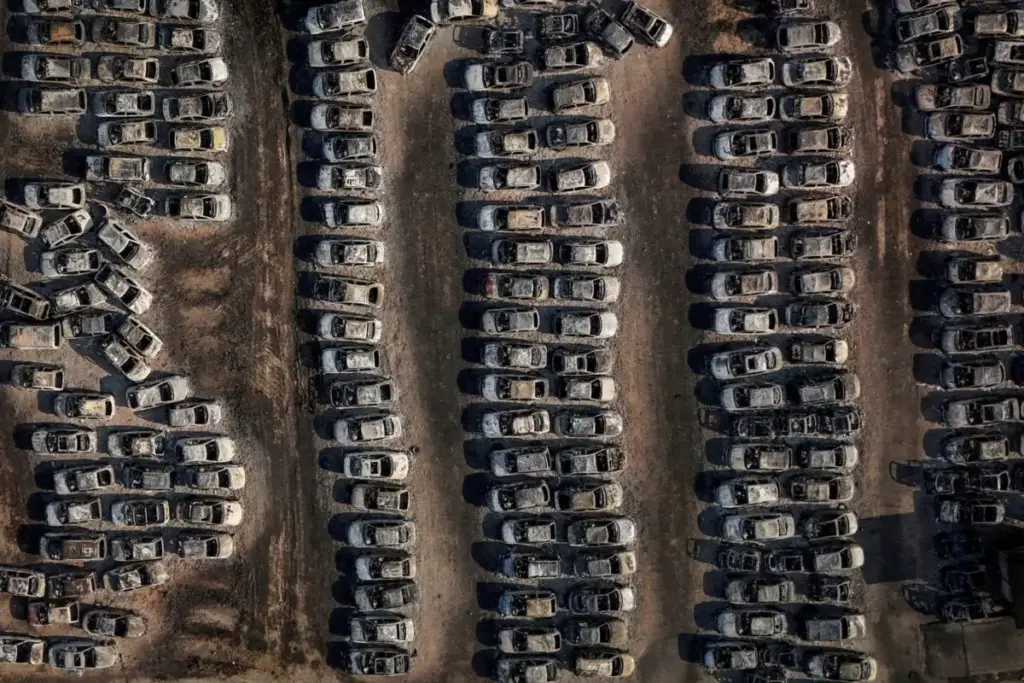
In the summer of 2025, Southern Europe—particularly Portugal and Spain—faced severe heatwaves coupled with severe atmospheric dryness. In regions like Trancoso, Portugal, agricultural landscapes and timber plantations burned uncontrolled for days. Firefighting crews managed to halt blazes only after tens of thousands of hectares of forest and agricultural property were reduced to ash.
Independent financial evaluations estimated that the direct and indirect economic losses from European wildfires in 2025 ranged between €15.6 billion and €19.1 billion. The sheer magnitude of these costs forced municipal and national governments to acknowledge that emergency budgets could no longer sustain the mounting financial toll.
2026: The Upstream Policy Mandate
Entering late 2026, international bodies, climate research institutes, and policy networks—including the Forest Future Alliance and the Global Wildfire Leadership Network—amplified calls for systemic governance reform. The focus shifted toward integrating wildfire risk reduction directly into national climate adaptation plans (NAPs) and structural economic policies ahead of upcoming global climate summits.
Supporting Context & Metrics
Understanding the financial and ecological dynamics of modern wildfires requires examining both the direct financial costs and the structural land-use conditions that amplify risk.
Financial and Insurance System Vulnerabilities
The economic footprint of wildfires extends far beyond immediate property destruction. It encompasses smoke-induced public health costs, supply chain disruptions, lost agricultural productivity, tourism declines, and municipal infrastructure repairs.
Estimated European Wildfire Economic Losses (Recent Peak Year)
┌──────────────────────────────────────┬──────────────────────────┐
| Category                             | Estimated Value          |
├──────────────────────────────────────┼──────────────────────────┤
| Lower Bound Damage Estimate          | €15.6 Billion             |
| Upper Bound Damage Estimate          | €19.1 Billion             |
| Mean Global Impact Benchmark (Europe)| ~€17.35 Billion            |
└──────────────────────────────────────┴──────────────────────────┘
Furthermore, the global insurance sector is reaching a tipping point. In fire-prone regions across North America, Australia, and Southern Europe, primary insurers are increasingly pulling out of high-risk markets or dramatically raising premiums. When private insurance markets contract, the unmitigated risk defaults to public balance sheets, placing immense burdens on taxpayers and state disaster funds.
The Suppression Paradox and Hazardous Fuel Accumulation
Paradoxically, decades of aggressive, total fire suppression have contributed to today’s megafire crisis—a phenomenon known as the "fire suppression paradox."
THE FIRE SUPPRESSION PARADOX
[ Aggressive Fire Suppression ]
              │
              ▼
[ Natural Fire Cycles Interrupted ]
              │
              ▼
[ Excessive Vegetation & Fuel Accumulation ]
              │
              ▼
[ High-Intensity Megafires Exceeding Suppression Capacity ]
When low-intensity, natural fires are systematically extinguished, dead vegetation and dense underbrush accumulate over time. When an ignition inevitably occurs under extreme weather conditions, the accumulated fuel creates high-intensity megafires that overwhelm conventional firefighting assets.
Land Abandonment and Monoculture Plantations
Socioeconomic shifts over the past half-century have fundamentally reshaped rural landscapes:
- Rural Flight and Land Abandonment: As agrarian populations migrate to urban centers, traditional land management practices—such as controlled biomass collection, livestock grazing, and mosaic farming—have declined.
- Fuel Continuity: Abandoned fields quickly revert to unmanaged scrubland, creating unbroken corridors of flammable fuel.
- Monoculture Forestry: The expansion of fast-growing, highly flammable monoculture plantations (such as eucalyptus and certain pine species) has heightened landscape vulnerability compared to diverse, native broadleaf forests.
Official Statements
Expert commentary highlights an urgent consensus: public policy must evolve from reactive emergency control to proactive risk reduction.
"Wildfires have devastated communities across the world, claiming lives, displacing thousands of people, and leaving billions in economic damage in their wake. They are an economic, financial, and public health challenge that is growing faster than many governments and markets are prepared for—and exposing the real costs of poor land management."
— Gill Einhorn, Head of the Forest Future Alliance, and Natalie Çilem, Community Lead of the Global Wildfire Leadership Network"Continuing to throw over 90 percent of our wildfire budgets into suppression while starving prevention efforts is a strategy of diminishing returns. You cannot out-fight a fire season driven by historic dry biomass and extreme heat. The only solution is to change the landscape before the ignition happens."
— Senior European Disaster Risk Management Official"We are witnessing a structural breakdown in the insurability of wildland-adjacent communities. Without state-level policy shifts that incentivize upstream risk mitigation and landscape modification, financial institutions will continue to de-risk, leaving governments to shoulder unprecedented liabilities."
— Global Insurance Risk Analyst
Future Outlook
To disrupt the cycle of disaster and recovery, public policy must align around structural, long-term upstream interventions. The following policy framework outlines key action areas for national and regional governments:
+--------------------------------------------------------------------------+
|                 UPSTREAM WILDFIRE RESILIENCE FRAMEWORK                   |
+--------------------------------------------------------------------------+
|                                                                          |
|  1. LANDSCAPE RESTRUCTURE     ---> Native Species & Mosaic Buffers       |
|  2. PREVENTATIVE FUELS MGMT   ---> Prescribed Burning & Targeted Grazing   |
|  3. SPATIAL PLANNING          ---> WUI Zoning & Building Code Enforcement|
|  4. FINANCIAL INNOVATION      ---> Resilience Bonds & Upstream Tax Credits|
|                                                                          |
+--------------------------------------------------------------------------+
1. Rebalancing Disaster Budgets
Governments must adjust their budget allocations to prioritize pre-disaster mitigation. A significant portion of national disaster contingency funds should be earmarked specifically for pre-fire management, fuel reduction, and community preparedness. Investing in prevention yields substantial returns by reducing downstream suppression costs and economic disruption.
2. Scaling Up Landscape-Level Management
Upstream mitigation depends on restoring natural fire resilience to rural landscapes:
- Prescribed Burning: Standardizing legal frameworks to allow trained land managers and indigenous practitioners to conduct controlled burns during cooler seasons, safely clearing accumulated brush.
- Targeted Pastoral Grazing: Incentivizing livestock farming to manage vegetation along strategic firebreaks near vulnerable infrastructure.
- Native Ecosystem Restoration: Phasing out high-risk monoculture timber stands near residential communities in favor of diverse, fire-resilient broadleaf species (such as oak and chestnut) that naturally slow fire progress.
3. Enforcing Strict Spatial Planning and Building Codes
Urban planning frameworks must recognize wildfire as a primary spatial constraint:
- Regulating construction in high-risk WUI zones.
- Mandating defensible space buffers around existing developments.
- Enforcing strict building codes that require fire-resistant roofing, tempered glass, and non-combustible building materials.
4. Pioneering Innovative Financial and Market Tools
To mobilize private capital for landscape management, governments can partner with financial institutions to develop:
- Catastrophe and Resilience Bonds: Financial instruments that fund upstream land management, with returns tied to verified reductions in local wildfire risk.
- Insurance Rebates for Mitigation: Regulatory frameworks that require insurers to offer reduced premiums for property owners and municipalities that undertake certified risk-reduction measures.
The Path to Global Adaptation
As world leaders gather at future international summits, such as COP30, wildfire management can no longer be treated solely as a local emergency services issue. It stands as a core component of global climate adaptation, biodiversity protection, and fiscal sustainability. By shifting investments upstream today, public policy can help build resilient landscapes capable of withstanding the climate pressures of tomorrow.