

Executive Overview
In an era defined by accelerating climate change, biodiversity loss, and the urgent imperative for sustainable ocean governance, the Channel Islands are charting a proactive course toward marine conservation. At the heart of this regional initiative is a series of pioneering educational workshops tied directly to Guernsey’s upcoming Marine Spatial Plan (MSP). By bridging the gap between established environmental professionals and the next generation of ecological stewards, local authorities and conservation bodies are ensuring that the future protection and management of the island’s surrounding seas are informed by those who will inherit them.
This report examines a recent collaborative gathering that brought together sixth-form students, independent environmental consultants, and conservation leaders from across the archipelago. The event featured immersive field research on the ecologically and historically rich shores of Lihou Island, blending marine ecology with coastal archaeology. Central to the discussions was the formulation of Guernsey’s Marine Spatial Plan—a critical policy framework designed to balance economic activities, such as fishing and renewable energy, with the preservation of marine habitats.
Through exclusive insights from key figures like Angela Salmon, Head of Education at the Nature Commission, and Sebastian Dufour, an independent consultant for the Alderney Wildlife Trust, this article explores how cross-island collaboration, historical ecological knowledge, and youth-led advocacy are converging to redefine marine stewardship in the Channel Islands. As the islands face shared environmental vulnerabilities, this initiative serves as a case study in community-engaged policy-making and intergenerational dialogue.
Detailed Chronology
Day One: Mobilizing the Next Generation of Ocean Stewards
The initiative commenced with a structured series of workshops tailored specifically for Guernsey’s sixth-form students. Recognizing that young adults are uniquely positioned to inherit the consequences of contemporary environmental policies, organizers sought to integrate student voices into the foundational stages of the Marine Spatial Plan.
Rather than treating youth engagement as an afterthought, the planning committee—comprising members of the Nature Commission and regional environmental agencies—placed students at the center of the dialogue. The workshops were designed to unpack complex ecological concepts, demystify marine spatial planning, and provide a platform for participants to articulate the environmental issues that resonate most profoundly with their generation.
From microplastic pollution and coastal erosion to the overexploitation of fish stocks and the degradation of benthic habitats, students dissected the multifaceted threats facing the Bailiwick’s waters. Facilitators guided the participants through interactive scenario-planning exercises, simulating the competing demands placed on marine spaces by commercial navigation, recreation, conservation, and emerging blue-economy sectors.
Day Two: Field Research and Ecological Discovery on Lihou Island
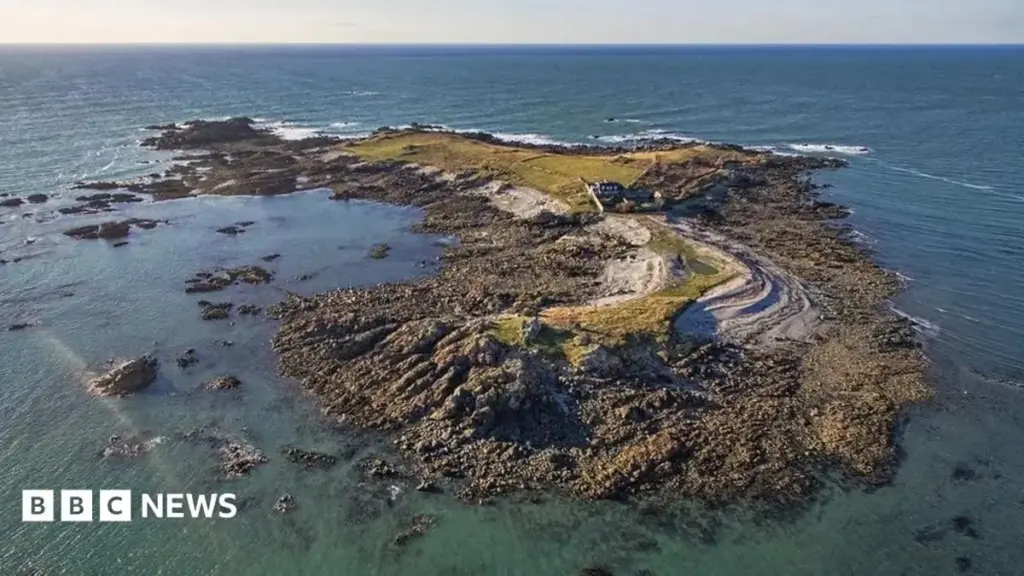
Transitioning from theoretical policy discussions to hands-on environmental observation, a cohort of delegates embarked on a field research excursion to Lihou Island—a tidal island situated off the western coast of Guernsey known for its rich biodiversity and deep historical roots.
Guided by environmental experts and local historians, the participants explored the dynamic intertidal zones, rocky shores, and terrestrial habitats of Lihou. The expedition was structured to highlight the intimate connections between terrestrial heritage and marine ecosystems. Among the attendees was Sebastian Dufour, an independent consultant for the Alderney Wildlife Trust, whose multidisciplinary background allowed him to contribute unique insights into the island’s dual ecological and archaeological significance.
During the field trip, participants investigated the remnants of the historic Benedictine Priory site, gaining an appreciation for how human communities have interacted with and depended upon the marine environment for centuries. Archival and field discussions shed light on bygone coastal economies, revealing unexpected historical parallels to modern resource management challenges.
Following the field component, attendees reconvened for plenary sessions dedicated to synthesizing their findings, comparing notes across island jurisdictions, and establishing professional networks that transcend municipal and geographical boundaries within the Channel Islands.
Supporting Context & Metrics
The Strategic Importance of Guernsey’s Marine Spatial Plan
To fully comprehend the significance of these educational workshops, one must examine the policy instrument they are designed to influence: Guernsey’s Marine Spatial Plan. Marine Spatial Planning (MSP) is a public process of analyzing and allocating the spatial and temporal distribution of human activities in marine areas to achieve ecological, economic, and social objectives.
As maritime space becomes increasingly crowded—with demands ranging from traditional fisheries and marine tourism to submarine telecommunication cables, coastal defense structures, and prospective offshore renewable energy installations—unregulated use threatens to destabilize fragile marine ecosystems. Guernsey’s MSP aims to establish a transparent, evidence-based zoning framework that minimizes user conflicts while safeguarding high-value conservation areas.
The inclusion of youth voices in this process marks a departure from traditional, top-down bureaucratic policymaking. By engaging sixth-form students, planners are injecting fresh perspectives into the consultation phase, ensuring that the resulting spatial blueprint reflects the long-term ethical priorities of the community rather than purely short-term economic interests.
Island Biogeography and Shared Environmental Vulnerabilities
The Channel Islands share a distinct biogeographical profile, characterized by high tidal ranges, rich macroalgal communities, and diverse fish and invertebrate populations. However, their island status also renders them acutely vulnerable to external environmental pressures, including warming sea temperatures, ocean acidification, and transboundary pollution.
During the collaborative meetings, delegates from Guernsey, Alderney, and other regional entities emphasized that marine ecosystems do not respect administrative boundaries. A pollutant introduced in one part of the Bailiwick or surrounding waters inevitably impacts neighboring marine zones. Consequently, isolated conservation efforts are bound to fall short without robust, interconnected strategies.
Historical Ecology: Lessons from Lihou’s Seaweed Industry
A striking revelation from the Lihou Island field trip was the historical scale of marine resource exploitation in the region. Investigations into the island’s past uncovered evidence of a remarkably large, formalized industry centered around the harvesting and processing of seaweed (kelp and wrack).
Historically, seaweed was harvested extensively throughout the Channel Islands for use as agricultural fertilizer, iodine extraction, and alkaline ash production utilized in glass and soap manufacturing. This historical precedent provided contemporary conservationists and consultants with a fascinating case study in anthropogenic pressure on marine flora.
Analyzing past industrial booms offers critical context for modern resource management. It demonstrates that the coastal waters of Guernsey and its sister islands have long supported intensive economic activities, underscoring the necessity of finding a sustainable equilibrium between human utilization and ecological regeneration.
Official Statements and Stakeholder Perspectives
The success and unique ethos of the collaborative initiative were underscored by statements from key figures within the region’s environmental sector, highlighting the imperative of cross-generational and cross-island cooperation.
Angela Salmon on Youth Empowerment
Angela Salmon, Head of Education at the Nature Commission and an influential member of the meeting’s organizing group, articulated the philosophical underpinning of involving students in high-level environmental policy discussions.
"Inviting sixth formers to share the environmental issues that mattered to them makes perfect sense," Salmon noted.
She elaborated that education should not merely transmit existing knowledge, but actively empower young people to participate in civic governance and environmental decision-making. By giving students a direct line to the architects of the Marine Spatial Plan, the Nature Commission is validating their concerns and fostering a culture of active, lifelong environmental citizenship. Salmon emphasized that young people often possess a clarity of vision unburdened by political expediency, making their contributions invaluable to long-term planning initiatives.
Sebastian Dufour on Inter-Island Collaboration
Sharing his perspective from the Alderney Wildlife Trust, independent consultant Sebastian Dufour reflected on the profound value of the multidisciplinary field trip and the broader collaborative framework of the annual meetings.
Describing his exploration of the Lihou Island priory site, Dufour remarked:
"It’s very interesting to learn about the Benedictine Priory site, and we discovered there had been a really remarkably large industry in harvesting seaweed."
Beyond the historical and ecological discoveries, Dufour placed immense value on the communal spirit of the gathering. He highlighted the mutual benefits of regional networking among conservation professionals operating across different islands:
"We’re all coming from different islands, and we’re all facing similar challenges."
Dufour underscored that the annual meeting serves as an indispensable platform to "learn from each other" and "share our successes and failures and everything." In an operational environment where conservation budgets and human resources can be constrained, pooling institutional knowledge and experiential data across the Channel Islands maximizes the efficiency and impact of environmental protection initiatives.
Future Outlook
Implementing Insights into the Marine Spatial Plan
As the dust settles on the workshops and field excursions, the immediate challenge lies in translating the insights generated by students and consultants into actionable policy language for Guernsey’s Marine Spatial Plan. Organizers are currently compiling the qualitative data, student policy pitches, and ecological observations gathered during the events to submit them to the relevant government directorates responsible for drafting the spatial framework.
The integration of youth perspectives is expected to bolster the social license of the MSP, ensuring that when the plan is formally adopted, it carries broad community endorsement. Furthermore, the relationships forged between students and established conservationists during the Lihou Island field trip are anticipated to inspire a new cohort of local youth to pursue higher education and careers in marine biology, environmental law, and coastal management.
Fostering an Ongoing Regional Dialogue
Looking beyond the immediate horizon, the stakeholders involved have committed to maintaining the momentum generated by this year’s gathering. Plans are already underway to institutionalize these annual cross-island forums, expanding participation to include younger secondary school students, commercial stakeholders, and marine industry representatives.
Key priorities for future collaborative sessions include:
- Monitoring and Data Sharing: Establishing a unified, inter-island database for marine biodiversity monitoring, enabling real-time tracking of habitat health and invasive species across the Bailiwick.
- Climate Resilience Planning: Developing joint adaptation strategies to mitigate the impacts of rising sea levels and marine heatwaves on vulnerable coastal communities and marine protected areas (MPAs).
- Public Outreach and Blue Literacy: Expanding community education initiatives to foster a deeper cultural appreciation for the marine environment among the broader Channel Islands populace.
Conclusion
The initiative undertaken in Guernsey demonstrates that effective environmental governance requires a synthesis of rigorous scientific inquiry, historical consciousness, and inclusive community engagement. By opening the doors of the Marine Spatial Plan consultation process to sixth-form students, and by fostering deep professional exchanges between islands like Guernsey and Alderney, the region is building a resilient framework for marine stewardship.
As Sebastian Dufour aptly noted, facing shared challenges requires a collective commitment to learning from both successes and failures. With empowered youth adding their voices to the chorus of seasoned conservationists, the future of Guernsey’s seas rests on a foundation of shared responsibility, collaboration, and enduring respect for the natural world.



