

Executive Overview
In an unexpected departure from the prevailing diplomatic deadlock that has defined international climate talks during Donald Trump’s second presidential term, the United Nations General Assembly has achieved a rare and significant diplomatic consensus. World leaders unanimously approved a landmark resolution establishing a comprehensive framework for addressing accelerating sea level rise, securing the continued political existence and maritime sovereignty of low-lying island nations facing total inundation.
Remarkably, the United States—which has systematically dismantled its international climate obligations, withdrawn from the Paris climate agreement, undermined global carbon-tax frameworks for international shipping, and threatened tariff retaliation against nations vocal on climate policies—did not block the measure. The tacit consent of the U.S. State Department represents a rare victory for multilateral cooperation. Even more striking is that the final text explicitly incorporates references to climate change and the urgent obligation of historic carbon emitters to provide expanded climate adaptation financing to vulnerable developing states.
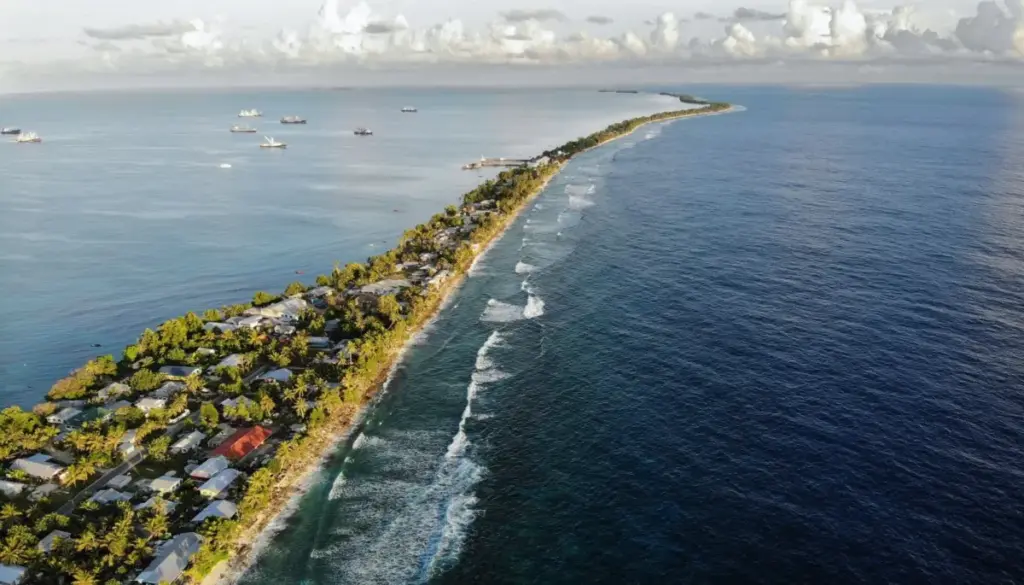
For frontline island nations such as Tuvalu, the Marshall Islands, and the Bahamas, the implications of this accord are profound. As rising global temperatures melt polar ice sheets and swell oceans, threatening to submerge entire landmasses over the coming century, this declaration enshrines the legal principle of the "presumption in favor of continued statehood." Even if physical islands disappear beneath the waves, their sovereign status remains intact alongside absolute legal control over their lucrative and strategic maritime economic zones.
This comprehensive report explores the genesis of the declaration, the geopolitical calculus that permitted Washington to acquiesce, the economic and structural hurdles facing global climate finance, and the long-term ramifications of securing maritime borders in an era of rapid planetary transformation.
Detailed Chronology: From Legal Presumptions to Global Consensus
The path to this UN General Assembly breakthrough was paved by years of persistent advocacy, escalating ecological crises, and groundbreaking developments in international jurisprudence.
The Alliance of Small Island States Campaigns
For decades, the Alliance of Small Island States (AOSIS)—an influential, unified bloc of low-lying coastal and island nations—has warned of existential threats posed by anthropogenic climate change. While international legal bodies have progressively moved toward affirming the sovereign rights of countries facing geographic erasure, world leaders had historically refrained from formally endorsing these legal protections at the highest diplomatic levels.
Recent International Jurisprudence
Momentum accelerated notably when the International Court of Justice (ICJ) issued a landmark climate ruling establishing that once a sovereign state is formally recognized and established, the physical disappearance of its constituent landmass does not automatically entail the loss of its statehood. Furthermore, international law mandates that existing maritime borders must be respected regardless of coastal erosion or inundation.
The UN General Assembly Adoption
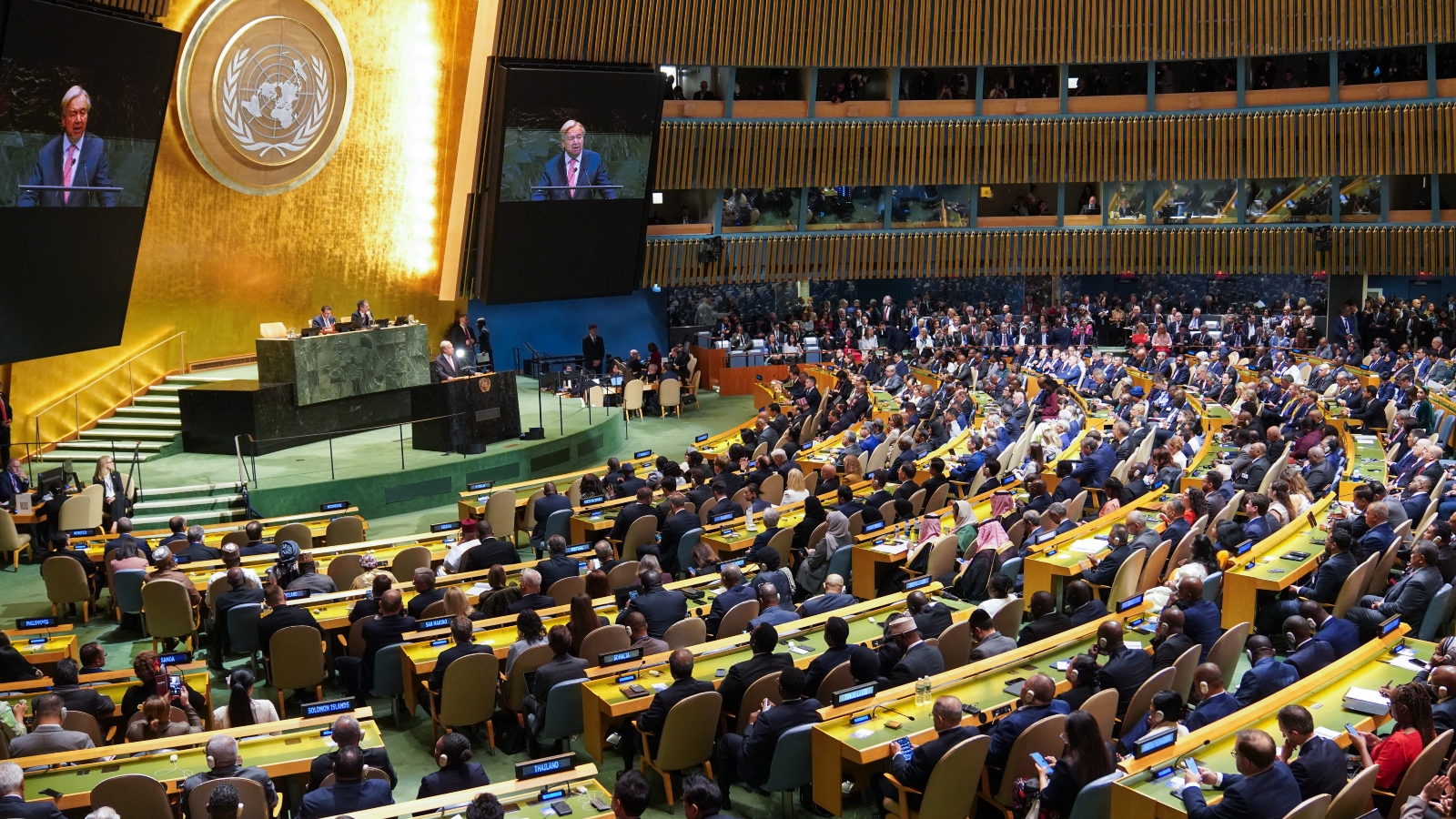
Building upon these legal precedents, negotiations spearheaded by climate diplomats and legal scholars culminated this week at the United Nations General Assembly in New York. Amid a global geopolitical landscape heavily fractured by trade wars, resource competition, and climate denialism, the UN membership achieved the impossible: a unanimous resolution adopting the sea level rise declaration by consensus.
Kamal Amakrane, managing director of the Global Center for Climate Mobility and former climate envoy to the UN General Assembly presidency, noted the historical weight of the agreement. "What was long treated as a legal ‘presumption’ is now an affirmation," Amakrane observed. "The world has agreed to preserve small islands by consensus, in a year when consensus has been hard to come by."
Supporting Context & Metrics: The Geopolitics of Sinking Lands and Ocean Wealth
To fully grasp why this declaration matters, one must examine the devastating physics of sea level rise and the high-stakes economics of maritime boundaries.
The Physics of Inundation
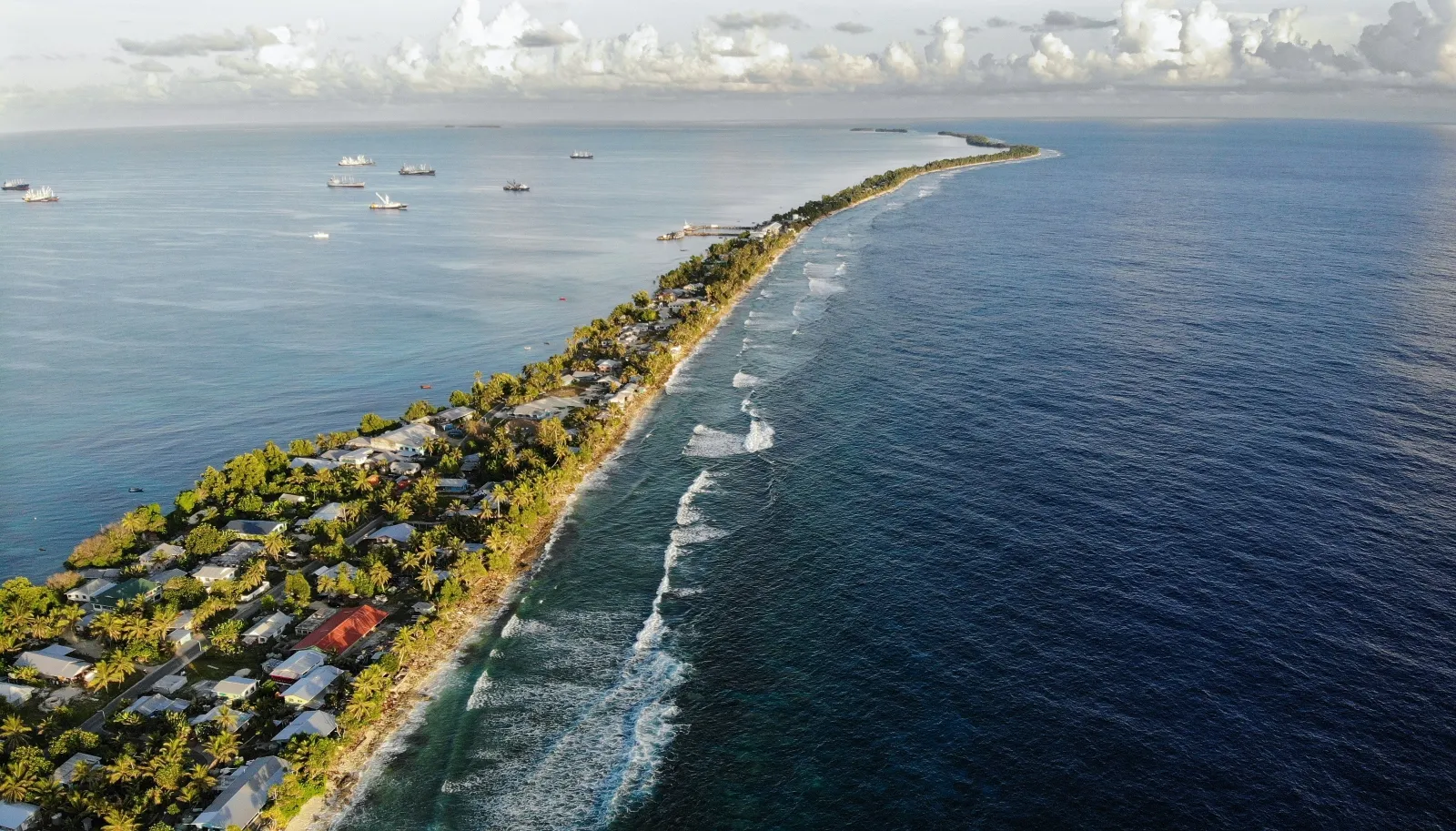
The existential threat facing island nations is immediate and measurable. Nations such as the Bahamas possess average landmass elevations of less than three meters above sea level. In places like Funafuti, the capital of Tuvalu, rising tides routinely breach coral atolls, contaminating freshwater lenses with saline water and rendering traditional agriculture impossible. Without sweeping global emissions reductions and massive physical coastal defenses, entire populations of roughly 11,000 Tuvaluans and tens of thousands across the Marshall Islands face the terrifying reality of permanent displacement.
Securing Maritime Zones and Economic Lifelines
Beyond the preservation of passports, seats in the United Nations, and cultural heritage, the declaration guarantees that sunken or shrinking nations retain control over their exclusive economic zones (EEZs). Under the United Nations Convention on the Law of the Sea (UNCLOS), a nation’s maritime boundaries—extending hundreds of miles off its coastline—grant it exclusive rights over fishing, energy development, and military operations.
For tourism-dependent economies like the Bahamas, protecting these pristine waters is paramount. Prime Minister Philip Davis emphasized that the legal protections preempt predatory efforts by industrial conglomerates seeking to exploit unclaimed international seabeds for controversial ventures like deep-sea mining.
"This cannot be a free-for-all," Prime Minister Davis stated during interviews with international media. "This cannot be might is right, and might takes what is there."
The U.S. Calculation: Why Washington Did Not Block the Accord
The Trump administration’s second term has been characterized by an aggressive retreat from international climate mechanisms. The U.S. has pulled out of the Paris accord, slashed funding to the U.S. Agency for International Development (USAID), and actively suppressed climate diplomacy abroad. Yet, despite references to climate change and adaptation financing, Washington allowed the resolution to pass without objection.
According to Bryce Rudyk, a New York University law professor and legal advisor to AOSIS, the U.S. and other wealthy, industrialized nations had a pragmatic self-interest in supporting the text. Sea level rise spares no coastline; major superpowers will eventually lose domestic coastal land to encroaching oceans. More importantly, shifting maritime borders could jeopardize Washington’s own sovereign control over lucrative offshore natural resources, including oil reserves, rare minerals, and expansive offshore wind energy installations.
"Everyone will lose land, and no one wants to lose ocean territory," Rudyk explained. "I think that’s why they were fine with making these relatively strong statements… It’s in everyone’s interest to say, ‘We don’t want states just disappearing.’"
Official Statements and Diplomatic Perspectives
The nuances of the UN declaration are best understood through the primary stakeholders who navigated the tense diplomatic corridors in New York.
- Prime Minister Philip Davis (The Bahamas): Highlighting the urgency of the crisis, Davis stressed that global efforts to curb carbon footprints have dangerously stalled, making regional adaptation and legal permanence vital lifelines. "Our landmass is less than 3 meters above sea level, we are already seeing our land being swallowed by water… I think this declaration will perhaps heighten the flow of action."
- Kamal Amakrane (Global Center for Climate Mobility): Emphasizing the rarity of multilateral consensus, Amakrane underscored the transformative shift from ambiguous legal theory to concrete international policy. "We have achieved a consensus in a year when consensus has been hard to come by, cementing a presumption in favor of continued statehood."
- Bryce Rudyk (NYU Law / Legal Advisor to AOSIS): Shedding light on the strategic alignment of superpowers with small island vulnerabilities, Rudyk pointed to the universal utility of freezing maritime baselines against the tide of climate change. "No one wants to lose ocean territory; protecting statehood is ultimately a mechanism to protect global maritime stability."
Future Outlook & Financial Realities
While the UN declaration provides an impenetrable legal shield guaranteeing that small island states will remain political and maritime entities on paper, it does not instantly solve the material and financial deficits threatening their physical survival.
The Adaptation Financing Gap
The declaration explicitly asserts that developed nations and historic carbon emitters bear an urgent obligation to expand access to adaptation finance for vulnerable developing states. This capital is desperately needed to construct heavy-duty seawalls, restore protective mangrove ecosystems, reinforce freshwater reserves, and finance the orderly, dignified relocation of inland communities.
However, current financial flows fall woefully short of what is required. Wealthy industrialized nations currently channel approximately $130 billion annually in grants and low-interest loans for clean energy and climate adaptation. While global climate conferences targeted reaching $300 billion annually by 2035, progress toward this benchmark remains sluggish and opaque.
The Debt Trap of Climate Vulnerability
Compounding the crisis is the structure of modern climate finance. Much of the international assistance provided to developing nations is disbursed in the form of high-interest loans rather than direct grants. For island nations already buckling under catastrophic debt burdens—such as the Bahamas, which carries billions in liabilities stemming from the reconstruction wreckage left by Hurricane Dorian in 2019—taking on additional loans to combat climate change is economically untenable.
Furthermore, with the United States actively stepping back from international development commitments and dismantling foreign aid apparatuses, the burden of funding global adaptation falls heavily on an increasingly strained coalition of European and Asian donor nations.
Conclusion: A Blueprint for Resilience
The United Nations General Assembly’s unanimous adoption of the sea level rise declaration marks a historic inflection point. It proves that even during an era defined by geopolitical polarization, nationalist retrenchment, and climate obstructionism, the fundamental principles of sovereignty and human dignity can transcend partisan divides.
For the millions of citizens living on the frontline of climate change, the declaration ensures that their nations will never truly be wiped off the map. Yet, as the physical waters continue to rise and the financial gap in adaptation funding persists, the international community faces a sobering reality: preserving the legal fiction of a state is only half the battle. The ultimate test will be whether global leaders can summon the political will and financial resources to preserve the physical world upon which those states depend.



