Executive Overview
In an era defined by accelerating climate disruption, overfishing, and unprecedented biodiversity loss, the global marine conservation movement is undergoing a paradigm shift. Moving beyond passive awareness and isolated advocacy, the renowned ocean conservation organization Mission Blue has officially announced the global launch of its comprehensive Science Initiative.
Spearheaded by Chief Scientist Dr. Tessa Hempson, this organization-wide effort is designed to bridge a critical historical gap in marine stewardship: the disconnect between high-level scientific research and grassroots, place-based conservation. By embedding credible, practical, and highly usable science directly into the hands of local leaders, the Science Initiative aims to supercharge the protection and ecological restoration of marine ecosystems across the global Hope Spot network.
Mission Blue is positioning itself as a dynamic catalyst, convener, connector, facilitator, and multiplier. Rather than generating academic research that languishes in journals, the initiative builds a direct conduit between world-class scientific expertise and the "Hope Spot Champions"—the frontline environmentalists, indigenous leaders, and local communities safeguarding Earth’s most critical marine ecosystems.
The launch kicks off with two ambitious, cutting-edge flagship programmes: Charting the Blue, an environmental DNA (eDNA) biodiversity mapping initiative, and Listening to the Ocean, a passive acoustic monitoring program designed to decode marine soundscapes. Supported by a newly established advisory panel known as the College of Experts, these programmes are engineered to equip conservationists with robust, data-backed evidence. This data will be leveraged to inform public policy, guide active management, strengthen advocacy, inspire local communities, and bolster donor confidence as the global community races toward the vital 30×30 target—protecting at least 30 percent of the world’s oceans by 2030.
Detailed Chronology: The Evolution of Mission Blue’s Scientific Framework
To understand the profound significance of the Science Initiative, one must trace the evolutionary trajectory of Mission Blue and its flagship Hope Spot concept, founded by legendary oceanographer Dr. Sylvia Earle.
The Genesis of Hope Spots
For decades, conservation strategies focused heavily on broad, generalized marine management or sporadic, reactionary interventions. Dr. Sylvia Earle and the Mission Blue team revolutionized this approach by introducing Hope Spots—special places that are scientifically identified as critical to the health of the ocean. Just as national parks protect terrestrial biodiversity, Hope Spots represent the "heart of the blue," encompassing vibrant coral reefs, critical shark nurseries, deep-sea trenches, and migratory corridors.
However, as the network expanded to hundreds of sites worldwide, a recurring challenge emerged: while local Hope Spot Champions possessed immense passion, local knowledge, and dedication, many lacked access to the sophisticated, verifiable scientific data required to influence national governments, secure legislative protections, or attract institutional funding.
Developing the Blueprint
Over recent years, the leadership team recognized that scaling conservation impact required standardizing data collection across vastly different geographical regions. The conceptualization of the Science Initiative began as an internal strategy to transform Mission Blue into an active science-to-protection actor.
Under the leadership of Chief Scientist Dr. Tessa Hempson, the organization consulted with marine biologists, data scientists, and conservation practitioners to identify the most efficient, non-invasive, and cost-effective technologies available today. The result was the formulation of a structured framework built upon two foundational pillars: eDNA sampling and passive acoustic monitoring.
Operationalizing the Strategy
With the formal launch of the Science Initiative, Mission Blue has transitioned from conceptual design to active implementation. The initiative introduces pilot projects co-designed with selected Hope Spot Champions and leading scientific partners. These projects are tailored to address localized conservation priorities while simultaneously feeding into a broader, comparable global database.
Concurrently, Mission Blue established the College of Experts, an advisory panel of preeminent scientists tasked with providing trusted guidance, vetting methodologies, and ensuring that every data point collected translates directly into measurable, long-term marine protection.
Supporting Context & Metrics: The Dual Pillars of the Science Initiative
At the heart of Mission Blue’s new scientific framework are two distinct yet deeply complementary programmes: Charting the Blue and Listening to the Ocean. Together, they represent a technological leap forward in how humanity interacts with, monitors, and protects the marine environment.
+-----------------------------------------------------------------+
|                   MISSION BLUE SCIENCE INITIATIVE               |
+--------------------------------+--------------------------------+
                                 |
         +-----------------------+-----------------------+
         |                                               |
         v                                               v
+------------------------+                     +------------------------+
|   CHARTING THE BLUE    |                     | LISTENING TO THE OCEAN |
| (Biodiversity Mapping) |                     |   (Acoustic Habitat)   |
+------------------------+                     +------------------------+
         |                                               |
         +--> Non-invasive eDNA sampling                 +--> Passive acoustic monitoring
         +--> Detects traces of genetic material         +--> Decodes marine soundscapes
         +--> Establishes biodiversity baselines         +--> Maps human pressures & patterns
1. Charting the Blue: Mapping Marine Biodiversity Through eDNA
Traditional marine surveys—such as visual scuba transects, trawling, or tagging—are often labor-intensive, expensive, geographically limited, and occasionally disruptive to marine life. Charting the Blue circumvents these limitations by harnessing the power of environmental DNA (eDNA).
- The Science: All marine organisms constantly shed genetic material into their surrounding environment through skin cells, mucus, feces, and gametes. By simply collecting a water sample, filtering it, and analyzing the extracted DNA using advanced genomic sequencing, scientists can identify an extraordinary breadth of species present in a given area.
- The Scope: The eDNA approach detects everything from microscopic plankton and deep-dwelling invertebrates to highly mobile apex predators such as sharks, rays, and marine mammals, all without ever laying eyes on them or disturbing their natural behaviors.
- The Application: For Hope Spot Champions, Charting the Blue provides a revolutionary tool to establish precise, up-to-date biodiversity baselines. It enables teams to detect rare, cryptic, or elusive species that evade traditional monitoring methods. Most importantly, it generates ironclad, scientifically credible evidence that can be presented to policymakers to justify the establishment or expansion of Marine Protected Areas (MPAs).
2. Listening to the Ocean: Decoding Marine Soundscapes
While visual surveys capture a snapshot of ocean life, acoustic monitoring reveals its continuous, living rhythm. Sound is arguably one of the most critical sensory channels in the marine realm.
- The Science: Marine species—from snapping shrimp and reef fish to baleen whales—rely on sound to communicate, navigate, feed, mate, and avoid predators. Conversely, anthropogenic (human-generated) noise from commercial shipping, seismic testing, sonar, and coastal development has dramatically reshaped acoustic habitats worldwide, often causing chronic stress or behavioral disruption in marine fauna.
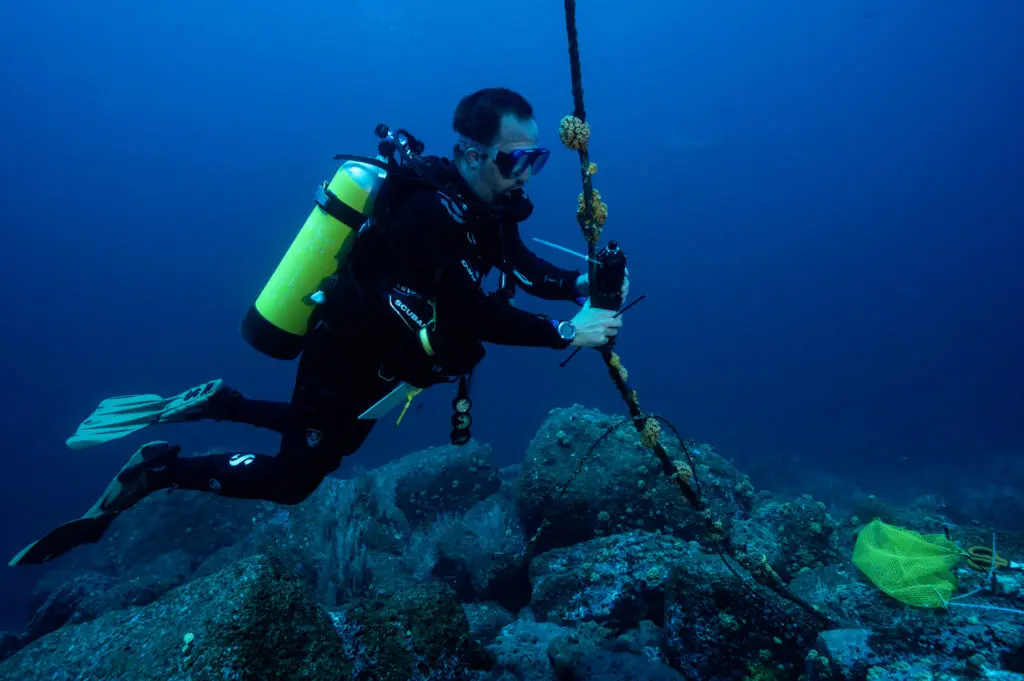
- The Methodology: Listening to the Ocean deploys passive acoustic monitoring (PAM) devices—hydrophones anchored beneath the waves—to record the soundscape over extended periods.
- The Insight: Long-term acoustic data allows researchers to track seasonal migration patterns, identify biological hotspots, monitor reproductive cycles, and evaluate overall ecosystem health. Furthermore, it measures the creeping footprint of human industrial noise, providing local champions with empirical data to lobby for vessel slowdowns, shipping lane rerouting, or noise pollution regulations.
Official Statements and Strategic Vision
The formal launch of the Science Initiative marks a defining moment for Mission Blue, underscoring a commitment to rigorous, evidence-based conservation that bridges the gap between grassroots passion and high-level policy change.
Dr. Tessa Hempson, Chief Scientist at Mission Blue, emphasized the pragmatic, collaborative nature of the initiative during the launch:
"Our goal is not simply to collect data for the sake of academic curiosity. The Science Initiative is purposefully designed to ensure that scientific insight translates directly into tangible conservation outcomes. By acting as a catalyst and a bridge, we are connecting world-class scientific expertise directly with the Hope Spot Champions who are on the front lines protecting these vital ocean ecosystems."
The initiative builds upon Mission Blue’s core philosophy, often summarized through the iterative journey of Wish, Act, Protect:
- Wish: Envisioning a healthy, vibrant global ocean (championed by Dr. Sylvia Earle’s lifelong advocacy).
- Act: Mobilizing local communities, indigenous groups, and conservationists to establish Hope Spots.
- Protect: Equipping these stewards with the rigorous, credible evidence needed to secure permanent legislative safeguards, guide active restoration, and build unshakable donor confidence.
Furthermore, the integration of the College of Experts ensures that the initiative maintains the highest standards of academic and methodological rigor. This advisory panel acts as a quality-control mechanism and a strategic compass, ensuring that pilot projects deployed under Charting the Blue and Listening to the Ocean generate data that meets international scientific benchmarks while directly serving local management objectives.
Future Outlook: The Road to 30×30 and Beyond
As the Mission Blue Science Initiative scales its operations in the coming years, its long-term implications extend far beyond individual Hope Spots. The initiative is poised to play a pivotal role in meeting global biodiversity frameworks, most notably the international commitment to achieve at least 30% ocean protection by 2030 (30×30), alongside active restoration initiatives across an additional 30% of degraded marine habitats.
Building Comparable Global Datasets
One of the greatest historical challenges in marine conservation has been the fragmentation of data. Monitoring protocols vary widely between countries, NGOs, and academic institutions, making it difficult to assess planetary-scale trends. By deploying standardized eDNA and acoustic monitoring frameworks across diverse Hope Spots spanning the globe, Mission Blue is creating a harmonized, comparable global dataset. This data will allow scientists to track macro-ecological shifts, evaluate the resilience of marine ecosystems under climate stress, and measure the real-world efficacy of Marine Protected Areas.
Strengthening Advocacy and Securing Investment
In the realm of conservation finance, donor confidence is inextricably linked to measurable impact. Philanthropic organizations, corporate sponsors, and government agencies increasingly demand empirical evidence before committing substantial capital to conservation projects. By providing Hope Spot Champions with robust, scientifically verified baselines and monitoring metrics, the Science Initiative transforms localized projects into investment-ready endeavors. Donors can clearly visualize the ecological return on investment, knowing their contributions are backed by state-of-the-art genetics and acoustics.
A Catalyst for Healing the Sea
Ultimately, the launch of the Science Initiative represents a profound philosophical alignment: pairing humanity’s deepest emotional connection to the sea with the sharpest tools of modern science.
As Dr. Sylvia Earle frequently notes, "With knowing comes caring, and with caring comes protection." By systematically revealing what the ocean desperately needs through advanced science, Mission Blue is not only illuminating the hidden realities of the deep blue but also actively mobilizing the robust, enduring protection that the ocean so richly deserves.