Executive Overview
In an ambitious move to bridge the gap between empirical research and on-the-ground conservation, the global marine protection foundation Mission Blue has officially announced the launch of its organization-wide Science Initiative. Designed to strengthen protection and restoration efforts across its sprawling global network of "Hope Spots," the new initiative connects place-based community leadership with credible, practical, and highly usable science.
Led by Chief Scientist Dr. Tessa Hempson, the initiative fundamentally reframes how conservation data is gathered, interpreted, and applied. Rather than functioning as a traditional, ivory-tower research endeavor, the Science Initiative acts as a dynamic catalyst, convener, connector, facilitator, and multiplier. It directly links world-class scientific expertise with the dedicated "Hope Spot Champions"—local leaders, Indigenous groups, and grassroots activists—who are on the front lines protecting some of the most ecologically vital and threatened marine environments on Earth.
At its core, the newly unveiled initiative debuts with two flagship programs: Charting the Blue and Listening to the Ocean. These twin pillars employ cutting-edge, non-invasive methodologies—specifically environmental DNA (eDNA) sampling and passive acoustic monitoring—to decode the hidden dynamics of marine ecosystems. By co-designing pilot projects with local champions and leading academic partners, Mission Blue aims to address immediate local management priorities while simultaneously building a robust, comparable, and global body of marine data.
This strategic evolution marks a significant milestone in Mission Blue’s core philosophy of Wish–Act–Protect. As international frameworks increasingly emphasize ambitious conservation targets—such as the global commitment to protect at least 30% of the world’s ocean by 2030 (the "30×30" target)—the Science Initiative provides the empirical backbone necessary to inform policy, guide active management, drive restoration, inspire local communities, and bolster donor confidence.
Detailed Chronology: The Evolution of Mission Blue’s Scientific Framework
To understand the weight and timing of the Science Initiative, it is helpful to examine the historical trajectory of Mission Blue and the escalating urgency of marine conservation over the past two decades.
From Vision to Global Network
Founded by legendary oceanographer Dr. Sylvia Earle, Mission Blue emerged from a 2009 TED Wish. Dr. Earle’s vision was to spark a global campaign to explore and protect the ocean through the identification of "Hope Spots"—special places that are scientifically identified as critical to the health of the marine environment. Over the years, the Hope Spot network has grown exponentially, encompassing archipelagos, coral reefs, deep-sea trenches, and coastal mangroves spanning every corner of the globe.
However, as the network expanded from a few dozen sites to over 150 globally recognized Hope Spots, a persistent challenge emerged. While local champions possessed unwavering passion and intimate knowledge of their local waters, many lacked access to the rigorous, peer-reviewed data required to influence government policy, secure legal protections, or successfully manage marine protected areas (MPAs) against sophisticated industrial threats like overfishing and coastal development.
The Genesis of the Science Initiative
Recognizing that passion alone cannot turn the tide against rapid ocean degradation, Mission Blue leadership initiated a multi-year planning phase to institutionalize scientific support across the network. The goal was clear: create a dedicated mechanism that could translate complex marine science into practical, digestible, and actionable tools for non-scientists.
Led by Dr. Tessa Hempson, the newly minted Science Initiative was structured not as a top-down bureaucratic hurdle, but as a collaborative bridge. The initiative spent months consulting with marine biologists, data scientists, and field champions to identify the most pressing data gaps in marine management. The consensus pointed toward two major technological breakthroughs that were becoming cost-effective and field-ready: environmental DNA sequencing and underwater acoustic monitoring.
Launching the Flagship Pillars
With the institutional framework established, Mission Blue formally rolled out the initiative with its two flagship programs:
- Charting the Blue: Designed to tackle the notorious difficulty of surveying elusive, highly mobile, or microscopic marine life through traditional visual censuses. By leveraging eDNA, this program allows local teams to map biodiversity with unprecedented accuracy.
- Listening to the Ocean: Focused on the acoustic ecology of marine habitats. Recognizing that sound is the primary sensory modality for many ocean dwellers, this program deploys hydrophones to capture long-term environmental and anthropogenic soundscapes.
Simultaneously, Mission Blue introduced the College of Experts advisory panel—a curated collective of world-renowned marine scientists tasked with vetting methodologies, providing trusted guidance, and ensuring that the data generated meets the highest academic standards.
Supporting Context & Methodologies: Inside the Flagship Programs
The operational success of the Mission Blue Science Initiative rests on its two core programs. Far from being abstract academic exercises, both Charting the Blue and Listening to the Ocean are engineered for practical, boots-on-the-ground deployment.
+-----------------------------------------------------------------+
|                 MISSION BLUE SCIENCE INITIATIVE                 |
+--------------------------------+--------------------------------+
                                 |
         +-----------------------+-----------------------+
         |                                               |
         v                                               v
+-----------------------------+                 +-----------------------------+
|    CHARTING THE BLUE        |                 |  LISTENING TO THE OCEAN     |
| (Biodiversity Mapping via   |                 | (Passive Acoustic Monitoring|
|         eDNA)               |                 |    & Soundscape Ecology)    |
+-----------------------------+                 +-----------------------------+
         |                                               |
         +-----------------------+-----------------------+
                                 |
                                 v
                 +-------------------------------+
                 |  EQUIPPING HOPE SPOT CHAMPIONS|
                 |   • Baseline Biodiversity     |
                 |   • Real-Time Threat Tracking |
                 |   • Policy & Advocacy Power   |
                 |   • Enhanced Donor Confidence |
                 +-------------------------------+
1. Charting the Blue: Decoding the Ocean’s Genetic Archive
Traditional marine surveys—such as scuba-based visual transects or catch-and-release netting—are often time-consuming, expensive, highly invasive, and limited by water visibility and human presence. Charting the Blue circumvents these limitations by utilizing environmental DNA (eDNA).
- The Science: As marine organisms move through the water, they continuously shed cellular material through skin cells, scales, mucus, gametes, and waste. Water samples collected by local champions in a Hope Spot contain a complex soup of this genetic material.
- The Process: By filtering seawater samples and sequencing the extracted DNA using metagenomic pipelines, scientists can match genetic fragments against reference databases.
- The Impact: This non-invasive technique can detect everything from microscopic plankton and benthic invertebrates to apex predators like sharks, rays, and marine mammals—even when the animals are miles away or hiding in crevices. For Hope Spot Champions, eDNA provides a powerful, up-to-date biodiversity baseline. It helps detect rare or invasive species, measures shifts in community composition over time, and generates ironclad empirical evidence to persuade policymakers to establish or expand marine reserves.
2. Listening to the Ocean: Capturing the Acoustic Anthropocene
While human perception of the ocean is predominantly visual, the underwater world is fundamentally acoustic. Sound travels roughly four and a half times faster in water than in air, making hearing the primary channel through which marine species communicate, navigate, feed, and reproduce.
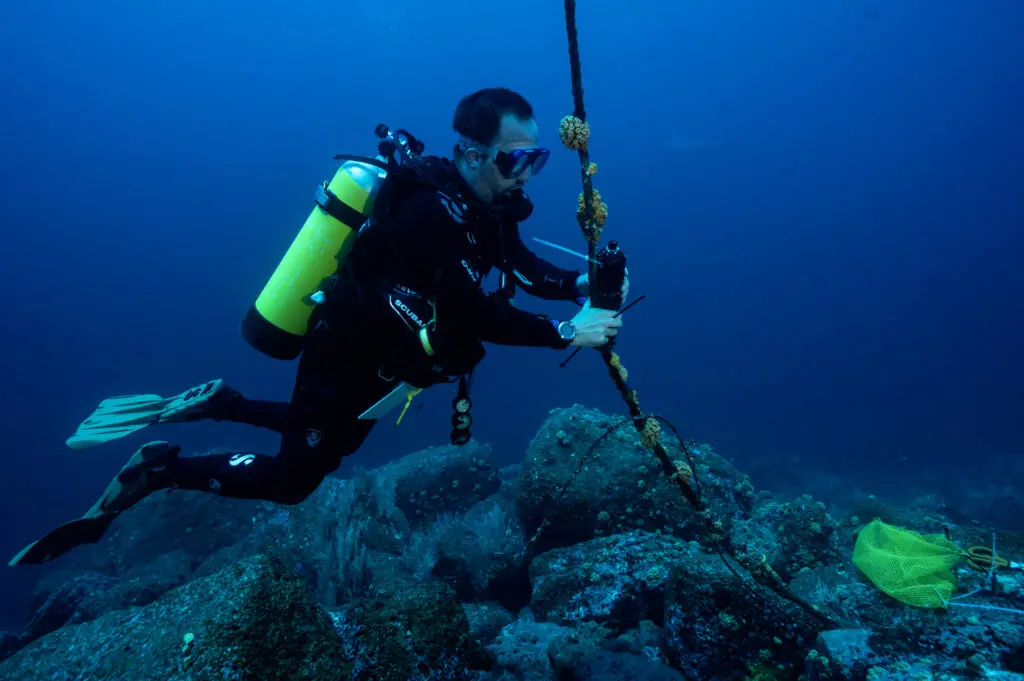
- The Science: Listening to the Ocean deploys passive acoustic monitoring (PAM) via submerged, long-term hydrophones. These autonomous listening devices record the rich soundscapes of coral reefs, kelp forests, and deep-sea canyons.
- The Process: The recorded audio data is analyzed using advanced bioacoustic software and machine learning algorithms to identify specific biological signatures (such as fish chorusing, whale song, or snapping shrimp activity) alongside anthropogenic noises (cargo ship engines, seismic airguns, and sonar).
- The Impact: Soundscapes reveal ecological health in real-time. A healthy reef is typically noisy and complex; a degraded or overfished reef falls silent. By listening continuously over months or years, Hope Spot Champions can track seasonal migration patterns, monitor reproductive events, and quantify the creeping encroachment of human noise pollution—insights that traditional, periodic visual monitoring almost entirely misses.
Official Statements & Leadership Insights
The launch of the Science Initiative represents a profound philosophical and operational shift for Mission Blue, one underscored by the organization’s key leaders.
Dr. Sylvia Earle, President and Founder of Mission Blue, has long championed the integration of hard science with public passion. In framing the philosophy behind the new initiative, she often reiterates a core truth of modern conservation: "You cannot protect what you do not understand, and you cannot value what you do not know."
Chief Scientist Dr. Tessa Hempson, who spearheads the daily operations and strategic direction of the initiative, emphasizes the practical utility of the programs for local changemakers:
"Our goal with the Science Initiative is not to create more paperwork or academic studies that sit gathering dust on a digital shelf. We are building a direct bridge between world-class scientific innovation and the incredible grassroots leaders who are fighting every day to safeguard their local waters. By equipping Hope Spot Champions with tools like eDNA and acoustic monitoring, we are giving them the empirical leverage they need to hold decision-makers accountable and secure lasting legal protections."
Advisory members of the newly formed College of Experts have similarly praised the initiative’s collaborative model. By pairing academic institutions and specialized laboratories with local indigenous and community-led conservation groups, the initiative ensures that research is ethically conducted, culturally respectful, and directly responsive to community needs rather than extractive.
Future Outlook: The Road to 2030 and Beyond
As the Mission Blue Science Initiative scales its operations and expands its global programme offerings, its long-term vision is firmly anchored in the global timeline for planetary survival.
The 30×30 Imperative
The international scientific and policy communities have coalesced around a vital target: protecting at least 30% of the global ocean by 2030, alongside active restoration initiatives for another 30% of degraded marine habitats. Achieving this monumental goal requires more than drawing lines on a map; it requires ensuring that designated Marine Protected Areas (MPAs) are "fully" or "highly" protected and actively managed to deliver ecological results.
The Mission Blue Science Initiative directly supports this global commitment by:
- Generating Comparable Datasets: Standardizing eDNA and acoustic methodologies across diverse geographic regions allows researchers to draw global conclusions, track macro-trends in ocean health, and measure the real-world efficacy of MPAs.
- Streamlining Policy Integration: Providing governments and regional management bodies with transparent, unassailable scientific data removes ambiguity, making it politically harder to rollback protections or permit destructive industrial practices within Hope Spots.
- Building Donor and Public Confidence: Philanthropic organizations and corporate partners increasingly demand rigorous, data-driven accountability. By establishing clear metrics of success through the Science Initiative, Mission Blue provides donors with verifiable proof of conservation return-on-investment.
Revealing What the Ocean Needs
The health of the global ocean is at a critical crossroads. Climate change, ocean acidification, industrial overfishing, and habitat destruction continue to exert unprecedented pressures on marine biodiversity. Yet, stories of resilience within Hope Spots around the world prove that when given a chance, the ocean has an extraordinary capacity to heal.
By serving as a bridge between knowledge and action, the Mission Blue Science Initiative is systematically illuminating what the ocean needs to recover. Through the deployment of genetic mapping, acoustic listening, and expert guidance, Mission Blue is not only documenting the wonders of the deep and shallow seas—it is actively mobilizing the robust, science-backed protection that the ocean so urgently deserves.