

Executive Overview
The global packaging and recycling landscape is undergoing a silent revolution. As regulatory pressure mounts, corporate sustainability commitments intensify, and consumer expectations shift toward genuine environmental stewardship, the waste management and materials recovery sectors are forced to adapt at unprecedented speeds. At the heart of this transformation is a powerful symbiosis between cutting-edge material recovery facilities (MRFs) and innovative recycling technologies.
Recent discussions spearheaded by industry leaders during a joint webinar hosted by the Stewardship Action Foundation and the National Stewardship Action Council highlighted a pioneering partnership that is setting a new benchmark for plastics circularity. Through heavy investments in artificial intelligence (AI), optical sortation, and next-generation recycling technologies, waste giant Rumpke Waste & Recycling and advanced recycler PureCycle are forging a robust domestic supply chain for high-purity polypropylene (PP). Joined by packaging manufacturing innovator IPL Schoeller, these companies are demonstrating how technological upgrades at the front end of the recycling stream can directly unlock high-grade, post-consumer recycled (PCR) resin capable of meeting the stringent requirements of food-contact packaging.
This collaborative framework addresses a long-standing bottleneck in the plastics economy: the systemic difficulty of capturing, sorting, and purifying post-consumer polypropylene. While polyethylene terephthalate (PET) and high-density polyethylene (HDPE) have enjoyed relatively mature recycling markets for decades, polypropylene has historically lagged behind due to its diverse applications, varied melting points, and challenges in automated sortation. However, by coupling Rumpke’s 98% to 99% sorting efficiency with PureCycle’s patented dissolution technology, the industry is witnessing a paradigm shift. Packaging producers are no longer forced to compromise on safety, clarity, or performance when utilizing recycled content. Instead, they are gaining access to consistent, high-purity resin that easily complies with emerging state-level extended producer responsibility (EPR) programs and mandatory recycled content laws.
Detailed Chronology of Technological Evolution
The journey toward a closed-loop polypropylene market did not happen overnight; it is the result of years of calculated financial commitments, strategic partnerships, and iterative technological deployments across the waste management and processing sectors.
2021: The Genesis of Enhanced PP Sortation
Rumpke’s commitment to capturing polypropylene began in earnest in 2021. Recognizing that conventional MRF configurations were missing significant volumes of valuable PP containers, cups, and packaging, the company pursued targeted equipment upgrades. This initiative was heavily supported by a strategic grant administered through The Recycling Partnership’s Polypropylene Recycling Coalition.
By integrating specialized optical sorting units calibrated to detect the specific spectral signature of polypropylene, Rumpke laid the foundation for what would become a reliable, long-term feedstock stream. In the years immediately following this initial investment, Rumpke successfully processed approximately 8,200 tons of polypropylene, averaging roughly 350 tons per month. This baseline volume proved to downstream processors—most notably PureCycle—that municipal solid waste streams could indeed yield a viable, scalable source of polypropylene if sorted with sufficient precision.
2024: The Columbus MRF Milestone and the PureCycle Connection
The partnership reached a major inflection point in 2024 with Rumpke’s opening of its state-of-the-art, $100 million materials recovery facility in Columbus, Ohio. Built in collaboration with equipment provider Machinex, the Columbus MRF represents the pinnacle of modern waste-sorting infrastructure. Equipped with advanced AI-driven optical sorters, high-speed pneumatic ejectors, and automated quality-control mechanisms, the facility is engineered to isolate multiple streams of recyclable materials concurrently, with an extraordinary focus on polypropylene.
According to Rob Kurtz, a marketing specialist at Rumpke, the deployment of this next-generation technology has drastically altered operational metrics. "What we found by utilizing the newer technology is we are able to sort more efficiently and effectively," Kurtz noted, emphasizing that the facility is now capable of capturing polypropylene at an astounding 98% to 99% effectiveness rate.
This high-purity output serves as the lifeblood for PureCycle’s flagship facility in Ironton, Ohio. Christian Bruey, PureCycle’s director of sustainability and external affairs, points out that while PureCycle maintains off-take agreements with various bale suppliers across the country, Rumpke’s material stands out due to its exceptional quality. Because not all MRFs possess the advanced capabilities found in Columbus, lower-quality bales often require intermediate processing at PureCycle’s secondary sortation facility in Denver, Pennsylvania—where incoming bales composed of roughly 70% polypropylene are upgraded to 95 purity. By contrast, Rumpke’s output minimizes the need for extensive pre-processing, streamlining the pathway to the Ironton purification plant.
The Cincinnati Expansion and Future Horizons
Building upon the success of the Columbus facility, Rumpke is not resting on its laurels. The company has announced plans for an upcoming $55 million to $60 million capital investment to modernize its legacy Cincinnati facility. Operating for approximately 14 years, the Cincinnati plant requires a comprehensive overhaul to meet modern throughput and purity demands.
The slated upgrades will incorporate the same caliber of optical sorting and AI-powered equipment that proved successful in Columbus. Furthermore, the project includes expanding the physical footprint of the facility, featuring a larger tipping floor, expanded warehouse space, and additional shipping docks. These logistical improvements are designed to accelerate the velocity of materials moving back into the circular economy, aligning with Rumpke’s regional distribution model, which aims to send 80% of its recovered commodities to Ohio-based or regional end-users within a 250-mile radius.
Supporting Context & Metrics: Decoding the Resin Process
Understanding the commercial viability of this partnership requires examining the underlying chemistry and processing mechanics that separate PureCycle’s operations from conventional mechanical and chemical recycling models.
The Mechanics of Dissolution vs. Depolymerization
A common point of confusion in the advanced recycling sector involves the categorization of various recycling methodologies. Environmental advocacy groups and regulatory bodies frequently lump all non-mechanical recycling innovations under the broad banner of "chemical recycling," drawing intense public scrutiny regarding transparency, life-cycle emissions, and operational transparency.
However, PureCycle is careful to distance itself from traditional chemical recycling categories. As Bruey explains, the company does not utilize depolymerization—a process that breaks polymers down into their constituent monomers using heat and chemical agents before rebuilding them into plastics. Instead, PureCycle employs a patented physical dissolution process.
[Raw PP Bales]
      │
      ▼
[Dissolution Process (Solvent-based Purification)]
      │
      ▼
[Filtration & Odor/Color Removal]
      │
      ▼
[Resolidification into PureFive Pellets]
      │
      ▼
[Food-Contact PCR Packaging (IPL Schoeller)]
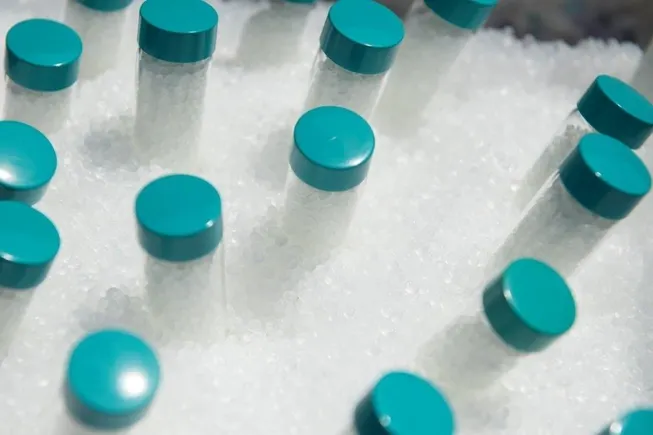
In this system, waste polypropylene is dissolved in a specialized solvent, allowing contaminants, additives, colorants, and odors to be systematically filtered out at a molecular level. The purified polymer is then separated from the solvent, dried, and extruded into pristine, clear pellets known commercially as PureFive. Because the polymer chains themselves are not chemically fractured during purification, PureCycle avoids the energy-intensive monomer-reconstruction steps typical of depolymerization.
Furthermore, PureCycle operates entirely independently of mass balance accounting credits—a practice wherein recycled content is allocated arithmetically across manufacturing runs rather than physically residing in the final product.
"There are no mass balance credits that we need to sell. The pellet that we sell is the recycled content," Bruey asserts. This transparency provides brand owners and packaging manufacturers with an unassailable audit trail, guaranteeing that the resin in their products is physically derived from post-consumer waste.
Operational Scale and Feedstock Dynamics
The industrial scale of this supply chain is substantial. PureCycle’s Ironton facility boasts a design capacity to process approximately 107 million pounds of polypropylene annually. To support this massive output, the company recently brought its accompanying compounding site online, enabling the production of up to 100 million pounds of finished, high-grade resin per year.
For this high-capacity facility to run efficiently, it requires a steady, homogeneous stream of feedstock. This is where Rumpke’s operational rigor becomes invaluable. By utilizing advanced optical sorting and AI-driven quality checks, Rumpke ensures that the bales leaving its Ohio MRFs are free from heavy contamination—such as multi-layer films, PVC, or non-PP rigid plastics—that could otherwise disrupt the dissolution cycle.
Official Statements and Industry Perspectives
The collaborative synergy between waste collectors, recyclers, and converters was a central theme during the recent webinar hosted by the Stewardship Action Foundation and the National Stewardship Action Council. Industry leaders used the platform to articulate how regulatory compliance and technical innovation are converging to reshape commercial packaging strategies.
Rob Kurtz of Rumpke emphasized that technology is the ultimate enabler of circularity. "What we found by utilizing the newer technology is we are able to sort more efficiently and effectively," he noted, highlighting the crucial achievement of capturing polypropylene at a 98% to 99% effectiveness rate. By treating waste not merely as refuse, but as a valuable domestic resource, Rumpke has transformed its MRFs into high-tech manufacturing feeders.
Christian Bruey of PureCycle underscored the importance of upstream partnerships in overcoming the quality barrier that has historically plagued the recycled plastics market. "Not everybody has the latest and greatest technology like Rumpke does at the Columbus MRF," Bruey remarked, pointing out that superior sorting directly translates to lower energy expenditures during purification and superior aesthetic and functional qualities in the final resin pellet.
Representing the downstream manufacturing perspective, Melissa Vettleson, a sustainability and materials engineer for packaging producer IPL Schoeller, spoke to the necessity of reliability and safety in food-contact packaging. Working with recycled plastics is notoriously difficult due to batch-to-batch variability in color, melt flow index, and contaminant levels. However, the combined efforts of Rumpke’s bale consistency and PureCycle’s purification technology have given IPL Schoeller the confidence to scale up its sustainable product lines.
"We’ve been able to get the material to a state where it is that consistent quality that we can rely on, a state that’s going to work in our process and provide a very high level of food safety," Vettleson stated.
Future Outlook: Meeting Regulatory Demands and Market Realities
As the packaging industry looks toward the remainder of the decade, the pressure to integrate post-consumer recycled content into commercial portfolios will only intensify. This urgency is driven by a complex patchwork of state-level mandates and extended producer responsibility (EPR) frameworks designed to shift the financial and operational burden of waste management back onto producers.
Navigating State EPR and Recycled Content Mandates
Packaging manufacturers can no longer afford to treat sustainability as an optional marketing initiative. Regulatory landscapes across the United States are shifting rapidly. For instance, Oregon’s landmark EPR program requires producers of covered products to register, report, and actively participate in circular funding and infrastructure development. Similarly, states like New Jersey have enacted strict statewide recycled content mandates that legally obligate companies selling rigid plastic packaging to incorporate specific percentages of PCR into their containers.
IPL Schoeller is actively navigating these mandates by leveraging the PureFive resin supplied through the Rumpke-PureCycle partnership. The company is currently manufacturing food-contact packaging—such as pickle containers utilizing 25% PureCycle-sourced recycled content, and clear deli meat tubs incorporating 20% food-grade recycled polypropylene—that directly satisfies these regulatory thresholds.
Applications Beyond Traditional Boundaries
The success of high-purity polypropylene dissolution has unlocked high-end applications previously thought impossible for recycled plastics. While recycled plastics have traditionally been relegated to non-food applications, garden furniture, or heavy-duty industrial crates, PureFive resin is currently being utilized in sensitive food-contact environments. Furthermore, it is finding a home in lifestyle and consumer products, including lids for hot-beverage containers and specialty sports drink cups distributed at major sports stadiums and entertainment venues.
The Road Ahead for Circular Infrastructure
The operational model demonstrated by Rumpke, PureCycle, and IPL Schoeller offers a blueprint for the future of domestic resource recovery. By continuing to invest heavily in front-end artificial intelligence, optical sorting enhancements, and localized distribution networks, the waste management sector can drastically reduce contamination rates and elevate bale quality.
Concurrently, advanced purification technologies like solvent-based dissolution provide the chemical bridge necessary to turn erratic municipal waste streams into pristine, virgin-equivalent polymers. As additional MRFs across the country adopt the technological blueprint pioneered in Columbus, and as purification capacities expand, the vision of a truly circular economy for polypropylene moves steadily from theoretical ambition to commercial reality.



