

EXECUTIVE OVERVIEW
As the global community faces unprecedented ecological shifts, the intersection of legacy wisdom and next-generation innovation has never been more critical. In a landmark multimedia feature published by CNN’s Call to Earth, legendary oceanographer Dr. Sylvia Earle and Titouan Bernicot, founder of the grassroots conservation powerhouse Coral Gardeners, have united to present a compelling roadmap for marine restoration.
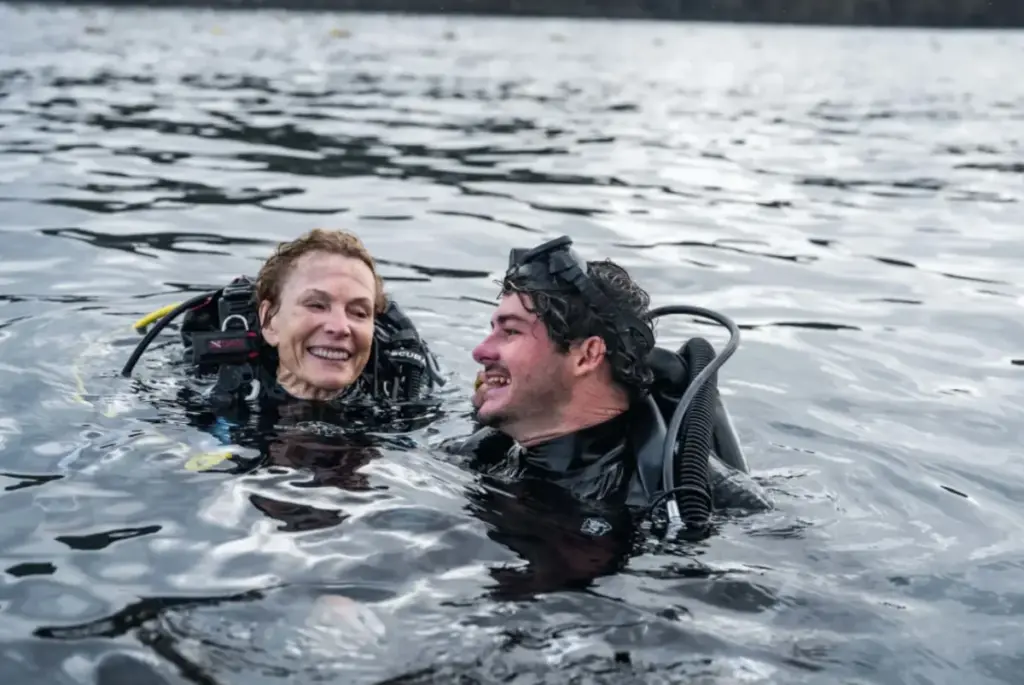
Representing two distinct eras of environmental activism, Earle—affectionately known as "Her Deepness" after logging more than 7,000 hours underwater across a decades-long career—and Bernicot, a young Polynesian coral advocate who launched his organization at just 16 years old, offer a unified front against the degradation of the world’s blue biosphere. Their collaboration moves beyond lamenting the systemic collapse of marine ecosystems. Instead, it presents five actionable, scalable solutions designed to empower local communities, leverage emerging technologies, and shift public perception from passive observation to active guardianship.
This feature article provides a deep-dive analysis of their collaborative blueprint. By examining the structural pillars of their proposals—ranging from grassroots empowerment and the democratization of marine science to technological innovation and holistic ecosystem preservation—we explore how safeguarding the global ocean is not merely an environmental imperative, but a fundamental prerequisite for human survival.
1. DETAILED CHRONOLOGY: THE EVOLUTION OF A GENERATIONAL ALLIANCE
The Roots of Ocean Advocacy: Dr. Sylvia Earle’s Legacy
To understand the significance of the Earle-Bernicot alliance, one must trace the historical arc of modern oceanography. When Dr. Sylvia Earle began her career in the mid-20th century, the prevailing human attitude toward the ocean was one of infinite resource extraction and limitless capacity for waste absorption. Oceans were viewed as a boundless frontier—a watery abyss too vast to be permanently altered by human hands.
Earle’s pioneering expeditions, including her leadership of the 1970 Tektite II project (where she lived and worked underwater for two weeks) and her record-setting 1,000-foot solo dive off the coast of Oahu in 1979, shattered these illusions. Through decades of relentless fieldwork, writing, and advocacy—including founding Mission Blue, an initiative dedicated to establishing a global network of marine protected areas known as "Hope Spots"—Earle transitioned from a research scientist to a planetary elder statesman. Her message has remained consistent: the ocean is the life support system of Earth, and its systematic dismantling threatens the very fabric of human existence.
The Rise of the Next Wave: Titouan Bernicot and Coral Gardeners
Decades after Earle first sounded the alarm, a new generation of ocean stewards emerged, shaped by the visible, rapid deterioration of coastal environments. Titouan Bernicot grew up in the pristine waters of Moorea in French Polynesia. Witnessing firsthand the devastating coral bleaching events that swept through his home reefs, Bernicot realized that waiting for bureaucratic, top-down governmental interventions was no longer a viable strategy.
At age 16, armed with little more than a surfboard, a camera, and an intimate, generational knowledge of the reef, Bernicot founded Coral Gardeners. What began as a local group of surfing friends planting resilient coral fragments has rapidly evolved into an international movement. Utilizing social media platforms, direct-action volunteerism, and corporate partnerships, Bernicot and his team have mobilized hundreds of thousands of supporters worldwide, proving that digital-native generations can effectively translate online engagement into tangible, boots-in-the-water conservation outcomes.
The Convergence: The CNN Call to Earth Feature
The collaboration between Earle and Bernicot, as highlighted in their recent CNN Call to Earth feature, represents a strategic synthesis of macro-level scientific vision and micro-level tactical execution. By bringing together Earle’s sweeping, planetary perspective and Bernicot’s agile, modern methodologies, the partnership bridges the perceived gap between legacy conservationism and modern eco-activism.
The initiative outlines five foundational strategies designed to alter the trajectory of marine decline. Rather than operating in isolated silos, these strategies depend on an interconnected web of human agency, technological integration, and systemic policy reform.
2. SUPPORTING CONTEXT & METRICS: THE STATE OF THE GLOBAL OCEAN
To fully appreciate the urgency behind the Earle-Bernicot blueprint, one must examine the empirical data defining the current crisis. The global ocean covers approximately 71% of the Earth’s surface, produces over 50% of the oxygen in the atmosphere, and absorbs roughly 90% of excess heat generated by anthropogenic climate change. Yet, it remains severely underfunded, under-protected, and overexploited.
The Coral Reef Crisis
Coral reefs, often described as the rainforests of the sea, support an estimated 25% of all marine life while comprising less than 0.1% of the ocean floor. According to global monitoring networks, including the Global Coral Reef Monitoring Network (GCMRN):
- Mass Bleaching Events: Over the past four decades, rising ocean temperatures driven by carbon emissions have triggered multiple global coral bleaching events. Scientists estimate that the world has already lost approximately 50% of its coral reefs since the 1950s.
- Acidification: As the ocean absorbs excess carbon dioxide, seawater pH declines, severely compromising the ability of calcifying organisms—such as corals, oysters, and microscopic plankton—to build and maintain their calcium carbonate skeletons.
- Economic Impact: Coral reefs provide goods and services valued at billions of dollars annually, spanning coastal protection, fisheries, and tourism. Their collapse threatens the economic security and food sovereignty of over half a billion people worldwide, particularly in developing island nations.
The Five Solutions: Deconstructing the Blueprint
The partnership between Earle and Bernicot crystallizes these complex ecological challenges into five core solutions, detailed in their CNN feature:
- Empowering Local Leaders: Conservation cannot succeed when imposed from distant capitals. True stewardship requires funding, training, and elevating indigenous and local coastal populations who possess generational knowledge of their marine environments.
- Expanding Public Participation: Marine conservation must transition from an exclusive domain of academic scientists to an inclusive movement where everyday citizens—divers, tourists, and coastal dwellers—can actively contribute data and restoration labor.
- Harnessing Cutting-Edge Technology: From AI-driven monitoring systems and environmental DNA (eDNA) sampling to the selective breeding of heat-resistant "super corals," technology must be leveraged to scale conservation efforts exponentially.
- Protecting Whole Ecosystems: Piecemeal conservation is obsolete. We must shift from managing individual species to establishing fully protected marine reserves ("Hope Spots") that preserve entire interconnected food webs and habitats.
- Recognizing Ocean Health as Human Health: Humanity must dismantle the false dichotomy between environmental protection and human well-being. A thriving ocean is the absolute prerequisite for stable climate systems, food security, and human survival.
3. OFFICIAL STATEMENTS & PERSPECTIVES
The resonance of the Earle-Bernicot collaboration lies in their ability to articulate profound truths about humanity’s relationship with the natural world. While full details and interactive elements of their proposals can be explored directly through the CNN Call to Earth Feature, key statements from their public advocacy underscore the philosophy of their shared mission.
Dr. Sylvia Earle on Planetary Stewardship
Dr. Earle has consistently emphasized that humanity stands at a unique historical crossroads. In various forums accompanying her lifelong conservation work, she has articulated the core dilemma of our era:
"We are the first generation with the knowledge of what is happening to the ocean, and we are likely the last generation with the opportunity to do something meaningful about it. Every breath we take, every drop of water we drink, is connected to the ocean. To protect the blue heart of the planet is not an act of charity; it is an act of absolute self-preservation."
Earle’s perspective reframes environmentalism away from traditional preservationist paradigms—which often sought to cordon off nature from human use—toward a holistic recognition of human dependence on natural systems. Her concept of "Hope Spots" challenges governments to designate 30% of the ocean as fully protected marine reserves by 2030 (the international 30×30 target), providing sanctuaries where depleted populations can rebound and natural resilience can regenerate.
Titouan Bernicot on Intergenerational Action and Technology
Titouan Bernicot represents a new breed of environmental entrepreneur who views digital connectivity and scientific innovation not as distractions from nature, but as powerful tools for its defense. Reflecting on the mission of Coral Gardeners, Bernicot has frequently highlighted the necessity of urgency and accessibility:
"We can no longer afford to wait for slow-moving institutional bureaucracies to save our reefs. The ocean is dying in real-time, and our response must be equally dynamic. By combining traditional reef-restoration techniques with modern technology—like real-time water temperature sensors, AI monitoring, and global digital community building—we are transforming passive ocean lovers into active reef gardeners."
Bernicot’s approach demystifies marine science. Through Coral Gardeners, supporters around the world can "adopt" a coral, track its growth via digital dashboards, and participate in educational programs that bridge the gap between abstract climate statistics and immediate, tactile environmental action.
4. FUTURE OUTLOOK: TURNING THE TIDE FOR THE BLUE PLANET
As global temperatures continue to push historical boundaries and marine heatwaves test the limits of ecological resilience, the blueprint offered by Dr. Sylvia Earle and Titouan Bernicot serves as both an urgent warning and a practical guide.
Scaling Grassroots Innovation
The future of ocean conservation relies heavily on decentralization. While international treaties and high-level climate negotiations remain vital for capping global carbon emissions, local communities and agile NGOs are proving that bottom-up restoration can achieve rapid, localized successes. By empowering local populations to manage their marine resources, projects spearheaded by groups like Coral Gardeners and Mission Blue demonstrate that economic livelihood and ecological restoration can reinforce one another rather than conflict.
The Role of Technology in the Decade of Ocean Science
Looking ahead, the integration of advanced technologies will dictate the efficacy of global conservation efforts. Artificial intelligence is increasingly being deployed to analyze acoustic signatures of healthy versus degraded reefs, while genetic sequencing allows scientists to identify and propagate coral strains capable of surviving higher thermal stress. However, Earle and Bernicot remind us that technology is merely an accelerator; the fundamental driver of change must remain human will and ethical accountability.
Conclusion: A Shared Destiny
Ultimately, the central thesis of the Earle-Bernicot collaboration is deceptively simple: we cannot separate the health of the ocean from the health of humanity. As the CNN Call to Earth feature powerfully illustrates, every hectare of restored coral reef, every established marine reserve, and every individual citizen mobilized into action brings humanity one step further away from ecological collapse and closer to a sustainable planetary future.
To explore the complete details of their five-part strategy and discover how you can contribute to this global movement, read the full article on CNN. The tide can still be turned, but the window for meaningful intervention is narrowing rapidly.



