

Executive Overview
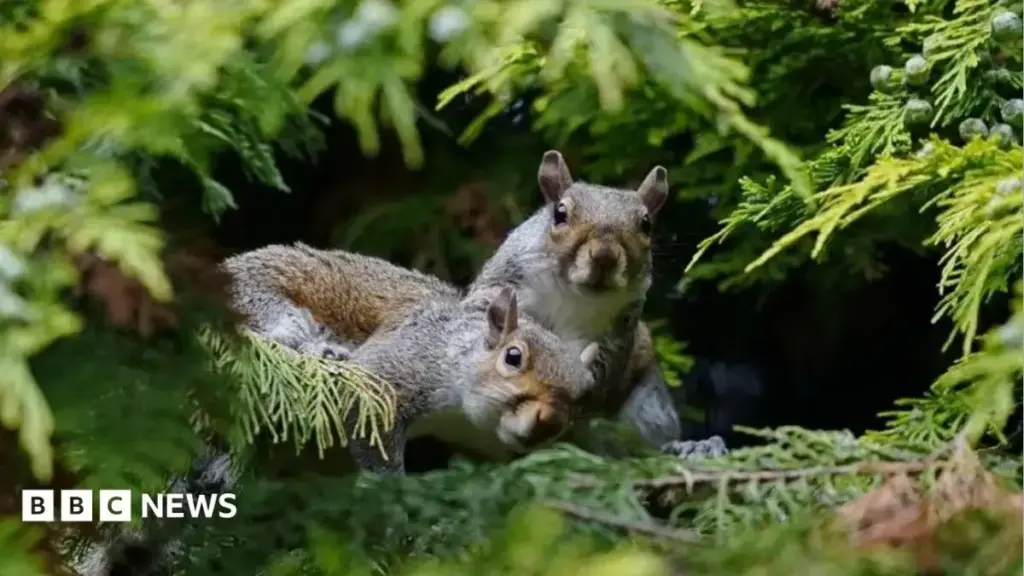
For centuries, the idyllic woodlands of the United Kingdom were defined by the darting, russet-furred silhouette of the native red squirrel (Sciurus vulgaris). Today, however, that familiar flash of autumn color has become an increasingly rare sight across the British landscape. Once numbering an estimated 3.5 million individuals, native red squirrel populations across the UK have plummeted to fewer than 300,000. In stark contrast, their North American cousin, the invasive eastern grey squirrel (Sciurus carolinensis), continues to expand its dominance, now numbering between 2.5 million and 2.7 million nationwide.
This profound ecological shift is not merely a numbers game; it represents a slow-moving environmental tragedy. Conservation groups, including the Woodland Trust and the Save Our Reds campaign, paint an alarming picture of survival in England, where as few as 15,000 to 39,000 red squirrels may remain. With recent warnings suggesting that remaining pockets of red squirrels in northern England could be wiped out entirely within the next 25 years, the UK stands at a critical crossroads.
At the heart of this ecological crisis lies a complex web of habitat loss, fatal disease transmission, and interspecies competition. Yet, as conservationists, government agencies, and scientists lock horns over the best path forward, a glimmer of hope emerges from modern technological trials and nature-based solutions. From specialized oral contraceptives designed to outsmart invasive rodents to the clever reintroduction of native apex predators, the battle for Britain’s trees has entered its most desperate—and innovative—chapter.
Detailed Chronology: How the North American Invader Conquered Britain
To understand how Britain’s native woodlands were reshaped, one must look back nearly two centuries to a time when globalization and Victorian botanical enthusiasm inadvertently set the stage for an ecological catastrophe.
The 19th Century: The Fatal Imports
While occasional historical accounts suggest minor introductions of foreign wildlife earlier in British history, the definitive turning point for the grey squirrel arrived during the mid-to-late 19th century. During the height of the British Empire, exotic flora and fauna became fashionable status symbols among the Victorian elite, who sought to embellish their sprawling country estates with novel wildlife from abroad.
The first verifiable importation of grey squirrels into Britain is widely traced back 150 years. According to historical records, a wealthy Victorian banker named Thomas V. Brocklehurst returned from a business trip to the United States with a pair of eastern grey squirrels. In an act that would have unintended and generational consequences, Brocklehurst released these two animals into Henbury Park, near Macclesfield in Cheshire.
Unbeknownst to the Victorians, the North American grey squirrel possessed biological advantages that the native red squirrel—evolved alongside the Caledonian pine forests and isolated island ecosystems—was entirely unprepared to handle. Over the subsequent decades, wealthy landowners across England, Scotland, and Wales followed suit, releasing more pairs of greys onto their estates. By the turn of the 20th century, isolated populations had established themselves in the wild, beginning a slow, relentless outward migration.
The Mid-20th Century: The Tipping Point
By the middle of the 20th century, the ecological writing was on the wall. What began as a novelty addition to stately home parks morphed into an unstoppable wave. As the twentieth century progressed, grey squirrels swept across the English midlands, pushing relentlessly northward into Scotland and westward into Wales.
During this period, the red squirrel population suffered catastrophic declines. The introduction of the invasive species coincided with widespread post-war forestry changes and commercial timber planting, which heavily favored the adaptable grey. By the late 20th century, red squirrels were largely excised from the lowlands of England, retreating into isolated strongholds such as the island of Anglesey, the Scottish Highlands, parts of Cumbria, Northumberland, and the Merseyside dunes at Formby.
The 21st Century: The Race Against the 25-Year Clock
Entering the 21st century, the plight of the red squirrel transitioned from an environmental footnote to a high-priority conservation emergency. In May, specialized regional campaigns warned that red squirrels—which still desperately "cling on" in fragmented habitats across northern England—face functional extinction within a quarter of a century if aggressive intervention strategies fail. Today, the demographic gap is staggering: for every single red squirrel struggling to survive in the British wild, there are roughly ten to twelve grey squirrels occupying the same geographical footprint.
Supporting Context & Metrics: The Mechanics of Displacement
The numerical collapse of the red squirrel is driven by a ruthless biological asymmetry. According to Jackie Foott of the British Red Squirrel conservation group, the core reality of the modern British woodland is absolute: red and grey squirrels simply cannot coexist in the same location over the long term.
The Scale of the Economic and Environmental Damage
While the cultural tragedy of losing the native red squirrel is immeasurable, the physical destruction wrought by the grey squirrel extends far beyond interspecies conflict. Foott describes the grey squirrel as a classic pest species—non-native, highly invasive, and profoundly destructive.
Beyond outcompeting native wildlife, grey squirrels inflict severe economic harm on the UK’s forestry, agricultural, and property sectors. Through their habit of bark-stripping—tearing away the outer bark of mature and semi-mature trees to access the sweet sap underneath—they deform timber, stunt forest growth, and occasionally kill healthy trees outright. Current industry estimates reveal that grey squirrels cause at least £40 million in damages to forests and forestry services across the United Kingdom each year.
Why Reds and Greys Cannot Coexist
The displacement of the red squirrel is governed by two primary mechanisms: resource competition and lethal pathogen transmission.
- Nutritional and Spatial Competition: Grey squirrels are larger, stronger, and more aggressive foragers than reds. They possess a superior ability to digest large quantities of acorns and other heavy mast, and they can store fat reserves more efficiently. Crucially, greys can consume green acorns before they are ripe, depriving red squirrels of crucial autumn food sources long before winter arrives. As Foott notes, "Greys outcompete reds for habitat and food—they don’t actually physically attack them, but they do bother them."
- The Squirrel Pox Catastrophe: Perhaps the most devastating weapon in the grey squirrel’s ecological arsenal is squirrel pox virus (SPV). The grey squirrel acts as an asymptomatic carrier; the virus does not affect them, but they shed it continuously into the environment. When a red squirrel contracts squirrel pox, the results are almost universally fatal, characterized by severe skin lesions, fluid-filled ulcers, lethargy, and eventual blindness that leaves the animal unable to forage or escape predators. An outbreak of squirrel pox can wipe out a localized red squirrel colony within weeks.
Official Statements & Perspectives: Strategies for Survival
As the window to save the red squirrel narrows, conservationists and pest management experts are engaged in intense debate over the most effective methodologies to reverse the tide. The consensus among frontline organizations is as brutal as it is clear: to save the reds, active management of the greys is non-negotiable.
The Harsh Reality of Lethal Control
"To protect the reds, you have to get rid of the greys—we realised that a while ago," states Jackie Foott plainly. For decades, conservation groups have relied on traditional methods of population reduction.
While gene therapy remains a theoretical horizon estimated to be at least a decade away, and broad-scale fertility control methods are currently underdeveloped and risk harming non-target species—including the endangered reds themselves—the immediate frontline defense has relied heavily on conventional means. According to Foott, current operational protocols leave practitioners with limited choices: "For now, the only way is lethal control—by shooting or trapping."
Technological Innovation: The Oral Contraceptive Breakthrough
However, relying solely on shooting and trapping across millions of acres of dense British woodland presents monumental logistical and financial challenges. Recognizing this bottleneck, alternative solutions are rapidly moving from the laboratory to the field.
Graham Paskett of the Red Squirrel Survival Trust (RSST) offers a more optimistic timeline for non-lethal population management, highlighting an innovative field trial currently being co-funded by the Trust and the government’s Animal and Plant Health Agency (APHA).
Set to launch either later this year or early next year, this groundbreaking project introduces a specialized delivery mechanism for grey squirrel oral contraceptives. The system utilizes a specially engineered device known as a "hopper."
The genius of the hopper lies in its weight-discriminating design. Because adult grey squirrels typically weigh around 500 grams—roughly double the weight of the much lighter red squirrel—the access hatch of the hopper is calibrated so that only heavier animals can lift the lid to reach the contraceptive feed inside. This ensures that the native red squirrels remain entirely unaffected by the treatment. If these upcoming field trials prove successful, Paskett hopes that forest rangers, private landowners, and conservation groups will soon be able to deploy the technology on a national scale.
Nature’s Ally: The Return of the Pine Marten
In addition to human-led interventions, conservationists are increasingly turning to rewilding concepts to restore natural balances within British ecosystems. One of the most promising biological allies in the fight against the grey squirrel is the pine marten (Martes martes).
As Foott explains, the reintroduction of the pine marten—a native UK carnivore—has shown remarkable success in suppressing grey squirrel numbers in areas like Scotland and Ireland.
"Because pine martens are a native species in the UK, they evolved together with red squirrels," Foott notes. Over millennia, red squirrels developed sophisticated defensive behaviors alongside pine martens. When a red squirrel detects a pine marten, it recognizes the threat instantly, flees to safety, and emits distinct alarm calls to warn the rest of the colony.
Conversely, the invasive grey squirrel shares no evolutionary history with the pine marten. Lacking innate predator recognition, grey squirrels are slower to react and far more vulnerable to predation. As Foott dryly observes, "The greys are a little bit stupid and will say, ‘Hello, I haven’t seen you before,’ and the pine marten will get them!"
Future Outlook: Can the Red Squirrel Be Saved?
The future of the red squirrel in the United Kingdom hangs in a delicate balance. The trajectory over the last century has been overwhelmingly negative, driven by industrial expansion, globalization, and the unchecked spread of an invasive competitor. Yet, the narrative is far from entirely hopeless.
The coming decade will serve as the ultimate litmus test for British conservation. If government agencies, private landowners, and environmental charities can successfully integrate modern innovations—such as weight-selective oral contraceptives and strategic predator reintroductions—with ongoing localized culling efforts, the tide may finally turn.
Without these aggressive, multi-pronged interventions, Britain risks losing one of its most charismatic and beloved native mammals forever, reducing the red squirrel to little more than a historical footnote in children’s literature and archival photographs. But with concerted political will, scientific ingenuity, and public support, the red squirrel just might reclaim its rightful place among the oak and pine canopies of the British Isles, ensuring that future generations can still witness the fleeting flash of rust-colored fur in the wild.



