

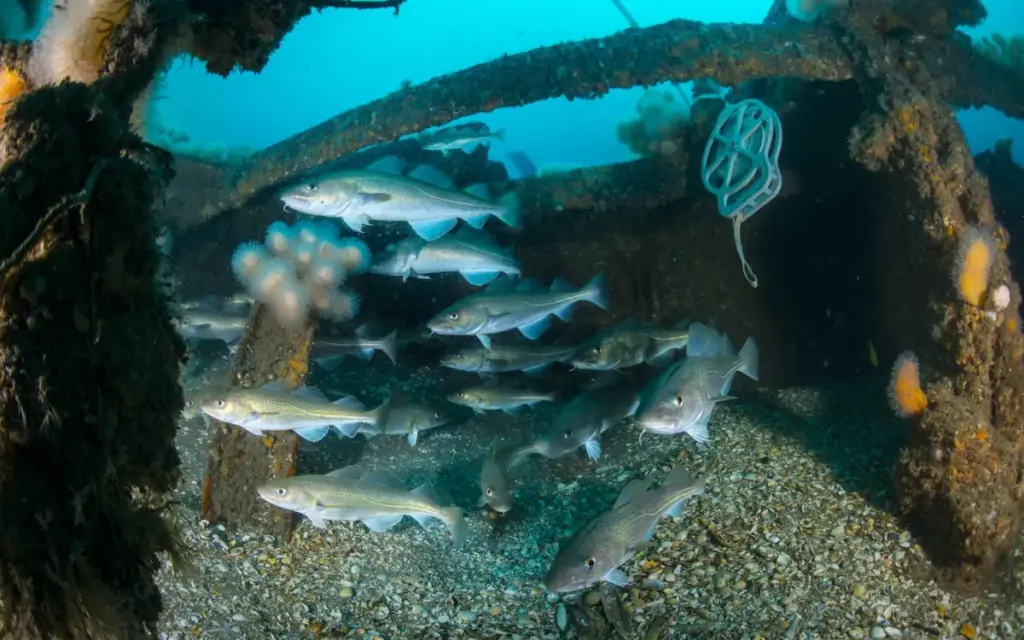
LONDON — In a damning indictment of decades of political expediency and environmental mismanagement, independent marine scientists have issued a stark warning for the future of British fisheries. For the second consecutive year, the International Council for the Exploration of the Sea (ICES) has officially recommended a complete zero-catch limit for Northern Shelf cod in 2027.
Once the crown jewel of the United Kingdom’s commercial fishing industry and the undisputed centerpiece of the nation’s culinary identity, the Northern Shelf cod population is now hovering on the precipice of ecological collapse. Despite unprecedented scientific warnings issued last year calling for a total commercial shutdown, fishing pressure has persisted, driven by quotas set stubbornly above sustainable thresholds.
The latest recommendation is not an isolated crisis. It forms part of a wider, alarming trend that has seen three of the UK’s four primary cod stocks classified as requiring absolute zero-catch limits. Conservationists, marine biologists, and industry analysts warn that this systemic failure threatens not only the marine ecosystem but also the socio-economic fabric of coastal communities, the viability of small businesses, and the cultural tradition of the British fish and chip shop.
Executive Overview: A National Fishery in Freefall
The Northern Shelf cod stock inhabits a sprawling and vital marine territory encompassing the North Sea, the waters west of Scotland, the eastern English Channel, and the Skagerrak. Historically, this fishery yielded bountiful harvests, supporting a robust domestic market and anchoring local economies across coastal Britain. Today, however, it represents a cautionary tale of environmental degradation accelerated by political short-sightedness.
When scientific bodies like ICES recommend a zero catch, it is never done lightly. Such severe measures are reserved exclusively for fish stocks that have fallen into an exceptionally poor and vulnerable state, where any level of directed fishing threatens to permanently impair reproduction and recovery.
The fact that three of the UK’s four distinct cod stocks now trigger this emergency threshold exposes deep structural flaws in post-Brexit fisheries management. Despite explicit legal mandates to fish sustainably, the gap between scientific evidence and government policy has widened. In 2026 alone, an astonishing 58% of UK fishing opportunities were set above scientific recommendations, directly undermining years of fragile, incremental progress toward marine stewardship.
Detailed Chronology and Stock Breakdown: Anatomy of a Collapse
To understand how one of the world’s most resilient marine species was driven to the edge, it is necessary to examine the composition of the Northern Shelf cod stock and the timeline of its deterioration.
The Northern Shelf cod complex is subdivided into three distinct biological populations:
- The Southern Population: Inhabiting the lower reaches of the range, this sub-stock has suffered the most catastrophic depletion. It has fallen well below critical biological limits, raising fears that it has lost the reproductive capacity required to sustain itself.
- The Northwestern Population: Ranging across the western waters, this group has experienced severe and continuous contractions.
- The Viking Population: Situated further north, this sub-stock has historically been more robust, but is now showing alarming downward trends.
Because these three populations naturally mix across their geographic ranges and are frequently caught together during mixed-fishery operations, targeted or incidental harvesting of one inevitably impacts the others. Consequently, ICES has concluded that any continuation of fishing poses an unacceptable, systemic risk to the recovery of the entire stock complex.
The Statistical Reality of Decline
Recent scientific assessments reveal the staggering scale of the collapse over the past decade:
- Southern Region: Cod populations have plummeted by 52% since 2016.
- Northwestern Region: Stocks have dropped by 53% over the same timeframe.
- Viking Region: Numbers have contracted by 37% since 2016.
This downward spiral did not occur overnight. It is the cumulative result of decades of overfishing, delayed management interventions, and a persistent political culture that favors short-term economic appeasement over long-term biological sustainability. Year after year, advisory limits formulated by marine biologists have been systematically overridden or inflated during annual quota negotiations, setting the stage for the crisis unfolding today.
Supporting Context & Metrics: Economic and Cultural Fallout
While the ecological consequences of cod depletion are clear, the ripples of this crisis are now reaching deep into the British economy, fundamentally altering everyday life for businesses and consumers.
The Fish and Chip Shop Crisis
Perhaps the most visceral manifestation of the cod crisis is felt in the nation’s thousands of independent fish and chip shops. Cod has traditionally been the default choice for Britain’s most iconic takeaway meal. However, skyrocketing wholesale prices and dwindling domestic supplies have placed unprecedented pressure on small business profit margins.
To survive, many shop owners have been forced to pass rising costs onto consumers, driving up the average price of fish and chips across the UK. More alarmingly, because local waters can no longer supply the demand, a growing proportion of the cod served in British eateries is imported from overseas fisheries, stripping away the traditional provenance that defined the trade.
The Broader Economic Toll
Fisheries economists emphasize that the collapse of a major stock like Northern Shelf cod is a lose-lose scenario for all stakeholders:
- Fishers: Face shrinking quotas, reduced catches, and mounting financial insecurity.
- Supply Chains and Processing Businesses: Struggle with volatile raw material costs and reduced throughput.
- Consumers: Confront a dwindling selection of affordable, sustainably sourced domestic seafood.
Climate Security and Marine Resilience
The crisis also intersects with broader national security and environmental priorities. The UK Department for Environment, Food and Rural Affairs (Defra) has repeatedly acknowledged that nature and climate security are fundamentally intertwined with national security. A healthy, biodiverse ocean is the planet’s primary defense against climate change, acting as a crucial carbon sink and buffering against environmental shocks.
However, overexploited marine ecosystems lose their ecological resilience. When apex predators and key commercial species like cod are systematically removed, marine food webs destabilize, leaving the broader ocean environment increasingly vulnerable to warming waters, acidification, and other climate-driven pressures. A resilient ocean, scientists argue, is structurally dependent on robust, healthy fish populations.
Official Statements and Expert Perspectives
The persistence of zero-catch advice for a second consecutive year has galvanized conservation organizations and policy advocates, who are demanding an urgent pivot in government strategy.
Jonny Hughes, Fisheries Policy Lead at the Blue Marine Foundation, did not mince words when addressing the political roots of the crisis:
"A second consecutive year of zero-catch advice should be a wake-up call. Northern Shelf cod did not collapse overnight. It is the result of years of political decisions that repeatedly allowed catches to exceed scientific recommendations."
Hughes emphasized that the path forward requires a fundamental shift in political will rather than technological innovation or further debate over the data:
"The choice facing governments is simple: continue with business as usual, or prioritize recovering this iconic species. The future of our seas and our fishing communities depend on getting this right. It is remarkable that we have access to some of the best fisheries science in the world—science that tells us exactly how to fish sustainably while securing the greatest long-term benefits for fishing communities, food security, and the economy—yet we continue to disregard it."
Connecting the ecological emergency to the broader climate conversation, Hughes added:
"At a time when the Government rightly recognizes that the climate crisis is already affecting our lives, it must also recognize that resilience to these challenges depends on a healthy and resilient ocean. Healthy fish populations are a fundamental part of that."
Future Outlook: A Critical Juncture for UK Waters
As policymakers prepare for upcoming quota negotiations and environmental reviews, the UK stands at a definitive crossroads. The advice from ICES provides a clear, scientifically validated roadmap for recovery, but following it requires immense political courage.
Allowing stocks like Northern Shelf cod to rebuild will necessitate short-term sacrifices, including stringent management measures, restricted fishing areas, and robust financial support packages for displaced fishing communities. Yet, industry experts argue that these sacrifices pale in comparison to the permanent, irreversible cost of inaction.
If current management practices persist—characterized by a reliance on political expediency and quotas detached from ecological reality—the UK risks witnessing the functional extinction of native cod populations within commercial waters. Such an outcome would not only erase a vital chapter of Britain’s maritime heritage but also deal a severe blow to marine biodiversity, coastal economies, and food security.
The science is definitive, the warnings are clear, and the timeline for intervention is rapidly narrowing. Whether the government possesses the resolve to align policy with nature will determine the ultimate fate of Britain’s seas for generations to come.



