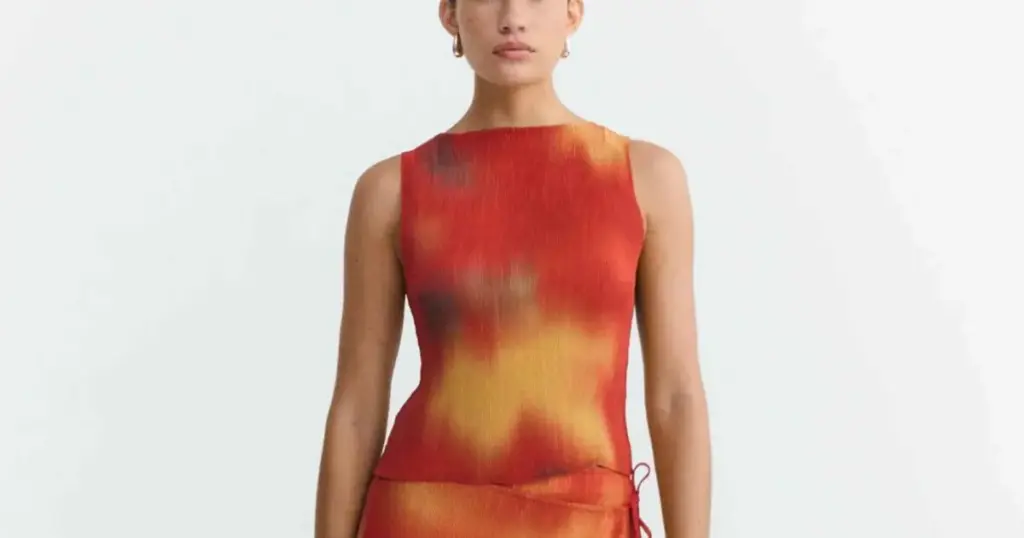
Editor’s Note: The following editorial is curated by Good On You’s investigative sustainability desk. Our team evaluates global fashion houses against rigorous, multi-tiered criteria assessing their direct impacts on people, the planet, and animal welfare. Purchases made via our embedded links may generate a cooperative commission, directly fueling our ongoing advocacy and independent research.
Executive Overview
For decades, the sustainable fashion movement faced a persistent, pervasive aesthetic bottleneck: the "beige trap." Early iterations of eco-conscious clothing were inextricably linked to unbleached cotton, raw linen, and a monotonous palette of oatmeal, stone, and what the industry colloquially termed greige. This minimalist asceticism, while noble in its rejection of synthetic chemical dyes, inadvertently created a false dichotomy. Consumers were left to choose between the vibrant, dopamine-inducing hues of fast fashion—with all its devastating environmental and social external costs—or a lifetime of muted, earth-toned neutrality in the name of ecological responsibility.
That paradigm has officially shattered.
Today, a new vanguard of global, highly rated sustainable brands is proving that environmental ethics and chromatic vibrancy are not mutually exclusive. Spanning every shade of the visible light spectrum, these labels harness advanced closed-loop systems, botanical and low-impact reactive dyes, and innovative upcycling methodologies to inject bold expression back into conscious wardrobes.
This comprehensive review investigates the shifting landscape of colorful sustainable fashion. We analyze how top-tier, "Good" and "Great"-rated enterprises across the globe are engineering vivid wardrobes without compromising the planet. From upcycled vintage rompers in New Mexico to naturally dyed selvedge denim in Japan, we break down the definitive global brands proving that sustainability is technicolour.
Detailed Chronology: The Evolution of Colour in Eco-Fashion
To understand how the sustainable fashion industry arrived at its current explosion of color, it is necessary to examine the historical trajectory of textile dyeing and the hurdles overcome by ethical pioneers.
[Early 2000s: The "Greige" Era]
       │
       ▼ (Rise of primitive eco-fashion prioritizing unbleached, raw aesthetics)
[2010s: The Rise of Transparency & Certification]
       │
       ▼ (GOTS & OEKO-TEX standards emerge, making non-toxic dyeing viable)
[2020s: The Dopamine & Upcycling Revolution]
       │
       ▼ (Global labels integrate bold palettes, deadstock, and natural dyes)
[Present Day: Technicolour Circularity]
Phase 1: The Raw and Undyed Origins (Early 2000s)
In the nascent stages of the ethical fashion movement, avoiding synthetic dyes was a primary defense mechanism against water pollution. Conventional textile dyeing is notorious for consuming immense volumes of freshwater and discharging toxic effluent laden with heavy metals, formaldehyde, and azo dyes directly into municipal waterways in the Global South. To circumvent this, early green brands defaulted to raw fibers. The result was an endless sea of beige, cream, and undyed brown wools.
Phase 2: The Rise of Non-Toxic Certifications (2010s)
As consumer demand for ethical alternatives surged, independent standard-bearers like the Global Organic Textile Standard (GOTS) and OEKO-TEX stepped in to regulate chemical inputs. Brands realized that sustainability did not mean abandoning color altogether; rather, it required a fundamental shift in how color was achieved. Closed-loop water systems, heavy-metal-free reactive dyes, and botanical colorants began to replace hazardous industrial baths.
Phase 3: The Dopamine and Upcycling Revolution (2020–Present)
Post-pandemic consumer psychology shifted dramatically toward dopamine dressing—using bright, saturated colors to boost mood and personal expression. Concurrently, pioneering designers recognized that pre-existing textiles (deadstock fabrics, vintage saris, and post-consumer waste) already possessed rich, vibrant dye jobs. Instead of creating new colors from scratch, brands began intercepting waste streams, giving rise to an era of high-impact, hyper-colorful circular fashion.
Supporting Context & Metrics: The Mechanics of Sustainable Colour
Achieving vivid color profiles while maintaining high environmental standards requires deep supply chain innovation. The Good On You ratings framework evaluates brands across three core pillars: Planet, People, and Animals. When evaluating colorful brands, our methodology focuses heavily on the Planet pillar, specifically chemical management, water stewardship, and waste reduction.
The Problem with Conventional Dyes
The World Bank estimates that roughly 20% of global industrial wastewater pollution comes from textile dyeing and treatment. Synthetic azo dyes, commonly used for their brilliance and colorfastness, can break down into carcinogenic amines when exposed to certain environmental conditions. Furthermore, traditional reactive dyeing requires massive saline fixing agents, leaving high concentrations of salt in wastewater that devastates local agricultural soil if untreated.
The Sustainable Alternative: Closed-Loop Systems and Plant Dyes
Highly rated brands mitigate these impacts through several key interventions:
- Closed-Loop Water Filtration: Utilizing machinery that captures, purifies, and recycles up to 98% of dye-house water on a continuous loop.
- Low-Impact Reactive Dyes: Utilizing dyes that bond efficiently with cellulose fibers, requiring less salt and lower temperatures, resulting in significantly reduced energy consumption.
- Agricultural and Food Waste Dyes: Sourcing pigments from renewable, non-food agricultural biomass, such as apple peels, grape stalks, and discarded floral offerings.
Global Brand Directory: Your Guide to Vibrant, Responsible Fashion
Our editorial team has curated an expansive global directory of brands rated "Good" or "Great." Below is an in-depth look at sixteen standout labels proving that conscious style is a spectrum.
1. OMNES (United Kingdom)
- Aesthetic & Mission: OMNES bridges the gap between high-street accessibility and rigorous environmental accountability, crafting chic, contemporary womenswear in a wide array of vibrant colorways. Their philosophy centers on reshaping how consumers think about, purchase, and wear clothing.
- Size Range: UK 6–20.
- Sustainability Focus: Lower-impact materials and a transparent supply chain.
2. Printfresh (United States)
- Aesthetic & Mission: Founded in 2016 by textile designer Amy Voloshin and Leo Voloshin, Printfresh is a majority woman-owned enterprise celebrated for its vivacious sleepwear, apparel, and lifestyle goods. Heavily inspired by botanical illustrations, fauna, and eclectic home decor, their prints burst with tropical and saturated tones.
- Size Range: 2XS–6XL.
- Sustainability Focus: Organic and low-impact textiles with ethical production partnerships.
3. I was a Sari (India)
- Aesthetic & Mission: Transforming traditional Indian heritage into modern global streetwear, I was a Sari is a masterclass in circular design. The brand repurposes pre-loved saris and industrial deadstock fabrics into contemporary, vibrantly patterned dresses, jumpsuits, and accessories.
- Size Range: S–L.
- Sustainability Focus: Upcycling, artisan empowerment, and zero-waste initiatives.
4. Up-Fuse (Egypt)
- Aesthetic & Mission: Operating out of Cairo, Up-Fuse is a social enterprise rooted in the ethos that "one person’s trash is another’s fabric." They transform single-use plastics into colorful, durable accessories and apparel lines.
- Sustainability Focus: Social impact, employing and empowering female refugees from Syria, Ethiopia, and Sudan.
5. Conscious Step (United States)
- Aesthetic & Mission: Proving that foundational basics don’t have to be boring, Conscious Step designs premium organic vegan socks and casual wear featuring bold patterns and rich color palettes, with each collection directly supporting partner charities.
- Size Range: Socks: S–L; Apparel: 2XS–2XL.
- Sustainability Focus: Fair Trade Certified, organic cotton, and transparent charitable giving.
6. Ucon Acrobatics (Germany)
- Aesthetic & Mission: Delivering minimalist yet functionally innovative accessories for urban creatives, this German label champions clean lines paired with striking, saturated colorways.
- Sustainability Focus: High proportion of eco-friendly materials, organic cotton, renewable energy integration in direct operations, and guaranteed living wages.
7. Loop Swim (United States / India / China)
- Aesthetic & Mission: Co-founded by women spanning multiple continents, Loop Swim closes the loop on marine plastic pollution by converting post-consumer plastic bottles into high-performance, UP50+ sun-protective swimwear that retains its vibrant color season after season.
- Size Range: XS–XL.
- Sustainability Focus: Circular economy, REPREVE recycled fibers, and trendless durability.
8. Amble Outdoors (Australia)
- Aesthetic & Mission: Formerly known as Team Timbuktu, this Australian label manufactures high-performance raincoats and activewear in vivid, nature-inspired hues, crafted entirely from recycled plastic bottles.
- Size Range: XS–4XL.
- Sustainability Focus: Waste reduction and local Australian manufacturing partnerships.
9. SUI (India)
- Aesthetic & Mission: Based out of Delhi, SUI creates gorgeous, flowing womenswear infused with earthy warmth and sunset hues, bringing a gentle, artful approach to conscious fashion.
- Size Range: 2XS–2XL.
- Sustainability Focus: Local artisan workshops and lower-impact fabrics.
10. 4kinship (United States)
- Aesthetic & Mission: Founded by Diné creative Amy Denet Deal, 4kinship is a BIPOC-owned, community-focused brand specializing in upcycled vintage restoration and vibrant handwoven garments that celebrate indigenous resilience and color.
- Sustainability Focus: Community and youth empowerment, including direct contributions to initiatives like the Diné Skate Garden Project.
11. Mightly (United States)
- Aesthetic & Mission: Bringing bright, durable clothing to the children’s market, Mightly produces GOTS-certified organic cotton tees, leggings, and hoodies designed to endure active play while maintaining vibrant color integrity.
- Sustainability Focus: Fair Trade USA certified facilities and rigorous organic standards.
12. amt. studio (Spain)
- Aesthetic & Mission: Operating out of Spain, amt. studio champions local manufacturing and circular design, creating dynamic, colorful silhouettes from recycled materials.
- Size Range: XS–L.
- Sustainability Focus: Localized supply chains and recycled material integration.
13. ID.EIGHT (Italy)
- Aesthetic & Mission: Born from the collaboration of footwear veterans Dong Seon Lee and Giuliana Borzillo, ID.EIGHT crafts refined, colorful sneakers in Italy using innovative low-impact materials derived from food industry waste—specifically apple peels, grape stalks and seeds, and pineapple leaves.
- Size Range: EU 36–46.
- Sustainability Focus: Bio-based vegan leathers, agricultural waste valorization, and recycled cotton/polyester blends.
14. The Summer House (India)
- Aesthetic & Mission: Specializing in flowing silhouettes and elegant prints, The Summer House partners with local Indian artisans and non-governmental organizations to craft womenswear from locally sourced, lower-impact fabrics.
- Size Range: XS–XL.
- Sustainability Focus: Artisan support and regional textile preservation.
15. Spell (Australia)
- Aesthetic & Mission: Inspired by vintage treasures and distant landscapes, Byron Bay-based Spell designs bohemian-infused, hyper-colorful collections that prioritize responsible manufacturing across global supply chains.
- Size Range: 2XS–2XL.
- Sustainability Focus: Traceable fibers, circular design initiatives, and ethical factory partnerships.
16. The ANJELMS Project (Australia)
- Aesthetic & Mission: Focused squarely on maker welfare, this Australian project works with traditional artisans in India to create naturally dyed, hand-loomed garments in limited production runs to minimize waste.
- Size Range: XS–2XL.
- Sustainability Focus: Natural plant dyes, hand-looming techniques, and direct livelihood enhancement for makers.
Official Industry Statements & Expert Insights
The transition toward vibrant sustainability has drawn commentary from leading voices across the global textile industry:
"There has long been a false narrative that caring for the planet requires an ascetic, joyless wardrobe. Color is a vital component of human expression and cultural identity. By innovating within our dyeing and upcycling systems, we are demonstrating that ethical fashion can—and should—be bursting with life."
— Dr. Elena Vance, Senior Textile Technologist & Sustainable Materials Researcher"When we launched our ratings directory, our primary goal was to give consumers the clarity they need to vote with their wallets. The influx of ‘Good’ and ‘Great’-rated brands specializing in bold, saturated palettes proves that the market has evolved. You no longer have to sacrifice personal style to align with your environmental values."
— Good On You Editorial Directorate
Future Outlook: What’s Next for Colourful Sustainable Fashion?
As we look toward the horizon of 2030 and beyond, several key technological and regulatory trends are poised to transform how color is integrated into sustainable wardrobes:
- Cellulose Biotechnology & Microbial Dyes: Researchers are currently scaling biological pigmentation processes. By utilizing engineered microbes, fungi, and algae to produce pigments through fermentation, the industry is moving toward a future where clothing can be dyed without petrochemicals, heavy metals, or arable land use.
- Digital Color Matching and On-Demand Manufacturing: Brands like Japan’s 9-jour are pioneering zero-waste, made-to-order manufacturing models. By pairing digital textile printing with localized, on-demand production, brands can offer infinite color options without the massive deadstock inventory risks that plague traditional retail.
- Stricter Global Legislation: As upcoming Extended Producer Responsibility (EPR) laws and chemical regulations take effect across the EU, US, and Asia, toxic dye usage will face severe legal penalties. This regulatory tightening will force laggard fast-fashion giants to adopt the exact closed-loop color systems that sustainable pioneers have championed for years.
Conclusion: Wear Your Values in Full Technicolour
The myth of the monochromatic eco-warrior has officially been put to rest. Thanks to a global network of innovative designers, artisan collectives, and circular pioneers, your wardrobe can be simultaneously ethical, sustainable, and extravagantly colorful.
Whether you choose to make a bold statement with upcycled vintage rompers from 4kinship, invest in plant-dyed selvedge denim from 9-jour, or ground your neutral wardrobe with an injection of vibrant accessories, conscious consumerism has never looked more alive.
To explore over 6,000 rated brands, verify sustainability metrics, and discover ethical alternatives tailored to your style, download the Good On You app or visit our comprehensive brand directory.