

Executive Overview
For decades, the global energy transition has labored under a stubborn paradox: hydrogen is widely heralded as the ultimate zero-carbon fuel of the future, yet producing it cleanly in the present requires staggering amounts of energy and capital. Traditional methods—whether splitting water via electrolysis powered by renewable grids or reforming natural gas—frequently generate heavy greenhouse gas emissions or demand more energy input than the resulting fuel can yield.
However, a paradigm shift is quietly unfolding beneath our feet. A growing vanguard of geochemists, deep-earth researchers, and venture-backed startups are bypassing industrial manufacturing entirely. Instead, they are hunting for a primordial, naturally occurring resource: geologic hydrogen.
Deep within the Earth’s ancient crust, continuous geochemical processes are quietly generating vast underground reservoirs of pure hydrogen gas ($H_2$). Recent estimates by the U.S. Geological Survey (USGS) suggest that trillions of tons of hydrogen may be trapped within the Earth’s crust. If even a tiny fraction of this subterranean treasure can be safely and economically recovered, it could satisfy global hydrogen demand for centuries, fundamentally rewriting the economics of clean energy.
Yet, translating scientific discovery into commercial reality remains a formidable trial of engineering and detective work. While exploration startups like Koloma (backed by Bill Gates) and HyTerra scour ancient continental rifts and oceanic rock formations, researchers are tallying up natural emissions from unexpected places—such as deep mining operations in Canada and Albania. At the same time, experimental projects in Oman are attempting to artificially stimulate hydrogen production by injecting water deep into reactive bedrock.
As the race for natural hydrogen accelerates, the primary challenge is no longer proving that the gas exists deep underground. Rather, it is determining whether humanity can capture, scale, and commercialize Earth’s hidden breath without repeating the costly pitfalls of past energy booms.
Detailed Chronology: From Subterranean Brines to the Global Energy Race
The journey toward understanding geologic hydrogen spans decades of academic persistence, transforming what was once considered a scientific curiosity into one of the most hotly pursued frontiers in energy exploration.
1. The 1990s: The Kidd Creek Discovery
In the mid-1990s, geochemist Barbara Sherwood Lollar descended more than three kilometers beneath the surface into the Kidd Creek mine in northern Ontario, Canada. Carved deep into the ancient Canadian Shield—the geological core of North America—the mine exposes rocks that have been isolated from the surface for billions of years.
There, Sherwood Lollar and her team made a startling discovery: ancient, highly saline brines trapped in rock fractures for over a billion years. Crucially, these subterranean waters were teeming with chemolithotrophic microbes—living organisms that survived entirely independently of sunlight by feeding on hydrogen gas. This hydrogen was not remnants of ancient biological life, but rather the product of continuous inorganic chemical reactions between water and iron-rich rocks, as well as the radioactive decay of surrounding elements.
2. The 2010s to 2020s: Revisiting the Data and the Global Rush
For many years, the presence of hydrogen in deep mines like Kidd Creek was viewed primarily as a microbiological or safety concern rather than an energy resource. However, as the global urgency to decarbonize intensified, Sherwood Lollar—now a professor at the University of Toronto—decided to look back at decades of accumulated data. Collaborating with colleague Oliver Warr, she began asking a transformative question: Is there enough hydrogen continuously venting from these subterranean boreholes to serve as a viable source of zero-carbon fuel?
Simultaneously, independent discoveries began popping up globally. In 2024, a team of researchers led by Laurent Truche at the University of Grenoble Alpes in France reported that an astonishing 200 metric tons of natural hydrogen were escaping annually from the Bulqizë chromium mine in Albania.
These findings triggered a massive wave of private exploration. Dozens of venture-backed startups and established energy players launched expeditions worldwide. Firms like HyTerra and Koloma began targeting the U.S. Midwest and other global geological sutures—areas characterized by ancient oceanic rocks (ophiolites) and continental rifts known to catalyze hydrogen generation.
3. 2025 and Beyond: The Stimulation Frontier and Field Trials
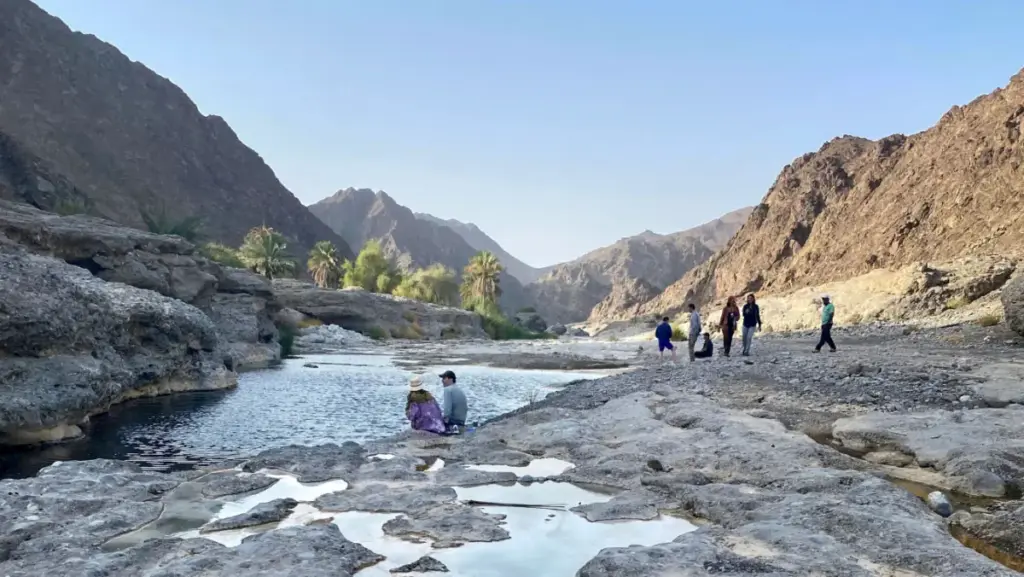
By early 2025, the race moved from passive observation to active intervention. Researchers began testing whether natural hydrogen production could be artificially accelerated. In a milestone experiment in the mountains of Oman, a scientific team drilled a one-kilometer borehole and injected 50,000 cubic meters of water into the reactive, iron-rich peridotite rock below.
When the well was unsealed several months later, it roared to life, spewing a pressurized gas mixture composed of 90% hydrogen. This dramatic proof-of-concept demonstrated that humanity might not just find natural hydrogen reservoirs—we might be able to manufacture them on demand by stimulating deep-earth geochemistry.
Supporting Context & Metrics: Quantifying Earth’s Invisible Fuel
To understand the potential of geologic hydrogen, one must examine the hard numbers emerging from recent scientific literature and geological surveys.
The Scale of the Subterranean Resource
- Trillions of Tons: According to recent assessments by the U.S. Geological Survey, the Earth’s crust harbors vast, virtually untapped reserves of $H_2$. Recovering even a low single-digit percentage of this inventory could sustain global energy demand for hundreds of years.
- The Kidd Creek Metrics: Analyzing data collected across 35 boreholes at the Kidd Creek mine over a decade, Sherwood Lollar and Warr discovered that each borehole consistently released an average of eight kilograms of hydrogen per year.
- Ventilation Potential: When extrapolated across Kidd Creek’s more than 14,000 boreholes, this data reveals that approximately 140 metric tons of pure hydrogen flow completely unused out of the mine’s ventilation systems annually. While this specific volume is not large enough to transform global energy markets overnight, Sherwood Lollar notes it is more than sufficient to power a substantial portion of the mine’s own daily operations.
- The Albanian Benchmark: Complementing the Canadian data, the Bulqizë mine in Albania vents at least 200 metric tons of natural hydrogen each year, cementing the reality that deep underground fluid migrations are globally widespread.
The Physics and Chemistry of Generation
Natural hydrogen is born through two primary geological mechanisms:
- Serpentinization: When water comes into contact with iron-rich, mantle-derived rocks (such as olivine) at high temperatures and pressures, it oxidizes the iron. This chemical reaction strips oxygen from water molecules ($H_2O$), leaving behind free molecular hydrogen ($H_2$).
- Radiolysis: In ancient, stable crustal environments like the Canadian Shield, the radioactive decay of elements like uranium, thorium, and potassium splits water molecules apart, continuously generating background concentrations of hydrogen and oxygen.
The ARPA-E Acceleration Target
To make engineered or stimulated geologic hydrogen commercially viable, the U.S. Advanced Research Projects Agency-Energy (ARPA-E) has launched funding initiatives aimed at accelerating the natural serpentinization reaction rate. The agency’s stated goal is ambitious: to speed up underground hydrogen-producing chemical reactions by a factor of 10,000, which researchers calculate is the threshold required for industrial-scale economic viability.
Official Statements and Expert Perspectives
As the geologic hydrogen sector transitions from academic theory to corporate strategy, leading scientists and researchers are weighing in on both the immense promise and the remaining hurdles.
"If we can set some smart minds into figuring out how to hook it up and use it, then we’ve got a win for this nascent economy."
— Dr. Barbara Sherwood Lollar, Geochemist, University of Toronto
Sherwood Lollar emphasizes that capturing localized, escaping emissions from existing infrastructure—such as mines—offers an invaluable stepping stone. It provides a practical, localized demonstration that geologic hydrogen can be safely harvested and integrated into industrial workflows.
"The remaining challenge is not proving that natural hydrogen exists, but proving that it can be produced economically and reliably at commercial scale."
— Dr. Laurent Truche, Geochemist, University of Grenoble Alpes
Truche highlights the core commercial bottleneck facing startups today. While geological mapping and gas-sniffing expeditions have successfully confirmed that hydrogen is bubbling up in dozens of locations worldwide, translating those geological anomalies into steady, profitable supply chains remains unproven.
"It’s bubbling with gas… though a slew of unknowns remain. The most crucial question is a basic one: Is the hydrogen rising up out of the well made through stimulation, or had it been there all along?"
— Dr. Jo Shannon, Geoscientist, University of Southampton
Reflecting on the successful Oman borehole experiment, Shannon struck a note of scientific caution. While the recovery of gas that was 90% hydrogen is undeniably thrilling, distinguishing between newly stimulated production and the release of pre-existing, trapped pockets of ancient gas is paramount for designing predictable industrial extraction techniques.
Future Outlook: Challenges and the Road Ahead
The prospect of tapping into a self-renewing, clean-burning energy source directly from the Earth’s crust is intoxicating. However, the path from scientific curiosity to mainstream energy commodity is fraught with significant hurdles.
1. The Data Drought and Commercial Secrecy
Unlike the oil and gas sector, where historical seismic data and regulatory reporting standards are well-established, the geologic hydrogen industry is currently characterized by intense secrecy. Because dozens of early-stage startups and venture-backed firms are jockeying for position and seeking capital investment, public data regarding actual exploratory finds remains scarce. Until transparency improves, independent validation of reserve sizes will lag behind corporate claims.
2. Infrastructure and Transport Bottlenecks
Hydrogen is notoriously difficult to handle. As the lightest element in the universe, it leaks easily through microscopic pores in standard pipelines, causes metal embrittlement, and requires extreme compression or cryogenic temperatures for transport. Even if a massive geologic reservoir is successfully tapped, building the requisite transport and distribution infrastructure will require monumental capital investments.
3. Environmental and Regulatory Unknowns
While geologic hydrogen promises a zero-carbon footprint at the point of combustion, large-scale drilling and well stimulation carry environmental risks. Injecting water and chemical catalysts deep into tectonic fault lines or complex rock formations requires rigorous oversight to prevent induced seismicity or the contamination of deep underground aquifers.
Conclusion
The hunt for Earth’s hidden fuel has officially moved from the fringes of academic geology into the spotlight of the global energy transition. Whether through capturing the fugitive gases venting from historic mines in Canada and Albania or engineering the next generation of stimulated wells in the mountains of Oman, the evidence is clear: the Earth is actively manufacturing hydrogen beneath our feet.
The ultimate success of geologic hydrogen will not depend on whether the resource exists—the planet has already proven that it does in abundance. Instead, success will hinge on human ingenuity: the ability of geologists, engineers, and policymakers to answer the fundamental questions of scale, safety, and economics, finally unlocking the limitless potential of Earth’s deep-earth breath.



