

Executive Overview
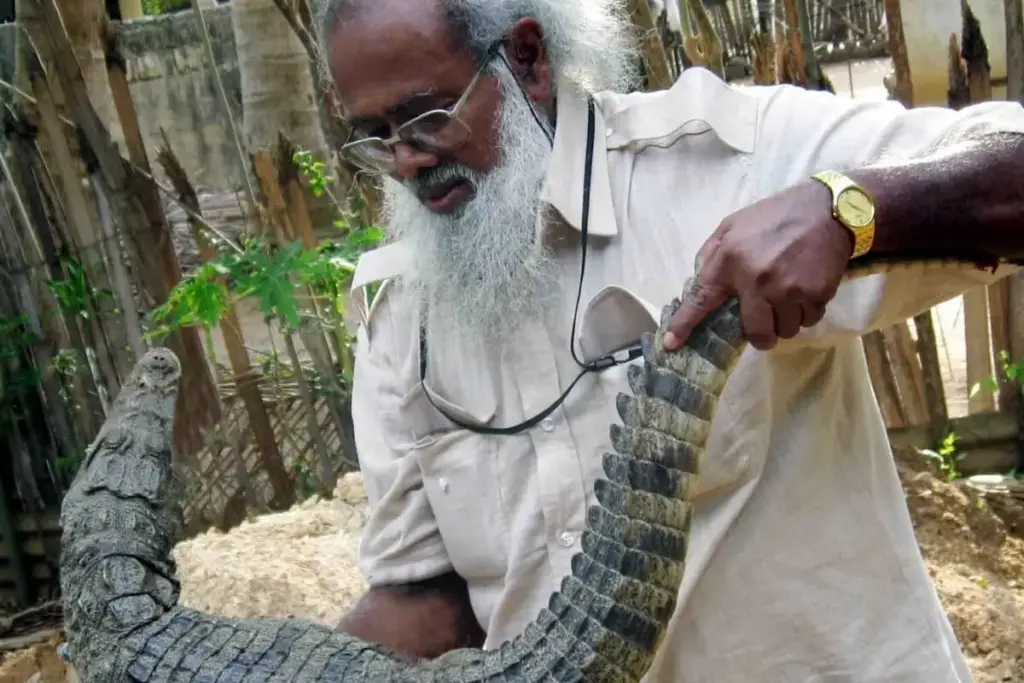
In the misty hill city of Kandy, Sri Lanka, an 86-year-old pioneer is preparing to host a landmark international gathering that will focus the global conservation spotlight on his island nation. Anslem de Silva, universally recognized as the founding father of modern Sri Lankan herpetology, is gearing up to lead the inaugural World Congress on Snakes this October. This high-profile international event represents the culmination of a life dedicated to documenting, protecting, and understanding the rich reptile and amphibian diversity of an island ecosystem that punches far above its weight in global biodiversity metrics.
For more than six decades, de Silva has been a fixture of tropical ecology, traversing deep jungles, confronting public prejudices, and quietly orchestrating a scientific renaissance. His journey stretches from the coastal city of Matara—where a young boy rescued a harassed rat snake—to the highest echelons of international conservation governance. Along the way, he has authored over 350 scientific papers and more than 25 books, founded journals and research organizations, and mentored generations of naturalists who now carry the torch of conservation biology across the globe.
Yet, when asked about his crowning achievement, de Silva does not point to his prolific bibliography, his prestigious awards, or even the species named in his honor. Instead, he speaks of the human ecosystem he helped cultivate: a thriving community of young, dedicated Sri Lankan scientists who are stepping forward to protect the island’s fragile natural heritage. As the global scientific community prepares to converge on Kandy, this profile examines the extraordinary life, career, and enduring legacy of a man who transformed a solitary scientific pursuit into a national movement.
Detailed Chronology: A Life Dedicated to Science and Conservation
Formative Years and the Spark of Curiosity (1940–1960s)
Anslem de Silva’s story begins in 1940 in Matara, a vibrant coastal city in the southern province of Sri Lanka. Long before he was a co-chair of the IUCN Amphibian Specialist Group or an internationally respected authority on venomous bites, he was a curious child fascinated by the natural world.
His defining childhood moment occurred when he intervened to rescue a rat snake (Ptyas mucosa) that was being tormented by fellow students. This act of early empathy planted a seed that would blossom into a lifelong crusade. However, the path to becoming a preeminent scientist was unconventional. Before establishing himself in the scientific community, de Silva pursued an entirely different form of performance: stage magic.
In 1965, his mastery of illusion earned him the prestigious national title of Best Magician. While it may seem a far cry from laboratory research and field expeditions, de Silva credits his years as a magician with instilling the foundational public communication skills that would define his career. In his view, science communication is not merely about reciting dry data; it is an art form rooted in storytelling and engagement.
Building Foundations from Scratch (1960s–1990s)
When de Silva first began documenting reptiles and amphibians in the 1960s, the field of herpetology in Sri Lanka was in its infancy. He was part of a tiny, isolated handful of researchers working across the island with limited institutional support, outdated equipment, and little public understanding of why these organisms mattered.
Recognizing that individual efforts would never be enough to catalog and protect the island’s staggering biodiversity, de Silva took on the role of an institutional architect. In the 1960s, he organized Sri Lanka’s very first one-day herpetological conference, bringing together scattered researchers to share findings and forge a unified path forward.
As the decades progressed, his initiatives grew bolder. To provide a dedicated platform for local scholarship, he launched Lyriocephalus, Sri Lanka’s inaugural herpetological research journal. This publication gave researchers an accessible, peer-reviewed outlet for their discoveries, reducing their reliance on expensive foreign journals.
The institutional framework culminated in 1990 with the establishment of the Amphibia and Reptile Research Organization of Sri Lanka (ARROS). Through ARROS, de Silva created a collaborative network that unified field biologists, academic researchers, and conservationists, cementing an organizational backbone for the discipline that persists to this day.
Global Recognition and Continued Impact (2000s–Present)
Entering the 21st century, de Silva’s tireless efforts began to receive widespread international acclaim. His decades of meticulous fieldwork, coupled with his persistent advocacy for habitat preservation, earned him deep respect within global conservation networks.
In 2019, the International Union for Conservation of Nature (IUCN) honored his lifetime of contributions by awarding him the prestigious IUCN Sir Peter Scott Award of Conservation Merit. This accolade placed him among the global elite of conservationists, recognizing a career defined by scientific rigor and unyielding dedication.
Now, at 86 years of age, de Silva shows no signs of slowing down. His current role as co-chair of the IUCN Amphibian Specialist Group keeps him at the forefront of global policy discussions, while his ongoing mentorship ensures that his methodologies and conservation philosophies are successfully transmitted to the digital age.
Supporting Context & Metrics: The Science and Ecosystem of Sri Lanka
A Biodiversity Hotspot
Sri Lanka is globally recognized as one of the world’s hottest biodiversity hotspots. Encompassing a diverse array of climatic zones—from arid coastal plains and dry-zone scrublands to the dense, mist-shrouded rainforests of the central highlands—the island supports an extraordinary density of endemic species found nowhere else on Earth.
Within this landscape, reptiles and amphibians play critical ecological roles. They serve as both apex predators of smaller fauna and vital prey bases for larger mammals and birds, while acting as sensitive bioindicators of ecosystem health. Amphibians, in particular, with their permeable skin and complex life cycles, are among the first organisms to register the impacts of environmental degradation, climate change, and chemical pollution.

Navigating the Human-Wildlife Interface
Despite the richness of Sri Lanka’s herpetofauna, these animals face profound existential threats, driven largely by habitat fragmentation, agricultural expansion, and climate shifts. Compounding these ecological challenges is an entrenched cultural barrier: public fear and misinformation.
According to de Silva, Sri Lanka is home to more than 100 distinct species of snakes. Yet, a common societal misconception paints nearly all of them as lethal menaces. In reality, rigorous scientific data indicates that only about five species possess venom potent enough to cause fatal bites in humans.
A cornerstone of de Silva’s career has been bridging this knowledge gap. By educating rural communities, medical professionals, and school children about snake behavior, bite prevention, and first-aid protocols, he has saved countless human lives while preventing the retaliatory killing of harmless serpents.
Quantitative Overview of a Legendary Career
To fully grasp the magnitude of Anslem de Silva’s impact, one must examine the measurable milestones of his professional journey:
- Years Active: 60+ years in continuous field research and conservation advocacy.
- Scientific Publications: Author of more than 350 peer-reviewed scientific papers.
- Authored Books: Writer and editor of over 25 authoritative books on reptiles and amphibians.
- Fatal Snake Species in Sri Lanka: Approximately 5 out of 100+ native species (highlighting the rarity of truly dangerous encounters).
- Key Organizations Founded/Co-founded: Amphibia and Reptile Research Organization of Sri Lanka (ARROS, est. 1990); Lyriocephalus research journal.
- Major Accolades: IUCN Sir Peter Scott Award of Conservation Merit (2019).
Official Statements and Perspectives
The influence of Anslem de Silva extends far beyond his own publications; it lives on in the minds and careers of the scientists he has shaped. In an interview with Mongabay contributor Malaka Rodrigo, de Silva reflected on the intersection of his unusual background and his life’s work:
"Communicating the value of conservation to the public is an art; a matter of good storytelling. I believe my experience as a magician helped me to reveal the true magicians of nature — reptiles and amphibians."
De Silva’s philosophy emphasizes that scientific discovery locked away in academic journals is insufficient to drive policy change. Conservation requires active, engaging public outreach that dispels myths and replaces fear with fascination.
This philosophy has left an indelible mark on his students. Ruchira Somaweera, a prominent Sri Lankan-born conservation biologist working internationally, fondly recalled his first encounter with the master herpetologist as a 13-year-old aspiring naturalist:
"Most of the herpetologists of my generation were groomed by de Silva, and hundreds, if not thousands, of students have been inspired by him, just like I was."
Somaweera’s testimony underscores a broader truth about de Silva’s legacy: he did not merely study nature; he engineered a generational shift in how Sri Lanka views its own wildlife. Rather than hoarding knowledge or working in academic isolation, de Silva made it his mission to open doors for younger minds, providing them with books, journal access, field experience, and, above all, encouragement.
Future Outlook: The World Congress on Snakes and Beyond
As the global scientific community looks toward October, anticipation is reaching a fever pitch for the inaugural World Congress on Snakes, set to take place in the hill city of Kandy. Bringing together leading toxicologists, ecologists, conservation policymakers, and field researchers from across the globe, the conference will tackle some of the most pressing issues facing snake populations today. These include emerging fungal pathogens, catastrophic habitat loss, the illegal wildlife trade, and the persistent global crisis of snakebite envenoming in developing nations.
For Sri Lanka, hosting this premier international event is a testament to the nation’s growing prominence in ecological research—a standing built largely on the foundation laid by de Silva over the past six decades. The congress will not only highlight cutting-edge research methodologies and conservation strategies but will also provide a global platform for the rising generation of Sri Lankan herpetologists to showcase their work to international peers.
Looking to the horizon, de Silva remains characteristically focused on the future rather than his own storied past. When reflecting on his decades-long journey, his greatest satisfaction does not stem from the volume of papers he has published or the awards lining his shelves, but from the human capital he has nurtured:
"For me, it is not only about the species I have studied or documented. I am especially happy to see the growth of herpetology in Sri Lanka and the younger generations who are now continuing this work."
As the forests of Sri Lanka echo with the calls of endemic frogs and the subtle rustles of forest-floor reptiles, the legacy of Anslem de Silva stands secure. He is a man who looked at the misunderstood creatures of the dark and the damp, saw true magic, and spent a lifetime teaching his country—and the world—how to look closer, fear less, and protect better.



