


Executive Overview
Asia stands alone on the global stage as the most ecologically and culturally diverse continent on Earth. Spanning from the frozen steppes of Central Asia to the tropical rainforests of Southeast Asia, and from the arid drylands of West Asia to the towering Himalayan highlands, the continent harbors an irreplaceable wealth of biodiversity. Yet, this remarkable natural heritage is locked in a state of perpetual, compounding crisis. Decades of uneven socio-economic development following the end of Euro-American colonization, coupled with capital-intensive infrastructure growth, widening economic inequality, and high population densities overlapping directly with endangered wildlife ranges, have placed immense pressure on natural systems. Add to this the devastating impacts of illegal wildlife trafficking, regional conflicts, militarization, and the existential threat of climate change, and the mandate for conservationists working in the region becomes nearly overwhelming.
Historically, however, the intellectual machinery driving environmental protection in Asia has been heavily dictated by Western systems of knowledge production. Researchers, funders, policymakers, and international non-governmental organizations rooted in the Global North have traditionally dominated the conversation, often applying top-down, Eurocentric frameworks to complex, localized socio-ecological landscapes.
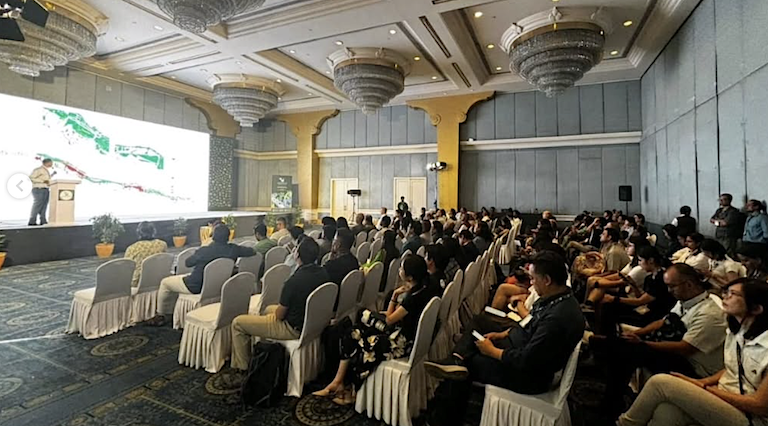
To challenge this dynamic and reclaim regional agency, nearly 500 conservationists—predominantly from Asian nations—converged in Kathmandu, Nepal, during the first week of June for the 6th Conservation Asia Congress. Organized by the Asia region of the Society for Conservation Biology (SCB) in partnership with the SCB Nepal Chapter and the Nepal-based community-centric organization, Burhan Community Regeneration and Conservation Foundation (BCRCF), the landmark event operated under the theme "Harmonizing Biodiversity and Human Well-being in Asia."
United by a shared vision to decolonize conservation and elevate local leadership, the delegates—spanning global experts, Indigenous leaders, early-career researchers, and grassroots stewards—spent days hammering out strategies to address the intertwined biodiversity, climate, and cultural crises facing the continent. The summit culminated in the adoption of the Kathmandu Resolution 2026, a bold, people-driven manifesto calling for systemic economic reform, transboundary collaboration, and the uncompromised elevation of Indigenous and local community stewardship across Asia.
Detailed Chronology: Inside the 6th Conservation Asia Congress
The path to the Kathmandu Congress was paved by months of meticulous logistical maneuvering, fundraising, and backstage diplomacy designed to dismantle the systemic barriers that routinely lock Asian conservationists out of international forums. When the doors officially opened in early June, the gathering immediately broke traditional molds by prioritizing geographic, demographic, and institutional representation from the Global South.
A Truly Global-South-Centric Assembly
Out of the roughly 500 delegates in attendance, participants hailed from 42 distinct countries, with the overwhelming majority embedded in Asian institutions or working directly on Asian ecosystems. Statistics from the event underscore its grassroots makeup:
- 390 participants represented Global South countries.
- 357 attendees were early-career conservationists, with a median age under 45.
- 151 delegates were active students.
- 38 individuals identified explicitly as members of Indigenous or local communities.
- 43% of the total cohort identified as women or minority genders.
The scientific program spanned over 300 hours of intensive knowledge-sharing, fostering an environment where mentorship, peer-to-peer networking, and institutional partnerships flourished. The academic schedule featured 11 high-level plenary addresses by leading regional conservationists, 300 oral presentations distributed across 24 concurrent sessions and 19 formal symposiums, and 59 detailed poster presentations. Five half-day and seven full-day specialized workshops provided deep-dive technical training led by thematic authorities, addressing critical gaps in local institutional capacity.

Scientific Scope and Human Dimensions
The breadth of scientific discourse at the congress reflected the sheer ecological scale of the continent. Presentations ranged from the acute conservation crises facing the Asiatic cheetah and the Arabian leopard in the West Asian drylands to snow leopard populations and associated montane fauna across the Central, East, and South Asian highlands. Tropical ecosystem specialists brought forward urgent data regarding endangered elephants and primates in South and Southeast Asia, while numerous delegates highlighted the overlooked conservation statuses of amphibians, reptiles, and avian species inhabiting fragmented landscapes.
Crucially, the congress refused to view wildlife in isolation from human societies. A significant portion of the scientific program was dedicated to the human dimensions of conservation, exploring human-wildlife coexistence, the conservation attitude-behavior nexus, political ecology, community-based resource stewardship, policy analysis, and environmental education. While the program was lauded for its breadth, post-conference evaluations noted that future iterations must expand coverage of marine and coastal ecosystems, invertebrate and smaller species conservation, and the environmental humanities.
Overcoming Logistical and Geopolitical Barriers
Hosting a truly inclusive regional conference in an era of heightened geopolitical friction and strict visa regimes is a formidable undertaking. High conference registration fees and prohibitive travel expenses have historically excluded students, independent researchers, and practitioners from under-resourced countries. Recognizing this, the organizing committee implemented an unprecedented financial inclusion strategy.
Through targeted fundraising, the organizers successfully disbursed travel grants, registration waivers, and heavy discounts to nearly 160 participants—representing over 30% of total attendance. This was achieved through an innovative "Inclusivity Package" partnership, wherein philanthropic bodies like the Snow Leopard Conservancy and the Arcus Foundation bypassed traditional lump-sum sponsorships, redirecting their financial contributions directly toward covering the travel and registration costs of early-career scholars, students, and Indigenous delegates from nations such as Iran, Mongolia, Kyrgyzstan, and Pakistan.
Visa procurement proved to be one of the most daunting hurdles of the event. Amid ongoing geopolitical tensions and travel blockades—exemplified by the severe mobility restrictions faced by Iranian delegates due to regional conflicts and closed airspaces—local partner BCRCF worked tirelessly behind the scenes. Collaborating directly with the Nepal Ministry of Foreign Affairs and the Nepali consulate in Qatar, BCRCF navigated complex diplomatic channels up until 48 hours before the event, successfully securing safe transit through Istanbul and visas for all affected participants.
Supporting Context & Metrics: The State of Asian Conservation
To fully grasp the gravity of the Kathmandu Resolution, one must examine the complex socio-ecological baseline of the Asian continent. Asia possesses a demographic and ecological density unlike any other region on Earth, creating friction points where rapid modernization collides directly with ancient, biodiverse landscapes.
| Metric / Demographic Focus | Congress Data & Regional Context |
|---|---|
| Total Attendees | ~500 conservationists from 42 countries |
| Global South Representation | 390 participants (approx. 78% of total) |
| Early-Career Researchers | 357 delegates (median age under 45) |
| Indigenous & Local Representation | 38 self-identified Indigenous and local community delegates |
| Gender Diversity | 43% of participants identified as women or minority genders |
| Financial Assistance Disbursed | ~160 grants/waivers (over 30% of total attendance supported) |
| Academic Output | 11 plenaries, 300 oral talks, 19 symposiums, 59 poster presentations |
The socioeconomic backdrop of these conservation efforts is fraught with structural challenges. Following independence from Euro-American colonial powers, Asian nations pursued varied economic trajectories, often prioritizing rapid, capital-intensive infrastructure development over ecological resilience. This has resulted in worsening income inequality, heavy reliance on natural resource extraction at both household and national levels, and landscapes heavily fragmented by roads, railways, and hydroelectric dams.
Furthermore, Asia’s high human population density frequently overlaps with the remaining strongholds of megafauna, such as Bengal tigers in the Sundarbans, Asian elephants in tropical river basins, and Ganges river dolphins navigating heavily polluted waterways like Bangladesh’s Buriganga River. In this context, conventional fortress conservation—which relies on fences, fines, and the exclusion of local populations—has repeatedly proven ineffective, unjust, and socially catastrophic. The data and discussions at the Kathmandu Congress underscored an urgent regional consensus: conservation in Asia must pivot away from top-down protectionism and fully embrace community-led, landscape-scale stewardship if it is to survive the 21st century.
Official Statements: Voices from the Congress
The philosophical anchor of the 6th Conservation Asia Congress was articulated by its leadership, who emphasized that the mechanics of conservation are just as important as the ecological targets themselves.
Dr. Koustubh Sharma, president of the SCB Asia region, underscored the ambition behind the event’s organizational ethos:
"When we started planning this congress, our primary goal was to set what we now call the ‘SCB Asia Standards’ of conference organization; hosting a world-class scientific event while ensuring absolutely nobody is left behind. This resolution reflects a profound consensus that what you conserve is important, but how you conserve it is even more important. It sends a clear message to the world that nature conservation simply cannot be achieved without securing the stewardship and wellbeing of the local communities and Indigenous peoples who have shared these spaces with wild inhabitants for thousands of years."
Addressing the grueling administrative and fundraising efforts required to build a truly equitable platform, conference coordinator Dr. Mohammad Farhadinia highlighted the intentional shift away from profit-driven conference models:
"We knew that many conservationists across Asia face financial and visa barriers, so we focused on finding ways to remove these barriers. We created sponsorship packages to support travel, not to increase revenue, and worked closely with our partners in Nepal, who went the extra mile to help participants overcome visa challenges… To me, the success of a conference isn’t about having the largest audience or the most countries represented; it’s about ensuring that everyone who wants to be there has a genuine chance to participate."
Future Outlook: The Kathmandu Resolution 2026 and the Road Ahead
As the delegates departed Kathmandu, the momentum generated by the congress coalesced into a defining document: The Kathmandu Resolution 2026. Unanimously embraced by the assembly, the resolution operates not as a hollow bureaucratic statement, but as a collective, transboundary call to action born from the grassroots of Asian conservation science and practice.

The resolution lays out four foundational pillars for the future of conservation across the continent:
- Regional Solidarity and Knowledge Freedom: Calls for peaceful regional cooperation, the dismantling of artificial borders blocking scientific expertise, and the elevation of existing SCB country chapters into active regional think-tanks and communities of practice—with formalized new chapters emerging from countries like Bangladesh, India, Iran, Mongolia, and Thailand.
- Systemic Economic Challenge: Demands a critical re-evaluation of extractive, perverse economic models that treat nature merely as raw capital to be exploited, advocating instead for sustainable, landscape-scale economic policies that harmonize human development with ecological health.
- True Community-Centric Stewardship: Rejects conservation tokenism in favor of self-determined decision-making power, land rights, and livelihood security for Indigenous peoples and local communities who have historically managed these ecosystems.
- Ethical, Open Science: Urges the integration of collaborative socio-ecological research, transparent data-sharing, and rigorous monitoring indicators to guide linear infrastructure development and climate adaptation policies.
Between Optimism and Despair: Will the Resolution Hold?
Skeptics of international conservation declarations often point to a graveyard of high-level pledges that failed to transition from paper to practice. Given the immense geopolitical fractures, economic pressures, and institutional inertia across Asia, translating the Kathmandu Resolution into enforceable regional policy will be an uphill battle.
Yet, the raw enthusiasm, cross-border solidarity, and rigorous empirical frameworks demonstrated by the 500 conservationists in Kathmandu suggest a paradigm shift is already underway. By wresting control of the narrative from external, top-down institutions and rooting it firmly in the hands of Asian researchers, indigenous leaders, and early-career practitioners, the 6th Conservation Asia Congress has laid a resilient foundation for the continent’s ecological future.
Between optimism and despair, the collective voice emerging from Nepal offers a resolute and enduring form of hope.



