

Executive Overview
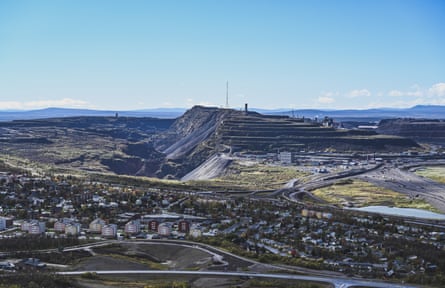
Sweden’s transition toward a green, post-fossil economy has collided head-on with the rights of its Indigenous population. In the run-up to the national elections, a fierce political battle has erupted over land use, traditional reindeer herding, and the exploitation of critical raw materials in the country’s sparsely populated north. At the heart of this conflict is the Per Geijer iron ore and rare-earth element deposit near the northern mining town of Kiruna—home to Europe’s largest known reserves of critical minerals essential for electric vehicles and wind turbines.
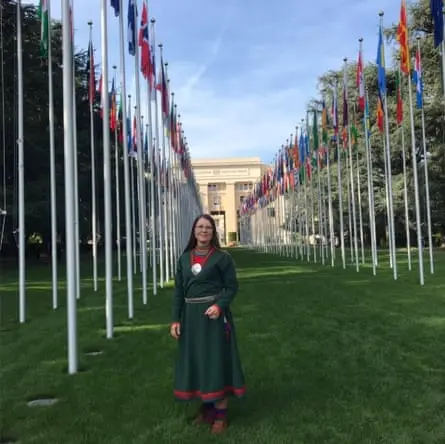
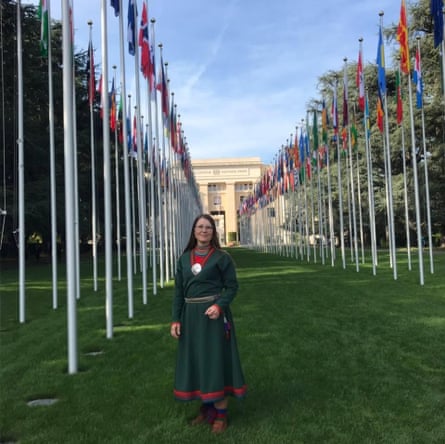
While the Swedish government, led by a centre-right coalition, argues that these minerals are vital for European energy independence and technological sovereignty, Indigenous Sami leaders view the push as an existential threat to their culture, ancient livelihoods, and territorial rights. Recent aggressive political rhetoric from high-ranking government officials, including Deputy Prime Minister and Energy Minister Ebba Busch, has upended decades of fragile political consensus. Sami politicians and community leaders warn that state-sponsored marginalization has entered the mainstream political discourse, setting a dangerous precedent where Indigenous populations are openly painted as obstacles to national progress.
This deep-seated friction brings to light the paradox of the European green transition: how the decarbonization of the global economy relies on extractive industries that frequently imperil the fragile Arctic ecosystems and Indigenous communities that have protected them for generations.
Detailed Chronology: From Local Friction to National Political Crisis
The tensions defining the current political landscape did not emerge in a vacuum. They are the culmination of decades of competing land claims, mounting industrial demands, and shifting geopolitical priorities.
Spring 2026: The Rhetorical Escalation
The watershed moment in contemporary Sami-state relations occurred in late April and May 2026. As political parties began positioning themselves for the national elections, Deputy Prime Minister Ebba Busch launched a high-profile offensive targeting the legal and customary rights of Sami reindeer herders. In a series of public speeches and editorial pieces, Busch explicitly questioned the economic viability of traditional practices. At a heavily publicized press conference, she characterized reindeer husbandry as "an industry that affects very large areas, but has limited economic significance."

Following these remarks, Busch’s party—the Christian Democrats, a junior partner in Sweden’s three-party centre-right government—released a controversial policy platform. The manifesto demanded a government-mandated reduction in reindeer numbers, called for reindeer husbandry to be stripped of its status as a "national interest," and urged the state to reclaim direct administrative control over grazing lands.
This rhetorical escalation quickly found company on the far right. The Sweden Democrats, a populist party positioned to potentially enter government or exert decisive legislative influence, echoed these sentiments. Their manifesto explicitly pitted reindeer herders against industrial interests, tourism, and the broader Swedish public, directly challenging the constitutional basis of Sami land rights.
Summer 2025: The Monumental Move of Kiruna Church
The current flashpoint builds directly on the monumental industrial transformations already reshaping the region. For years, the state-owned mining giant LKAB has been managing the colossal task of moving the entire town of Kiruna, piece by piece, as decades of underground iron ore mining cause severe surface subsidence.
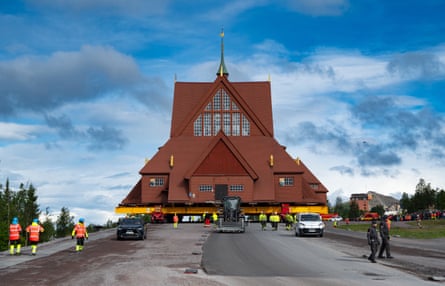
The physical reality of this industrial sprawl captured global attention in August 2025, when Kiruna’s iconic red wooden church—architecturally designed to mirror a lávvu (a traditional Sami tent)—was loaded onto massive transport vehicles and rolled five kilometers to its new, stable foundation. While the church move was celebrated as an engineering marvel, it served as a stark physical reminder to the local Sami population that industrial extraction always takes precedence over indigenous architecture, heritage, and geography.
September 2026: The Election Threshold
As voters head to the polls on September 13, 2026, the question of who controls and benefits from the Arctic landscape has become a defining ballot-box issue. The integration of anti-Sami rhetoric into mainstream campaigning has pushed Indigenous rights advocacy into an unprecedented defensive posture, fundamentally altering the relationship between the Swedish state and its recognized Indigenous minority.
Supporting Context & Metrics: The Anatomy of the Conflict
To fully understand the gravity of the standoff in northern Sweden, one must examine the intersection of geography, economics, international geopolitics, and constitutional law.
The Strategic Importance of the Arctic Underground
The European Union has made reducing its reliance on foreign supply chains—particularly for rare-earth elements and critical minerals imported from China—a top strategic priority. The discovery by LKAB of the Per Geijer deposit near Kiruna represents a potential treasure trove for the continent. Rare-earth elements are indispensable for manufacturing permanent magnets used in wind turbine generators and electric vehicle (EV) motors.
Consequently, Stockholm and Brussels view the rapid exploitation of the Scandinavian north not merely as a matter of domestic economic growth, but as a pillar of European geopolitical security. This macro-level imperative has created an unyielding institutional momentum that brushes aside localized environmental and social concerns.
The Ecological and Cultural Matrix of Reindeer Husbandry
Reindeer herding (bohandeln) is far more than a commercial meat industry; it is the backbone of Sami social organization, language preservation, and cultural identity. The Gabna Sami community, whose traditional migration routes span the affected regions around Kiruna, relies on uninterrupted access to seasonal landscapes.
Herding depends on an interconnected mosaic of ecological zones:
- Mountain Areas: Crucial summer grazing lands where reindeer find relief from insects and heat.
- Forest Regions: Essential winter habitats where animals can dig through snow to forage for lichen.
- Calving Grounds: Highly sensitive ecosystems where new life is nurtured each spring.
Lars-Marcus Kuhmunen, the head of the Gabna community, warns that the Per Geijer expansion will sever these critical corridors. Because the proposed mine sits directly between the mountain ranges and the forest zones, its footprint threatens to fracture the ecological continuity required for the herds to survive, spelling an end to a centuries-old way of life.
The Sami Parliament and Legal Status
Sweden formally recognizes the Sami as an Indigenous people, and the Sami Parliament (Sametinget) acts as both a cultural representative body and a state administrative agency. However, unlike neighboring Norway and Finland, Sweden has consistently lagged behind in ratifying international human rights standards, such as the International Labour Organization’s (ILO) Convention 169 concerning Indigenous and tribal peoples. This leaves Sami land and water rights in a perennial state of legal ambiguity, heavily dependent on shifting political winds rather than robust constitutional protections.
Official Statements and Stakeholder Perspectives
The ideological chasm dividing the Swedish government and the Sami population is starkly reflected in the rhetoric and justifications offered by key figures on both sides.
The Sami Perspective: Constitutional Protections Under Siege
Sami leaders argue that the current government has abandoned its fiduciary duty to protect minority populations in favor of short-term electoral gains and corporate extraction quotas.
-
Åsa Larsson Blind (Sami Parliament Board Member):
"If you look at it from afar, it means that the deputy prime minister is highlighting one group of people… as being the enemy of development in Sweden. She is really clearly not feeling the need to have the support of the Sami… Even if we have known that previous governments haven’t prioritised Sami rights issues, it hasn’t been politically correct to say it so abruptly and out loud. But now it is possible to do that, so the boundaries have been pushed."
-
Anna-Karin Niia (Gabna Reindeer Herder):
"The Sami people are constitutional protectors of the land… It’s not just a simple matter of quietly reducing reindeer herds and making these kinds of statements so that you win the 2026 election. Even if the state or the government or the EU says it is important to have minerals, at the same time, Indigenous rights, Sami rights, the local[s] are just as important. We also need nature."
-
Nils-Johan Labba (Master Craftsman and Sami Parliament Politician):
Pointing to the lingering trauma of the Kiruna town relocation, Labba noted that the community is "bleeding" from disruptions to transport, education, and social cohesion, lamenting that politicians chose to weaponize anti-minority sentiment rather than solve the region’s existing infrastructural crises.
The State and Industrial Perspective: Balancing Competing Public Interests
Proponents of the mining expansion emphasize that democratic governance requires weighing competing societal goods—specifically, the global imperative of climate action versus local land claims.
-
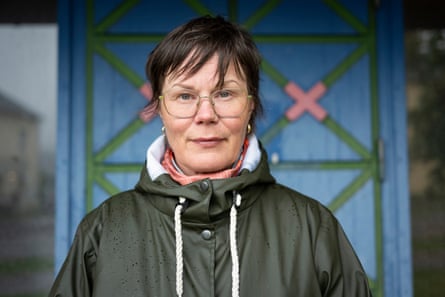
Peter Kullgren (Christian Democrats Board Member):
"Sweden has a responsibility to protect Sami rights, but the government must also be able to weigh up Sami rights with other very strong public interests. Our mineral resources are strategically important for Sweden and Europe and we already have high standards of consideration, dialogue and influence, but the state must also be able to make decisions about when important public interests are working against each other."
-
LKAB (Official Corporate Statement):
The state-owned mining enterprise maintained that the Per Geijer expansion remains in its exploratory infancy and is subject to rigorous regulatory scrutiny:"Our intention is to continue evaluating the potential of the mineral deposit. The application is currently being reviewed by the Mining Inspectorate of Sweden, and the consultation process is ongoing… We understand that our plans for the new deposit would have an impact… We have submitted a reindeer herding impact assessment that includes proposed measures intended to support the conditions for continued reindeer herding in the area. Our starting point is not to dismiss the concerns that have been raised, but to work toward solutions that can reduce impacts and create the conditions for safeguarding both interests over the long term."
Future Outlook: A Permanent Divide in the Arctic
As Sweden navigates the fallout of the September 2026 elections, the path forward remains fraught with profound friction. The institutional validation of anti-Sami rhetoric by senior government ministers has created a psychological rupture that community leaders warn will take generations to heal.
Several critical trajectories will dictate the future of the region:
- Legal Battles in Swedish and European Courts: With political channels appearing increasingly hostile, Sami legal advocates are expected to ramp up challenges in domestic courts and international bodies, invoking human rights frameworks to contest the legality of mining permits granted without free, prior, and informed consent (FPIC).
- The Escalation of Industrial Sprawl: If the Per Geijer deposit moves from exploration to full-scale extraction, it is likely to serve as a catalyst for dozens of other green-transition projects across northern Sweden, including wind farms, transmission lines, and additional mining operations. This will continuously test the threshold of what remaining lands can sustain traditional reindeer migration.
- Erosion of Social Trust: The mainstreaming of political narratives that frame Indigenous rights as antithetical to national progress risks unleashing localized harassment and deepening societal polarization in northern municipalities where Sami and non-Sami residents live side by side.
Ultimately, the crisis in Kiruna poses an uncomfortable question for Sweden and the broader European Union: Can a green transition achieved by green-lighting the industrialization of Indigenous ancestral lands truly be considered sustainable? For the Sami people, the answer is clear—there can be no ecological transition that sacrifices the very stewards who have preserved the Arctic environment for millennia.



