
Executive Overview
As the crisp air of early autumn settles over Britain, a familiar rhythm has returned to the nation’s school corridors, yet an underlying sense of anxiety persists among educators, parents, and policymakers. While Scottish pupils returned to their desks in mid-August—mirroring timelines across much of continental Europe—their peers in England, Wales, and Northern Ireland experienced a vastly different trajectory. Breaking up for summer only in late July, English and Welsh students found themselves thrust directly onto the frontlines of an increasingly aggressive climate phenomenon: extreme classroom heat.
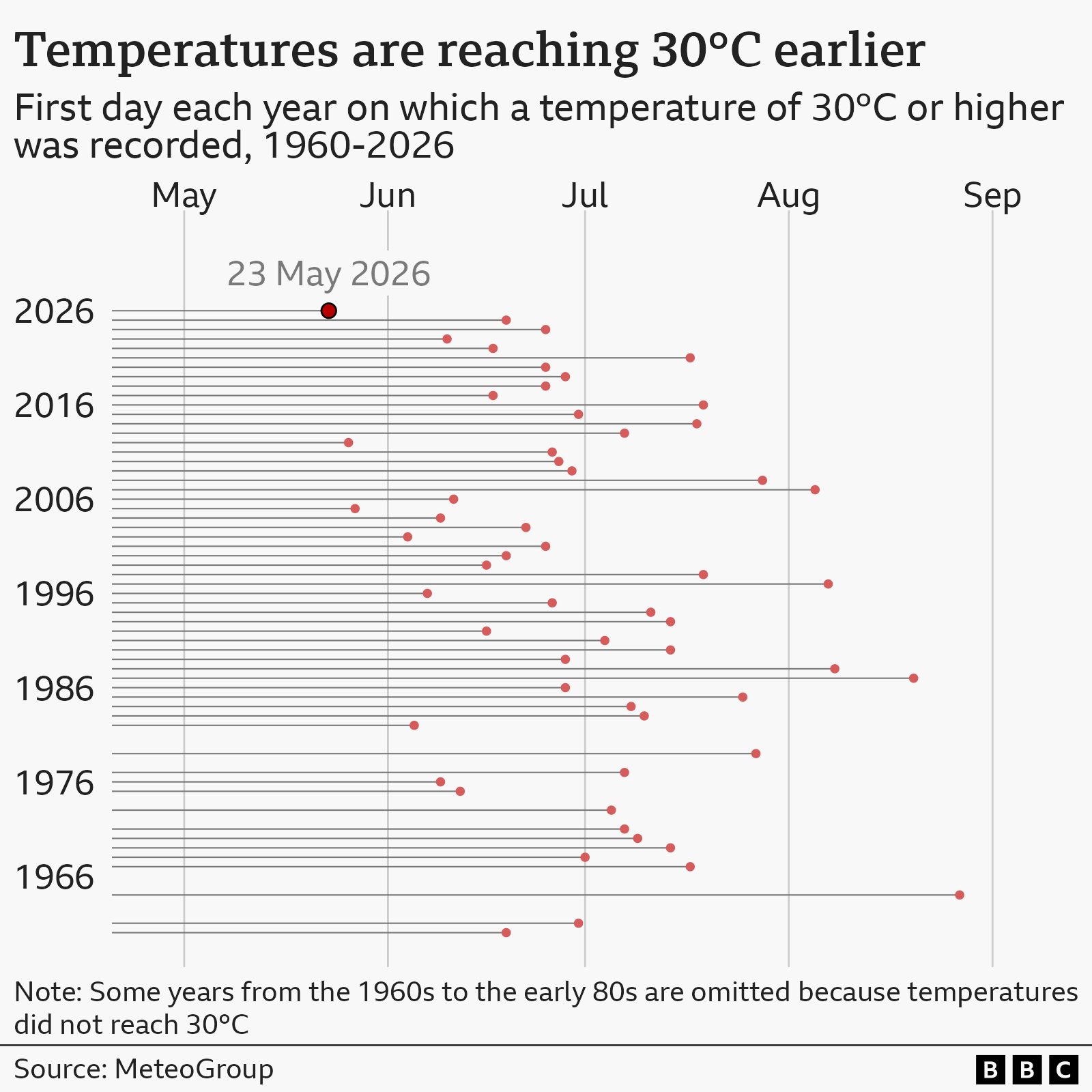
With temperatures soaring past 30°C outdoors and transforming poorly ventilated, non-air-conditioned classrooms into stifling environments, more than 1,000 schools across the UK were forced to close their doors or send children home early. This was not an isolated meteorological anomaly. Data analyzed by the BBC highlights a dramatic and concerning shift: while 30°C days historically arrived around July 13 in the 1960s, they now manifest on average by June 19 in the 2020s.
This shifting baseline has sparked an urgent national debate. From Ofsted chiefs and climate scientists to anxious parents and academy trust leaders, a growing coalition is demanding structural reforms. Whether through a sweeping overhaul of the academic calendar—shifting the traditional summer break forward to bypass peak heat—or multi-billion-pound infrastructure investments in climate-resilient architecture, the UK education system faces an existential test. Classrooms designed for a bygone climate are failing a generation of students, threatening both their health and academic performance.
Detailed Chronology: A Summer of Unprecedented Extremes
The summer of 2026 is on track to shatter historical records, cementing itself as the hottest ever recorded in the United Kingdom. According to the Met Office, the season was defined by a relentless sequence of five widespread heatwaves and an unprecedented four consecutive months where temperatures breached 35°C—a milestone never before witnessed in British meteorological history.

The crisis began in earnest during late June, precisely when teenagers across the country were sitting high-stakes GCSE and A-level examinations. An intense, prolonged heatwave gripped the nation, with temperatures lingering well above official heatwave thresholds for seven consecutive days. On June 26, Lingwood in Norfolk recorded a staggering 38°C, marking the hottest June day in UK history. The Met Office was forced to issue a rare red extreme heat warning, signaling a potential "danger to life," while the UK Health Security Agency maintained amber alerts across multiple regions.
Rather than offering a reprieve, July maintained these punishing conditions, enveloping the country in stifling humidity and unbroken sunshine. For headteachers, the timing could not have been worse. Schools, historically built to retain heat during chilly British winters, became thermal traps. With no air conditioning and woefully inadequate ventilation, indoor temperatures frequently eclipsed outdoor readings.
Headteachers found themselves navigating an impossible administrative labyrinth. Bound by statutory obligations to provide education, they simultaneously faced national weather warnings advising citizens to avoid non-essential travel and stay cool. The specter of students or staff collapsing from heat exhaustion—and the subsequent legal and moral liability—pushed many school leaders to declare emergency "heat days," curtailing lessons and sending children home into the afternoon inferno.
Supporting Context & Metrics: The Cost of a Warming Classroom
The immediate disruption of closed schools and shortened days is only the visible surface of a much deeper systemic crisis. Mounting scientific evidence indicates that elevated temperatures inflict severe cognitive tolls on developing minds, severely compromising educational outcomes.
The Cognitive Toll of Heat
A landmark study conducted jointly by the Met Office and University College London (UCL) paints a bleak picture of the future. Should global average temperatures rise to 2°C above pre-industrial levels—a threshold scientists warn we are rapidly approaching—students in the UK could lose an estimated 8.2 days of learning per year due to extreme heat disruptions.
Furthermore, research published in Climate Risk Management establishes that any indoor temperature exceeding 24°C actively compromises learning capacity. The study documents a stark decline in student performance ranging from 2% to 12% for every single degree increase above this threshold.
To quantify this, researchers established 26°C as the upper "comfortable limit" for classrooms. Under current climatic conditions, the average English school breaches this limit on 59 days of the academic year. With a 2°C rise in global temperatures, that figure will surge to 71 days. In "at-risk" educational facilities—characterized by poor cross-ventilation, south-facing windows, or low ceilings typical of modern modular builds—that number skyrockets to 75 days annually.
The Exam Penalty
The stakes are particularly high for teenagers sitting external examinations. Data from the Climate Change Committee’s Well-Adapted UK report reveals a startling correlation: students sitting an exam on a 32C day experience an approximate 10% lower likelihood of passing compared to those taking the exact same assessment in a comfortable 22C environment.

Baroness Brown, chair of the UK’s Climate Change Adaptation Committee, did not mince words regarding these findings:
"As heatwaves become more frequent and intense, it is unacceptable that children are expected to sit high-stakes exams in halls that were not designed for these conditions."
Official Statements and Stakeholder Perspectives
The convergence of failing infrastructure, shifting climate metrics, and declining academic performance has galvanized educational leaders, oversight bodies, and families into active dissent.
Educational Leadership and Oversight
Sir Martyn Oliver, Ofsted’s chief inspector, broke cover in early 2026 to call for a comprehensive reassessment of the academic calendar. Noting the structural absurdity of forcing children to sit grueling exams during the hottest months of the year, Oliver argued:
"It’s pretty hot usually in May, June and July, just at the point you’re asking children to sit down and take an exam… so I think there is a need to have a good old look at it."
Steve Chalke, founder of Oasis Academy—a multi-academy trust operating over 50 schools across England—echoed these frustrations. Describing the heatwaves as a "real inhibitor" to teaching, Chalke emphasized the impossible burden placed on headteachers during red weather warnings.
"We’re all accustomed to ‘snow days’ but we now need to properly think and prepare for ‘heat days’ too," Chalke noted, stressing the urgent necessity for a centralized national strategy.
The Parental Frontline
Parents across the country are witnessing the physical and emotional toll of these conditions firsthand. Andrea Bigger, a London-based parent, expressed profound concern over the lack of preparedness in the British education sector. Recalling how her young daughter previously suffered heat exhaustion and subsequent hospitalization after overheating at a primary school, Bigger stated she is "really concerned that the UK is not ready or prepared for this."

Other parents, such as Gemma Beake in Bristol, point toward infrastructural solutions. Beake suggests that upgrading schools with modern air-conditioning units could transform them into cooler, safer environments than many domestic homes and flats, which suffer from identical overheating issues during heatwaves. Meanwhile, families are increasingly eyeing the European model. In countries like France and Spain, institutionalized heat protocols automatically trigger timetable modifications or school closures long before conditions become dangerous.
Future Outlook: Navigating Adaptation and Reform
As the UK confronts a future defined by earlier springs, longer summers, and protracted heatwaves, policymakers face a stark binary choice: modify the structural architecture of the school year or fundamentally upgrade the physical infrastructure of the nation’s classrooms.
Reforming the Academic Year
Shifting the school calendar to align more closely with Scotland and continental Europe—breaking up in late June and returning in mid-August—offers a compelling logistical countermeasure. By removing children from classrooms during the statistical peak of July and August heat, schools could largely bypass the most disruptive thermal events.
However, this shift carries secondary economic and cultural ripple effects. Travel patterns are already evolving; research by Mintel indicates that more than half of UK holidaymakers now choose domestic "staycations" over foreign travel due to climate concerns, with 28% explicitly citing rising domestic temperatures as an incentive. A synchronized shift in school holidays could supercharge domestic tourism demand in late June and July, driving up prices and altering family travel habits as southern European destinations like Spain, Greece, and Turkey face projections of becoming uncomfortably hot for summer tourism by the end of the decade.
Infrastructural Overhaul vs. Short-Term Flexibility
Alternatively, prioritizing capital investment to climate-proof school buildings represents a monumental financial undertaking. Most state schools operate within aging Victorian or mid-20th-century premises utterly devoid of mechanical cooling systems. Retrofitting thousands of buildings for enhanced thermal resilience would require years of sustained government investment and institutional coordination.
Recognizing the protracted timeline required for major infrastructure projects, education experts are urging the government to formulate immediate, pragmatic short-term interventions. These include:
- Standardized Heat Protocols: Establishing clear legal benchmarks and guidance for "heat days," mirroring existing frameworks for winter "snow days."
- Flexible Timetabling: Permitting schools to adopt early-start schedules during periods of high heat, allowing pupils to complete core academic work before temperatures peak in the afternoon.
- Uniform Relaxation: Institutionalizing flexible dress codes, allowing lightweight PE kits and sun protection as standard practice during heatwaves.
Ultimately, the warming climate is rendering traditional school operations untenable. Whether through a sweeping realignment of the academic year or an unprecedented injection of capital into school infrastructure, the message from educators and parents is unequivocal: the time for a cohesive, long-term national strategy is now.