Executive Overview
For millennia, the fate of human civilization in the arid expanse of the Sahara was inextricably bound to the whims of a single waterway: the Nile River. By delivering dependable fresh water and annual blankets of nutrient-dense sediment, the river allowed ancient Egyptians to transform a scorching desert into the breadbasket of the ancient world. Through ingenious irrigation systems and meticulous water management, local farmers generated massive agricultural surpluses—most notably wheat—that eventually sustained the nutritional needs of the sprawling Roman Empire.
Today, however, the modern descendants of those ancient innovators face an existential threat that their forebears never had to navigate on this scale: climate change. Egypt’s contemporary agricultural sector, much like farming communities worldwide, is grappling with escalating temperatures, intensifying droughts, and severe water scarcity. These compounding environmental stressors threaten to wilt staple crops, degrade arable soils, and destabilize food security for millions.
In response to this modern crisis, Egyptian farmers and agricultural technologists are looking backward to their ancestral heritage of innovation, while leaping forward into cutting-edge renewable technology. The result is the burgeoning practice of agrivoltaics—the dual-use practice of simultaneously producing solar energy and agricultural crops on the same parcel of land.
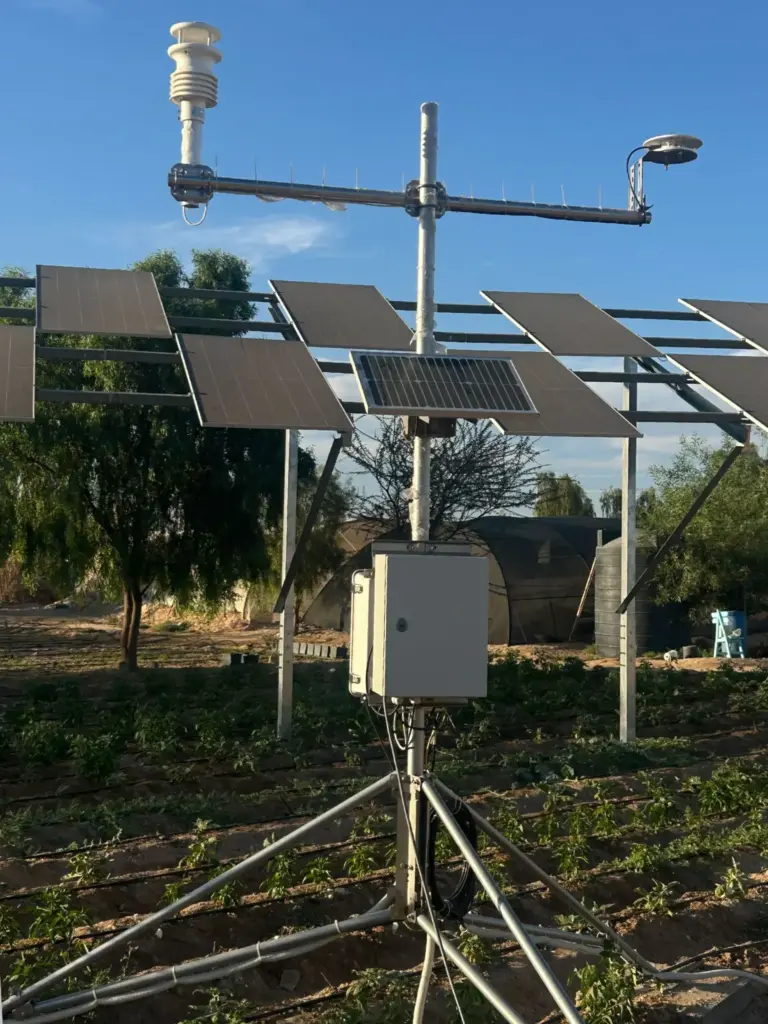
By erecting elevated arrays of photovoltaic panels directly over cultivated fields, participating farmers are generating clean electricity while casting vital shade over vulnerable plants. This canopy shields crops from blistering heat stress and dramatically curbs moisture evaporation from the soil. Pilot projects are currently underway across Egypt to evaluate how this technology performs across diverse geographies, from small rural farming communities to larger desert installations. As global climate pressures mount, agrivoltaics offers a tantalizing proposition: rather than forcing a zero-sum choice between land for food production and land for renewable energy, it provides a symbiotic solution where agriculture and green energy reinforce one another.
Detailed Chronology: From Ancient Irrigation to Modern Solar Canopies
To understand the revolutionary nature of agrivoltaics in Egypt, it is essential to trace the historical continuum of land and water management in the region.
The Ancient Baseline: Engineering the Desert
- Circa 3000 BCE – 1st Century BCE: The rise and apex of Egyptian agriculture. Utilizing basin irrigation, ancient Egyptians captured the annual Nile flood, trapping nutrient-laden silt on their fields. This high-efficiency water usage yielded massive cereal surpluses, cementing Egypt’s economic and geopolitical dominance through agricultural trade with Rome and the wider Mediterranean.
- The 20th Century: The completion of structures like the Aswan High Dam transformed the Nile’s hydrology, preventing annual floods but securing year-round irrigation control. While this protected against catastrophic droughts, it also eliminated the natural sediment deposition that historically replenished the soil, necessitating heavy reliance on synthetic fertilizers and intensive water management.
The Modern Pivot: The Birth of Egyptian Agrivoltaics
- Early 2020s: As global temperatures climbed and groundwater tables fell, researchers and clean-tech firms began exploring international climate adaptation models tailored to North Africa’s intense solar radiation.
- May 2026: A series of collaborative pilot projects officially launch in Egypt, spearheaded by partnerships between renewable energy innovators—such as the green tech firm 3E—and community-led agricultural initiatives like the Habiba Community in South Sinai.
- Mid-2026: Farmers and agronomists begin testing novel structural layouts, including checkerboard panel arrangements designed to balance electricity generation with optimal light penetration. Initial crops, such as watermelons and traditional local varietals, are planted beneath the newly erected solar canopies to monitor their baseline resilience against extreme heat.
Supporting Context & Metrics: The Science of Dual-Use Land
The core premise of agrivoltaics challenges a long-standing agricultural assumption: that crops require maximum, uninhibited exposure to sunlight to thrive. In reality, many plant species evolved under the dappled light of forest canopies or understories. When subjected to the unrelenting glare and heat of open-desert suns, these plants often experience photo-inhibition, heat stress, and accelerated moisture loss.
Microclimate Engineering and Hydrological Protection
When solar panels are elevated over agricultural plots, they alter the microclimate beneath them in several crucial ways:
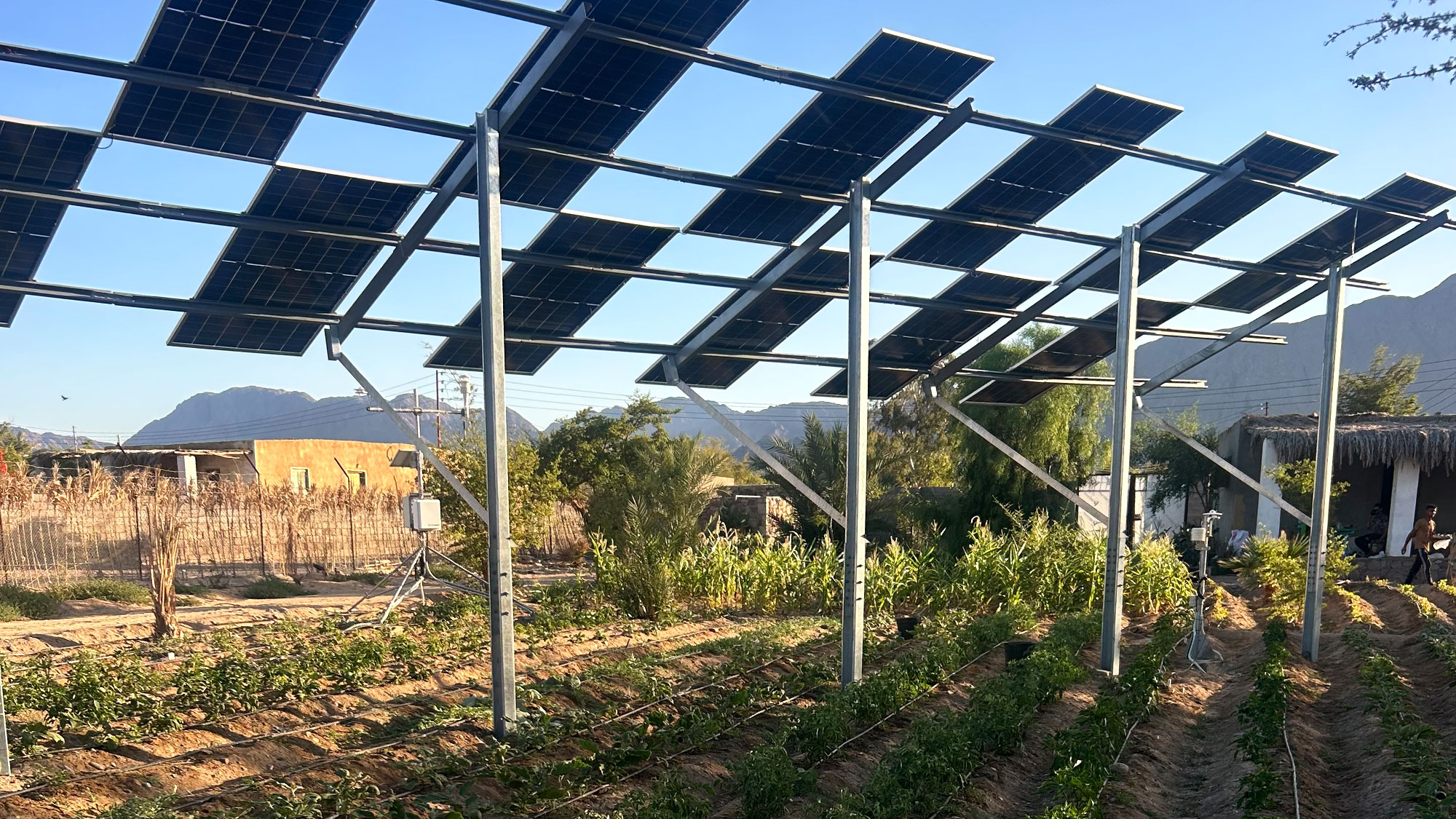
- Reduced Evapotranspiration: Shade lowers the ambient temperature of the soil surface, significantly cutting down the rate at which precious irrigation water evaporates into the atmosphere. Field experiments conducted by researchers in the deserts of Nevada have demonstrated that this hydrological protection can shield even fragile, rare plant species from environmental collapse.
- Thermal Buffering: By intercepting direct solar radiation, the panels prevent the extreme temperature spikes that cause plant stomata to close prematurely, halting photosynthesis.
- Vertical and Urban Integration: Research out of Colorado highlights the versatility of the technology. Scientists cultivating crops in rooftop agrivoltaic systems found that shaded plants required up to two-thirds less water than their unshaded counterparts. Additionally, the overhead arrays shielded rooftop crops from high winds and scorching urban heat islands, while producing oversized produce, such as cucumbers growing to the size of baseball bats.
- Transparent Photovoltaics: Emerging technological adaptations, including semi-transparent solar panels, are pushing the boundaries of the field even further. These specialized panels allow targeted wavelengths of light necessary for photosynthesis to pass through to the crops below while simultaneously harvesting solar energy.
Overcoming the Land-Use Dilemma
Historically, the green transition has threatened to spark land-use conflicts. Vast utility-scale solar farms demand significant acreage, often displacing agricultural land or natural ecosystems. Agrivoltaics completely neutralizes this friction. By stacking agricultural production vertically beneath energy generation infrastructure, communities maximize their economic output per square meter. As Maged El-Said, founder of the Habiba Community, aptly summarizes: "I have the solution that I can have both. Well, why not?"
Official Statements and Expert Insights
Implementing a complex technological intervention across traditional farming communities requires careful listening, cultural sensitivity, and flexible engineering. Because every crop has distinct physiological requirements, rigid, one-size-fits-all guidelines do not exist.
Gofran Chowdhury, Head of Innovation at the renewable energy firm 3E and a key partner in the Egyptian agrivoltaics initiative, emphasizes the iterative nature of the campaign:
"There is no perfect guideline on how to get there, so I imagine many projects like ours will be trying out different things."
Chowdhury notes that the objective is not to impose foreign agricultural practices onto generational farmers, but rather to bolster existing livelihoods:
"We want to adapt and see what is the community doing right now, and trying to see if we can support them with that adaptation."
On the ground in South Sinai, Maged El-Said of the Habiba Community reports encouraging early outcomes following the installation of the pilot arrays in May:
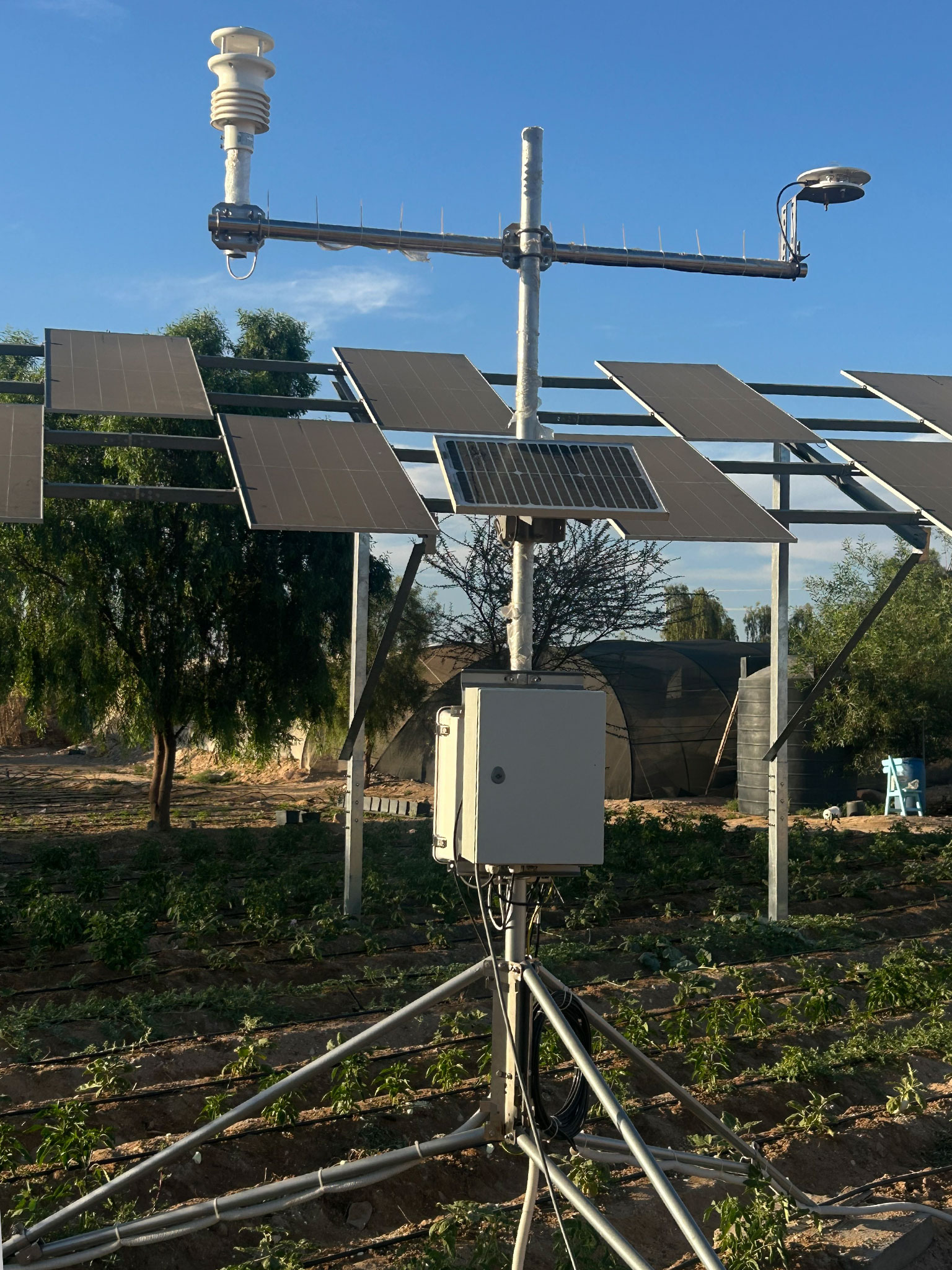
"Honestly, it’s growing well for the first time," El-Said remarks, pointing specifically to the unexpected vigor of local watermelon crops thriving under the protective solar canopy.
While comprehensive yield data is still being accumulated through ongoing seasonal monitoring, these early field observations validate the theoretical models developed by international agronomists.
Future Outlook: Scaling Resilience Along the Nile
As Egypt’s pilot projects mature, the initiative’s organizers face critical strategic decisions regarding scalability and infrastructure integration. Moving forward, rural communities must determine whether agrivoltaic systems are best deployed by individual landowners or through cooperative, community-wide syndicates.
Equally vital is the question of energy distribution. The clean electricity generated by the overhead photovoltaic panels currently powers local irrigation pumps—a massive operational cost savings for farmers who traditionally relied on diesel generators. However, the vision for the future extends far beyond water pumping.
Engineers and community leaders are exploring the potential of channeling excess solar energy into desalination plants designed to purify the region’s abundant brackish groundwater. By converting unpotable water into fresh H2O, these communities could dramatically expand their total arable acreage, supporting even more agricultural and agrivoltaic expansion.
This creates a powerful, self-reinforcing cycle: solar energy powers desalination, providing fresh water to expand agriculture; agricultural plots are shaded by solar panels, saving water and cooling the microclimate; and the resulting crop yields sustain local populations while generating green electricity to repeat the loop.
Ultimately, agrivoltaics represents a profound paradigm shift for climate-vulnerable regions like Egypt. By merging the ancient wisdom of cultivating the desert with 21st-century renewable engineering, Egyptian farmers are proving that adaptation and innovation are as enduring a part of their heritage as the mighty Nile itself. As global temperatures continue to climb, these sun-shielded fields offer a resilient blueprint for feeding a warming world.