

Executive Overview
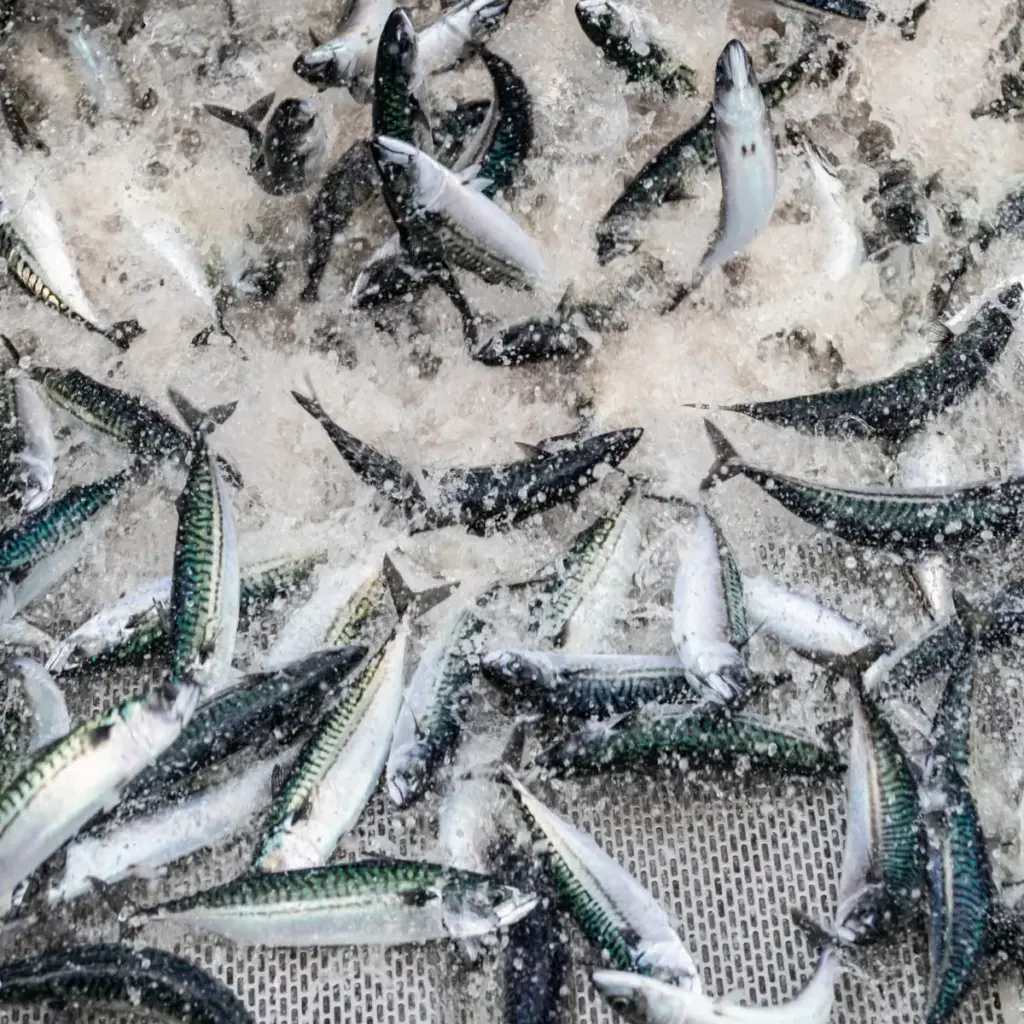
Despite a marginal, short-term biological rebound that has offered temporary relief to conservationists and commercial fishers alike, the Northeast Atlantic mackerel stock remains under unprecedented, long-term ecological pressure. Marine scientists, environmental watchdogs, and independent fisheries experts are issuing urgent warnings that the population is far from safe. In response to ongoing vulnerability, scientific advisory bodies have called for an immediate 11% reduction in total catch limits to prevent the stock from tipping past the point of no return.
The crisis facing one of Europe’s most commercially and culturally vital pelagic species is not merely a localized fishing dispute; it is a profound failure of international governance, regulatory alignment, and sustainable resource management. According to data compiled by marine conservation groups, the Northeast Atlantic mackerel population has plummeted by an alarming 72% since 2016. Despite international treaties and rigorous domestic legislation enacted within the United Kingdom and the European Union designed to enforce precautionary limits, the stock continues to languish well below the biomass thresholds legally required to ensure long-term viability.
Environmental organizations, most notably the Blue Marine Foundation, argue that while recent assessments show the stock has narrowly skirted a catastrophic drop, this temporary stabilization masks a deeply alarming baseline. Critics contend that coastal states and international negotiating bodies have continually ignored scientific advice, pushing catch quotas dangerously close to the historical margins of error that have driven countless other commercial fish species into commercial extinction. As negotiations over annual quotas intensify, the plight of the Northeast Atlantic mackerel has become a crucial test case for whether modern marine management can prioritize ecological preservation over short-term economic gains.
Detailed Chronology: The Decadel-Long Decline of Mackerel Stocks
To fully grasp the gravity of the current situation, it is necessary to examine the trajectory of the Northeast Atlantic mackerel fishery over the past decade. The unfolding crisis is the product of years of overexploitation, geopolitical friction, and shifting migration patterns accelerated by climate change.
2015–2016: The Peak and the Turning Point
At its height during the mid-2010s, the Northeast Atlantic mackerel stock appeared robust, supporting a lucrative, multi-national pelagic industry spanning the UK, Norway, Iceland, the Faroe Islands, and the European Union. However, 2016 marked a critical turning point. Unbeknownst to many outside the scientific community, recruitment failures—where fewer young fish survive to maturity—began to plague the population. Concurrently, total allowable catches (TACs) agreed upon by coastal states consistently exceeded the maximum sustainable yield (MSY) advice provided by the International Council for the Exploration of the Sea (ICES).
2017–2020: Escalating Quota Wars and the Brexit Factor
As the biomass began its steep descent, geopolitical tensions complicated conservation efforts. Following the United Kingdom’s exit from the European Union, UK waters became an independent coastal negotiating zone, fracturing an already fragile consensus on stock management. Coastal nations routinely engaged in "autonomous quota setting," where individual governments unilaterally assigned themselves higher catch limits than what was scientifically recommended. During this period, the cumulative catch totals consistently overshot ICES advice by 20% to 40% annually, severely undermining the resilience of the spawning stock biomass.
2021–2024: Plummeting Biomass and Climate Displacement
By the early 2020s, the cumulative impacts of overfishing manifested in stark population metrics. The stock plummeted by nearly three-quarters compared to 2016 levels. Compounding the issue, warming ocean temperatures driven by climate change shifted the geographic distribution of mackerel stocks further north and west into international waters, particularly around Iceland and the Faroe Islands. This northward migration triggered intense disputes over historical fishing rights, leading to a breakdown in comprehensive coastal state agreements and leaving the fishery operating without a robust, multi-lateral management pact for consecutive years.
2025–2026: The Marginal Rebound and Current Standpoint
Recent assessments entering late 2026 indicate a slight, tentative biological stabilization. Favorable environmental conditions in specific spawning grounds allowed a modest number of juvenile fish to enter the adult population, halting the immediate freefall of the biomass. However, marine biologists emphasize that this stabilization is fragile. The stock remains dangerously close to critical biological reference points, prompting scientists to insist that any relaxation of fishing pressure would be catastrophic, thereby necessitating the mandated 11% reduction in catch levels.
Supporting Context & Metrics: The Biology and Economics of the Crisis
Understanding the Northeast Atlantic mackerel (Scomber scombrus) requires examining both its ecological role as an apex pelagic predator and prey species, and its immense economic footprint across the North Atlantic rim.
Ecological Importance
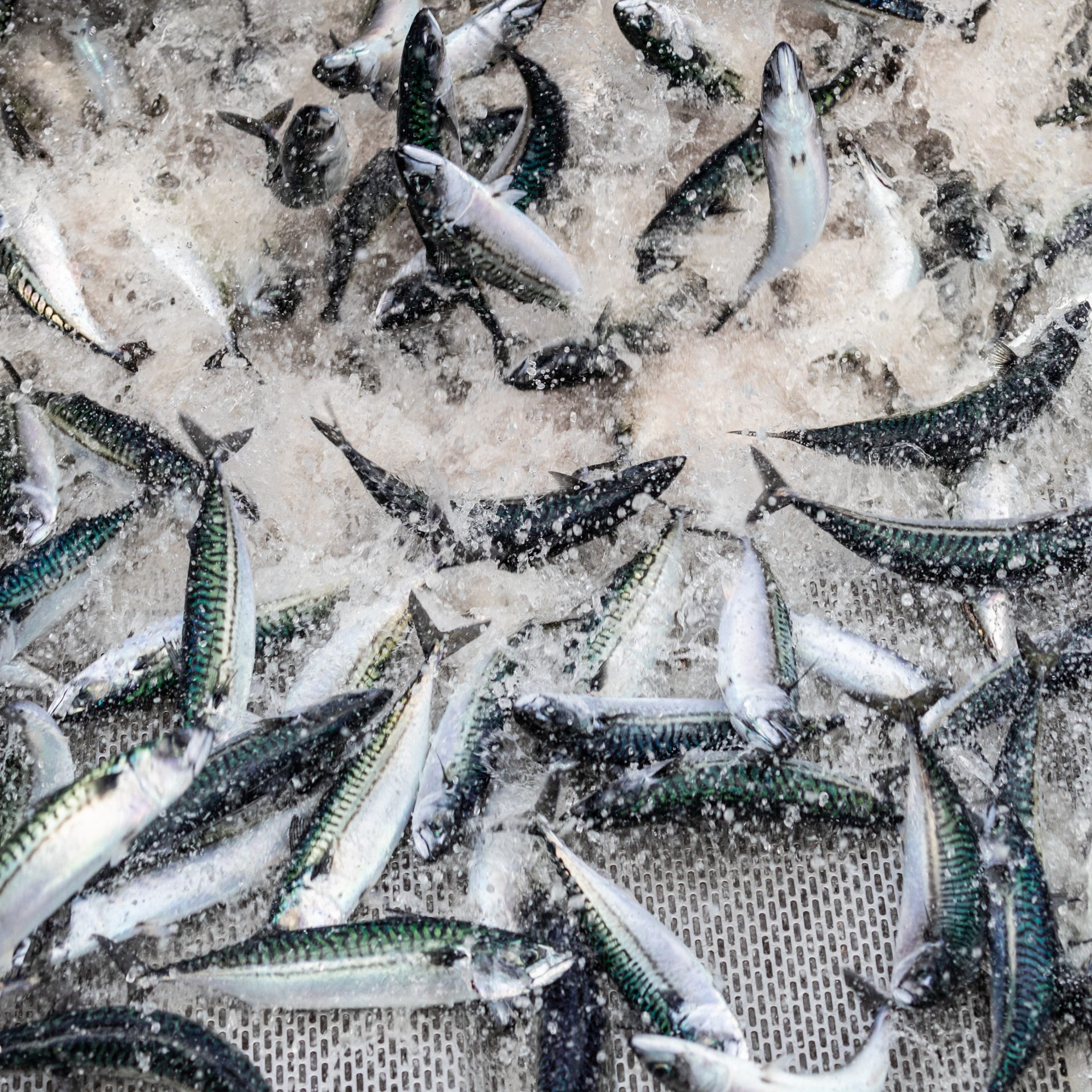
Mackerel are fast-swimming, highly migratory pelagic fish that form massive schools in the open ocean. They play a critical trophic role in marine ecosystems, serving as both voracious predators of smaller fish and zooplankton, and as a vital energy source for larger marine predators, including cetaceans, sharks, and sea birds. Because they school densely, they are highly vulnerable to modern industrial fishing techniques, particularly mid-water trawling and purse seining. When a pelagic stock of this magnitude experiences a 72% collapse, the ripple effects destabilize the entire marine food web.
Economic Value and Governance Failures
Economically, the Northeast Atlantic mackerel fishery is worth hundreds of millions of Euros annually, supporting thousands of jobs across Scotland, Norway, Ireland, Iceland, and the broader EU. Key export markets in Asia—particularly Japan—place a high premium on rich, high-fat Atlantic mackerel.
However, this high economic value has been the stock’s undoing. The absence of a binding, comprehensive Coastal State Agreement has created a classic "Tragedy of the Commons." Because individual nations refuse to curb their domestic fishing fleets for fear of losing market share, the collective sum of autonomous quotas habitually eclipses ecological safety limits.
| Metric / Indicator | Historical Peak (2016) | Current Status (2026) | Required Action / Target |
|---|---|---|---|
| Stock Biomass Trend | Baseline 100% | Down ~72% from peak | Rebuild to safe biological limits |
| Scientific Advice Adherence | Systematically exceeded | Marginally improved, still deficient | 11% catch reduction |
| Governance Framework | Fragmented post-Brexit | Unresolved coastal state disputes | Binding multi-lateral pact |
| Recruitment Rates | Moderate to high | Intermittent and volatile | Protection of spawning zones |
Official Statements and Stakeholder Perspectives
The debate surrounding the management of the Northeast Atlantic mackerel fishery has exposed deep rifts between conservationists, commercial fishers, and governmental regulators.
Jonny Hughes, fisheries policy lead at the Blue Marine Foundation, pulled no punches in his assessment of the current crisis. Highlighting the stark reality behind the marginal biological recovery, Hughes emphasized that governments have walked an alarmingly thin line between management and disaster:
"The stock has declined by 72% since 2016 and is still below the level required by international treaties and UK domestic law," Hughes stated.
He further cautioned against complacency, adding: "The fact the stock has avoided a further decline is good, but it highlights the uncomfortable reality that governments came dangerously close to repeating the mistakes that have driven other fish stocks into collapse."
Conversely, representatives from commercial fishing federations argue that science-based quotas often fail to account for socio-economic realities and practical fleet operations. Industry spokespeople maintain that fishers have already absorbed significant financial pain through previous quota adjustments and that further reductions could bankrupt independent operators, particularly in rural coastal communities where alternative employment is scarce.
Meanwhile, independent marine scientists and policy analysts counter that economic survival is inextricably linked to ecological sustainability. Without a healthy, abundant fish stock, the commercial fishery will inevitably face permanent economic ruin through natural stock collapse rather than managed reduction.
Future Outlook: A Critical Juncture for North Atlantic Fisheries
As policymakers prepare for upcoming international quota negotiations, the future of the Northeast Atlantic mackerel hangs in the balance. The path forward demands radical reform across multiple fronts if the fishery is to avoid the fate of the Northwest Atlantic cod.
1. Enforcing Scientific Advice in Quota Setting
The primary imperative is absolute alignment between political ambition and scientific consensus. Coastal states—including the UK, Norway, the EU, Iceland, and the Faroe Islands—must abandon the practice of setting inflated autonomous quotas. Adopting the recommended 11% reduction in catch levels is non-negotiable if the biomass is to recover to levels mandated by international law.
2. Establishing a Comprehensive Coastal State Agreement
A modernized, legally binding management treaty that equitably distributes quotas based on updated stock distributions and climate migration patterns must be prioritized. Without a unified governance framework, individual nations will continue to incentivize overfishing to capture short-term political and economic windfalls.
3. Adapting to Climate-Driven Distribution Shifts
As ocean warming alters migration routes, management frameworks must become more flexible and adaptive. Real-time spatial management, temporary closures of critical spawning grounds, and advanced electronic monitoring of vessels are essential tools to protect juvenile and spawning fish from targeted industrial pressure.
Conclusion
The slight biological rebound observed in the Northeast Atlantic mackerel stock should be interpreted by governments not as a victory, but as a reprieve—a final warning shot. The margin for error has evaporated. Whether international policymakers possess the political courage to enforce painful, necessary reductions and prioritize long-term marine stewardship over short-term political expediency will determine whether the mackerel remains a thriving pillar of the North Atlantic ecosystem or joins the tragic history of collapsed global fisheries.



