

Executive Overview
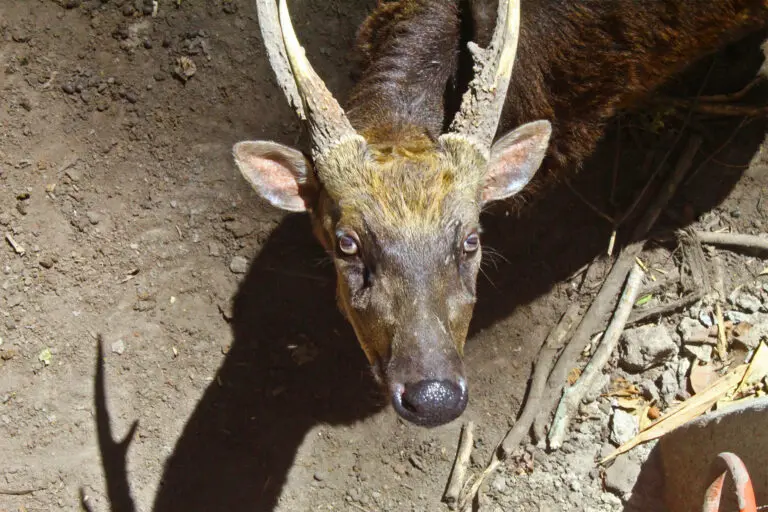
In the dense, shadowed rainforests of the central Philippines, a silent extinction crisis has been unfolding for decades. Once roaming freely across at least six major islands, the Visayan spotted deer (Rusa alfredi)—one of the world’s most distinctive and threatened cervids—has been pushed to the absolute brink of survival. Today, habitat fragmentation, relentless deforestation, and historical overhunting have restricted this nocturnal, strikingly patterned ungulate to just two remaining island refuges: Negros and Panay. With fewer than 700 mature individuals estimated to remain in the wild as of the last comprehensive count in 2016, the species occupies an increasingly precarious perch on the edge of oblivion.
However, a revolutionary turning point has arrived from an unexpected frontier: the microscopic realm of genomics. In a monumental scientific milestone, researchers from Silliman University and the Philippine Genome Center Visayas have successfully sequenced the first-ever draft genome of the Visayan spotted deer. This breakthrough marks the inaugural full genomic mapping of any endangered mammal native to the Philippines.
Derived from the DNA of a single captive-born deer named Abraham, who lived and died at Silliman University’s Center for Tropical Conservation Studies (CENTROP), this 2.5-billion-letter genetic blueprint is far more than an academic achievement. It provides conservationists with an unprecedented, high-resolution roadmap to reverse generational inbreeding, revitalize captive breeding programs, and strategically manage dwindling wild populations. As international conservation frameworks race against the clock to protect global biodiversity, this genetic key could spell the difference between recovery and permanent erasure for Rusa alfredi.
Detailed Chronology: From Abundance to the Brink of the Abyss
To understand the profound weight of this genomic breakthrough, one must trace the rapid unraveling of the Visayan spotted deer’s historical range and population stability.
Pre-Industrial Abundance and Island Isolation
Centuries ago, Rusa alfredi was an integral component of the rich, endemic ecosystems spanning the central Philippine islands—specifically Panay, Negros, Cebu, Guimaras, Masbate, and Leyte. Evolving in isolation, these compact, dark-brown deer adorned with distinct white spots adapted perfectly to the dense primary and secondary tropical rainforests. They played a critical ecological role as seed dispersers and grazers, maintaining the structural health of their island habitats.
The Twentieth Century Onset of Decline
As the Philippines underwent rapid agricultural expansion and commercial logging throughout the 20th century, the landscape shifted dramatically. Unchecked deforestation decimated the lowland forests that the Visayan spotted deer called home. By the latter half of the century, rampant hunting for bushmeat and the illegal pet trade compounded the habitat loss.
The cascading effects of this ecological pressure did not go unnoticed by the global conservation community. In 1988, the International Union for Conservation of Nature (IUCN) officially recognized the escalating danger, listing the species as endangered. Yet, the downward spiral continued unabated. By the turn of the 21st century, the deer had vanished entirely from Cebu, Guimaras, Masbate, and Leyte, surviving in dwindling, highly fragmented pockets exclusively on Negros and Panay.
Regulatory Milestones and the 2016 Census
Recognizing the escalating emergency, Philippine environmental authorities elevated the conservation status of the species. In 2019, the Department of Environment and Natural Resources (DENR) formally classified the Visayan spotted deer as nationally critically endangered under Administrative Order 2019-09.
This administrative urgency was heavily backed by field data. The last comprehensive population census, conducted in 2016, painted a grim picture: approximately 700 mature individuals remained across the entirety of their restricted natural range. Small, isolated breeding populations were established in captive facilities—such as CENTROP, the Mari-it Wildlife and Conservation Park, and the Negros Forest Park—as insurance against total extinction in the wild. However, these captive enclaves faced their own silent, insidious threat: the invisible erosion of genetic diversity.
Supporting Context & Metrics: Unlocking the Code of Abraham
The decision to sequence the genome of the Visayan spotted deer was born out of a critical necessity to diagnose and treat this hidden genetic decay. Led by collaborative teams at Silliman University and the Philippine Genome Center Visayas, researchers focused their efforts on a specific tissue sample.
The Genomic Architecture
The subject of this historical sequencing was Abraham, a captive male Visayan spotted deer raised at CENTROP, where he lived out his life before passing away. Utilizing advanced high-throughput sequencing technologies, scientists successfully mapped Abraham’s complete genome, unearthing a massive biological dataset:
- Total Genome Size: Approximately 2.5 billion DNA base pairs.
- Gene Count: 24,531 distinct genes identified.
This achievement represents a monumental leap forward for Philippine conservation biology. Prior to this project, no comprehensive genomic reference existed for any of the nation’s heavily threatened endemic mammalian species.
Diagnosing Inbreeding: The Heterozygosity Score
With the draft genome assembled, the bioinformatics team turned their attention to evaluating the animal’s genetic health. They calculated Abraham’s heterozygosity score—a standard metric used by geneticists to measure the diversity of alleles (gene variants) inherited from parents. In healthy, robust, and genetically diverse wild populations, a typical heterozygosity score hovers around 0.3.
Abraham’s score registered at a startlingly low 0.17.
This stark disparity provided mathematical confirmation of what conservationists had long suspected: decades of demographic isolation within captive facilities had allowed generational inbreeding to quietly take hold. Because the captive colony was founded on a very small number of individuals and had remained largely closed off from outside genetic inputs, mating between closely related animals had steadily impoverished the population’s gene pool.
Lower heterozygosity typically correlates with diminished immune system resilience, lower reproductive success, and an increased susceptibility to congenital disorders and environmental stressors. For an endangered species already grappling with external pressures, genetic erosion poses an existential threat just as dangerous as habitat loss.

Official Statements: Perspectives from the Frontlines of Conservation
The unveiling of the Visayan spotted deer genome has generated immense optimism among the researchers and geneticists spearheading the project, who view the data not as a discouraging diagnosis, but as an actionable prescription for recovery.
Albert Noblezada, who oversees the bioinformatics pipeline at the Philippine Genome Center Visayas, contextualized the findings regarding Abraham’s low genetic diversity.
"Since Abraham is from a captive population, we expected to get a low heterozygosity result," Noblezada noted. He elaborated that the decades-long physical isolation of the captive colonies created a structural bottleneck, allowing inbreeding depression to quietly infiltrate the closed population structures without immediate visual warning.
Rather than accepting this genetic bottleneck as an insurmountable dead end, field biologists sought to mine the newly unlocked genomic data for hidden reservoirs of resilience. Persie Mark Sienes, a biologist at Silliman University, spearheaded an exhaustive search through the genetic architecture to determine whether unique, beneficial variations still lurked within the population.
"We wanted to see just how much genetic diversity remained in the population and whether there are individuals that carry genetic variations that could improve breeding outcomes," Sienes explained.
His persistence paid off. Scrutinizing the genomic markers, Sienes made a critical discovery that altered the trajectory of the conservation program.
"We have identified a rare allele found only in one individual here, and luckily this individual is still sexually active," Sienes announced.
This rare allele represents a precious genetic asset—a thread of distinct biological diversity that can now be intentionally targeted, protected, and propagated through selective pairing.
Robert Guino-o, another lead biologist at Silliman University, emphasized that this discovery provides the definitive empirical proof required to overhaul decades-old conservation practices.
"This is the proof we needed to revamp CENTROP’s captive breeding," Guino-o stated firmly. Announcing a major operational pivot, he added, "আমরা are pursuing a genome-based breeding protocol," noting that this precise, DNA-informed methodology will completely replace traditional management systems that relied entirely on physical pedigree tracing and visual record-keeping.
Future Outlook: A New Genomic Roadmap for Species Recovery
Armed with a 2.5-billion-letter genetic manual and a newly identified strategy for selective genetic rescue, Philippine conservationists are designing a comprehensive, multi-phase action plan to secure the future of the Visayan spotted deer.
1. Revamping Inter-Facility Breeding Networks
For nearly two decades, institutional isolation has hampered the captive management of Rusa alfredi. The last documented deer exchange between CENTROP and the Negros Forest Park took place all the way back in 2007. Researchers are now calling for the immediate resumption and formalization of structured deer exchanges between CENTROP, the Mari-it Wildlife and Conservation Park, and the Negros Forest Park. By actively transferring animals with distinct genetic profiles across these facilities, conservationists can artificially simulate gene flow and counteract localized inbreeding.
2. Bridging the Gap Between Captive and Wild Populations
Perhaps the most ambitious component of the future outlook involves breaking down the barrier between captive-bred populations and their wild counterparts. Over generations of captive management, animals housed in facilities risk losing behavioral adaptations necessary for wild survival, while wild populations face increasing genetic stagnation due to habitat fragmentation.
To test the feasibility of merging these two demographic groups safely, researchers have laid out plans to trial managed mixing at the Bayawan Nature Reserve on Negros Island. Spanning an expansive 300 hectares (approximately 741 acres), the reserve currently plays host to a semi-wild population of 70 Visayan spotted deer. By introducing genetically screened individuals into this semi-wild environment, scientists hope to observe how well captive-wild hybrids integrate, survive, and reproduce, ultimately closing the genetic gap that currently separates the two factions.
A Beacon for Philippine Conservation
The sequencing of the Visayan spotted deer genome transcends the boundaries of a single species study. It establishes a groundbreaking methodological precedent for wildlife conservation across the Philippine archipelago—a recognized global biodiversity hotspot harboring an extraordinarily high concentration of endemic, threatened species.
By converting raw DNA data into a functional, data-driven breeding protocol, Silliman University and the Philippine Genome Center Visayas have transformed a single deer named Abraham into an enduring blueprint for survival. As these genome-based conservation strategies take root in the rainforests and reserves of Negros and Panay, Rusa alfredi steps back from the precipice, armed with the most powerful tool modern science can provide: its own restored future.



