

Executive Overview
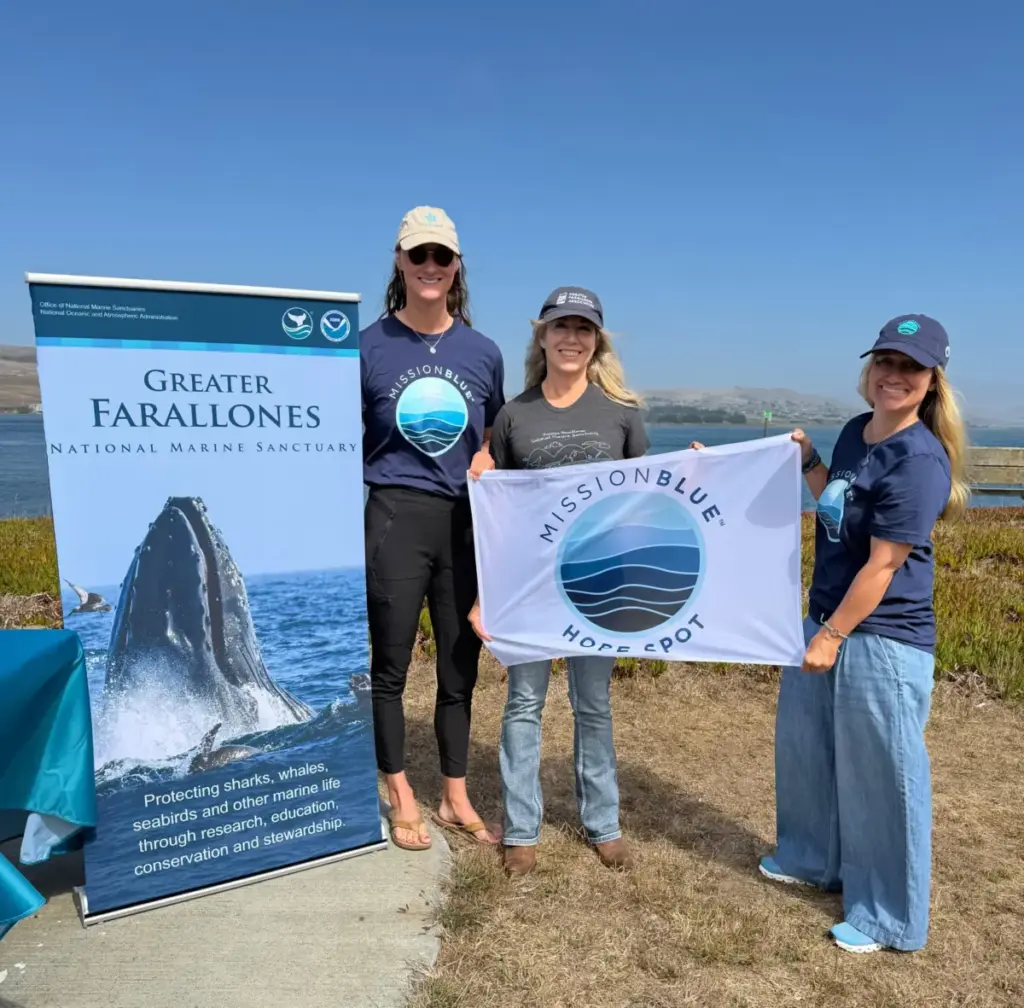
Along the rugged, fog-shrouded expanse of the California coastline, a powerful convergence of athletic endurance and marine conservation is drawing national attention. Shannon McIntyre Rake of the renowned ocean conservation foundation Mission Blue recently appeared on KTVU to articulate the urgent imperatives of marine stewardship in Bodega Bay. This media engagement followed a high-profile visit from Bay Area native and elite endurance swimmer Catherine Breed, who is currently undertaking a historic, grueling 900-mile open-water swim the length of the California coast.
Breed’s unprecedented aquatic journey is far more than a physical test of human endurance; it functions as a floating symposium on the state of the Pacific Ocean. As she navigates the volatile swells, treacherous currents, and frigid waters from the Oregon border down to the Mexican boundary, Breed is intentionally pausing in coastal enclaves like Bodega Bay. Her mission is to amplify the voices of local grassroots organizations, marine biologists, indigenous stewards, and international advocacy groups who are working tirelessly on the front lines of ocean conservation.
During her KTVU interview, McIntyre Rake illuminated the critical ecological significance of Bodega Bay—a vital biological hotspot within the broader California Current ecosystem. She detailed how Mission Blue, founded by legendary oceanographer Dr. Sylvia Earle, designates and advocates for "Hope Spots"—special marine areas that are scientifically identified as critical to the health of the ocean. The dialogue underscored a stark reality: while California boasts some of the most progressive marine protection policies in the United States, its coastal habitats face escalating threats from climate change, industrial runoff, overfishing, and habitat degradation.
This report provides an in-depth examination of the convergence between Breed’s historic expedition and Mission Blue’s localized conservation framework in Bodega Bay. By analyzing the structural integrity of California’s Marine Protected Areas (MPAs), evaluating the ecological value of Sonoma County’s coastline, and reviewing official statements from environmental leaders, this feature explores the past, present, and future of Pacific marine conservation.
Detailed Chronology: The Genesis of an Epic Journey and the Bodega Bay Stopover
To understand the resonance of Shannon McIntyre Rake’s appearance on KTVU, one must first trace the trajectory of Catherine Breed’s monumental 900-mile coastal transit and its intersection with Mission Blue’s strategic advocacy.
The Launch: Preparing for the 900-Mile Odyssey
The conceptual framework for Breed’s expedition was years in the making, requiring meticulous logistical planning, physical conditioning, and environmental coordination. As a Bay Area native with a deep-rooted affinity for the Pacific, Breed understood the ocean not merely as a recreational playground, but as a dynamic, fragile life-support system under siege.
When Breed formally launched her swim, she did so with a dual mandate: to push the boundaries of human athletic potential in marathon open-water swimming, and to transform every stroke into a megaphone for marine conservation. The journey demanded navigating unpredictable weather windows, avoiding hazardous marine traffic lanes, managing hypothermia risks, and coordinating safety watercraft support crews across hundreds of miles of remote and rugged coastline.
Entering Sonoma County Waters
As Breed pressed southward along the Northern California expanse, she entered the marine jurisdictions of Mendocino and Sonoma counties—regions renowned for their dramatic sea-cliffs, kelp forests, and nutrient-rich upwelling zones. It was within this stretch that the ecological stakes of her journey came into sharp focus.
The approach to Bodega Bay marked a pivotal milestone in the expedition. Bodega Bay is not only a historically rich fishing and maritime community; it is also a vital ecological nexus supported by institutions like the University of California, Davis, Bodega Marine Laboratory. When Breed pulled ashore in the Bodega Bay area, she was greeted by local conservationists, marine scientists, and regional representatives from organizations aligned with Mission Blue’s global network.
The KTVU Broadcast and Media Amplification
Recognizing the synergy between Breed’s physical feat and institutional advocacy, KTVU invited Shannon McIntyre Rake into the studio to contextualize the swim within the broader framework of ocean health.
During the broadcast, McIntyre Rake detailed how community touchpoints like Breed’s stop in Bodega Bay serve as catalysts for public engagement. Rather than viewing marine conservation as an abstract, academic discipline governed entirely by bureaucratic legislation, the public was invited to see it through a human lens. McIntyre Rake emphasized that coastal communities are the frontline defenders of marine biodiversity. The media appearance successfully bridged the gap between macro-level conservation theory—such as global carbon sequestration and marine protected area networks—and micro-level community action in Sonoma County.
Supporting Context & Metrics: The Ecological Significance of Bodega Bay
To fully appreciate the urgency articulated by Mission Blue and highlighted by Catherine Breed’s swim, one must examine the specific ecological architecture of Bodega Bay and the broader California Current Large Marine Ecosystem (CCME).
+-------------------------------------------------------------------+
                  CALIFORNIA CURRENT ECOSYSTEM DYNAMICS
+-------------------------------------------------------------------+
  [Upwelling Zones] ---> Nutrient-Rich Deep Water Rises to Surface
                             |
                             v
  [Phytoplankton Bloom] ---> Base of Marine Food Web Energized
                             |
                             v
  [Biodiversity Hub]   ---> Kelp Forests, Finfish, Marine Mammals, Seabirds
                             |
                             v
  [Conservation Focus] ---> Mission Blue "Hope Spots" & MPAs (Bodega Bay)
+-------------------------------------------------------------------+
The California Current and Upwelling Dynamics
Bodega Bay sits adjacent to one of the most productive marine environments on Earth, driven by the California Current system. Coastal upwelling—a process wherein northerly winds displace surface waters, drawing cold, nutrient-rich water up from the deep ocean—fuels explosive phytoplankton blooms. These microscopic organisms form the foundation of an extraordinarily complex food web that supports vast populations of finfish, marine mammals, seabirds, and benthic invertebrates.
However, this same upwelling system makes the region particularly vulnerable to climate-driven disruptions. Ocean acidification, driven by the absorption of anthropogenic carbon dioxide, lowers pH levels in upwelling waters, threatening the calcium carbonate shells of Dungeness crabs, abalone, and microscopic pteropods. Furthermore, marine heatwaves ("the Blob" phenomena) have repeatedly decimated kelp forests along the Northern California coast, stripping away critical habitat for juvenile rockfish and red abalone.
The Role of Mission Blue and "Hope Spots"
Founded by Dr. Sylvia Earle—hailed by Time magazine as its first "Hero for the Planet"—Mission Blue utilizes a science-based approach to rally public support for a global network of marine protected areas known as "Hope Spots."
While national parks and terrestrial nature reserves have long enjoyed widespread cultural and political support, the open ocean has historically suffered from a "tragedy of the commons" mentality. Mission Blue’s Hope Spots are recognized as areas that are scientifically identified as critical to the health of the ocean, representing the "heart of the planet."
Bodega Bay and the surrounding Sonoma-Mendocino coast embody the criteria required for Hope Spot consideration. They feature:
- High Biodiversity: Abundant marine life, including migrating gray whales, harbor seals, Steller sea lions, and diverse seabird colonies.
- Economic and Cultural Value: Indigenous heritage sites, sustainable commercial and recreational fisheries, and deep-rooted maritime traditions.
- Vulnerability to Anthropogenic Stressors: Proximity to urban runoff, shipping lanes, and localized industrial impacts.
The Intersection of Endurance and Policy
Catherine Breed’s 900-mile swim serves as a physical metaphor for the resilience required to defend these ecosystems. Just as an endurance athlete must battle relentless headwinds and punishing water temperatures, marine conservationists must navigate political apathy, regulatory rollbacks, and economic pressures. By swimming past California’s network of Marine Protected Areas (MPAs), Breed visually connects jurisdictions that are often separated on bureaucratic maps into a continuous, living ribbon of protected blue space.
Official Statements and Stakeholder Perspectives
The discourse surrounding the Bodega Bay conservation initiative features insights from prominent figures in marine biology, athletic advocacy, and environmental protection.
Shannon McIntyre Rake on Community-Led Stewardship
During her interview on KTVU, Shannon McIntyre Rake emphasized that institutional policy alone cannot save the ocean; it requires grassroots activation.
"When someone like Catherine undertakes a journey of this magnitude, she is holding up a mirror to the California coast," McIntyre Rake explained during the broadcast. "She is showing us how fragile these ecosystems are, but more importantly, she is introducing us to the everyday heroes in places like Bodega Bay who are fighting to protect water quality, restore kelp forests, and ensure that future generations can experience a vibrant, living ocean."
McIntyre Rake highlighted that Mission Blue’s strategy relies heavily on empowering regional stakeholders. National and international conservation mandates must be translated into actionable, community-driven projects, whether that involves local beach cleanups, citizen science monitoring of intertidal zones, or advocacy for stricter municipal water quality standards.
Catherine Breed on the Lived Experience of the Ocean
Reflecting on her journey and her stop in Bodega Bay, Catherine Breed has consistently pointed to the visceral, sensory reality of swimming through changing marine environments.
In dispatches from her expedition, Breed has noted:
"When you spend hours upon hours swimming through the water, you feel every shift in temperature, every patch of turbidity, and every surge of current. You realize how intimately connected our coastal communities are to the health of the open sea. Stopping in Bodega Bay reminded me that behind every marine statistic is a passionate community of people who care deeply about the water in their backyard."
Breed’s perspective underscores the unique power of athletic expeditions to humanize environmental issues. By transforming data points into a human narrative, her swim has galvanized local groups who might otherwise feel isolated in their conservation struggles.
Future Outlook: The Road Ahead for California Marine Conservation
As Catherine Breed completes the final legs of her historic 900-mile swim and Mission Blue continues its global advocacy work, the conversation inevitably shifts toward the future. What are the policy priorities, scientific imperatives, and community action items required to safeguard Bodega Bay and the broader California coast for the decades to come?
1. Scaling Up Marine Protected Area (MPA) Efficacy
California has established a pioneering network of MPAs designed to protect marine life and habitats. However, designation is only the first step. The future of conservation in regions like Bodega Bay depends on rigorous enforcement, continuous ecological monitoring, and adaptive management. As climate change rapidly alters baseline environmental conditions, MPA boundaries and management strategies must remain flexible enough to respond to shifting fish stocks, migrating species ranges, and thermal anomalies.
2. Investing in Kelp Forest Restoration
The catastrophic collapse of Northern California’s bull kelp forests—largely driven by an explosion of purple sea urchins following the die-off of predatory sunflower sea stars—remains an ecological emergency. Moving forward, conservation groups, academic institutions like UC Davis, and state agencies must collaborate on aggressive restoration techniques. These include targeted urchin removal, exploratory kelp seeding, and the reintroduction or natural recovery of keystone predators.
3. Climate Resilience and Watershed Management
Marine conservation cannot be separated from terrestrial management. Protecting Bodega Bay requires robust watershed protection policies that mitigate agricultural runoff, reduce plastic pollution, and upgrade municipal stormwater infrastructure. As extreme weather events become more frequent due to a warming climate, protecting the immediate coastal fringe requires comprehensive, ecosystem-based management from the headwaters to the deep sea.
4. Amplifying Youth and Community Engagement
Ultimately, the momentum generated by Mission Blue, Shannon McIntyre Rake, and Catherine Breed must be channeled into long-term educational initiatives. Inspiring the next generation of marine scientists, policymakers, and ocean advocates is essential. By integrating coastal ecology into regional school curricula and providing platforms for community science, the stewardship ethos exemplified in Bodega Bay can become a permanent cultural norm.
Conclusion
The convergence of Catherine Breed’s historic 900-mile swim, Shannon McIntyre Rake’s advocacy through Mission Blue, and the vibrant local community of Bodega Bay represents a masterclass in modern environmental communication. It demonstrates that saving the oceans requires a dual commitment: the visionary, macro-level framework provided by global conservation networks, and the gritty, boots-on-the-ground dedication exhibited by coastal communities.
As Bodega Bay continues to face the complex challenges of a changing climate and industrial pressures, the collective efforts of athletes, scientists, and everyday citizens offer a beacon of hope. Through sustained vigilance, scientific rigor, and community mobilization, the pristine waters and rich biodiversity of California’s legendary coastline can be preserved for generations to come.
For those wishing to learn more about Mission Blue’s ongoing initiatives and to view the full interview, please visit the official KTVU Video Archive.



