Executive Overview
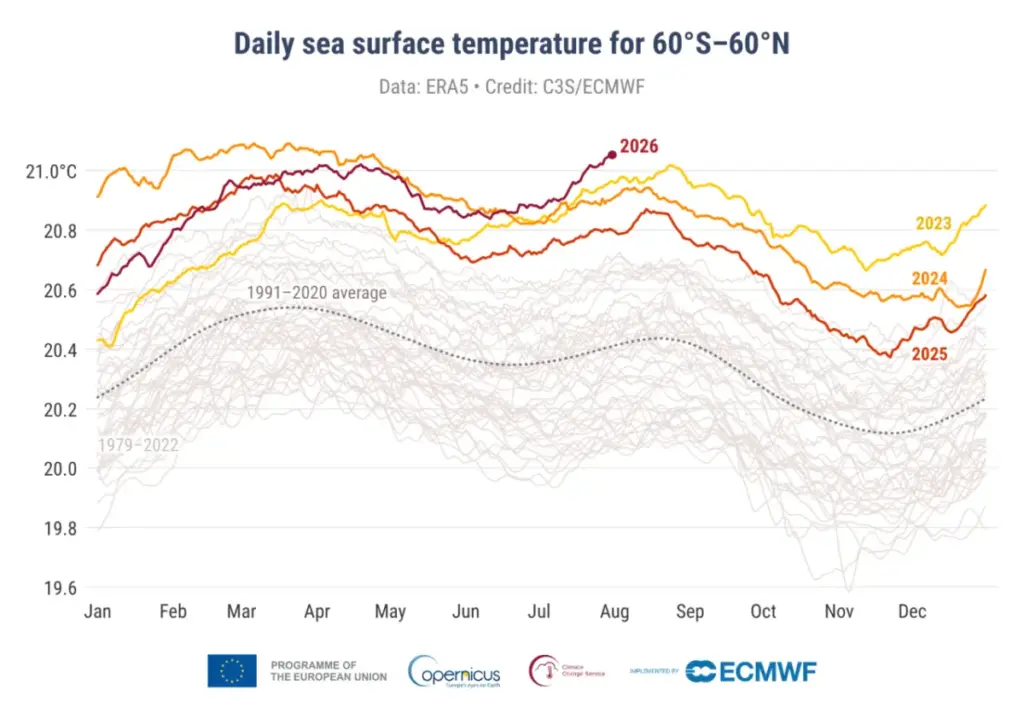
The Earth’s oceans are experiencing unprecedented thermal stress. Recent scientific assessments confirm that record-breaking sea surface temperatures are destabilizing marine ecosystems and degrading the ocean’s capacity to serve as the planet’s primary carbon sink. Against this alarming ecological backdrop, a broad and diverse international coalition—comprising African states, the European Union, select Latin American nations, and the Alliance of Small Island States (AOSIS)—has launched an ambitious diplomatic offensive ahead of the UN Climate Change Conference (COP31).
Their demand is straightforward yet revolutionary within the UN Framework Convention on Climate Change (UNFCCC) paradigm: elevate ocean protection from peripheral, non-binding side dialogues into formal, legally binding "negotiated decisions."
For years, marine considerations have been sidelined into voluntary, informal exchanges. However, as evidence mounts that ocean acidification, thermal expansion, and carbon-sink saturation pose existential threats to global climate stability, this coalition is pushing to integrate actionable marine conservation targets directly into core climate agreements.
In response, COP31 co-presidents Australia and Türkiye have initiated negotiations toward a voluntary "ocean roadmap." Designed as a concise action plan, this framework aims to harmonize regional and international strategies, bridging marine ecosystem restoration with national climate pledges.
Yet, this surge in diplomatic momentum faces a formidable structural obstacle: a rapidly tightening global climate finance landscape. As donor nations grapple with domestic fiscal constraints, shifting geopolitical priorities, and rising debt loads across the Global South, experts warn that ambitious ocean mandates risk becoming unfunded mandates.
The central challenge facing COP31 is not merely securing political consensus on the importance of marine ecosystems, but unlocking the financial mechanisms required to protect them before the oceanic carbon sink suffers irreversible damage.
+-----------------------------------------------------------------------------------+
|                            THE OCEAN-CLIMATE PARADOX                              |
+-----------------------------------------------------------------------------------+
|  ECOLOGICAL REALITY                               DIPLOMATIC HARDSHIP             |
|  • Ocean absorbs ~90% of excess global heat       • Ocean funding < 1% of total    |
|  • Absorbs ~25-30% of anthropogenic CO2              climate finance              |
|  • Marine heatwaves weakening biological pump     • Pushed to informal side-event  |
|  • Coral reefs & blue carbon ecosystems collapsing  dialogues rather than agendas  |
+-----------------------------------------------------------------------------------+
                                          |
                                          v
+-----------------------------------------------------------------------------------+
|                              THE COP31 MANDATE                                    |
+-----------------------------------------------------------------------------------+
|  Coalition Push (EU, AOSIS, African Group, LatAm)  -->  Formal Negotiated Text   |
|  Co-Presidency Strategy (Australia & Türkiye)      -->  Voluntary Ocean Roadmap  |
|  Looming Barrier                                   -->  Shrinking Public Finance |
+-----------------------------------------------------------------------------------+
Detailed Chronology: From Side-Event Dialogues to Mainstage Negotiations
The struggle to integrate ocean policy into the global climate governance framework has been long and arduous. Historically, marine management and climate regulation operated in institutional silos, with oceans addressed primarily under the UN Convention on the Law of the Sea (UNCLOS) and climate under the UNFCCC.
    2015                  2019                  2021                  COP31
  COP21 (Paris)         COP25 (Madrid)        COP26 (Glasgow)        Proposal
     |                     |                     |                     |
     v                     v                     v                     v
+------------+        +------------+        +------------+        +------------+
| Ocean      |        | Dubbed the |        | Mandated   |        | Coalition  |
| Preamble   | ---->  | "Blue COP" | ---->  | Annual     | ---->  | Demands    |
| Only       |        | Focus      |        | Ocean      |        | Negotiated |
|            |        |            |        | Dialogues  |        | Decisions  |
+------------+        +------------+        +------------+        +------------+
The Era of Exclusion and the Paris Baseline (2015)
When the landmark Paris Agreement was adopted in 2015, marine ecosystems were relegated to a single reference in the treaty’s preamble. Despite absorbing vast amounts of thermal energy and carbon dioxide, the oceans were treated as static background geography rather than active components of global climate regulation.
Between 2015 and 2018, coastal states and small island nations argued that ignoring ocean degradation undermined mitigation efforts, but these concerns failed to secure dedicated negotiating streams.
The "Blue COP" Turning Point and Glasgow Mandate (2019–2021)
The trajectory shifted at COP25 in Madrid (2019), officially branded as the "Blue COP." Intensive lobbying by maritime nations led to the formal recognition of the ocean-climate nexus.
This momentum culminated at COP26 in Glasgow (2021), where delegates permanently institutionalized the Ocean and Climate Change Dialogue under the Subsidiary Body for Scientific and Technological Advice (SBSTA).
While this ensured annual discussions on marine issues, the dialogue remained explicitly non-negotiated—functioning as an exchange of best practices rather than a mechanism for binding commitments or financial allocations.
The Push for Binding Mandates Ahead of COP31 (2024–Present)
By 2024, the limitations of non-binding dialogues had become evident. With marine heatwaves breaking historical records for consecutive months, a coalition of vulnerable and ambitious nations concluded that informal talks were insufficient.
Leading up to COP31, African states, the European Union, Latin American countries, and AOSIS submitted formal interventions demanding that ocean governance be elevated into the official outcome texts—the "negotiated decisions"—that bind signatory parties to action.
In response, the joint presidency of Australia and Türkiye began drafting a voluntary ocean roadmap to reconcile regional priorities with an actionable, international climate strategy.
Supporting Context & Metrics: The Oceans as a Crumbling Climate Shield
The urgency driving these diplomatic efforts is rooted in alarming scientific data. Oceans act as the planet’s thermal buffer, absorbing approximately 90% of the excess heat generated by greenhouse gas emissions and roughly 25 to 30% of anthropogenic carbon dioxide. However, recent oceanographic studies demonstrate that this planetary shield is suffering under structural strain.
Thermal Saturation and Carbon Sink Degradation
Published findings in journals such as Nature Climate Change highlight a worrying trend: rising sea surface temperatures (SSTs) are reducing the ocean’s capacity to absorb carbon dioxide. Warm water holds less dissolved gas than cold water, and extreme ocean warming weakens the "biological carbon pump"—the process by which marine organisms transport carbon from the surface ocean to the deep sea floor.
       Global Warming Trends & Marine Impact
       +-------------------------------------------------------+
       | Metric / System         | Observed Status/Impact      |
       +-------------------------+-----------------------------+
       | Ocean Heat Content      | Historic highs (Top 2000m)  |
       | Global CO2 Absorption   | Efficiency declining ~10-15%|
       | Blue Carbon Degradation | 30-50% lost globally        |
       | Ocean Adaptation Alloc. | < 1% of total climate finance|
+-------------------------+-----------------------------+- Record Sea Surface Temperatures: Over the past two years, global ocean temperature anomalies surpassed 40-year baselines, triggering widespread coral bleaching, shifts in marine species distribution, and disrupted atmospheric circulation patterns.
- Weakening Sink Capacity: Models indicate that if ocean temperatures continue their upward trajectory, ocean carbon uptake efficiency could decrease significantly by mid-century, accelerating atmospheric CO2 accumulation regardless of terrestrial emission cuts.
- Blue Carbon Vulnerabilities: Critical coastal ecosystems—mangroves, seagrass meadows, and tidal marshes—sequester carbon up to ten times faster per hectare than terrestrial tropical forests. Yet, over 30% of global blue carbon habitat area has been degraded or destroyed by coastal development, warming seas, and ocean acidification.
The Ocean Financial Deficit
Despite the critical role marine ecosystems play in global climate stability, funding for marine climate initiatives remains disproportionately low.
   TOTAL CLIMATE FINANCE FLOWS vs. OCEAN ACTION ALLOCATION
   =======================================================
   [==================================================]  Total Climate Finance
   [=]                                                   Ocean Finance (< 1%)
=======================================================- Funding Allocation Gap: Less than 1% of total international climate finance is allocated directly to ocean-focused mitigation and adaptation initiatives.
- Adaptation Funding Deficit: Developing coastal nations and Small Island Developing States (SIDS) face an estimated $300 billion annual adaptation funding deficit by 2030, with marine coastal defense and restoration receiving only a fraction of required capital.
- Shrinking Donor Budgets: Major multilateral climate funds are under pressure as key donor states curb foreign aid, threatening to widen the funding gap just as COP31 attempts to launch new marine initiatives.
Official Statements & Diplomatic Positions
The negotiations surrounding COP31 highlight diverging perspectives among global geopolitical blocs, balancing ecological urgency against fiscal constraints and sovereignty concerns.
+-----------------------------------------------------------------------------------+
|                        COP31 DIPLOMATIC BLOC POSITIONS                            |
+-----------------------------------------------------------------------------------+
|  AOSIS & AFRICAN GROUP         EUROPEAN UNION             CO-PRESIDENCY           |
|  • Demand formal mandates      • Target 30x30 integration  • Voluntary Ocean Roadmap|
|  • Require mandatory finance   • Link NDCs to ocean science• Pragmatic compromise  |
|  • Protect coastal livelihoods • Standardize monitoring   • Actionable regional plan|
+-----------------------------------------------------------------------------------+
Alliance of Small Island States (AOSIS) and the African Group
For island and coastal developing nations, the inclusion of oceans in negotiated outcomes is an existential imperative. In joint interventions submitted to the UNFCCC, representatives for AOSIS underscored that informal dialogues no longer suffice:
"For Small Island Developing States, the ocean is not a peripheral concern or an optional side event; it is our life support system, our economy, and our home. Leaving ocean action out of formal COP decisions ignores the reality of climate impacts. We can no longer settle for voluntary talks while our islands erode and our fisheries collapse."
Similarly, the African Group of Negotiators (AGN) emphasized the economic and food security risks associated with ocean warming, linking marine ecosystem health directly to climate adaptation funding:
"African coastal nations are absorbing the severe impacts of marine heatwaves and sea-level rise while contributing the least to global emissions. We need negotiated decision texts that guarantee targeted, predictable finance for coastal adaptation, resilient infrastructure, and blue carbon preservation."
The European Union and Latin American Nations
The European Union, alongside several Latin American states, has aligned with vulnerable nations in advocating for formal decision text. Their strategy focuses on integrating ocean targets into national climate strategies (Nationally Determined Contributions, or NDCs) and aligning them with the Kunming-Montreal Global Biodiversity Framework’s goal to protect 30% of ocean ecosystems by 2030 (30×30).
An EU climate diplomatic envoy stated:
"Integrating oceans into formal UNFCCC outcomes is essential to closing the global ambition gap. We must ensure that marine conservation targets are reflected in updated NDCs, backed by robust science, and aligned with international ocean governance instruments."
The Co-Presidency Strategy: Australia and Türkiye
Faced with balancing high-ambition demands against potential pushback from countries hesitant to take on new binding financial commitments, the co-presidency of Australia and Türkiye has proposed a pragmatic compromise: a voluntary ocean roadmap.
Speaking on behalf of the incoming presidency, an Australian climate official explained the rationale behind the initiative:
"Australia and Türkiye recognize that ocean health is fundamental to global climate stability. Our objective for COP31 is to deliver a concise, actionable roadmap that mobilizes regional and international partnerships. By fostering voluntary commitments grounded in scientific consensus, we aim to convert high-level diplomatic support into real-world conservation and financial flows."
Future Outlook: Ocean Governance, Financial Realities, and the Road to COP31
As negotiations advance toward COP31, the central challenge will be bridging the gap between high-ambition diplomatic goals and real-world fiscal limits. The success of the proposed ocean roadmap—and whether it can be elevated into a formal negotiated text—depends on resolving key structural challenges.
                   CRITICAL PATHWAY TO COP31
                   =========================
                             |
                             v
           +-----------------------------------+
           | Integrate Oceans into NDCs 3.0    |
           +-----------------------------------+
                             |
                             v
           +-----------------------------------+
           | Mobilize Innovative Blue Finance  |
           | (Debt Swaps, Resilience Bonds)    |
           +-----------------------------------+
                             |
                             v
           +-----------------------------------+
           | Reconcile North-South Priorities  |
           | in Negotiated Text                |
           +-----------------------------------+
                             |
                             v
           +-----------------------------------+
           | Establish Binding COP31 Mandate   |
           +-----------------------------------+
Integrating Oceans into NDCs 3.0
A key benchmark for COP31 will be whether countries incorporate concrete ocean protection targets into their third-generation Nationally Determined Contributions (NDCs 3.0). To make these commitments meaningful, nations will need to set measurable targets for:
- Protecting and restoring blue carbon sinks, such as mangroves, salt marshes, and kelp forests.
- Scaling up sustainable, ocean-based renewable energy deployment, including offshore wind and tidal power.
- Decarbonizing maritime transport and commercial shipping operations.
- Enforcing marine protected areas (MPAs) that maintain biological resilience against ocean warming.
Bridging the Capital Gap with Blue Finance
With traditional public climate finance constrained, securing new funding will require deploying innovative financial instruments specifically tailored to ocean ecosystems:
- Sovereign Blue Bonds: Expanding the use of ring-fenced sovereign debt instruments to finance marine conservation, sustainable fisheries, and coastal defense infrastructure.
- Debt-for-Ocean-Swaps: Restructuring sovereign debt for climate-vulnerable coastal nations in exchange for binding commitments to protect marine ecosystems.
- Ocean-Focused Loss and Damage Allocations: Capitalizing the operational Loss and Damage Fund to specifically address ocean-driven disasters, such as rapid coastal erosion, storm surges, and the loss of low-lying island territory.
The Diplomatic Endgame
The upcoming COP31 summit presents a decisive moment for global climate governance. If the coalition of island states, African nations, Latin American countries, and the European Union succeeds, COP31 could represent the point where marine conservation shifts from an informal secondary topic to a core pillar of international climate policy.
However, if donor nations resist formal mandates due to financial constraints, the co-presidents’ voluntary ocean roadmap will serve as the realistic backup plan. The critical question facing delegates is not whether the ocean requires urgent protection, but whether international diplomacy can mobilize the necessary financial capital before the global carbon sink reaches a tipping point.