

Executive Overview
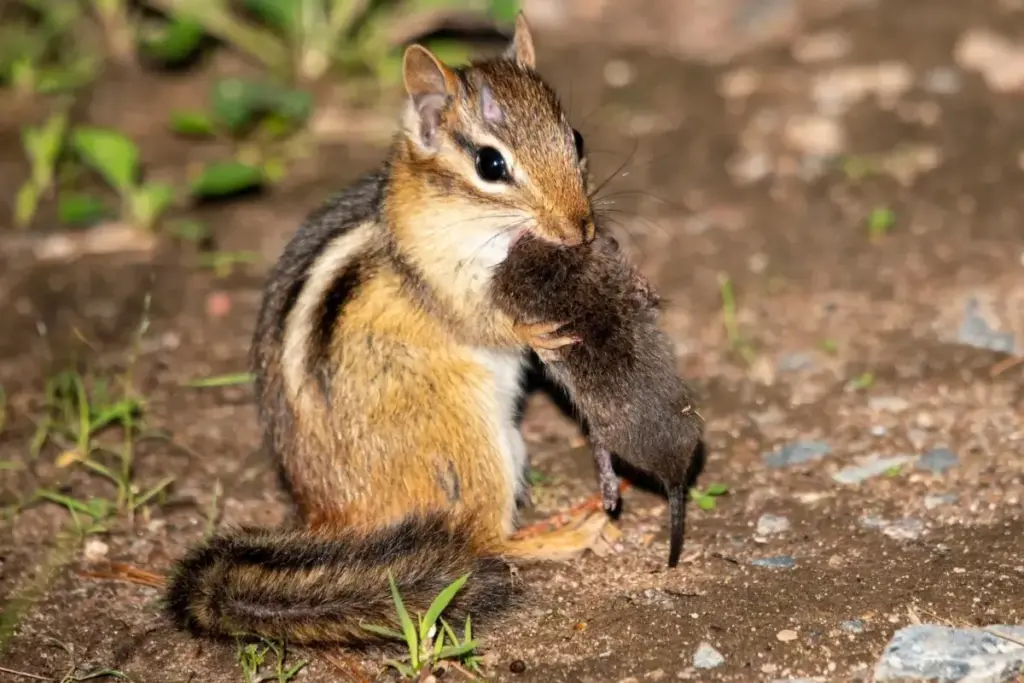
For generations, the standard depiction of the food chain taught in primary school classrooms has relied on a neat, linear progression: a garden crop feeds a rodent, an ermine preys upon the rodent, and a soaring eagle ultimately consumes the ermine. While pedagogically convenient, this tidy hierarchy bears little resemblance to the chaotic, hyper-connected reality of the natural world. In practice, ecosystems operate as vast, multidimensional webs where energy flows sideways, loops backward, and cascades across trophic levels in ways that traditional ecological field research has struggled to capture comprehensively.
Enter Who Eats Whom, a groundbreaking citizen science platform that is radically transforming how scientists document ecological interactions. Developed by researchers at North Carolina State University (and recently expanded to Colorado State University), the platform harnesses the sprawling, crowdsourced photographic database of iNaturalist. By mining geotagged images uploaded by everyday nature enthusiasts, hikers, and amateur photographers, Who Eats Whom maps real-world predator-prey dynamics, parasitic relationships, and scavenging events on a global scale.
Detailed in a recent study published in the journal PLOS Biology, the platform has already cataloged more than 17,000 unique species interactions involving over 5,700 species across more than 100 countries. As climate change rapidly reshapes habitats, shifts migration patterns, and empowers invasive species, traditional methods of ecological surveillance—such as exhaustive field observations or the meticulous analysis of animal scat—are no longer fast enough or broad enough. By weaponizing the smartphone-wielding public, Who Eats Whom provides the data velocity required to understand and protect our rapidly destabilizing biosphere.
Detailed Chronology: From Scat Sifting to Crowdsourced Ecologies
To understand the magnitude of the shift represented by Who Eats Whom, one must first look at the historical grind of field ecology. For centuries, mapping a food web meant grueling, time-consuming labor. Researchers spent countless hours hiding in brush to spy on avian nests, hoping to catch parents feeding their offspring, or engaged in the less romantic pursuit of sifting through animal feces to identify the splintered bones and undigested chitin of prey.
While these methods formed the bedrock of modern ecology, they suffered from inherent bottlenecks. Ephemeral events—such as a vulture scavenging a rare carcass or an uncommon predatory strike—were nearly impossible to capture systematically. An individual researcher could only be in one place at a time, severely limiting the spatial and temporal scope of observational data.
The turning point arrived with the democratization of digital photography and the rise of massive biodiversity platforms like iNaturalist. Recognizing a goldmine of untapped behavioral data buried within millions of casual nature photos, ecologist Bradley Allf and computer scientist Aditi Mallavarapu began conceptualizing a way to extract species interactions from the metadata and visual content of citizen science archives.
Working initially at North Carolina State University, the development team built the infrastructure for Who Eats Whom, creating a bridge between casual nature photography and rigorous ecological research. Their recent publication in PLOS Biology marks the formal introduction of this tool to the global scientific community, signaling a shift away from solitary field surveillance toward massive, decentralized data collection. Today, the platform stands as a testament to what happens when big data meets grassroots conservationism, turning every tourist with a telephoto lens into a frontline ecological researcher.
Supporting Context & Metrics: The Messy, Metal Matrix of Nature
The statistics generated by Who Eats Whom paint a portrait of nature that is far more "metal" than traditional textbooks care to admit. With 17,000 documented interactions spanning 5,700 species in over 100 countries, the database captures the uncompromising brutality and staggering complexity of ecological energy transfer.
Consider the sheer breadth of interactions now visible through the platform’s interactive food web:
- Intraguild Predation and Cannibalism: The brown rat, long typecast merely as a crop-raiding pest, is documented not only as prey for the American ermine (captured near Monty Drive in Ottawa, Canada) but also as a predator of its own kind through documented infanticide.
- Avian Apex Scavenging: New World vultures are frequently observed dismantling the carcasses of wild boars, raccoons, and groundhogs. However, the platform also hosts an astonishing record from a beach in California’s San Luis Obispo County, where a vulture was captured dining on a stillborn baby white shark.
- Complex Trophic Cascades: When users search for a red-tailed hawk on the platform’s interactive matrix, they trace a web extending down to small mammals, and further down to avian species like the American robin, which in turn feed on invasive plants like common buckthorn and yaupon holly.
- Invertebrate Intersections: The Western honey bee—vital for pollinating agricultural crops and wildflowers such as honeysuckles, thistles, and buttercups—frequently meets its end in the jaws of the goldenrod crab spider, a ghostly white ambush predator.
These aren’t just isolated curiosities; they are data points illuminating the "messiness" of energy flow. As Aditi Mallavarapu notes, looking backward over even a five-year window reveals shifting feeding patterns, allowing scientists to track not just what is present, but crucially, what is absent.
Official Statements: The Scientific Community Weighs In
The debut of Who Eats Whom has drawn high praise from prominent ecologists and biodiversity experts who view crowdsourced interaction data as an essential evolutionary step for the discipline.
"That’s just kind of the power of crowdsourcing. You can generate a ton of valuable information in a way that you can’t if you’re just an individual scientist trying to follow snakes around and hope they eat something while you’re watching them, or waiting for them to poop and be able to take their scat."
— Bradley Allf, Lead Author and Ecologist, Colorado State University (formerly of North Carolina State University)
The logistical hurdle of documenting ephemeral events—those rare, once-in-a-lifetime interactions scattered across remote geographies—has historically crippled ecological forecasting. Peter Roopnarine, curator of invertebrate zoology and geology at the California Academy of Sciences, emphasizes the sheer scale of this challenge:
"The biggest challenge is really data acquisition, because there’s so many species and so many interactions out there. They sometimes can be ephemeral—like it happens once in a lifetime of a species, and that’s it. And they’re dispersed all over the place."
Furthermore, experts highlight how the platform fundamentally alters the psychology of nature observation for the public. Rebecca Johnson, director of the Center for Biodiversity and Community Science at the California Academy of Sciences, points out the educational and engagement benefits:
"It’s obviously super engaging, I think, for the people who are participating. It gives you a new way of thinking about your nature observations that you might share."
Future Outlook: Conservation in a Topsy-Turvy World
As global temperatures climb, ecosystems face unprecedented upheaval. Species are rapidly shifting their ranges toward the poles to escape unbearable heat, leading to novel ecological communities where animals and plants interact in ways humanity has never witnessed before.
This shifting baseline makes real-time monitoring an absolute imperative. When a newly arrived species migrates into a region, local citizen scientists equipped with smartphones are frequently the first to document the disruption. Platforms like Who Eats Whom provide an early-warning system, enabling researchers to track how native webs absorb—or collapse under the weight of—new arrivals.
This is particularly critical in the context of invasive species. Destructive interlopers like the lionfish in marine ecosystems or various invasive plants and insects on land can decimate native populations already weakened by extreme droughts and rising temperatures. As Peter Roopnarine notes:
"We need to know who’s being consumed by these invasive species, and are there species on that menu that we really need to be worried about?"
Ultimately, Who Eats Whom underscores a vital paradigm shift in modern conservation biology: protecting biodiversity requires more than simply drawing boundaries around a patch of land or sea and declaring it a sanctuary. Animals and plants cannot survive on habitat alone; they require the intricate web of relationships that sustains them. By mapping these bonds with the help of a global army of citizen scientists, researchers are gaining the insights necessary to keep the threads of life from unraveling entirely.



