

Executive Overview
Marking two decades of digital preservation, the Biodiversity Heritage Library (BHL)—the world’s largest open-access repository for literature on biodiversity—serves as both a sanctuary of natural history and a sobering chronicle of ecological loss. As the BHL celebrates its milestone 20th anniversary through its ongoing BHL at 20 blog series, curators and researchers are casting a sharp light on its most irreplaceable holdings: the first scientific descriptions of species.
For Australia, a continent whose long geological isolation produced some of the planet’s most bizarre and specialized marsupials and monotremes, these foundational texts carry a profound emotional and scientific weight. British colonization, beginning in 1788, unleashed a rapid wave of European exploration that documented a dazzling array of unfamiliar creatures. Yet, this influx of European naturalism also signaled the start of an ecological cataclysm. Fueled by the deliberate introduction of placental predators—such as foxes and cats—and unprecedented environmental fragmentation, Australia now bears the highest rate of mammal extinctions in the world.
Coinciding with Australia’s National Threatened Species Day, this milestone anniversary offers an urgent reflection on the archival footprint left by vanished creatures. From the haunting historical trail of the thylacine (Tasmanian tiger) to the miraculous, high-stakes rediscovery of the Leadbeater’s possum, the BHL preserves a window into how these animals were first perceived, misunderstood, and ultimately driven toward the brink. By unlocking millions of historic pages, the library does not merely archive the past; it provides a critical roadmap to prevent future ecological collapses.
Detailed Chronology: A Timeline of Discovery, Misunderstanding, and Loss
The historical literature preserved within the BHL maps a swift trajectory from the initial scientific debut of Australia’s unique fauna to their devastating decline.
- 1788: British colonization of Australia begins, initiating a massive influx of European settlers, naturalists, and acclimatization societies intent on reshaping the Australian landscape to mirror Europe.
- 1799: Naturalist George Shaw publishes the first formal scientific description of the platypus, marveling in literature that of all known mammals, it "seems the most extraordinary."
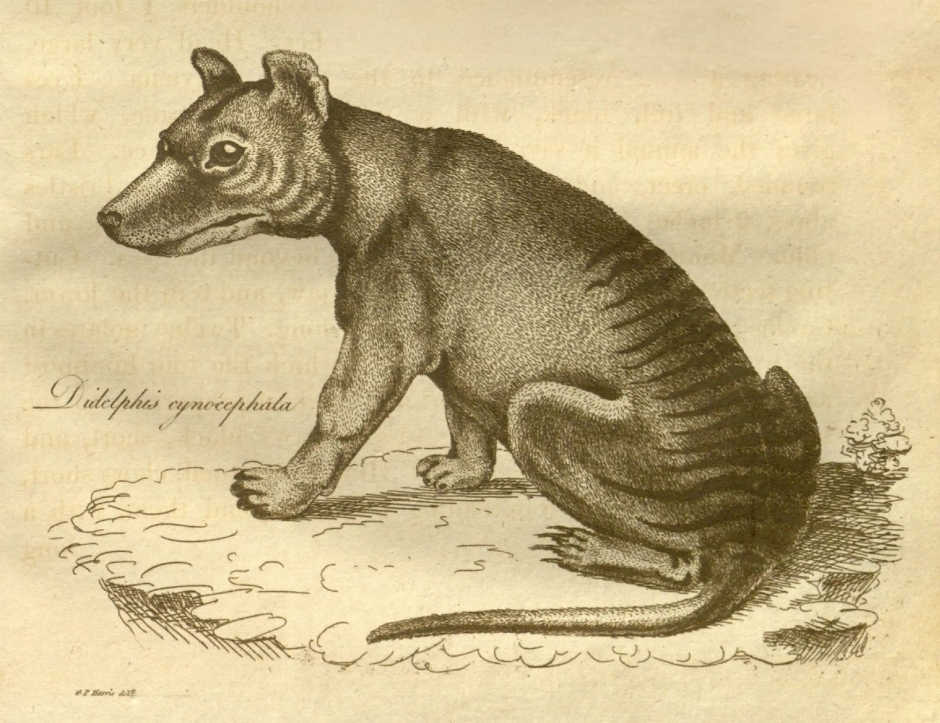
- 1808: George Prideaux Robert Harris publishes the first scientific description and illustration of the thylacine (Didelphis cynocephala, or "dog-headed opossum") in the Transactions of the Linnean Society of London. Harris casts the animal in a menacing light, describing its eyes as giving it a "savage and malicious appearance."
- 1838: Tasmanian naturalist Ronald Campbell Gunn documents thylacines attacking sheep at night, reinforcing a growing narrative that frames the marsupial predator as a direct threat to colonial agriculture.
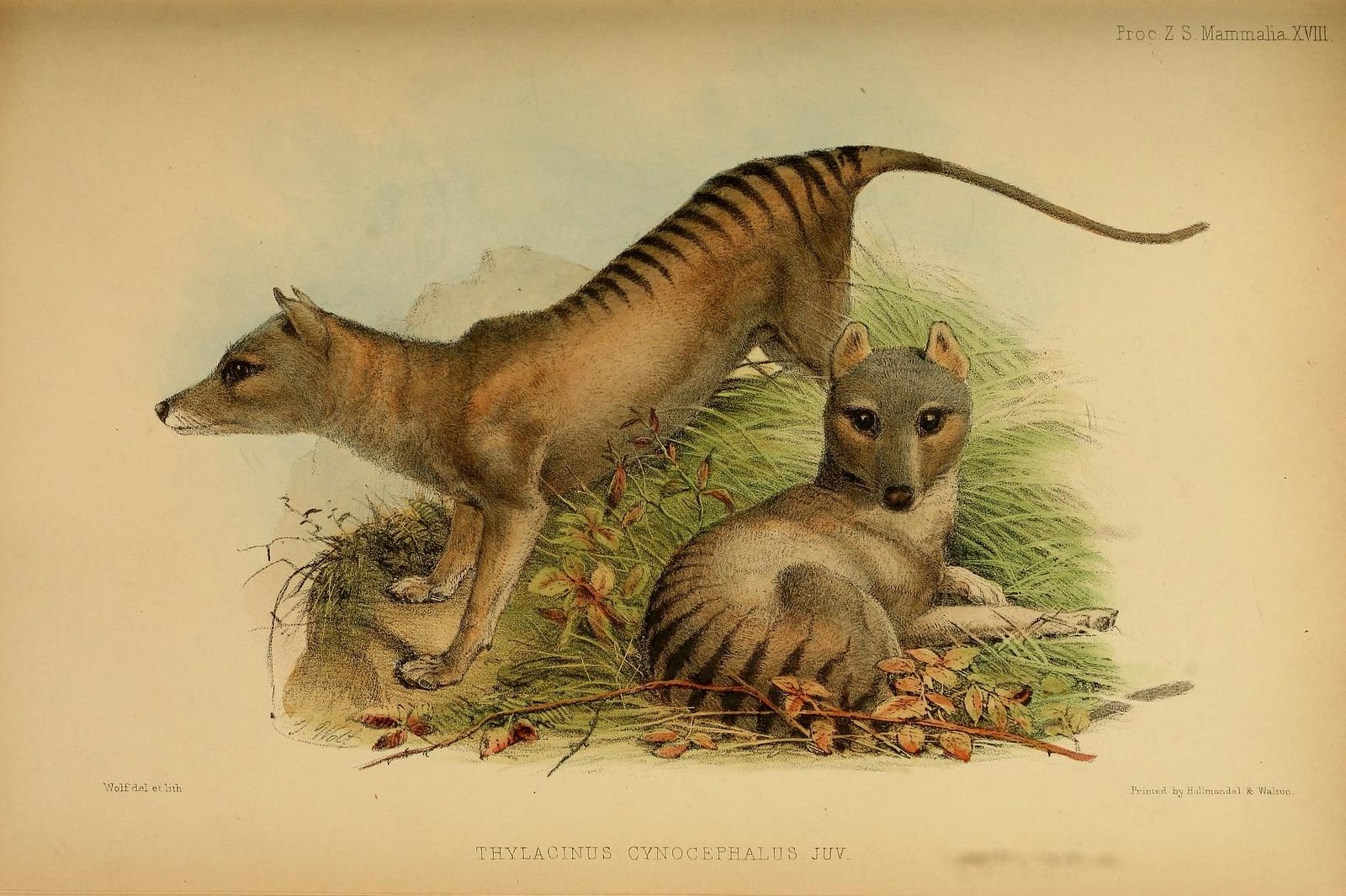
- 1850–1861: Renowned zoological artist Joseph Wolf illustrates living juvenile thylacines housed at the London Zoo—the first of their kind to be exhibited in a zoological garden. Accompanying texts by zoologists like Philip Lutley Sclater warn that perpetual warfare by Tasmanian shepherds will inevitably lead to the species’ extinction.
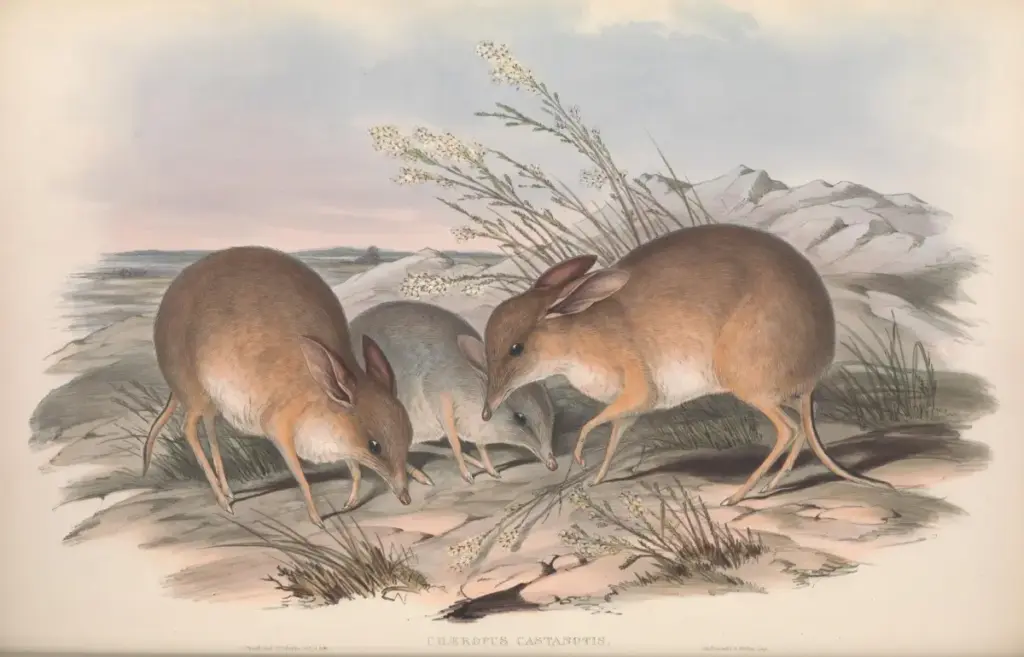
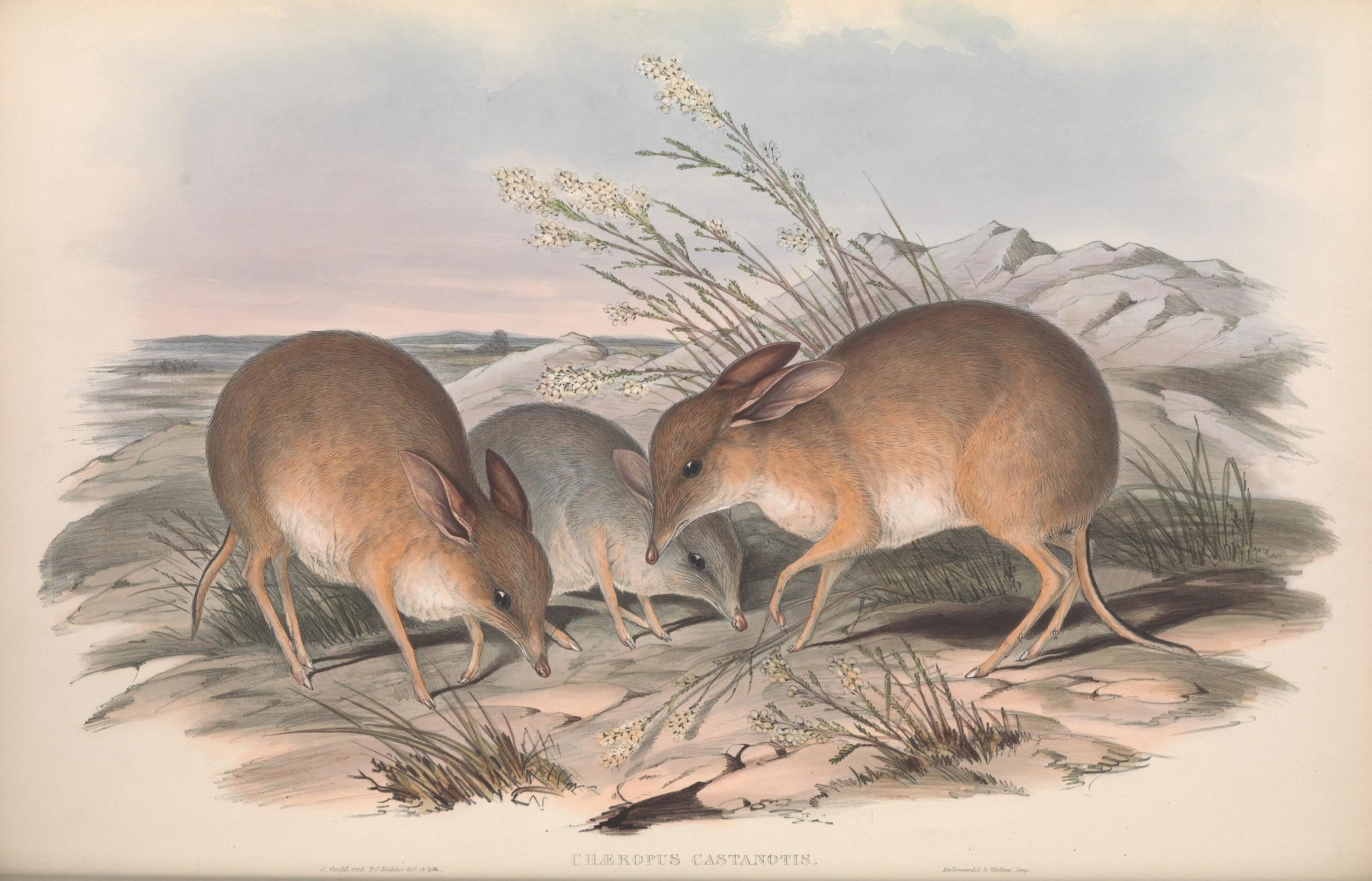
- 1863: John Gould publishes The Mammals of Australia, featuring a famous illustration of the thylacine by Henry Constantine Richter. Gould issues a chilling prophecy: as Tasmania’s population grows and forests are cleared, the thylacine will be recorded "as an animal of the past." Concurrently, other unique species, such as the Pig-footed Bandicoot, are meticulously illustrated and described before their quiet disappearances.
- 1867: Frederick McCoy, Director of the National Museum of Victoria, formally enters the Leadbeater’s possum (Gymnobelideus leadbeateri) into the scientific literature as both a new species and genus, naming it after the museum’s first taxidermist, John Leadbeater.
- Early-to-Mid 20th Century: Following decades of sparse sightings and intensified habitat destruction, the Leadbeater’s possum is officially presumed extinct after a 50-year drought of documented encounters.
- September 7, 1936: Just two months after the species is finally granted legal protection, the last known captive thylacine dies at the Beaumaris Zoo in Hobart, marking the functional extinction of the species. This date later inspires Australia’s National Threatened Species Day.
- 1961: In a stunning reversal of ecological misfortune, a small, resilient colony of Leadbeater’s possums is rediscovered near Marysville, Victoria, prompting a wave of conservation initiatives.
- 2006–Present: The establishment and expansion of BHL Australia and global collaborative digitization efforts bring millions of pages of rare natural history literature online, transforming fragile paper archives into globally accessible tools for modern conservation science.
Supporting Context & Metrics
The depth of the Biodiversity Heritage Library’s collection is staggering, acting as a digital ark for historical biodiversity data. Operating across global consortiums, the BHL houses over 64 million pages of digitized literature, encompassing centuries of taxonomic descriptions, field notes, and artistic illustrations.
The Anatomy of Extinction: Australia’s Vulnerable Endemics
Australia’s evolutionary history is defined by tens of millions of years of geographic isolation. This isolation allowed native fauna to evolve without the evolutionary pressures presented by fast-breeding placental carnivores. When European settlers arrived, they introduced a wave of invasive species—most notably the European red fox (Vulpes vulpes) and feral cat (Felis catus).
Coupled with land clearing for agriculture and urban development, these introduced predators triggered an extinction crisis. Today, Australia holds the highest rate of mammal extinctions globally. Historical documents within the BHL—such as John Gould’s The Mammals of Australia and regional museum Prodromi—capture the baseline abundance and behaviors of species that are now completely gone, including:
- The Pig-footed Bandicoot (Chaeropus ecaudatus): A unique, long-legged marsupial documented through the illustrations of Henry Constantine Richter.
- The Lesser Bilby (Macrotis leucura): A desert-dwelling burrowing marsupial whose behavioral ecology is preserved exclusively in historic literature and museum specimens.
- The Crescent Nail-tail Wallaby (Onychogalea lunata): Once common across scrublands, now relegated entirely to archival records.
The Value of Historical Literature in Modern Science
While modern conservation biology relies heavily on genetic sequencing, remote sensing, and telemetry, historic texts preserved in platforms like the BHL provide qualitative dimensions that physical bones and DNA cannot capture. These texts document:
- Behavioral Baseline Data: Descriptions of how animals interacted with their pristine environments before human-induced fragmentation.
- Population Densities & Range Shifts: First-hand accounts from naturalists tracking the initial, rapid contractions of species ranges.
- Human-Wildlife Dynamics: Detailed insights into how early settlers perceived native wildlife—often shifting from curiosity and awe to systematic persecution based on misunderstood economic threats.
Official Statements and Institutional Perspectives
Reflecting on the milestone anniversary of the BHL, leaders within the global biodiversity informatics community emphasize the deep connection between historical preservation and modern ecological stewardship.
"Coordinating this celebration of treasures chosen by our BHL community has been one of the most rewarding projects in my time as BHL’s Communications Director. My favorite treasures in BHL are the very first scientific descriptions of new species. I like to think of these descriptions as a species’ international debut in the literature."
— BHL Communications Director & Manager of BHL Australia
Reflecting on the tragic history of the thylacine and the early warnings issued by 19th-century zoologists, contemporary researchers note the painful irony of hindsight. As zoologist Philip Lutley Sclater warned in 1850 regarding the thylacine’s clashes with pastoralists: “Perpetual war is therefore waged against it by the Tasmanian shepherds, whose determined persecution must eventually lead to its extinction.”
Similarly, institutional leaders from organizations like Museums Victoria—which built monumental historical libraries by ordering expensive European publications across oceans in the 19th century—stress the enduring responsibility of modern institutions.
"For 20 years, BHL has helped preserve the record of life on Earth and make it freely accessible to everyone. My greatest hope for the next 20 is that we use the knowledge preserved across our 64+ million pages not only to understand what we have lost, but to help protect what we still have."
— BHL Community Contributor
Future Outlook: Lessons from the Past for the Next Generation
As the Biodiversity Heritage Library looks beyond its 20th anniversary, the intersection of digital archiving and active conservation has never been more critical. The dual narratives preserved within the BHL’s Australian collections—the permanent, sorrowful silence of the thylacine and the precarious, hard-won survival of the Leadbeater’s possum—serve as twin guideposts for the future.
The Threat Matrix Facing Modern Survivors
Even species that cheat extinction face steep hurdles in the 21st century. The Leadbeater’s possum, though rediscovered in 1961 and designated as Victoria’s faunal emblem, remains Critically Endangered. The threats that nearly wiped it out a century ago have evolved rather than vanished:
- Habitat Fragmentation: Logging of old-growth ash forests destroys the hollow trees essential for nesting.
- Climate-Driven Megafires: Unprecedented bushfire events, such as the catastrophic 2019–2020 Black Summer fires, decimated massive portions of its remaining habitat.
- Invasive Predation: Feral cats continue to exert immense pressure on recovering mammal populations across Australia.
Leveraging Open Access for Global Conservation
The primary mission of the BHL over the next two decades is to ensure that historical ecological data does not remain locked in physical rare-book rooms, but instead fuels active, data-driven conservation policies. By making 64 million pages of text, high-resolution illustrations, and taxonomic descriptions freely available to researchers, policymakers, and grassroots conservationists worldwide, the library democratizes ecological intelligence.
Ultimately, the BHL’s 20th anniversary is more than a celebration of digital infrastructure; it is an urgent call to action. The historic literature reminds humanity of the profound cost of ignorance and neglect. By studying the mistakes inscribed in 19th-century journals—and by honoring the warnings issued by naturalists who watched the first waves of extinction unfold—the global community is better equipped to protect the fragile biodiversity that remains on Earth today.



