High on the steep hillsides of central Ethiopia’s Gurage Zone, 32-year-old farmer Niku Argane surveys a landscape that tells a dual story of ecological collapse and stubborn recovery. For years, relentless flooding carved deep, jagged gullies through his farmland in Ambele Kebele, stripping away the fertile topsoil that once sustained abundant harvests of barley and potatoes to feed his wife and four children. Compounded by worsening droughts, Argane’s story is a microcosm of a nationwide crisis: decades of severe land degradation driven by deforestation, agricultural expansion, and climate change.
Across Ethiopia, the environmental toll has been staggering. Land degradation saps an estimated $4.3 billion annually from the nation’s economy through diminished harvests, lost farmer income, and compounding food insecurity. With more than 100 million citizens dependent on agriculture for their livelihoods, environmental shocks ripple instantly into humanitarian crises. In 2024 alone, an estimated 15.8 million Ethiopians—roughly 12 percent of the population—required emergency food assistance.
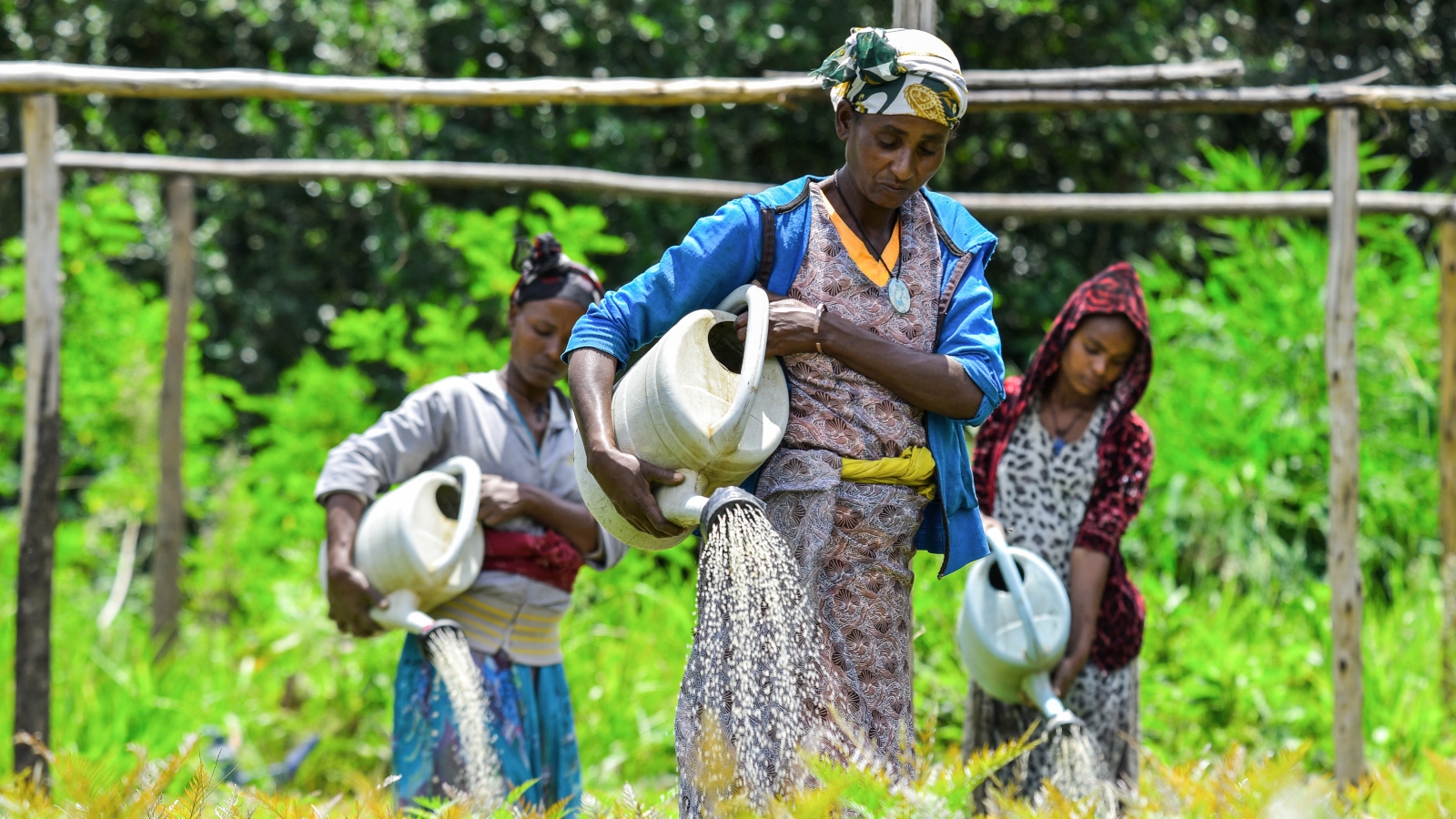
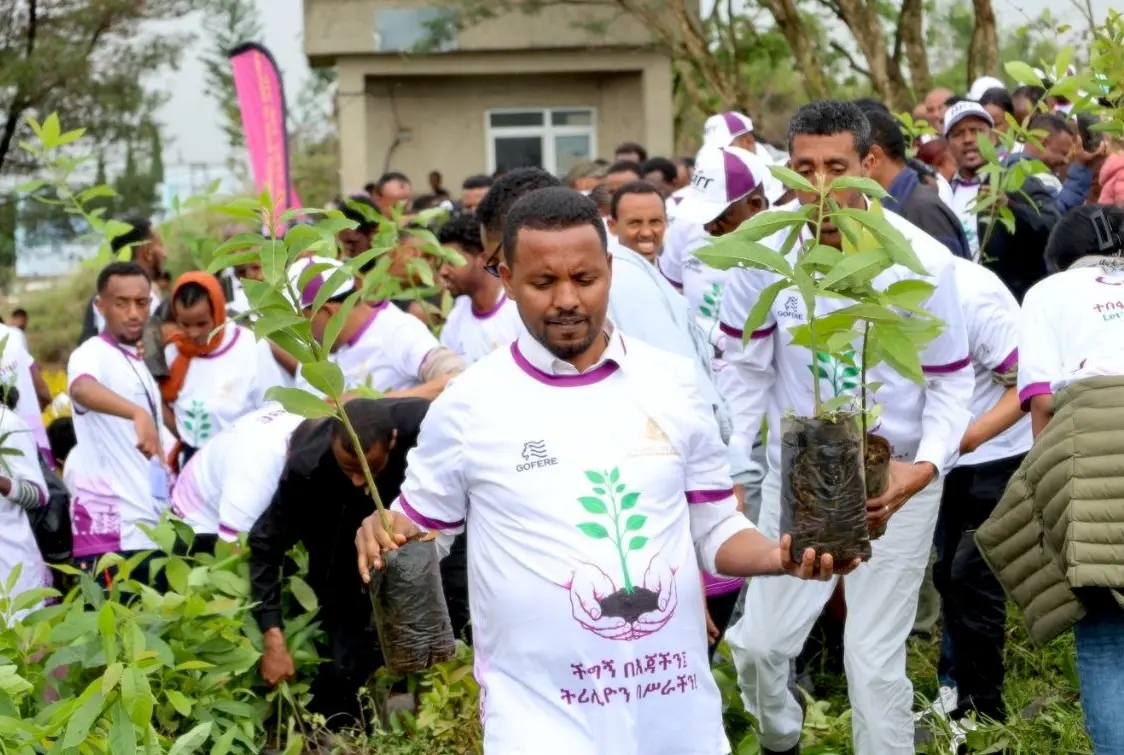
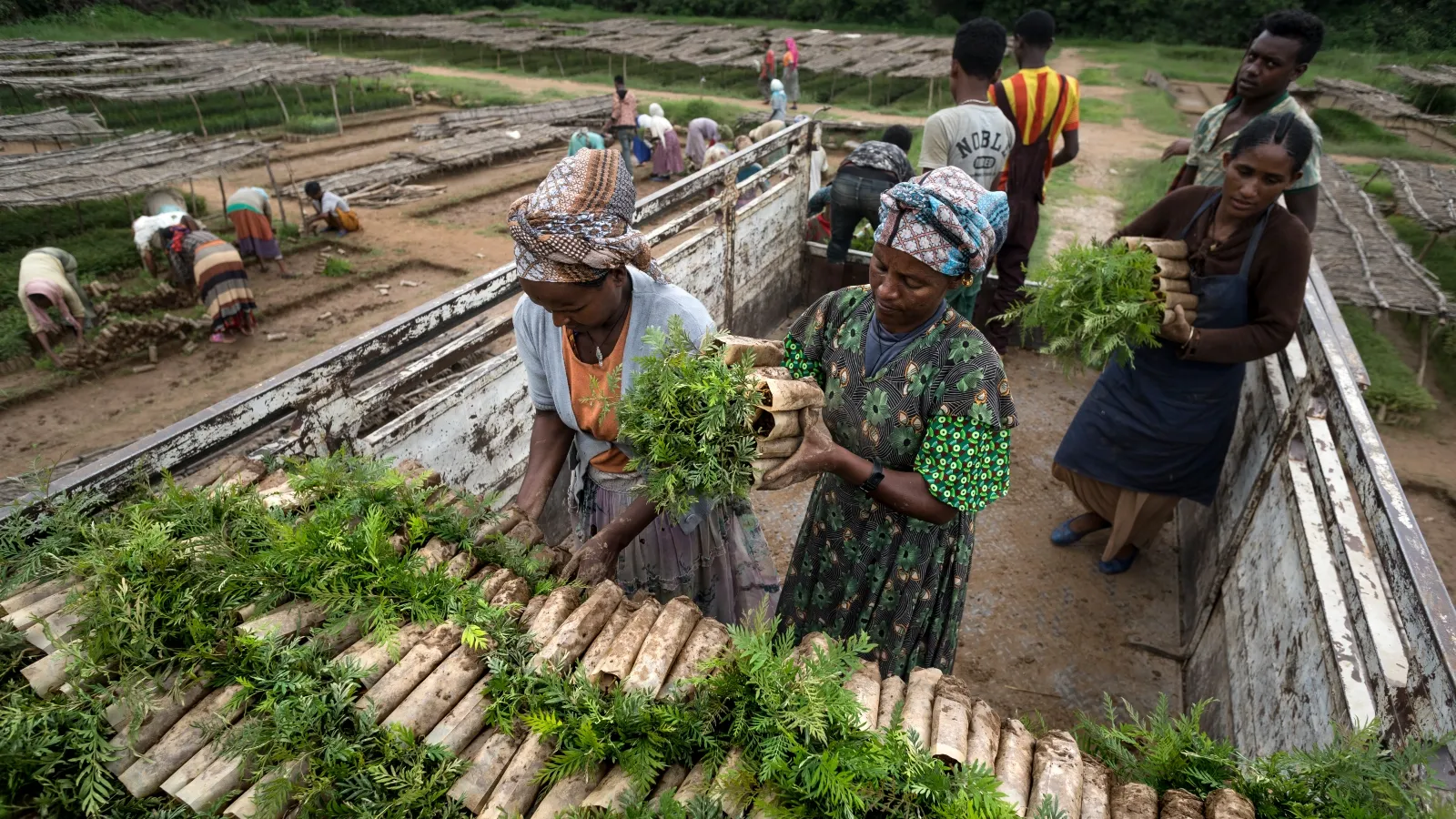
Faced with this existential threat, the East African nation has embarked on one of the most ambitious and massive environmental restoration campaigns in human history. Under the banner of the Green Legacy Initiative, launched in 2019, tens of millions of Ethiopians have planted more than 47 billion tree seedlings, driving toward a staggering target of 50 billion by 2030. Backed by top-tier political leadership, substantial federal funding, and unprecedented public mobilization, this monumental effort aims to restore native forests, stabilize eroding soils, and sequester carbon.
While international experts debate the survivability rates of mass plantings and the challenges of a top-down administrative approach, the local impacts are already taking root. From rising water tables in national parks to surging barley yields on Argane’s terraced hillside, Ethiopia’s audacious gambit offers a compelling, high-stakes case study in planetary healing.
Detailed Chronology: From Abundant Forests to Crisis and Recovery
To understand the urgency driving Ethiopia’s modern green movement, one must look back at a century of sweeping ecological transformation across the country’s once-lush highlands.
1. The Great Deforestation (Early to Late 20th Century)
In the early decades of the 20th century, dense, flourishing forests blanketed an estimated 35 to 40 percent of Ethiopia. Its cool, fertile uplands were rich with indigenous flora and fauna. However, as human populations expanded and rural settlements grew, trees were systematically cleared to make way for intensive agriculture, livestock grazing, and the insatiable demand for fuel and construction materials.
As the valleys and lower slopes were exhausted, cultivation crept inexorably upward onto marginal, high-angle terrain. Tilling steep hillsides without the protective matrix of tree roots and native vegetation unleashed unchecked erosion. During the rainy seasons, torrential downpours washed billions of metric tons of fertile topsoil down into rushing rivers and vital reservoirs. By 1989, national forest cover had plummeted to an alarming historic low of less than 3 percent.
2. The Awakening: Early Conservation Foundations (1970s–2000s)
The catastrophic droughts and famines of the 1970s and 1980s served as a profound national trauma, forcing both the Ethiopian government and international humanitarian donors to reckon with the root causes of ecological collapse. Heavy investments began pouring into soil and water conservation projects.
Communities across the highlands began building low stone and log barriers known as check dams across active gullies, constructing hillside terraces to slow runoff, and fencing off severely degraded pastures to exclude livestock and allow natural regeneration. By the 2000s, these piecemeal restoration initiatives were expanding in geographical scale, laying the groundwork for a more unified national strategy.
3. The Green Legacy Leap (2019–Present)
The modern era of Ethiopian restoration began in 2019, when the government superheaded localized tree-planting efforts into a synchronized, nationwide mobilization campaign: the Green Legacy Initiative. Designed to saturate the landscape with billions of indigenous and multipurpose seedlings, the initiative mobilized schools, religious organizations, civil servants, and rural smallholders alike.
Institutionalizing the Fund: In 2024, the government cemented its financial commitment by establishing the Green Legacy and Landscape Restoration Special Fund, dedicating between 0.5 percent and 1 percent of the annual federal budget—roughly $73 million to $145 million—directly to landscape rehabilitation.
Record-Breaking Mobilization: The scale of participation continues to shatter records. In August, government tallies revealed that 26.6 million Ethiopian volunteers planted an astonishing 800 million tree seedlings in a single 24-hour window, eclipsing the previous year’s record of 714.7 million.
This sustained, highly visible ambition caught the attention of the international community, contributing significantly to Ethiopia being selected as the host nation for upcoming United Nations climate conferences, providing a global stage to showcase its greening crusade.
Supporting Context & Metrics: The Science and Economics of Restoration
The numbers behind Ethiopia’s environmental transformation reveal both the immense scope of the crisis and the tangible progress achieved thus far.
Macroeconomic Toll: Land degradation costs the nation $4.3 billion every year in agricultural losses. With 12 percent of the population relying on food aid in recent years, reversing this trend is an economic imperative.
Forest Cover Rebound: According to official government reports, national forest cover climbed from 17.2 percent in 2019 to 23.6 percent in 2023. Concurrently, the annual rate of deforestation plummeted from more than 350 square miles to approximately 100 square miles between 2013 and 2023.
Biodiversity Restoration: In the Ethiopian highlands’ Abijata-Shalla National Park, intensive replanting, terracing, and contour bunding have successfully raised groundwater tables. As subsurface moisture levels climbed, park lakes swelled, inviting back populations of fish, cormorants, African darters, Grant’s gazelles, and wild dogs into habitats where they were once locally extinct.
Survival Rates: While critics frequently point out that mass-planting efforts can suffer high mortality rates, a comprehensive 2026 study of over 44,500 seedlings planted in southern Ethiopia revealed an 80 percent survival rate. Crucially, survivorship spiked dramatically among older seedlings, wet-season plantings, and locations where local planters received hands-on training in best plantation practices.
Official Statements & Expert Perspectives
The sheer scale of the Green Legacy Initiative has sparked intense global debate among ecologists, economists, and local stakeholders regarding methodology, efficiency, and long-term viability.
The Macro-Scale Optimists
Proponents of the campaign emphasize that when tackling a crisis of continental proportions, bold, imperfect action is vastly superior to inaction. Aad Kessler, a researcher at Wageningen University in the Netherlands, notes the extreme difficulty of reforestation globally:
"Reforestation is one of the most difficult things you can imagine. It almost always fails, but this is so big that even if 30 percent of the trees survive, it’s still huge."
Kessler compares Ethiopia’s strategy to China’s legendary restoration of the highly eroded Loess Plateau during the late 1990s and 2000s—a massive state-backed push that converted millions of acres of rain-fed cropland into dense forest and grassland, raising overall vegetative cover by 25 percent in a single decade. Summarizing the core philosophy behind both campaigns, Kessler observes: "Do it massively, and then see where you end up."
The Cautionary Voices on Methodology
Conversely, restoration ecologists caution that planting trees is not a silver bullet. Endalkachew Wolde-Meskel, a soil scientist and senior researcher at the Center for International Forestry Research, stresses that true ecological health requires complex systemic rehabilitation rather than mere arboriculture:
"The objective is not really ‘plant trees.’ It is to restore the functioning of the entire landscape."
This sentiment is echoed by Emiru Birhane Hizikias, an Ethiopian restoration ecologist at Norway’s Nord University. While acknowledging the immense political blessing of having prime-ministerial backing for environmental causes, Hizikias warns that speed has occasionally outpaced logistical support:
"You can’t expect a baby to grow if you don’t care for it, but that’s how plantation in Ethiopia is being done."
The Ground-Level Defense
Defending the administrative apparatus, Abreham Berta Aneseyee—an environmental scientist at Wolkite University and adviser to the Ministry of Agriculture—counters that the state-led campaign is deeply integrated with localized technical support. Forestry and agricultural experts travel extensively from farm to farm, advising smallholders on optimal planting depths, constructing soil-conserving bunds, and managing forests sustainably rather than clear-cutting them for quick economic gains.
Future Outlook: Climate Pressures and Local Triumphs
Even as Ethiopia pours billions of resources into rebuilding its natural capital, the ground rules are shifting beneath its feet. Anthropogenic climate change is aggressively altering the environmental baselines that newly restored landscapes must endure.
The Looming Threat of Extreme Weather
The Intergovernmental Panel on Climate Change (IPCC) projects increasingly frequent and intense rainfall patterns across East Africa as global temperatures rise. The tragic human cost of this volatility was laid bare in July 2024, when torrential downpours in the southern highlands’ Geze Gofa district triggered catastrophic twin landslides that claimed at least 257 lives.
Simultaneously, intensifying El Niño cycles are wreaking havoc on seasonal predictability. During the summer months, the Famine Early Warning Systems Network linked El Niño phenomena to historically poor rainfall across parts of Ethiopia, subjecting regions like Amhara to some of their driest June and July months on record. For veteran farmers like 65-year-old Belayneh Mamo, delayed seasonal rains complicate the foundational struggle of keeping newly sown crops and seedlings alive through their vulnerable early stages.
Green Hope on the Ground
Despite these compounding macro-climatic headwinds, the micro-level successes offer a powerful blueprint for resilience.
Back on his terraced hillside in the Gurage Zone, Niku Argane’s farm stands as living proof of what is possible when community labor meets ecological stewardship. Since 2019, Argane has woven grasses, fodder, fenugreek, and fruit trees into the margins of his property. These living buffers anchor the vulnerable hillside, while providing essential feed for his livestock. Most importantly, his barley yields have nearly doubled, jumping from 1,800 pounds per acre to roughly 3,200 pounds.
For Argane and millions of smallholders like him across Ethiopia, turning the tide against land degradation is no longer just an abstract environmental goal—it is a daily act of survival, dignity, and intergenerational hope.