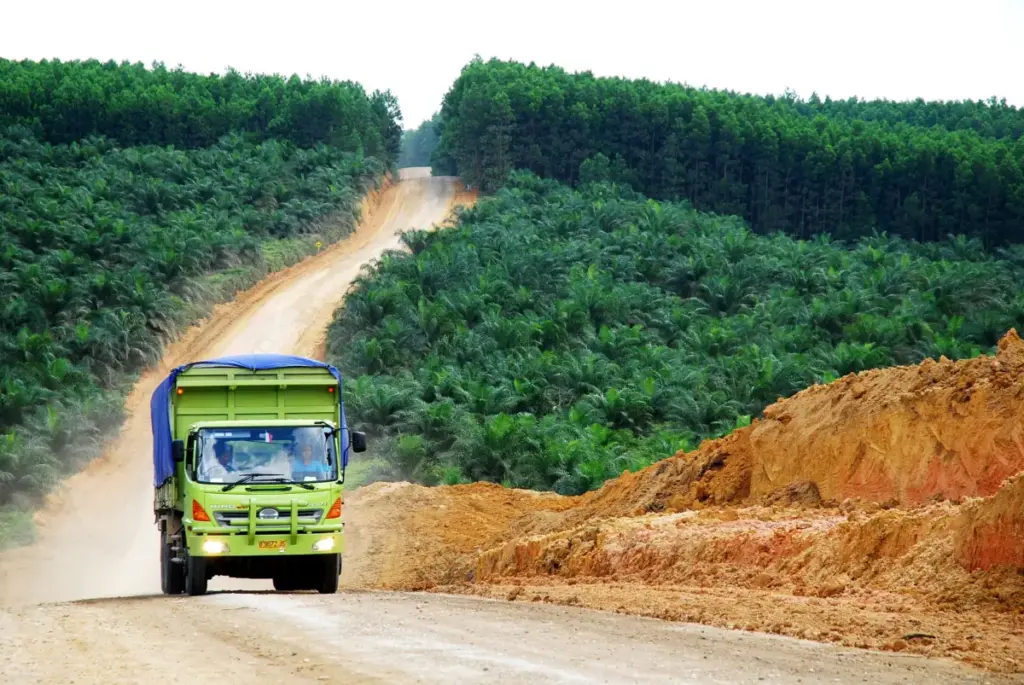
Corporate zero-deforestation commitments (ZDCs) have long been championed as a vital, market-driven mechanism to curb the devastating ecological footprints of major agricultural commodities. In Indonesia—the world’s foremost producer and exporter of palm oil—dozens of agribusiness giants, traders, and consumer goods companies have adopted ambitious ZDCs over the past decade. When evaluated through a simple before-and-after lens, these corporate pledges appear to be an unmitigated success, coinciding with a striking downward trend in national deforestation rates.
However, a landmark international study published in the Proceedings of the National Academy of Sciences (PNAS) challenges this conventional narrative. The research reveals a sobering reality: while compliance with zero-deforestation commitments among Indonesian palm oil concessions is remarkably high, these pledges have yielded no measurable additionality. In other words, companies bound by ZDCs did not reduce deforestation any faster or more extensively than companies operating without them.
This deep-dive investigation explores the underlying mechanics of this scientific finding. By examining historical land-use patterns, shifting global commodity prices, regulatory moratoria, and methodological nuances such as "positive spillovers," the study exposes the complex web of drivers that have truly dictated forest conservation in Southeast Asia. Furthermore, as Indonesia embarks on aggressive new biofuel expansions—epitomized by the controversial B50 biodiesel mandate—experts warn that the true stress-test for corporate sustainability commitments is only just beginning.
Detailed Chronology: The Rise of Pledges, Policies, and Falling Forests
To understand how the recent PNAS study reshapes the conversation surrounding corporate accountability, it is crucial to trace the historical timeline of Indonesia’s palm oil sector and the overlapping policy interventions that have reshaped its landscape over the past two decades.
1. The Era of Unchecked Expansion (2000–2010)
At the turn of the millennium, Indonesia’s palm oil industry experienced explosive, unregulated growth. Driven by surging global demand for vegetable oil, processed foods, and cosmetics, vast swaths of primary and secondary tropical rainforests across Sumatra and Kalimantan were systematically cleared, logged, and burned to make way for industrial monoculture plantations.
2. The Dawn of Moratoria and Public Interventions (2011–2018)
Recognizing the escalating environmental crisis, the Indonesian government began implementing a series of regulatory restrictions:
2011: Jakarta instituted a landmark national moratorium halting the allocation of new forestry, agriculture, and mining concessions—including palm oil—in primary forests and peatlands.
2016: Following catastrophic transboundary haze events caused by peatland fires, the government enacted a strict nationwide ban on the clearing and draining of carbon-rich deep peatlands.
2018: A sweeping three-year moratorium on new palm oil plantation permits was introduced, freezing the expansion footprint of major corporate players.
3. The Corporate Wave of Zero-Deforestation Commitments (2014–2020)
Running parallel to government interventions, international pressure from non-governmental organizations (NGOs) and mounting consumer boycotts pushed major traders and producers to adopt voluntary Zero-Deforestation Commitments. Companies pledged to purge their supply chains of any crude palm oil (CPO) linked to deforestation, peatland destruction, or human rights abuses. By the late 2010s, ZDCs had become the gold standard of corporate sustainability across global agricultural supply chains.
4. The Implementation Window and Scientific Reckoning (2018–2020)
During the full implementation period for ZDCs from 2018 to 2020, annualized deforestation plummeted to around 0.5% across the board in Indonesia. However, when researchers systematically compared concessions tightly bound to ZDC supply chains against a control group of non-ZDC concessions, the data revealed a striking parity. Both groups experienced identical declines in forest loss, rendering the additional impact of corporate commitments statistically indistinguishable from zero.
Supporting Context & Metrics: Unpacking the Data
The PNAS study, led by an international coalition of researchers including scientists from the University of Geneva (UNIGE) and the University of California, Santa Barbara, utilized rigorous econometric modeling to evaluate the true efficacy of corporate sustainability pledges. Their findings are underpinned by several critical contextual factors.
The "Old Frontiers" Phenomenon
One of the primary explanations for the lack of observable additionality is the historical state of the land itself. The vast majority of palm oil concessions analyzed in the research sample were "old frontiers"—areas that had already suffered extensive deforestation decades prior.
The Numbers: By 2012, the average ZDC-linked concession had already lost roughly 50% of the forest cover it possessed in 2000, leaving a meager 11% of forest remaining within its boundaries.
The Control Comparison: Non-ZDC concessions followed an almost identical trajectory, having shed 54% of their forest cover since 2000 and retaining approximately 10% by 2012.
Because so little forest remained within these long-established concessions, corporations had very little standing timber left to clear, regardless of whether they had signed a zero-deforestation pledge.
The Economics of CPO: Slumping Prices and Investment Incentives
Market dynamics played an equally formidable role in subduing forest loss. During the primary ZDC implementation window (2018–2020), international crude palm oil (CPO) prices traded significantly lower than the booming price levels seen between 2001 and 2012.
Economic literature underscores the direct correlation between commodity pricing and environmental degradation. A pivotal 2022 study published in PLOS One demonstrated that a mere 1% decline in palm oil prices is associated with a 1.08% reduction in the establishment of new industrial plantations and a 0.68% decline in overall forest loss. When profit margins shrink, large-scale land clearance becomes financially unviable, dampening corporate incentives to expand into remaining forested patches.
Methodological Challenges: Positive Spillovers and Supply Chain Fluidity
Evaluating voluntary environmental programs is methodologically fraught with challenges. The researchers noted two major factors that could potentially mask the true impact of ZDCs:
Positive Spillovers: Non-ZDC concessions in the control group may have organically altered their behavior due to broader market pressures. Fear of losing access to major international buyers, ongoing NGO satellite monitoring, and collective industry initiatives like the Consumer Goods Forum likely deterred uncommitted growers from clearing forests as well, thereby narrowing the performance gap between the two groups.
Supply Chain Dynamics: Because sourcing relationships frequently shift, some concessions classified as "controls" during the 2018–2020 observation window may have previously maintained ties to ZDC-linked companies during earlier implementation phases. This fluidity risks blending treated and untreated parcels, complicating econometric analysis.
Official Statements and Expert Insights
The study’s authors emphasize that their findings should not be interpreted as a wholesale dismissal of corporate sustainability pledges. Instead, they urge a nuanced understanding of when and where such commitments hold true value.
"This implies that these companies aren’t unique. Deforestation has dropped dramatically across both companies with and without ZDCs."
— Robert Heilmayr, Study Co-Author, University of California, Santa Barbara
While corporate commitments may successfully shield ecosystems from future pressures, Heilmayr points out that they cannot be credited as the primary driver behind Indonesia’s recent deforestation decline.
Lead author Matthieu Stigler of the University of Geneva (UNIGE) highlights that voluntary commitments are tested primarily during periods of economic calm. However, their true utility may manifest under entirely different conditions:
"We hypothesize that the additionality of ZDCs might become more significant during deforestation peaks than during the relatively calm period observed here. It is in times of crisis, when pressure on forests increases, that ZDC commitments could play a truly additional protective role."
Future Outlook: The Looming Threat of the B50 Mandate
The theoretical hypothesis proposed by Stigler and his colleagues—that corporate zero-deforestation pledges will prove their worth during times of heightened crisis—is facing an immediate, high-stakes real-world test in Indonesia.
The Biodiesel Expansion Drive
To reduce reliance on fossil fuel imports and bolster domestic energy security, the Indonesian government has aggressively championed renewable fuel blending. Following earlier iterations, the nation officially launched its ambitious B50 biodiesel program on July 9, following a operational rollout on July 1. This mandatory program requires a staggering 50% blend of palm oil-derived biodiesel (FAME) in commercial diesel fuels.
Land-Use Projections and Environmental Alarm
The sheer scale of the B50 mandate presents an unprecedented threat to remaining tropical ecosystems:
Government Estimates: Official projections indicate that fulfilling the feedstock requirements for B50 will demand an additional 2.3 million hectares (5.7 million acres) of land, driven by a requirement for nearly 19.73 million kiloliters of palm-based biodiesel.
Independent Projections: Environmental watchdog organizations offer significantly higher, more alarming estimates. Campaign group Satya Bumi warns that meeting escalating domestic palm oil demand under an aggressive expansion scenario could require up to 5.36 million hectares (13.2 million acres) of additional plantations by 2039, with direct deforestation potentially reaching 1.5 million hectares (3.7 million acres).
The Ultimate Stress Test for ZDCs
As government-backed biofuel mandates and rising international commodity prices combine to create powerful new economic incentives for land clearance, the agricultural sector enters a volatile new chapter.
Tropical conservation biologists and policy analysts will be watching closely to see whether agribusiness corporations holding zero-deforestation commitments will actively resist market pressures and protect remaining forest frontiers, or whether voluntary pledges will crumble under the weight of national energy policies and surging palm oil demand. Until that crisis point arrives, the true legacy of corporate ZDCs remains an open and fiercely debated question.