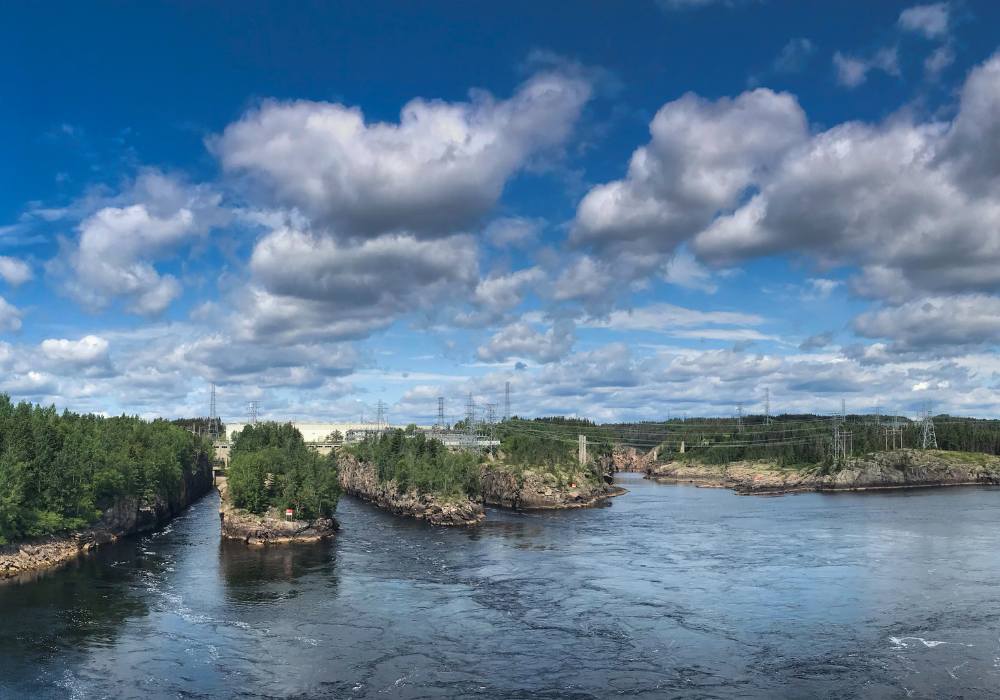
As international financiers, energy executives, and policymakers converge in Toronto for Mark Carney’s flagship Canada Investment Summit, they are met with one of the most ambitious and polarizing proposals featured in the federal investment prospectus: the Kino Aski LNG project. With an estimated capital expenditure of US$23 billion, this megaproject envisions the transport of Western Canadian natural gas across a staggering 1,000-kilometre overland corridor spanning Ontario, terminating at Baie-Comeau on the rugged North Shore of Quebec.
At Baie-Comeau, the enterprise would deploy three floating liquefaction facilities designed to churn out up to 15 million tonnes of liquefied natural gas annually for lucrative international export markets. Proponents have aggressively pitched the project around two primary, highly marketable selling points: that it is a First Nations-led initiative, and that it promises to deliver "ultra-low-emission" LNG through extensive electrification.
However, a rigorous examination of the project by leading Canadian energy researchers and policy experts reveals a starkly different reality. Beneath the glossy veneer of the federal prospectus lies a web of unresolved territorial disputes, acute regulatory hurdles, significant energy infrastructure constraints, and glaring scientific ambiguities regarding lifecycle greenhouse gas emissions.
While Indigenous economic self-determination is a vital pillar of modern resource development, ownership by one First Nations organization does not automatically translate into the collective consent of all Indigenous nations whose traditional territories the pipeline corridor would traverse. Furthermore, the project’s heavy reliance on Quebec’s tightly managed hydroelectric grid—alongside massive new wind developments—threatens to run headlong into provincial energy planning, an ongoing political election cycle, and deep-seated public skepticism inherited from previous failed LNG ventures. For global investors looking at the Canada Investment Summit, Kino Aski serves as a cautionary tale: early-stage political visibility must not be mistaken for guaranteed bankability, regulatory approval, or social license.
Detailed Chronology: From the Ashes of GNL Québec to the Toronto Summit
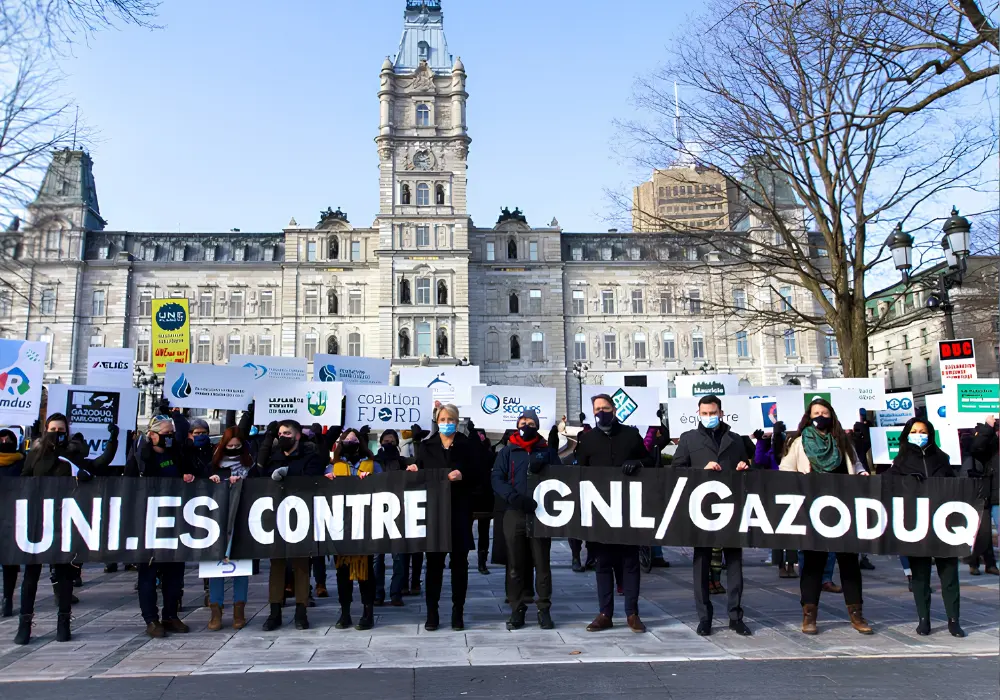
To understand the volatile landscape surrounding Kino Aski, one must examine its historical lineage. The project is, in effect, a conceptual phoenix rising from the ashes of the defunct GNL Québec–Énergie Saguenay proposal. That earlier venture, which also sought to export Western Canadian gas via a pipeline traversing Quebec to a maritime terminal, became the focal point of a historic multi-year public resistance campaign.
Key Milestones in the Evolution of the Project Corridor:
2019–2020: Public opposition mounts across Quebec against GNL Québec, uniting environmental groups, civil society, municipal leaders, and local communities in fierce pushback against fossil fuel infrastructure development in the St. Lawrence River watershed.
2021–2022: Following comprehensive environmental reviews and widespread public hearings, both the federal and provincial governments officially reject the GNL Québec proposal. Authorities cite the proponents’ failure to demonstrate credible, meaningful lifecycle greenhouse gas emissions reductions from production sites in Western Canada all the way to foreign combustion markets. Estimated lifecycle emissions for that iteration ranged between an alarming 50 and 83 megatons annually.
Mid-2020s: Recognizing the shifting political and corporate landscape, project architects reconfigure the concept into Kino Aski. By introducing a First Nations-led majority ownership structure (Kino Aski Inc., anchored by the Atikamekw Nation Council alongside Norwegian maritime firm Marinvest) and emphasizing a heavy reliance on clean electricity, proponents seek to bypass the fatal flaws that doomed GNL Québec.
2026: Kino Aski is prominently featured in the federal investment prospectus at the Canada Investment Summit in Toronto. Currently sitting firmly in the "pre-application" phase, the project seeks early-stage development financing to transform a conceptual blueprint into a formal regulatory submission.
Present Day: The project enters a charged political arena. Quebec is locked in a fierce provincial election campaign, leaving the proposal entirely unvetted and unauthorized by provincial authorities. Meanwhile, a coalition of 30 prominent Canadian academics publicly warns that Kino Aski remains fundamentally incompatible with global climate science trajectories.
Supporting Context & Metrics: Anatomy of a Megaproject
Evaluating a capital-intensive undertaking of this magnitude requires looking past corporate marketing brochures and examining the hard figures, engineering dependencies, and structural risks.
Financial and Infrastructure Scale
Capital Cost: Estimated at US$23 billion, making it one of the largest proposed private-public industrial investments in modern Canadian history.
Geographic Reach: A roughly 1,000-kilometre pipeline corridor slicing eastward from Western Canada’s natural gas fields, traversing the complex terrain of Ontario, and terminating at the marine facilities in Baie-Comeau, Quebec.
Export Capacity: Up to 15 million tonnes of liquefied natural gas produced annually via three distinct floating liquefaction facilities.
The Decarbonization Claim vs. Scientific Reality
Proponents heavily market Kino Aski as an ultra-low-emission alternative to conventional LNG operations. To achieve this, the project blueprint outlines an ambitious hybrid energy strategy:
Constructing 1,700 megawatts of dedicated wind generation capacity.
Securing an additional 550 megawatts of firm power directly from the Hydro-Québec grid to run compressor stations and liquefaction trains.
However, energy and climate experts emphasize that electrification—while undeniably reducing operational emissions compared to traditional gas-fired turbines—does not magically render LNG production carbon-neutral. Raw natural gas arriving at the Baie-Comeau terminal will inevitably contain impurities, including carbon dioxide, which must be scrubbed out to meet international pipeline and shipping specifications.
If this extracted carbon dioxide is simply vented into the atmosphere rather than permanently captured, transported, and stored (CCS), the carbon footprint remains dangerously high. Crucially, independent auditors and prospective investors cannot verify these variables because Kino Aski has yet to publicly disclose critical data regarding:
Feed-gas composition metrics.
Upstream treatment and purification requirements.
Comprehensive carbon dioxide management and permanent sequestration plans.
Moreover, the project’s reliance on Hydro-Québec’s grid introduces profound infrastructural dependencies. Quebec’s clean electricity surplus is a finite, highly sought-after resource. It faces soaring competing demands from provincial industrial decarbonization initiatives, heavy manufacturing, and the rapid electrification of the transportation sector. Tapping into this grid for fossil fuel export infrastructure creates direct competition with domestic climate goals.
Official Statements and Academic Warnings
The disconnect between federal marketing initiatives and the harsh realities of project implementation has drawn sharp criticism from Canada’s foremost academic minds in energy governance, physics, and environmental sociology.
"Indigenous rights disputes create permitting and schedule risks; political uncertainty creates regulatory risk; electricity constraints create infrastructure and operating risk; unresolved emissions questions undermine environmental assessment and financing. Delays turn all of them into financing risk."
— Collaborative Assessment by Energy Policy Experts
The core critique centers on the weaponization of the "Indigenous-led" label to fast-track environmental and social oversight. While Kino Aski Inc. operates under the leadership of the Atikamekw Nation Council—holding a 50.1% controlling stake alongside international partners like Marinvest—experts stress that corporate ownership must not be conflated with universal regional consent.
"The proposed corridor would cross the territories of multiple Indigenous Nations. Their rights are not transferred to another Indigenous organization simply because it owns part of the project. One nation’s right to say yes cannot extinguish another nation’s right to say no."
This sentiment is echoed by a collective of 30 Canadian scientists and researchers who published a scathing critique in La Presse, noting that the engineering framework of Kino Aski bears an uncomfortable resemblance to the discredited GNL Québec model. They argue that attempting to veneer a massive fossil fuel export corridor with wind turbines fails to pass basic scientific muster when evaluated against global carbon budgets.
Furthermore, the academic authors—including Johanne Whitmore (HEC Montréal), Éric Pineault (UQAM), Normand Mousseau (Université de Montréal), and Angela Carter (Memorial University)—caution that the federal government’s decision to platform an unvetted, pre-application project at the Canada Investment Summit creates a dangerous moral hazard. While the federal prospectus features standard legal disclaimers noting that inclusion is not formal state endorsement, showcasing the project at a premier international summit inevitably bestows undeserved credibility and visibility.
Future Outlook: Bankability and the Road Ahead
As the dust settles on the Canada Investment Summit, the ultimate fate of Kino Aski LNG remains shrouded in profound uncertainty. For institutional investors, venture capitalists, and project developers, navigating this landscape requires looking beyond political rhetoric and assessing five foundational risk vectors that dictate true bankability:
1. Indigenous Consent vs. Corporate Ownership
While Indigenous economic empowerment is a welcome and necessary evolution in Canadian resource development, developers cannot bypass the free, prior, and informed consent (FPIC) of every distinct Indigenous community whose traditional territories intersect the 1,000-kilometre pipeline route. Unresolved territorial disputes guarantee fierce legal battles, protracted injunctions, and severe permitting delays.
2. Regulatory and Political Volatility
The project’s future is inextricably tied to the shifting political sands of Quebec. With the province embroiled in an election cycle, no major political party has endorsed the return of a massive St. Lawrence/North Shore gas corridor. Without clear provincial legislative backing and a transparent, rigorous environmental review process, regulatory risk remains paralyzingly high.
3. Grid Capacity and Energy Infrastructure
Kino Aski’s heavy reliance on wind farms "balanced by the clean grid" places immense pressure on Hydro-Québec’s infrastructure. As Quebec prioritizes internal electrification to meet its own net-zero targets, carving out gigawatts of clean power for a fossil fuel export terminal will face steep political and economic resistance from local ratepayers and industrial competitors.
4. Transparent Emissions Accounting
Until the proponents transparently publish detailed feed-gas compositions, upstream fugitive emission data, and verifiable carbon capture and storage protocols, the market cannot price the environmental risk. In an era where institutional capital is increasingly bound by strict ESG (Environmental, Social, and Governance) mandates, funding a project with opaque lifecycle emissions invites severe divestment pressure.
5. The Threat of Compounding Financial Risk
In project finance, time is capital. As Whitmore, Pineault, Mousseau, and Carter cogently argue, every single unresolved challenge—whether it is a contested Indigenous territory, an uncommitted provincial government, a constrained electricity grid, or an unverified carbon claim—compounds the project’s overall risk profile. When these risks materialize, they cause chronic scheduling delays that rapidly transform into insurmountable financing risks.
Ultimately, a federal prospectus is not a substitute for Indigenous consent, regulatory approval, or provincial acceptance. A wind-power proposal is not definitive proof of low-carbon LNG production. For global investors weighing their options in Toronto, the lesson of Kino Aski is clear: true bankability cannot be manufactured through political exposure; it must be earned through rigorous science, uncompromised legal consensus, and authentic social license.