


Executive Overview
If you aren’t wearing polyester right now, it is almost certainly lurking somewhere in your wardrobe. As the single most ubiquitous textile fiber on Earth, this petroleum-based synthetic fabric weaves through the modern human experience, accounting for a massive share of global apparel manufacturing. Yet, step onto social media platforms like TikTok or Instagram today, and you will find that "polyester" has transitioned from a mere descriptor of material composition into a stinging cultural pejorative.
To Gen Z and younger internet subcultures, being associated with polyester is synonymous with being fake, inauthentic, or terminally low-quality. Viral videos mock the "polyester lifestyle," juxtaposing hyper-specific archetypes of modern burnout—such as sipping oat milk lattes in blue-light glasses while an AI assistant completes half a workday—with fading historical references to serial killers or tacky consumerism. Influencers launch scathing critiques of synthetic garments, accusing them of trapping heat, causing foul odors, and poisoning ecosystems with microplastics.
However, this cultural backlash is far from a novel invention of digital natives. The linguistic weaponization of polyester—using the fabric as a metaphor for cheap superficiality—has been active for half a century. From the countercultural backlash of the 1970s to the satirical cinema of the 1980s, synthetic textiles have long served as a proxy for anxieties regarding industrialization, authenticity, and ecological degradation.
Beneath the viral memes and TikTok insults lies a deeply complex, nuanced industrial reality. The neat binary dividing "pure, natural" fibers from "evil, synthetic" plastics collapses under scientific scrutiny. Natural fibers like cotton and wool require intense chemical processing, staggering volumes of fresh water, and vast tracts of land, often resulting in severe ecological degradation—such as the tragic desiccation of the Aral Sea. Meanwhile, while polyester generates substantial greenhouse gas emissions and sheds persistent microplastics, it also provides unmatched durability and functional versatility.
Ultimately, experts argue that the current social media discourse surrounding polyester is an overly simplistic regression to 1970s-style polarization. By framing the debate as a simplistic war between "good nature" and "bad plastic," consumers risk falling into the trap of greenwashing, using the illusion of sustainable natural fibers to justify the relentless consumption of fast fashion.
Detailed Chronology: From "Miracle Fabric" to Cultural Pariah
To understand how polyester became the ultimate internet insult, one must trace its trajectory across the decades—a cycle of technological triumph, widespread adoption, cultural backlash, and historical repetition.
The 1950s–1960s: The Era of "Plastic Fantastic"
When polyester was first introduced to the mass market, it was not greeted with suspicion or disgust; rather, it was heralded as a scientific miracle. In the post-World War II economic boom, chemical companies aggressively promoted synthetic materials as the pinnacle of human convenience, modernity, and hygiene.
For homemakers, polyester was liberating. Unlike natural fibers that required meticulous washing, starching, and endless ironing, polyester offered a wrinkle-free, quick-drying, resilient alternative. It promised freedom from the daily drudgery of domestic upkeep. Chemical giants ramped up production as manufacturing costs plummeted. By the 1960s, synthetic fiber production had begun to outpace traditional natural staples like cotton, cementing polyester as the foundational building block of mass-market consumer fashion.
The 1970s–1980s: From Treasure to Trash
As cheap polyester flooded global markets, the initial novelty quickly curdled. The widespread cultural and environmental awakenings sparked by the first Earth Day in 1970 fostered a profound suspicion of artificial, petroleum-derived materials. The prevailing hippie counterculture yearned for a "back-to-nature" lifestyle that valued organic authenticity over industrial uniformity.
It was during this era that the cultural lexicon shifted. The word "plastic" began to be deployed not just as a descriptor of petrochemical polymers, but as an adjective denoting superficiality, insincerity, and cheapness.
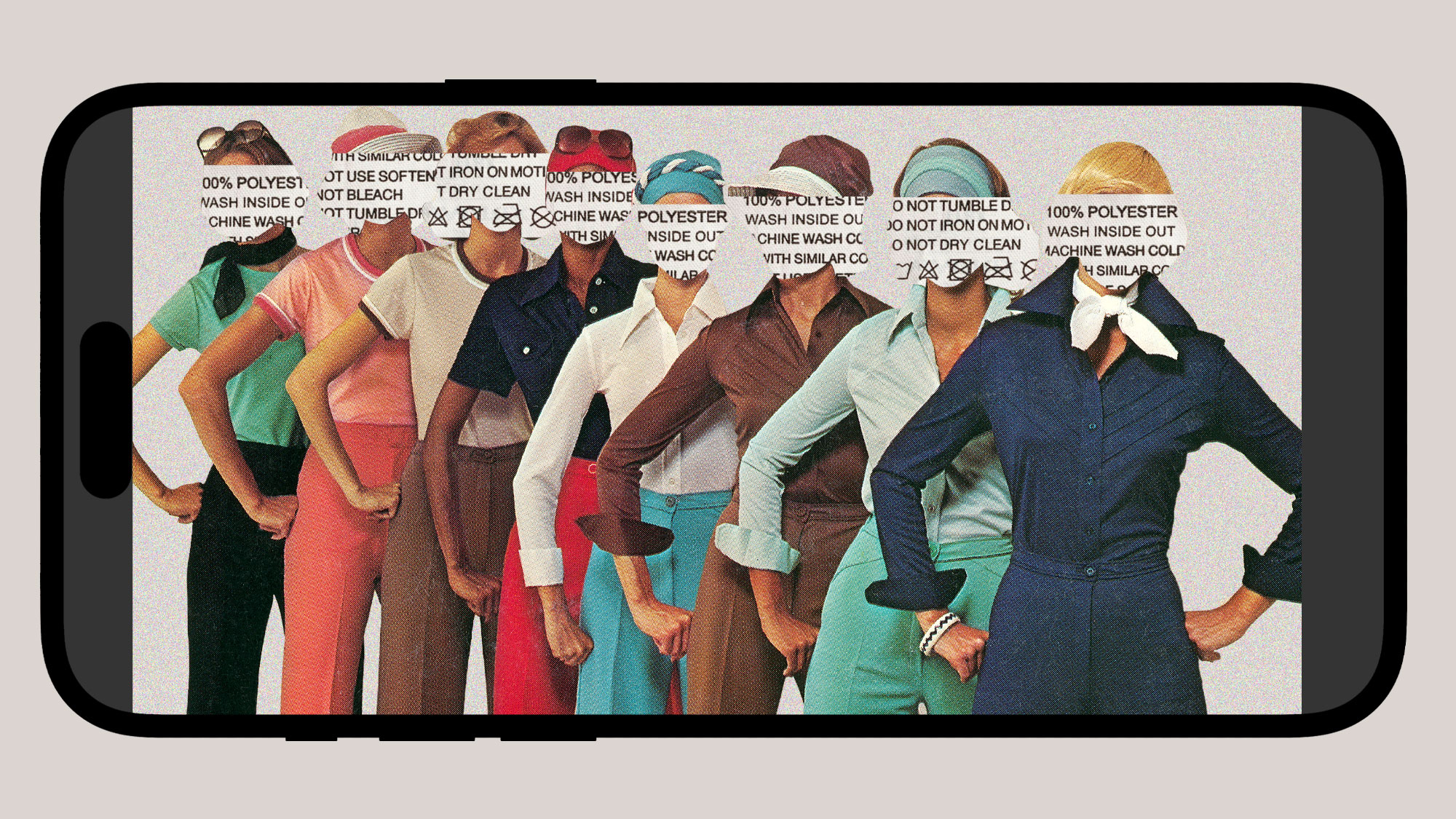
By the late 1970s, the shiny, ill-fitting synthetic men’s suits that had once symbolized futuristic modernity now felt intensely tacky and uninspired. Popular culture seized upon this aesthetic failure. In 1981, underground filmmaker John Waters released his satirical comedy Polyester, which weaponized the fabric’s low-rent associations by centering a narrative around a crass patriarch whose life revolved around a tawdry adult cinema. As cultural historian Anneke Smelik noted in academic analyses of the period, pairing polyester with pornography represented an absolute cultural nadir from which the fabric’s reputation could hardly sink lower.
The Modern Resurgence: TikTok’s "Polyester Prince"
Fast-forward to the current digital landscape, and this exact anti-synthetic sentiment has roared back to life with intensified vitriol. Social media platforms have birthed an entirely new vocabulary of textile-based degradation.
Today’s internet creators deploy terms like "Polyester Prince"—a nickname frequently hurled at prominent influencers who peddle cheap, synthetic-heavy clothing lines—and "polyester jester" to mock anyone caught wearing fast-fashion outfits. Wellness influencers across the ideological spectrum frequently warn followers about the invisible hazards of synthetic clothing, citing microplastic shedding and chemical treatments.
Yet, lexicographers point out that the underlying linguistic mechanism remains identical to the slang recorded in the Oxford English Dictionary from 1979 and 1987. Modern internet users have simply amplified the "inauthentic" and "low-quality" edges of a half-century-old semantic tradition.
Supporting Context & Metrics: The Environmental and Health Debate
While the cultural disdain for polyester is rooted in aesthetic and social grievances, the scientific and environmental realities surrounding textiles are intensely data-driven, complex, and frequently misunderstood.
The Hidden Toll of Natural Fibers
The cultural assumption that "natural equals green" creates a dangerous blind spot for consumers. Professor Anneke Smelik emphasizes that the boundary between synthetic and natural fibers is remarkably blurry. Raw cotton does not simply picked from a plant and woven into a wearable shirt; it undergoes grueling chemical treatments, bleaching, dyeing, and mechanical processing to achieve the soft texture consumers demand.
Furthermore, natural fibers exact a staggering environmental toll:
- Water Consumption: Producing a single cotton shirt can require upwards of 700 gallons of fresh water.
- Ecological Disasters: The insatiable global demand for cotton has driven large-scale agricultural exploitation. Most notoriously, the diversion of river water for cotton irrigation in Central Asia drove the near-total desiccation of the Aral Sea, transforming what was once the world’s fourth-largest lake into a toxic, sprawling dry lakebed.
The Carbon and Plastic Footprint of Synthetics
Conversely, polyester presents its own distinct set of environmental crises. Because polyester is synthesized from petroleum, its production is directly tied to fossil fuel extraction and greenhouse gas emissions.
Recent data underscores the worsening trajectory of the fashion industry’s climate impact. A comprehensive report released by the Apparel Impact Institute revealed that global fashion sector emissions surged by 7.5% in 2023 and an additional 6.3% in 2024. A significant driver of this increase is the ramped-up global production of raw fibers, led heavily by polyester.
Once manufactured, polyester’s greatest strength—its near-permanent durability—becomes its greatest ecological curse. When discarded, polyester garments resist natural degradation for centuries, slowly fragmenting into microscopic plastic particles. These microplastics now permeate global ecosystems, having been detected in marine life, agricultural soils, human bloodstreams, and placental tissues.

Additionally, health researchers have raised valid concerns regarding the chemical additives used during textile manufacturing. To help synthetic fabrics repel water, resist stains, and endure industrial washing, manufacturers often treat them with per- and polyfluoroalkyl substances (PFAS) and other hazardous chemical agents that pose documented risks to human health and environmental safety.
Official Statements and Expert Perspectives
As the public debate intensifies, academic researchers, cultural historians, and industry analysts are pushing back against the simplistic binaries propagated by social media algorithms.
Lexicographer Kory Stamper highlights the generational continuity of the insult, noting that "TikTokkers just seem to be leaning into the ‘inauthentic’ and ‘low-quality’ edge of that meaning" that older generations established decades ago when critiquing corporate conformity and cultural superficiality.
Academic experts like Professor Anneke Smelik argue that the current discourse suffers from dangerous oversimplifications. Commenting on the polarized nature of online wellness and fashion spaces, Smelik warns:
"It is so uninformed, and it leaves out all complexity. You know, it becomes very polarized—like, ‘natural is good, and artificial is not.’"
Smelik points out that consumer behavior is deeply distorted by these marketing myths. The comforting illusion that purchasing a 100% cotton garment absolves the buyer of environmental guilt allows consumers to purchase clothes at unprecedented volumes without psychological friction.
"Fast fashion remains fast fashion, and that is a huge problem," Smelik asserts, emphasizing that material composition matters far less than consumption volume.
Future Outlook: Beyond the Polyester Panic
As the fashion industry navigates mounting regulatory scrutiny, climate disclosures, and shifting consumer expectations, the path forward requires moving beyond superficial culture wars.
The viral condemnation of polyester on TikTok—while effective at generating engagement and ridiculing fast-fashion excesses—ultimately distracts from the core systemic failure of the modern apparel economy: overproduction and overconsumption. Whether a garment is spun from petroleum-derived polyester or water-intensive cotton, the linear "take-make-waste" model remains fundamentally unsustainable.
Ultimately, scientific consensus and environmental audits point to a sobering conclusion: the single most ecologically responsible wardrobe choice is not swapping one material for another, but drastically reducing acquisition rates. As long as the global fashion apparatus continues to churn out disposable trends at breakneck speed, society will remain trapped in an endless cycle of ephemeral outrage—condemning the "polyester jester" of today while repeating the unreflective consumption habits of the past.



