

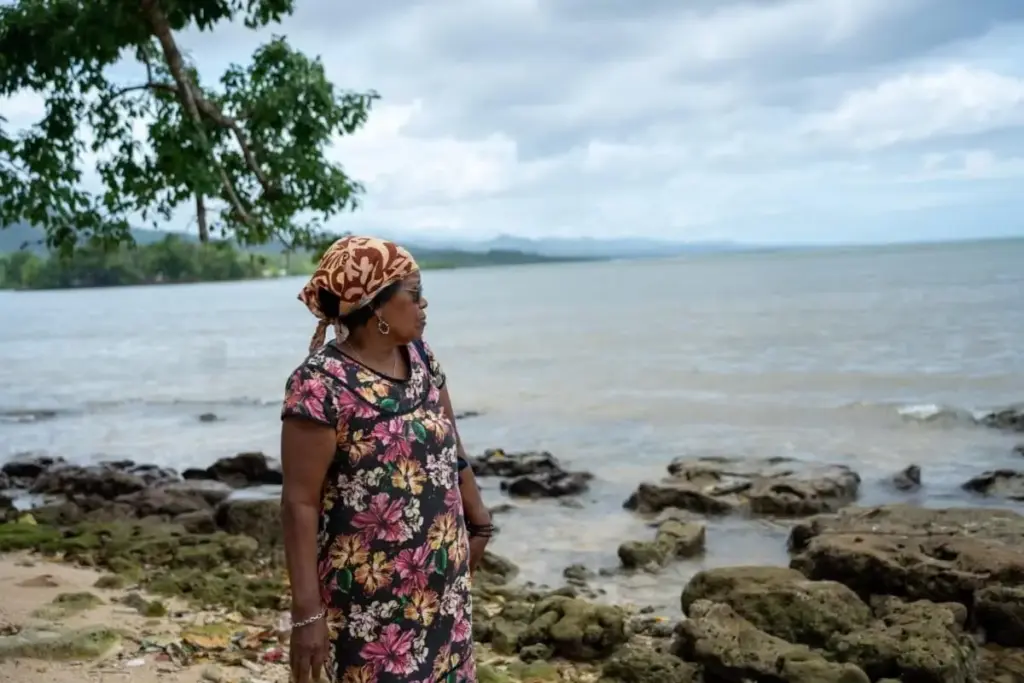
In an era dominated by bureaucratic metrics, rigid grant proposals, and risk-averse philanthropy, the Home Planet Fund is radically rewriting the rules of conservation. Founded five years ago, this independent, Indigenous- and women-led public charity has carved a unique space in global environmental funding. Rather than dictating terms from Western capitals, the fund delivers direct, unrestricted financial support to Indigenous and local communities working on the front lines of climate resilience and biodiversity loss.
At the helm is Executive Director Dilafruz Khonikboyeva, whose worldview was forged in the Pamir Mountains of Tajikistan during the Soviet occupation and the subsequent civil war. Khonikboyeva brings a rare, battle-tested perspective to modern philanthropy—one that rejects the illusion of absolute guarantees and instead anchors itself in trust, flexibility, and collective healing. Operating across four critical, highly vulnerable ecologies worldwide, the Home Planet Fund proves that true ecological restoration is inseparable from human dignity and the deliberate mending of generational trauma.
Detailed Chronology & Organizational Evolution
The genesis of the Home Planet Fund lies in the lived experience of its founder and the systemic failures Khonikboyeva witnessed within traditional international aid models.
Recognizing the Funding Bottleneck
For decades, global conservation funding has suffered from a top-heavy bottleneck. Donors in the United States and Europe pool millions of dollars into high-profile causes, typically funneling resources through tiered bureaucracies. By the time funds filter down through headquarters and regional offices, local and Indigenous communities—those historically safeguarding the land—frequently receive only cents on the dollar. More critically, these funds arrive pre-packaged with immutable timelines, foreign interventions, and rigid performance indicators that ignore local realities.
Recognizing this broken paradigm, Khonikboyeva spent the fund’s initial years deliberately out of the public eye. Eschewing the noise of traditional nonprofit launches, she and her team focused on quiet foundation-building. They engaged with trusted networks, consulted scientific databases, and sought formal invitations from communities before deploying a single dollar.
Public Debut and Growth
By 2024, after two rigorous years of accumulating baseline impact data and establishing unbreakable community trust, the Home Planet Fund stepped into the public sphere. Backed initially by anchor funding from Yvon Chouinard and his family at Patagonia, the fund established a model that bridges rigorous scientific accountability with radical trust-based philanthropy. Today, the organization operates across more than 20 countries, focusing exclusively on four distinct, highly critical ecologies identified by researchers as vital for biodiversity and climate stability:
- The Tongass Rainforest of Alaska
- The "Third Pole" glacial region spanning Kyrgyzstan, Tajikistan, Afghanistan, Pakistan, India, and Nepal
- The grasslands of East Africa (Kenya, Uganda, Tanzania)
- The South Pacific
Supporting Context & Metrics
The Home Planet Fund operates outside the standard philanthropic playbook, employing structural frameworks designed to maximize autonomy and minimize administrative violence.
Abolishing the Grant Proposal
Traditional philanthropy prides itself on open calls for proposals, framing them as the pinnacle of democratic transparency. Khonikboyeva challenges this assumption, noting that open calls inherently favor a tiny, privileged global elite who speak English, possess high-speed internet access, and understand how to navigate Western bureaucratic language.
By eliminating grant proposals altogether, the Home Planet Fund bypasses the high-pressure touchpoints that exhaust local leaders. Instead, the fund’s team sits directly with communities, engaging in prolonged listening and co-building initiatives. This approach intentionally limits the organization’s immediate geographical expansion in favor of deep, durable, and sustainable impact.
Focusing on Marginalized and Conflict-Affected Ecologies
The fund deliberately targets areas experiencing political fragility, resource scarcity, and historical conflict. While conventional donors view these regions as too risky, Khonikboyeva notes an inverse relationship between state stability and community strength: where central governments are weak, localized governance structures, tribal systems, and Indigenous institutions have often remained robust for centuries.
In the high mountains of Afghanistan’s Badakhshan province, for instance, the fund partners directly with women farmers. These grassroots initiatives achieve dual victories: they secure local food sovereignty and regenerative nutrition while stabilizing glacial watersheds to prevent devastating downstream floods.
+-----------------------------------------------------------------+
|                  TRADITIONAL VS. TRUST-BASED MODEL              |
+----------------------------------+------------------------------+
| Traditional Aid                  | Home Planet Fund             |
+----------------------------------+------------------------------+
| • Top-down bureaucratic control  | • Direct community ownership |
| • Rigid, restricted funding      | • Flexible, unrestricted use |
| • Open grant proposals (elitist) | • Relational co-building     |
| • Fear-based risk management     | • Trust-based verification   |
+----------------------------------+------------------------------+
Unrestricted Funding and Real-World Flexibility
A cornerstone of the fund’s methodology is truly unrestricted, trust-based giving. Contrary to the misconception that unrestricted funding amounts to handing over a check and walking away, Khonikboyeva defines it as a profound commitment to shared reality.
When unexpected disruptions occur—such as the December 2024 earthquake in Vanuatu—local partners do not need to wait weeks for a distant donor to approve a budget revision. Because the fund sits in an environment of established trust and maintains early-warning networks, communities can instantly pivot financial resources toward emergency disaster response without administrative penalties.
Official Statements & Insights
Throughout her public engagements, Khonikboyeva has articulated a philosophy that confronts the uncomfortable truths of international development and climate action.
Rejecting False Certainties
Addressing the comfort that donors derive from neat, predictable spreadsheets, Khonikboyeva offers a stark warning about the philanthropy industry:
"If you’re getting a satisfying answer in this space, something isn’t right… I think sometimes people wanna hear, ‘Yes, we’ll take your money. Yes, we’ll do what you want in the timeline that you want. Yes, everything is possible.’ And it’s just not true, right? That is actually not how life works, and anybody who tells you otherwise is certainly selling you something."
Re-evaluating Human Nature and Incentive
Drawing on her upbringing in Tajikistan and her academic background in conflict zones, Khonikboyeva pushes back against the cynical narrative that humans act solely for monetary gain:
"The hardest of humanity that I’ve seen, like the hardest issues around not having food, not having access, being worried that they were gonna be bombed or killed any day, I actually in those hardest contexts saw the most beautiful parts of community come out… The human condition is such, for the most part, that we do things because we’re grateful for each other, because we believe in the future."
The Imperative of Self-Healing
Perhaps the most poignant aspect of Khonikboyeva’s philosophy is her insistence that environmental work must be mirrored by internal and communal mending:
"We’re not just here to heal the planet… we’re here to understand what works in every single village, every single ecology. Let the local people do that. Let them continue to learn and grow. But in healing that land, there is something in people that we can also heal. So can we invest in the healing of ourselves?"
Future Outlook
As the Home Planet Fund looks toward the coming years, its trajectory serves as a stress test for the broader philanthropic sector. The organization’s ultimate vision is the cultivation of a collaborative funding network that invites multiple donors to pool resources while surrendering traditional control.
This model requires a fundamental mindset shift from institutional and individual donors: stepping outside comfortable Western boardrooms, embracing operational discomfort, and accepting that ecological resilience cannot be manufactured via Excel sheets. By prioritizing long-term durability over rapid scaling, the Home Planet Fund aims to prove that when local communities are trusted as the ultimate stewards of their lands, both the earth and its people can finally begin to heal.



