

In the coastal suburbs of southeastern Sydney, a silent struggle plays out each spring between urban development and resilient native wildlife. For the third consecutive year, a pair of spur-winged plovers—more commonly known as masked lapwings—chose a precarious headland overlooking a popular tidal pool in Maroubra to raise their young. By early September, two tiny chicks had hatched from speckled brown eggs nestled in a shallow divot of earth, their arrival instantly transforming the scenic clifftop into a zone of fierce parental protection.
To local residents, these birds are a familiar fixture. Adorned with distinctive black crowns, vivid yellow facial wattles, and defensive wing spurs, the adult plovers are known for their loud, rattling alarm calls and fearless dive-bombing tactics. For one nearby resident, monitoring the family’s daily routine offered a much-needed psychological refuge from the bleak, macro-level environmental anxieties of the era, including the looming threat of H5N1 bird flu arriving in Australia.
However, this urban headland—framed by open grasslands and panoramic ocean views—is also an obstacle course of modern hazards. Unrestrained dogs, speeding traffic, domestic cats, predatory birds, and sheer cliff drops form a gauntlet that previous broods failed to survive. Despite intervention from community volunteers and wildlife rescue networks, history repeated itself. Within weeks, the chicks vanished, leaving behind grieving parents, silent airspace, and a poignant reminder of the friction inherent in sharing our cities with native fauna.
Detailed Chronology
The Hatching and Early Days (Early September)
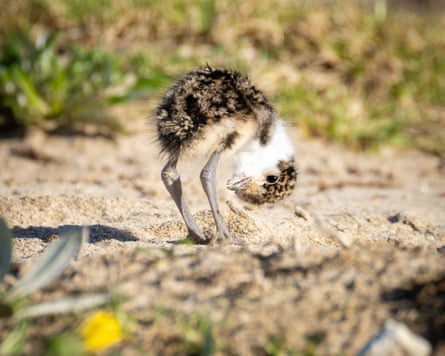
The lifecycle of the Maroubra plovers began in a shallow ground scrape on the exposed headland. Unlike altricial bird species that are born helpless, the spur-winged plover chicks—resembling fluffy brown-and-white cotton balls set atop disproportionately long, stilt-like legs—hit the ground running shortly after emerging.
From day one, the parents maintained an unbroken vigil. The adults provided warmth by letting the free-roaming chicks tuck themselves beneath their fluffy white breasts against the chilly coastal winds. They also established a strict defensive perimeter. Anyone—human, dog, or remote-controlled drone—crossing an invisible threshold was met with a high-decibel, rattling warning cry: "kekekekekekekek." Ignore the call, and the adults would launch into aggressive, low-altitude dives, their grey-brown wings brushing the ears of unwary passersby.
The Community Vigil and Rising Tensions
Drawn to their tenacity, neighborhood observers established an informal watch. For many, checking on the chicks twice daily became a grounding ritual. Yet, public reception of the nesting site was sharply divided.
While some residents and volunteers developed a deep admiration for the birds’ unwavering devotion, others responded with open hostility. Pedestrians frequently shouted and swore at the adults when dive-bombed, failing to recognize that the birds were simply defending vulnerable progeny incapable of flight.
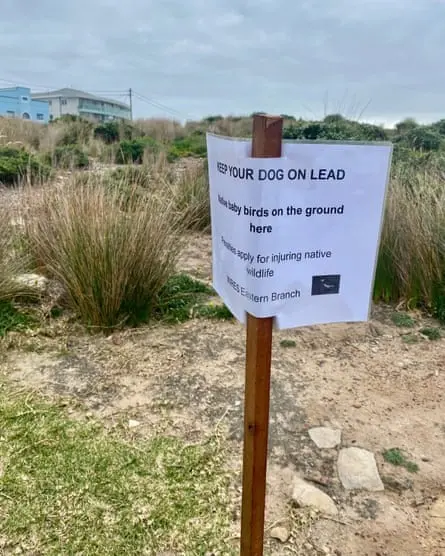
As the chicks grew, the risks mounted. The nesting site sat dangerously close to a local thoroughfare where speeding motorists posed a constant lethal threat during previous breeding seasons. In response, volunteers from WIRES—Australia’s largest wildlife rescue organization—stepped in. They erected perimeter warning signs around the headland to remind the public to leash dogs and respect native wildlife under threat of heavy legal penalties. Unfortunately, while compliance was observed among some beachgoers, many ignored the warnings entirely.

The Disappearance and Aftermath
Approximately a week after they were first spotted, the chicks abruptly vanished. Morning and evening checks revealed an empty headland; their usual foraging grounds were entirely deserted. A text message sent to a local WIRES volunteer confirmed the worst-case scenario: neither she nor any other community spotters had seen the juveniles in days.
The adult birds subsequently retreated from the immediate headland, their once-defiant posture replaced by a quiet, timid demeanor. Without chicks to protect, they kept their distance from humans, no longer shrieking or swooping. The WIRES warning signs remained on the turf like solemn grave markers, bearing witness to another failed breeding cycle on the Maroubra cliffs.
Supporting Context & Metrics
Urban Ecology of the Masked Lapwing (Bacterrops novaehollandiae)
The masked lapwing is one of Australia’s most recognizable birds, flourishing across the northern, central, and eastern regions of the continent. Traditionally inhabiting mudflats, open grasslands, and coastal wetlands, these birds have successfully adapted to human-altered landscapes.
Urbanization has inadvertently provided lapwings with an abundance of open, manicured lawns—such as sports ovals, median strips, and flat commercial rooftops—that mimic their natural open-habitat preferences. However, these human-dominated environments introduce unnatural pressures:
- Habitat Fragmentation: Urban parks and headlands force birds into narrow strips of land directly adjacent to high-density traffic and footpaths.
- Domestic Predators: Off-leash dogs and free-roaming domestic cats represent artificial apex predators that ground-nesting birds have not evolved to evade effectively.
- Automotive Hazards: Because juvenile plovers spend several weeks running along the ground before developing flight feathers, vehicular strikes near urban reserves are a leading cause of seasonal mortality.
Comparative Animal Grief and Sentience
The disappearance of the chicks raised difficult questions regarding avian emotional processing. While anthropomorphism is a traditional pitfall in wildlife observation, a growing body of scientific research confirms that non-human animals register the loss of offspring and companions.
- Cetaceans: Recent documentation off Australia’s Gold Coast captured humpback whales exhibiting prolonged care behavior toward stillborn calves. Similarly, orcas have been tracked carrying dead calves across open oceans for weeks.
- Elephants: Recognized universally for their complex social structures, elephants frequently return to visit and tactilely examine the bones of deceased family members.
- Corvids: Crows and ravens routinely gather in large numbers around the carcasses of fallen flock members, engaging in behaviors widely interpreted by ornithologists as mourning rituals.
In the case of the Maroubra plovers, the sudden abandonment of the headland following the disappearance of their clutch strongly suggests an acute behavioral response to reproductive failure, mirrored by the human observers who had invested emotional labor in their survival.
Official Statements & Community Perspectives
The conflict between urban human populations and nesting shorebirds highlights ongoing challenges for municipal wildlife management.
Local wildlife advocates and WIRES representatives emphasized that human behavioral modification is the singular variable determining whether urban wildlife survives. A spokesperson for the volunteer network noted:
"Every spring, native species attempt to reclaim spaces that we have heavily modified. The hostility directed toward nesting plovers is rooted in a fundamental misunderstanding of natural behavior. These animals are not deliberately malicious; they are simply trying to pass on their genetics in an increasingly hostile, human-dominated world."
Urban planners and council environmental officers have faced mounting pressure from community groups to implement seasonal protective fencing around known breeding sites, particularly along coastal walking tracks in Sydney’s east. Conservationists argue that temporary signage, while helpful, is insufficient without active enforcement of companion animal leash laws and reduced speed limits near high-biodiversity coastal zones.
Despite the prevailing friction, community responses remain deeply polarized. While some residents view nesting plovers as an urban nuisance requiring removal, a dedicated faction of urban naturalists views them as essential indicators of local ecosystem health, advocating for coexistence through education and environmental stewardship.
Future Outlook
As urban sprawl continues to intersect with native Australian habitats, encounters between humans and territorial ground-nesting birds will inevitably increase. The recurring tragedies at the Maroubra headland underscore a broader philosophical question: must we continue to alter natural ecosystems without making space for the species displaced in the process?
For the author and other local residents, the narrative does not end with despair. Even in the absence of this season’s chicks, the lingering calls of masked lapwings across the Maroubra neighborhood serve as a persistent reminder of resilience.
Plans are already underway among local volunteers to advocate for enhanced seasonal protections ahead of the next breeding cycle. Whether future clutches will survive the urban gauntlet remains uncertain, but the commitment of neighborhood observers proves that urban wildlife holds intrinsic value for those willing to watch, listen, and protect. As long as the distinctive "kekekekekekekek" rings out across the coastal cliffs, the argument for harmonious urban cohabitation remains alive.



