Executive Overview
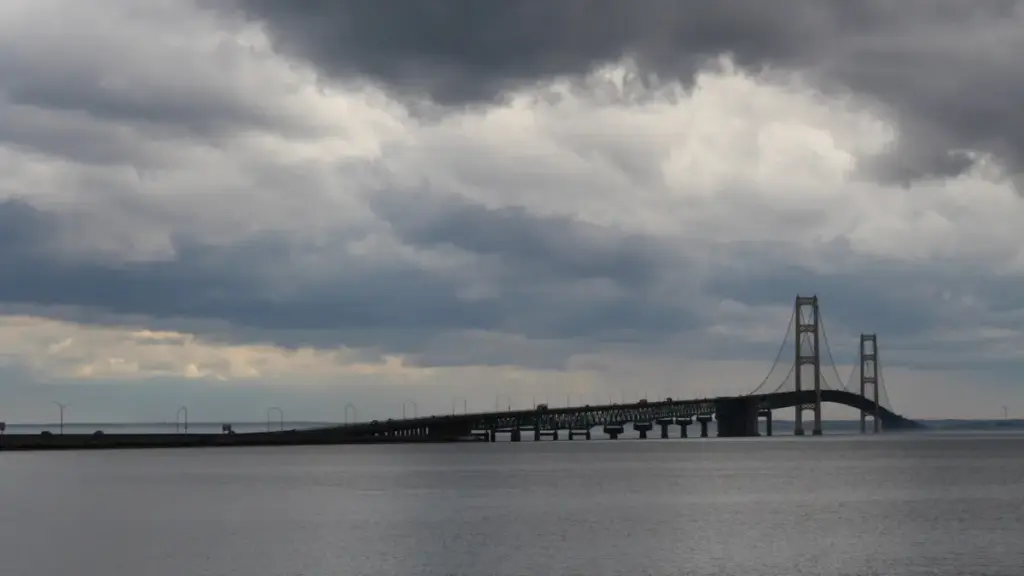
The long-contested battle over the Enbridge Line 5 pipeline has reached a critical and volatile juncture. The U.S. Army Corps of Engineers has officially issued a pivotal federal permit authorizing a controversial plan to overhaul an aging segment of the pipeline where it crosses the Straits of Mackinac in northern Michigan. For the pipeline’s operator, Canadian energy giant Enbridge Energy, the decision marks a substantial procedural victory in its multi-year campaign to secure federal clearance. The project aims to replace a 4-mile stretch of dual pipelines resting directly on the ecologically fragile lakebed with a single, modern pipeline housed inside a concrete-lined tunnel buried deep beneath the bed of the straits.
However, the federal greenlight has triggered immediate, profound outrage from Michigan’s Indigenous communities, environmental advocates, and legal organizations. Tribal leaders have condemned the decision as a blatant dismissal of tribal sovereignty, cultural heritage, and federally protected treaty rights. The Army Corps fast-tracked its review under a presidential emergency executive order, a move that critics argue weaponized emergency powers to bypass comprehensive environmental scrutiny and meaningful consultation with Native nations.
While the federal permit represents a milestone for Enbridge, the pipeline’s future remains deeply uncertain. The company is barred from breaking ground due to a gauntlet of unresolved state-level regulatory hurdles, ongoing litigation, and aggressive pushback from the administration of Michigan Governor Gretchen Whitmer. As legal teams representing Indigenous nations weigh their next steps in federal court, the clash over Line 5 has transformed into a high-stakes referendum on Indigenous rights, environmental justice, and the accelerating tension between national energy infrastructure demands and ecological preservation.
Detailed Chronology: The Path to the Army Corps’ Decision
The issuance of the Army Corps permit is the culmination of years of tense regulatory maneuvering, environmental assessments, and escalating conflicts between federal agencies, state regulators, and sovereign tribal nations.
Origins and the Push for a Tunnel
Enbridge’s Line 5 spans 645 miles, transporting up to 540,000 barrels per day of crude oil and natural gas liquids from Superior, Wisconsin, across Michigan’s Upper and Lower Peninsulas, to Sarnia, Ontario. The segment crossing the Straits of Mackinac—where Lake Michigan and Lake Huron meet—has operated since 1953. For years, environmental groups and tribal nations have warned that the dual 20-inch pipelines, exposed to swift currents and potential impacts from commercial vessel anchors, pose an existential threat to the Great Lakes.
In response to mounting pressure, Enbridge proposed the Great Lakes Tunnel Project: a multi-million-dollar endeavor to bore a protective bedrock tunnel beneath the lakebed to house a replacement segment for the Straits crossing. While Enbridge pitched the tunnel as a modern safety upgrade that would eliminate the risk of an anchor strike, opponents argued it would lock in fossil fuel dependence for decades and fail to address broader systemic safety and climate concerns.
The Fast-Tracked Federal Review
The regulatory landscape shifted dramatically under a federal executive order issued by President Donald Trump declaring a "national energy emergency." Leveraging this directive, the U.S. Army Corps of Engineers fast-tracked its environmental review of the Line 5 tunnel project.
The expedited process severely strained relations between federal regulators and local Indigenous populations. Citing a pervasive disregard for their expertise, cultural concerns, and treaty rights, seven Michigan tribal nations formally walked away from consultations with the Army Corps last year.
Despite this mass withdrawal, the agency pressed forward. In its official Record of Decision, the Army Corps asserted that the project complied with Clean Water Act guidelines, was not contrary to the public interest, and "would not abrogate or impermissibly impair tribal treaty rights." The agency acknowledged that tunnel construction would cause permanent adverse impacts on wetlands, vegetation, land use, and cultural resources. Nevertheless, it concluded that the long-term safety benefits of relocating the pipeline into a subterranean tunnel outweighed these localized detriments. Crucially, the agency limited the scope of its analysis to immediate construction impacts, maintaining that broader systemic risks—such as potential catastrophic oil spills or long-term greenhouse gas emissions—fell outside its direct jurisdiction and belonged under the purview of the federal Pipeline and Hazardous Materials Safety Administration (PHMSA).
Supporting Context & Metrics: Cultural Sovereignty and Environmental Realities
The conflict over Line 5 is far more than a standard industrial dispute; it sits at the intersection of sacred Indigenous history, federal treaty law, and modern ecological vulnerability.
The Significance of the Straits of Mackinac
To the Anishinaabe peoples, the Straits of Mackinac are sacred waters deeply woven into their creation stories and cultural identity. The lakebed and surrounding shores also serve as ancestral burial grounds. Five sovereign tribal nations hold explicit, legally binding fishing, hunting, and gathering rights in these waters under the 1836 Treaty of Washington—rights that predate the establishment of the state of Michigan and are protected under federal law.
Tribal leaders emphasize that ceding these lands and waters to the United States government was predicated on explicit expectations of co-management, consultation, and the protection of their traditional way of life. The federal government’s decision to override these concerns has laid bare what legal advocates describe as a systemic failure to honor foundational agreements.
Dissecting the "Energy Emergency" Justification
The rationale behind fast-tracking the permit has faced fierce skepticism from legal and environmental experts. Debbie Chizewer, managing attorney at Earthjustice—a legal nonprofit assisting Michigan tribes in litigation against Enbridge—noted the glaring contradiction in using an emergency declaration to fast-track a project of this scale.
"A project that’s going to take somewhere between six and 10 years to build is certainly not a response to a national energy emergency, and it won’t change the amount of fossil fuels transported," Chizewer pointed out. Critics argue that the emergency designation served primarily as a bureaucratic mechanism to bypass rigorous public engagement and truncate deep ecological reviews.
David Gover, a managing attorney at the Native American Rights Fund (NARF) who is of Pawnee and Choctaw descent, underscored the broader implications for tribal sovereignty across the United States.
"This notion that, ‘Yeah, we understand that this will permanently destroy your resting relatives, but we don’t care, and we got to move ahead. We got to have these fossil fuels’—that challenges tribal sovereignty," Gover stated. By prioritizing fossil fuel logistics over cultural preservation, the federal process has galvanized a unified front across Indian Country.
Official Statements and Stakeholder Reactions
The release of the Army Corps’ decision elicited sharply polarized responses from corporate stakeholders, government officials, and Indigenous leaders.
- Enbridge Energy: Ryan Duffy, a spokesperson for Enbridge, praised the federal decision in an official statement, calling the permit approval "a significant step forward" that reflects years of "rigorous review" by the federal agency. Duffy reiterated that Enbridge "is committed to protecting the Great Lakes, the region’s natural and cultural resources, and the waterfront communities that depend on them, while also ensuring reliable energy for the region."
- The Sault Ste. Marie Tribe of Chippewa Indians: Austin Lowes, chairman of the tribe, offered a scathing critique of the federal action, describing the permit approval as "disrespectful and ludicrous." Lowes added, "They’re acutely aware of the impact that this project will have on Indian Country, and they just flat-out ignored it. It’s one of the most disgusting things that I’ve ever been confronted with as a tribal leader." He emphasized that the ceding of ancestral lands was inextricably linked to the federal obligation to consult with tribes on major infrastructure projects.
- The Native American Rights Fund: David Gover framed the struggle as an enduring defense of native rights. "Tribes have been here since time immemorial. We’re not going anywhere," Gover said. "This is just another fight that Indian Country takes on and makes certain that those treaties that we signed are meaningful and honor our jurisdictions and sovereignty."
Future Outlook: State Hurdles and Ongoing Legal Battles
While the U.S. Army Corps of Engineers permit represents a major procedural milestone for Enbridge, the Great Lakes Tunnel Project remains stalled by an intricate web of state-level regulatory barriers and aggressive judicial challenges.
The State Regulatory Roadblock
Even with a federal stamp of approval, Enbridge cannot break ground without securing necessary state permits. The Michigan Department of Environment, Great Lakes, and Energy (EGLE) is currently deliberating on a crucial wastewater discharge permit for the project, with a final administrative decision anticipated before the end of September.
Furthermore, the legal foundation for the project was severely shaken last month when the Michigan Supreme Court issued a nearly unanimous ruling sending an approved state permit back to regulators for a vastly more thorough review. The state high court held that the Michigan Public Service Commission failed to adequately consider the full range of potential environmental impacts associated with the operation and construction of the pipeline.
The Broader Legal War Over Line 5
Beyond the tunnel project itself, Line 5 remains the target of multifaceted legal challenges spearheaded by Michigan Governor Gretchen Whitmer’s administration and various grassroots coalitions. The state has been locked in protracted legal battles aimed at revoking the pipeline’s easement and forcing its permanent shutdown over environmental catastrophe fears.
While a federal judge previously ruled that the governor lacked the unilateral authority to shut down the pipeline in 2020—a decision currently being appealed by the state—a major legal breakthrough occurred this spring. In a unanimous ruling, the U.S. Supreme Court cleared the path for state court proceedings to determine whether the aging pipeline can legally continue operating within the Straits of Mackinac. This foundational state-level case will proceed to trial once Governor Whitmer’s federal appeal reaches its resolution.
Meanwhile, legal teams representing Michigan tribes are actively reviewing the Army Corps’ Record of Decision to explore potential federal lawsuits challenging the permit’s validity. As these legal and regulatory fronts converge, the future of Line 5 will likely be decided not in corporate boardrooms, but through prolonged battles in both federal and state courtrooms—where the boundaries of tribal sovereignty, environmental protection, and state authority hang in the balance.