

Executive Overview
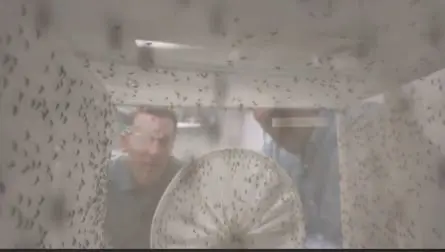
In a quiet logistics facility just east of Los Angeles, a box arrived bearing an unusual and carefully guarded cargo: over two dozen paper tubes, each roughly the size of a standard toilet paper roll. Tristan Hallum, who oversees scientific programs for the San Gabriel Valley Mosquito and Vector Control District, picked up one of the cylinders and brought it to his ear.
“What I’m listening for is the sound of 600 adults flying around,” Hallum said, listening intently to the faint, high-pitched hum echoing from within.
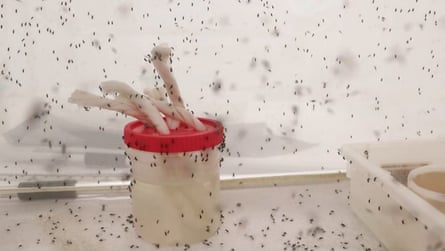
Inside those tubes were roughly 15,000 Aedes aegypti mosquitoes, shipped overnight from a specialized breeding facility in Kentucky. But Hallum was not preparing to exterminate them; he was about to set them free.
Over the course of the deployment, authorities plan to release approximately 30,000 of these insects every single week, culminating in a total release of nearly half a million mosquitoes into the suburban Southern California landscape. To the untrained observer, intentionally releasing hundreds of thousands of mosquitoes during an era of escalating public health concerns sounds counterintuitive, if not reckless. Yet, this is not an outbreak—it is a precise, biological counter-offensive.
Every single mosquito released in the San Gabriel Valley is male. They do not bite, they do not feed on human blood, and they cannot transmit diseases. Instead, they carry a naturally occurring bacterium called Wolbachia, which acts as an evolutionary biological weapon against wild populations. When these lab-bred males mate with wild females, the resulting eggs fail to hatch, effectively sterilizing the females for the remainder of their lifespans. Rather than trying to poison or trap an entire, highly adaptable insect population, scientists are cutting off the problem at its root: reproduction.
This innovative vector control strategy arrives at a critical juncture. Driven by a shifting climate, urbanization, and international travel, dangerous mosquito-borne pathogens—most notably dengue fever—are making historic inroads into regions of the United States that were previously considered safe. As mosquito seasons lengthen and their geographic ranges expand northward, public health officials are rewriting their playbooks, transitioning from seasonal spraying to year-round biological management.
Detailed Chronology: The Evolution of the California Vector Crisis
To understand why California vector control districts are resorting to airborne biological interventions, one must look at how rapidly the landscape of mosquito-borne illness has transformed in the American Southwest over the past several years.
The Historic Breakthrough of Local Transmission (2023–2024)
For generations, public health agencies in California viewed tropical diseases like dengue, Zika, and yellow fever as imported concerns—threats contracted by travelers vacationing abroad and diagnosed only after their return. That paradigm shattered in 2023 when Pasadena and Long Beach recorded the first locally acquired cases of dengue fever in California’s history. These patients had not left the country; they had contracted the virus right in their own neighborhoods.

The threat escalated the following year. A comprehensive investigation by the Centers for Disease Control and Prevention (CDC) identified 14 locally acquired dengue cases within Los Angeles County between August and November 2024. Of those cases, six were severe enough to require hospitalization.
Epidemiologists emphasize that local transmission requires a precise convergence of three elements:
- An individual carrying the virus in their bloodstream.
- A competent vector mosquito (Aedes aegypti) capable of acquiring and transmitting the pathogen.
- Environmental conditions warm and humid enough to allow the virus to incubate inside the mosquito and for the insect to survive long enough to bite another human.
While California had managed the first two elements for years, the third—climate suitability—has undergone a radical shift.
The Shift from Seasonal Pests to Year-Round Threats
Historically, vector control agencies operated on a predictable calendar. Mosquito season was generally understood to run from May through September, aligning with peak summer heat and localized standing water from irrigation or infrequent rains. During the off-months, operations scaled back significantly.
That seasonal demarcation has effectively vanished. “What we would use to refer to as the mosquito season would only be say May to September, but now we have individuals treating for mosquito control activity all year long,” Hallum notes.
The introduction of Aedes aegypti to California upended traditional control methodologies. Unlike native Culex mosquitoes, which typically breed in large, visible bodies of standing water or municipal storm drains, Aedes aegypti are quintessential "container mosquitoes." They thrive in hyper-urbanized environments, laying eggs in saucers beneath potted plants, discarded plastic cups, clogged gutters, and even bottle caps. They are aggressive daytime biters, highly adapted to living alongside humans in dense neighborhoods, and notoriously difficult to control with conventional chemical fogging.
Supporting Context & Metrics: The Climate and Scientific Imperatives
The Global Burden and Climatic Expansion
Mosquitoes are universally recognized as the world’s deadliest animals. This title is not earned through the discomfort of their bites, but through their terrifying efficiency as vectors for pathogens that claim hundreds of thousands of human lives annually, including malaria, dengue, West Nile virus, Zika virus, and yellow fever.
Recent data compiled by Climate Central underscores how anthropogenic climate change is reshaping the playing field. Analyzing temperature trends across the United States, researchers found that nearly 95% of the analyzed cities now experience more days each year with temperatures and humidity levels ideally suited for disease-spreading mosquitoes compared to conditions in the early 1970s. On average, the annual "mosquito-friendly" window has expanded by 18 days across these urban centers.
While an 18-day extension may sound modest on paper, in biological terms, it grants populations of Aedes aegypti several additional weeks to feed, mature, reproduce, and transmit viral pathogens.
Dr. Stephen Dobson, a professor at the University of Kentucky and president of MosquitoMate—the biotechnology company supplying the insects to California—explains that the geographic map is redrawing itself in real-time. “The general trend is they’re moving northward into places that historically have been too cold,” Dobson says. Furthermore, rising baseline temperatures accelerate the extrinsic incubation period of viruses like dengue inside the mosquito’s gut, meaning the insect becomes infectious faster after taking an infected blood meal.
The Science Behind Wolbachia
Faced with the limits of chemical insecticides—to which mosquitoes are increasingly developing resistance—scientists have turned to bio-control strategies that bypass genetic modification entirely.
The Wolbachian sterile insect technique deployed by MosquitoMate relies on a naturally occurring bacterium found in up to 60% of all insect species, including butterflies, dragonflies, and even many wild mosquitoes. However, it is not naturally present in Aedes aegypti.
In a controlled laboratory setting, Dobson’s team introduces the bacterium into the lineage of Aedes aegypti. The process involves no genetic engineering or transgenic splicing; it is a horizontal transfer of a benign, naturally occurring symbiont.
When these laboratory-reared, Wolbachia-carrying males are released into the wild, they seek out and mate with wild, uninfected female Aedes aegypti. Because of biochemical incompatibilities induced by the bacterium within the sperm, fertilization fails. The eggs laid by the wild female do not hatch.
“And when they do, those females are then sterile for the rest of their lives,” Dobson explains. By flooding an urban park, residential block, or commercial district with hundreds of thousands of sterile males, pest control managers drastically skew the ratio of successful to unsuccessful matings. As the birth rate plummets, the overall local population of disease-carrying mosquitoes collapses.
Official Statements and Expert Perspectives
The deployment of millions of sterile insects requires rigorous regulatory oversight and public trust. Federal agencies, including the Environmental Protection Agency (EPA), have evaluated and approved products utilizing Wolbachia-infected male mosquitoes for vector suppression, citing extensive safety data showing no ecological risks or adverse health effects for humans or domestic animals.
Globally, the World Mosquito Program has championed similar Wolbachia methodologies in countries afflicted by severe dengue epidemics, such as Brazil, Australia, Colombia, and Vietnam. Peer-reviewed field studies conducted across these international trials have consistently demonstrated dramatic reductions in dengue incidence—often ranging between 70% and 95% in treated communities.
In Southern California, local vector control leadership is optimistic yet pragmatic about scaling the pilot program. Tristan Hallum emphasizes that public education is just as vital as laboratory logistics. When residents learn that thousands of mosquitoes are being intentionally released into their neighborhoods, initial apprehension is common. However, public health messaging quickly dispels anxiety once citizens understand the biological distinction between the sexes.
“I tell people it’s the opposite of the human species. It’s the females that cause trouble in the mosquito world,” Dobson remarks with a touch of professional humor. Only female mosquitoes bite humans, as they require the protein-rich blood meal to develop their eggs. Male mosquitoes feed exclusively on plant nectar, fruit juices, and sap, rendering them entirely harmless to humans and animals.
Hallum echoes this sentiment with a pragmatic, frontline perspective shaped by years of battling the insects in the field: “I love the dudes, but the females—they can get out of here.”
Future Outlook: Measuring Success and Redefining Pest Control
As the San Gabriel Valley vector control team monitors the ongoing deployment, determining the success of the initiative will not involve counting the millions of released males. Instead, the metric of success is found in the negative space: the absence of the females.
Field technicians will continuously monitor a network of specialized traps strategically positioned throughout the release zones. These traps are designed to capture host-seeking female Aedes aegypti. If subsequent generations show a sharp decline in female trap counts—and, crucially, if local dengue transmission rates remain suppressed—the biological intervention will be deemed a success.
Previous field trials in other states, including Florida and New York, have reported local population suppression rates of 80% to 95% following sustained Wolbachia releases. Yet, vector control experts caution that biological control is not a silver bullet. It must operate as one component of an integrated pest management framework that includes public participation—such as homeowners actively emptying standing water containers—combined with targeted surveillance and environmental modifications.
As global temperatures continue to climb and urbanization creates new microclimates hospitable to tropical vectors, the intersection of biotechnology and climate adaptation will define the future of public health. Programs like the San Gabriel Valley’s sterile insect release demonstrate that humanity’s best defense against the world’s deadliest animal may no longer lie at the bottom of a chemical spray can, but in harnessing nature’s own evolutionary checks and balances.



