For decades, the narrative of wildlife conservation in Africa was written in the language of exclusion. Established under the heavy-handed model of "fortress conservation," national parks and reserves were carved out of ancestral lands through displacement, fencing off nature from the people who lived alongside it. For semi-nomadic pastoralist communities like the Maasai, this meant trading custodianship for conflict. Lions killed cattle, elephants trampled crops, and hyenas decimated flocks overnight—eradicating food security and the primary currency used to pay school fees—while centralized governments reaped the economic benefits of ecotourism.
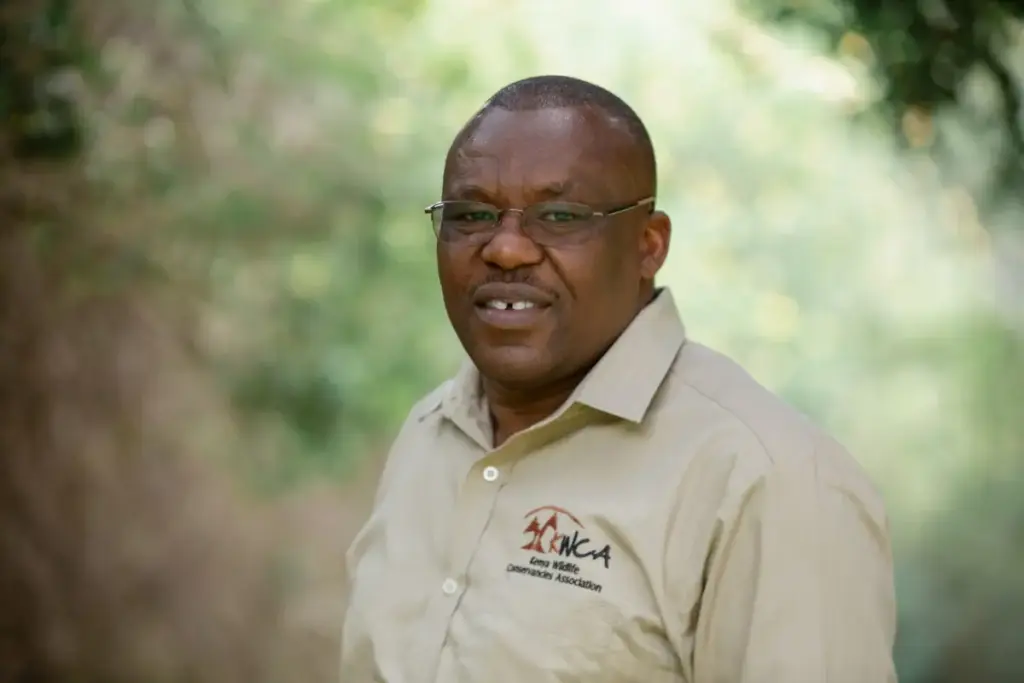
Today, that paradigm is undergoing a radical, grassroots transformation. At the vanguard of this shift is Dickson Kaelo, CEO of the Kenya Wildlife Conservancies Association (KWCA). Over a career spanning nearly three decades, Kaelo has transitioned from a personal struggle with wildlife-human conflict in the northern Maasai Mara to architecting a national movement that integrates pastoralism with wildlife management.
In an exclusive interview with Mongabay’s David Akana during Climate Week New York City, Kaelo detailed the arduous evolution of Kenya’s conservancy movement. From managing uncompensated volunteer efforts to mobilizing tens of millions of dollars through localized funding mechanisms like the Vuma fund and the Kenya Conservancy Fund, Kaelo’s work underscores a singular, urgent thesis: If local communities are expected to protect a global ecological heritage, the international community must pivot from top-down, conditional aid to direct, unrestrictive investment in community-led governance.
Detailed Chronology: A Three-Decade Journey From Conflict to Conservancies
The Roots of Coexistence (Late 1990s)
Kaelo’s entry into conservation was neither academic nor abstract; it was lived experience. Raised among livestock by a veterinarian father, he witnessed firsthand the volatile friction between pastoralist livelihoods and apex predators. Graduating from college at a time when institutionalized conservation offered no middle ground between hostile coexistence and outright eviction, Kaelo sought an alternative.
In 1998, working alongside local elders near the northern Maasai Mara, he helped organize the Koyiaki Lemek Wildlife Trust, uniting two group ranches. This early iteration of community conservation proved revolutionary for the region. The trust successfully constructed two community dams, established three medical dispensaries, and financed schooling for 420 students through tourism revenues. Crucially, it demonstrated that managed grazing could improve rangeland resilience during droughts, resulting in increased milk yields and faster-growing livestock.
However, this nascent success proved fragile. While Kaelo was away pursuing advanced studies in wildlife management, the trust fractured. Pressured by individualization processes, the communally managed land was subdivided into private holdings—a setback that nearly drove Kaelo to abandon conservation entirely for city life.
Rebuilding and Scaling (2004–2012)
Refusing to accept defeat, Kaelo returned to the Maasai Mara with a foundational realization: private land ownership did not preclude collective management. Between 2004 and 2012, he spearheaded the creation of eight community-conserved areas spanning 870 square kilometers (336 square miles) and incorporating roughly 20 tourism facilities.
This phase was defined by immense personal sacrifice. Operating largely without a salary, Kaelo balanced volunteer community organizing with family life, drawing gentle teasing from his wife that he might as well have been a Catholic priest given his devotion to unpaid public service. The model forged during this period shifted the financial risk away from vulnerable households: tourism operators signed long-term leases guaranteeing monthly payouts to landowners, regardless of whether tourist beds were occupied.
Recognizing that his individual capacity was insufficient to meet the surging demand for structured conservation, Kaelo helped establish the Maasai Mara Wildlife Conservancies Association. By the time he transitioned to national leadership, the Mara association had expanded to 25 conservancies covering 1,700 square kilometers (656 square miles), generating nearly $10 million annually for local households.
Institutionalizing a National Movement (2013–Present)
In 2013, Kaelo brought his blueprint to the national stage by joining the newly formed Kenya Wildlife Conservancies Association (KWCA). Starting with a modest rented office and a one-year budget of $100,000, KWCA prioritized legal reform. Partnering with the Kenya Wildlife Service, Kaelo’s team conducted 14 regional consultations, culminating in nearly 20 crucial amendments to Kenya’s Wildlife Conservation and Management Act of 2013.
These legislative victories formally recognized community and private conservancies as legitimate protected areas and granted legal status to community rangers. From 78 conservancies in 2016, the KWCA network has burgeoned to approximately 240 member conservancies today, collectively encompassing 10 million hectares (24.7 million acres)—roughly 15% of Kenya’s total landmass.
Supporting Context & Metrics: The Economics of Community-Led Conservation
The viability of community conservancies hinges on fundamentally altering local economic incentives. Historically, pastoralists bore the heavy opportunity cost of preserving rangelands that could otherwise be converted to commercial agriculture. To counteract this, Kaelo and his colleagues engineered a financial framework designed to ensure that conservation yields tangible improvements in day-to-day living conditions.
Predictable Payouts: By establishing joint management companies between communities and tourism operators, lease payments are distributed as steady, predictable monthly income directly to individual household bank accounts, bypassing patriarchal gatekeeping and empowering women.
Socio-Economic Upgrades: Research conducted in partnership with the International Livestock Research Institute (ILRI) revealed stark contrasts between participating and non-participating communities. Regions integrated into conservancies experienced a near-total transition from traditional mud huts to permanent housing, higher school attendance rates, and enhanced liquidity during community fundraisers (harambees).
Diversified Skills: To combat generational unemployment among rangeland youth, the Wildlife Tourism College of Maasai Mara was established, training close to 100 students annually in professional hospitality and conservation management.
Despite these milestones, systemic financial bottlenecks persist. International donor funding has traditionally been plagued by "donor-driven priorities"—allocating resources toward workshops, consultancies, and administrative overhead while starving communities of foundational needs like boots for rangers, boundary demarcation, and legal registration.
To bridge this gap, African grassroots organizations partnered with Maliasili to launch Vuma, a $65 million pooled fund designed to deliver multi-year, unrestricted core funding to frontline conservation groups. With its $65 million target now only $10 million short, Vuma represents a major step toward decolonizing conservation finance. Simultaneously, the Kenya Conservancy Fund was created to disburse tailored micro-grants ranging from $50,000 to $80,000, addressing specific vulnerabilities across different stages of conservancy maturation.
Official Statements and Institutional Challenges
While the expansion of Kenya’s conservancy network is a global success story, Kaelo remains remarkably candid about structural vulnerabilities within the movement.
On Elite Capture and Governance
The influx of ecotourism and carbon market revenues has introduced complex governance hurdles. In communities with traditional power structures and low literacy rates, the risk of "elite capture"—where a few educated gatekeepers monopolize financial flows—remains a persistent threat.
"When a largely less-educated community is managed by a few people… it can be very easy for elite capture to happen if you get the wrong person," Kaelo noted.
To counter this, KWCA enforces rigorous accountability metrics, requiring member conservancies to hold transparent Annual General Meetings (AGMs) and participate in intensive governance training programs.
On Land Tenure as the Bedrock of Conservation
Kaelo emphasizes that the ultimate success of community conservation is inextricably linked to land tenure security. The passage of the Community Land Act in 2016 was a watershed moment, yet sluggish implementation leaves vast tracts of communal land vulnerable to ambiguity and conflict.
"For me, land tenure is the foundation of conservation. Future conservation funding needs to prioritize land rights and land ownership, including delineation and beaconing of boundaries. That gives communities confidence to manage land because they know it is theirs."
On Carbon Markets and "Carbon Cowboys"
Though carbon credits present a viable mechanism to monetize avoided degradation and ecological stewardship, Kaelo sounds a cautionary note regarding third-party intermediaries.
"When we started engaging with carbon credits, we found the system very, very complex, very long and very prone to capture by third-party intermediaries—what people in Kenya sometimes call ‘carbon cowboys’… The whole thing has almost been designed not to work for communities."
Through ongoing collaboration with the Kenyan government on national carbon registries and regulatory frameworks, Kaelo aims to ensure that carbon financing genuinely rewards the stewards of the land rather than remote brokers.
Future Outlook: The 30×30 Imperative and the Path Ahead
As the global conservation community rallies behind the international target to protect 30% of the planet’s land and marine areas by 2030 (the "30×30" initiative), Kaelo issues a stark warning against reverting to colonial preservation models.
If 30×30 is pursued through forced evictions and fortress conservation, it will inevitably fail. However, if governments and international donors channel resources into empowering Indigenous and pastoralist communities to self-organize, conservation becomes self-sustaining.
The threats facing African biodiversity are formidable—ranging from the unchecked expansion of commercial agriculture and real estate to unresolved land disputes and stagnant, underfunded conservancies. Yet, Kaelo remains fundamentally hopeful. This optimism is not anchored in philanthropic benevolence, but in the enduring resolve of rural villagers and elders who recognize that their survival is inextricably bound to the preservation of the natural world.
"Sometimes we think we are doing conservation for the sake of conservation. But we are part of nature. If we don’t conserve it, we are the ones who will ultimately suffer the consequences."
Through institutional resilience, legislative advocacy, and innovative localized funding models like Vuma, Dickson Kaelo and the KWCA continue to prove that the future of African conservation rests not behind barbed wire fences, but in the hands of the communities who call the rangeland home.