

Executive Overview
Installing a utility-scale battery storage system in New York City is a grueling endeavor. Developers must navigate a dense, notoriously complex maze of fire codes, zoning laws, environmental reviews, and grid-interconnection queues. While massive, centralized energy storage plants are springing up rapidly across the globe, densely populated metropolitan areas like New York present unique hurdles. High-profile, albeit rare, battery fires in other parts of the country have stoked intense community pushback and heightened safety anxieties among urban residents and local lawmakers alike.
Faced with these formidable structural and political obstacles, a new wave of climate tech startups is pivoting away from massive, centralized installations. Instead, these entrepreneurs are embracing a decentralized ethos: embedding relatively small batteries into everyday consumer products and commercial appliances—ranging from e-bike charging cabinets and induction stovetops to window air-conditioning units and food-cart generators.
By bypassing the arduous permitting and regulatory hurdles required for utility-scale projects, these companies are introducing localized power infrastructure directly into homes, businesses, and streets. While individual units are small, their cumulative potential is staggering. When aggregated via advanced software platforms, thousands of distributed micro-batteries can form a virtual power plant (VPP) capable of shaving peak demand, preventing summer blackouts, lowering consumer utility bills, and cutting urban air pollution. Industry insiders are calling this the most significant shift in the power grid sector in two decades.
Detailed Chronology & Industry Evolution
The Gridlock of Centralized Storage
For years, the blueprint for decarbonizing the electrical grid relied heavily on macro-scale infrastructure: massive wind farms, sprawling solar arrays, and multi-megawatt battery energy storage systems (BESS) designed to absorb excess renewable energy and discharge it when demand peaks.
However, bringing these multi-megawatt facilities online in constrained urban cores has proven exceptionally difficult. In New York City, space is at an absolute premium, real estate is astronomically expensive, and local regulations regarding fire safety in dense populations are exceptionally strict.
Furthermore, public perception remains a major roadblock. As David Hammer, co-founder of PopWheels, noted during a panel at New York Climate Week on September 24:
"The number-one challenge that large-scale centralized energy storage providers have is the fact that their benefits are abstract and their costs are concrete."
Residents living near a proposed utility-scale battery facility bear the localized anxiety of potential thermal runaway events—such as those observed at high-profile sites like the Moss Landing energy storage facility—while the power generated is funneled broadly into the regional grid. This asymmetry of risk versus reward has stalled numerous urban clean energy projects.
The Pivot to the Micro-Scale
Recognizing that waiting for regulatory overhauls could take years, visionary startups began looking for loopholes within existing consumer product frameworks. Because these units are either small enough to plug into standard outlets or are entirely integrated into existing appliances, they largely evade the complex interconnection studies and expansive environmental permitting processes that plague utility-scale projects.
This mirrors the explosive growth of "balcony solar" models seen across parts of Europe and emerging markets, where homeowners use small, plug-and-play solar panels to offset a fraction of their electricity consumption without needing a certified electrician or utility approval.
Supporting Context & Metrics: Case Studies in Distributed Storage
1. Mobility and Micro-Logistics: PopWheels
Delivery workers navigating New York City’s bustling grid on e-bikes face a constant logistical challenge: keeping their vehicles powered throughout grueling shifts. PopWheels tackled this by constructing a decentralized network of battery-swapping cabinets specifically tailored for e-bike couriers.
Instead of plugging in and waiting hours for a charge, drivers simply swap a depleted battery for a freshly charged one at a local cabinet. According to Hammer, PopWheels currently maintains:
- ~50 cabinets strategically distributed across New York City.
- ~2,500 batteries actively circulating within the urban ecosystem.
Expanding beyond delivery bikes, PopWheels recently initiated a pilot program supplying these same modular batteries to urban food-cart operators. Traditionally, food carts rely on noisy, highly polluting gasoline generators to power their refrigeration, grills, and lighting. By deploying approximately four PopWheels batteries, a food vendor can secure 5 kilowatt-hours (kWh) of clean electricity—enough to reliably cover an entire day’s operational needs while eliminating localized exhaust and noise pollution.
2. Residential Resilience and Electrification: Copper
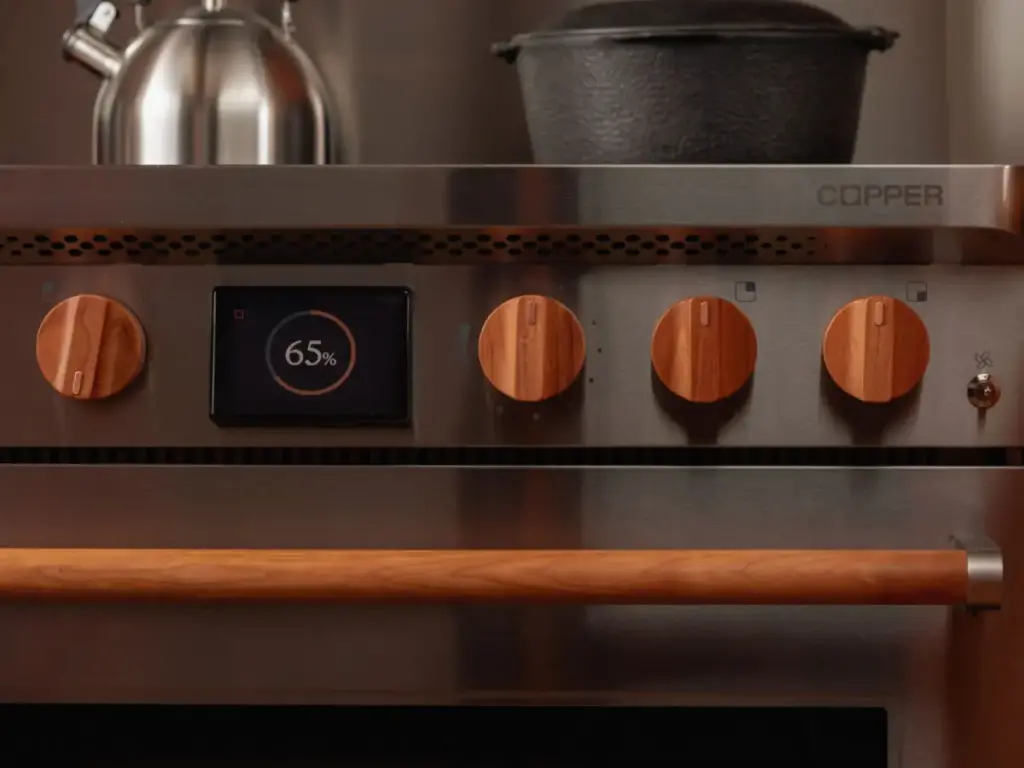
Moving indoors, startups are rethinking home appliances. Copper, a climate tech startup, has engineered induction stovetops with integrated battery storage systems.

Beyond offering the superior cooking performance and indoor air quality benefits of induction over gas, Copper’s integrated battery serves a dual purpose. First, it provides crucial energy resilience, allowing residents to cook meals even during a severe grid outage or blackout. Second, it delivers immediate financial savings.
Many older residential buildings in cities like New York lack the electrical capacity to support modern, high-draw electric appliances without expensive panel upgrades or heavy rewiring. Copper’s battery mitigates this by drawing power slowly from the standard wall outlet to charge itself, then discharging stored energy to assist the burners when the stove is actively in use, thereby shielding homeowners from costly electrical service upgrades.
Sam Calisch, co-founder and CEO of Copper, emphasized this value proposition at New York Climate Week:
"We’re not just selling a battery for resilience—we’re selling it for cost savings."
3. Plug-and-Play Commercial and Residential Units: Every Electric & David Energy
Other market players are attacking the problem from the perspective of plug-and-play commercial and residential demand response.
- Every Electric manufactures specialized batteries designed to plug directly into residential and commercial air-conditioning units. The company supplies the hardware and compensates customers for curtailing or shifting their energy usage during high-stress grid events—such as scorching summer afternoons when AC demand pushes the grid to its absolute limit.
- David Energy utilizes a similar software-driven business model, but strategically targets commercial energy hogs such as laundromats, parking garages, and local gyms. By outfitting these businesses with smart, connected storage units, David Energy can automatically optimize their energy consumption profiles in real time.
Official Statements & Industry Perspectives
The rapid rise of micro-storage is viewed by industry leaders not merely as a workaround for red tape, but as a fundamental reimagining of how power grids will operate in the 21st century.
James McGinniss, co-founder and CEO of David Energy, offered a bold assessment of the movement:
"This is the biggest thing to happen in the power grid sector in the last 20 years."
The sheer scale of this potential is unlocked through aggregation. If every residential stove manufactured and shipped in the United States were equipped with an integrated battery, the resulting aggregate capacity would equate to tens of gigawatts of power, according to Copper’s Sam Calisch.
When bundled together through virtual power plant (VPP) software platforms, this sprawling network of kitchen appliances, e-bike batteries, and window AC units can be commanded to discharge simultaneously. This creates an agile, responsive reserve capacity that can be tapped instantaneously when the main transmission grid experiences severe stress.
Future Outlook: The Hybrid Grid of Tomorrow
As battery manufacturing costs continue their downward trajectory, distributed micro-storage is poised to infiltrate deeper into daily domestic and commercial life. The consumer value proposition is clear and compelling: cleaner indoor and outdoor air, lower monthly utility bills, and built-in protection against the increasing frequency of climate-driven grid failures.
However, industry experts agree that decentralization does not render utility-scale storage obsolete. Both paradigms are required to build a fully decarbonized, resilient energy ecosystem:
- Large-scale installations will continue to perform the heavy lifting required to balance macro-level grid fluctuations, absorbing massive surges of remote wind and solar generation to meet surging, electrification-driven electricity demand.
- Distributed micro-batteries will tackle the "last mile" of the energy transition, smoothing out local grid congestion in hyper-dense urban centers like New York City, preventing summer blackouts, and empowering individual consumers to become active participants in grid management.
As cities become increasingly congested and traditional grid expansion hits physical and regulatory roadblocks, the humble stove, e-bike battery, and window AC unit may well prove to be the ultimate saviors of the modern electrical grid.



