Executive Overview
The global electric vehicle (EV) market has demonstrated remarkable resilience, staging a powerful recovery in the second quarter of 2026 following a sluggish and uncertain start to the year. According to newly released data and analysis from the International Energy Agency (IEA), worldwide EV sales surged by 35% in Q2 compared to the first three months of 2026. This rebound was potent enough to shatter quarterly sales records in fully 50 countries, proving that consumer demand for electrification remains structurally robust even as traditional internal combustion engine (ICE) markets stumble.
Remarkably, the electric vehicle sector is dramatically outperforming the broader automotive industry. While worldwide sales of conventional cars contracted by approximately 5% year-over-year during the first half of 2026, the EV market has pushed forward. This divergence is driven by a complex web of economic pressures, fluctuating fossil fuel costs, divergent regional policy frameworks, and an unprecedented wave of affordable export inventory flowing out of Chinese manufacturing hubs.
Consequently, the IEA has revised its global forecasts upward. EVs are now projected to capture an unprecedented 29% share of all new passenger car sales worldwide by the end of 2026—a full percentage point higher than the agency’s initial predictions published in its Global EV Outlook 2026 in May. However, this global average masks a deeply fractured landscape. While emerging markets and established European sectors accelerate rapidly, the United States battles a self-inflicted policy slowdown, and China confronts domestic market saturation alongside a staggering inventory surplus of over one million unsold electric vehicles.
Detailed Chronology: How 2026 Unfolded for the EV Sector
Q1 2026: Economic Headwinds and Policy Shockwaves
The year began under a cloud of deep uncertainty. The first quarter of 2026 registered an unexpected contraction in global EV sales growth, primarily triggered by sudden market corrections in the world’s two largest automotive arenas: China and the United States.
In the US, the market absorbed the full ramifications of the Trump administration’s sweeping policy reversals. The complete termination of federal EV tax credits in September 2025, paired with a simultaneous rollback of federal fuel-economy standards, stripped away the foundational economic incentives that had previously propelled American EV adoption. Without these guardrails, domestic US demand slumped sharply through January and February, creating a chilling effect across the supply chain.
Simultaneously, China—which had long commanded uninterrupted, explosive exponential growth—experienced a sharp domestic plateau. Plagued by broader macroeconomic pressures, high household debt cautiousness, and a shrinking overall domestic car market, Chinese EV sales flatlined on a year-over-year basis for the first time in the decade.

Q2 2026: The Global Rebound and Record-Breaking Momentum
Despite the localized pain in North America and mainland China, the rest of the world aggressively picked up the slack. Beginning in March and extending through June 2026, international buyers embraced electrification at an astonishing pace.
More than 90 countries recorded positive year-over-year EV sales growth during the first half of 2026. Nations across the Southern Hemisphere and Southeast Asia—led by standout performances in Australia, Brazil, India, South Korea, and Vietnam—saw their EV sales double during the March-to-June window compared to the same period in 2025.
This localized groundswell culminated in a explosive Q2 performance. Global sales jumped 35% over Q1 levels, rewriting the record books in 50 distinct national jurisdictions. This sweeping momentum forced analysts and international watchdogs to fundamentally reassess the health and trajectory of the global energy transition.
Supporting Context & Metrics: The Numbers Behind the Shift
To understand the mechanics of the 2026 market shift, one must examine the hard metrics and macroeconomic forces shaping consumer behavior.
Defining the Scope: BEVs and PHEVs
In its tracking methodology, the IEA includes both Battery Electric Vehicles (BEVs) and Plug-in Hybrid Electric Vehicles (PHEVs) within its overarching "electric car" category. While purists often debate the long-term environmental supremacy of PHEVs over pure battery models, the combined metrics demonstrate how thoroughly electrified powertrains are penetrating mainstream consumer consciousness.
The China Inventory Surplus: One Million Unsold EVs
Even as China’s domestic market faced stagnation in early 2026, its colossal manufacturing ecosystem did not ease its foot off the accelerator. Chinese factories exported nearly as many electric vehicles in the first six months of 2026 as they did throughout the entirety of 2025.
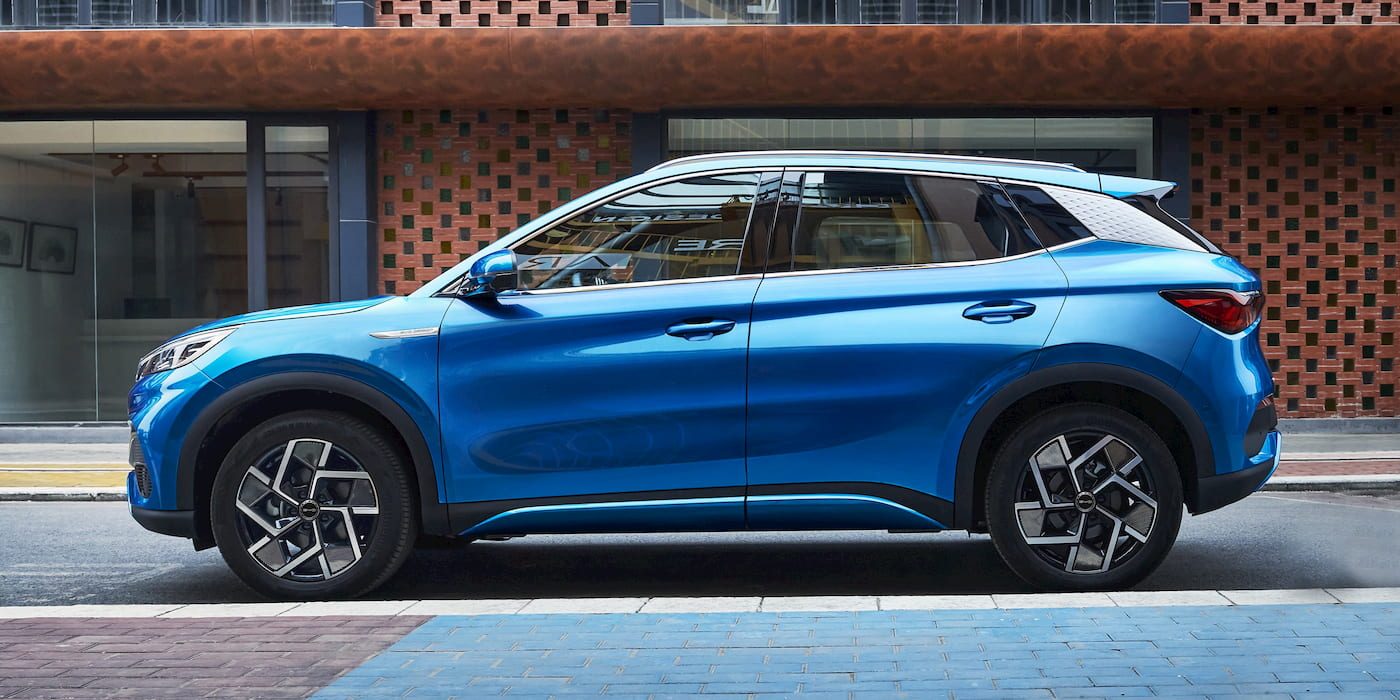
However, absorption rates have failed to keep pace with production velocity. According to IEA estimates, only about two-thirds of these exported vehicles have found retail buyers. When combined with lingering inventory overhangs from late 2025, this bottleneck has left more than one million Chinese-made electric cars sitting in transit, port terminals, or dealership lots around the world.
This massive surplus presents a double-edged sword for the global economy:
- Accelerated Adoption in Emerging Markets: The glut of affordable Chinese models is lowering the barrier to entry in developing economies across Latin America, Southeast Asia, and parts of Europe, driving global sales numbers higher.
- Intense Pressure on Legacy Automakers: Traditional Western and Japanese automakers—already struggling to manufacture EVs at profit margins comparable to Chinese competitors—now face fierce pricing pressure as discounted inventory floods international trade routes.
Fossil Fuel Volatility and the Geopolitical Catalyst
Beyond consumer economics, external geopolitical shocks have re-energized the transition away from internal combustion. Ongoing military conflicts in the Middle East have once again destabilized global energy markets, plunging crude oil prices and supply security into extreme volatility.
Road transport vehicles currently consume nearly half of the world’s daily oil output. This heavy reliance leaves national economies and everyday drivers acutely vulnerable to sudden price spikes, supply chain blockades, and inflationary shocks. For net-importers of Middle Eastern oil, the geopolitical instability of 2026 has transformed the purchase of an electric vehicle from an environmental choice into a matter of national economic security and household financial self-defense.
Official Statements and Industry Analysis
The release of the IEA’s updated mid-year assessment has triggered intense debate among policymakers, energy analysts, and automotive executives.
Global energy analysts have pointed out that the bifurcated nature of the 2026 market exposes the vulnerability of automotive sectors to regulatory whims. In nations where governments maintain steady, supportive policy frameworks—such as the European Union, various Latin American states, and progressive Southeast Asian economies—consumer adoption curves remain steep and predictable.

Conversely, the American trajectory serves as an institutional cautionary tale. Industry watchdogs note that by abruptly dismantling federal tax credits and diluting fuel-economy mandates, the US federal government engineered an artificial contraction in domestic technology adoption. While Chinese manufacturers export their surplus to capture foreign market share, American legacy automakers risk falling permanently behind in the global race for electrification and battery supply chain dominance.
Furthermore, economic think tanks emphasize the strategic importance of emerging markets. Current projections indicate that China and other emerging economies will account for roughly 60% of all global automotive demand over the coming decade. Consequently, market analysts agree that whichever automotive brands successfully capture these emerging consumer bases will dictate the structural leadership of the global car industry for the next generation.
Future Outlook: The Path to 2030 and Beyond
As the automotive industry looks past the turbulent mid-point of 2026, the long-term trajectory of electrification appears irreversible, albeit unevenly distributed.
1. The Regional Divergence Deepens
The remainder of 2026 and early 2027 will likely see a stark geographical partitioning of the automotive world. China will continue to grapple with domestic market saturation, forcing its manufacturing giants to look aggressively outward. The absorption of the 1-million-plus vehicle inventory surplus will test the protectionist resolve of trade blocs like the European Union and North America, likely resulting in heightened tariff barriers and localized trade disputes.
Meanwhile, markets in South Asia, Latin America, and Oceania are poised to become primary battlegrounds for affordable EV dominance.
2. Policy Choices as the Ultimate Arbiter
As the IEA notes in its latest assessments, the speed of the global transition will be dictated overwhelmingly by deliberate government policy choices. Nations that choose to insulate their citizenry from fossil fuel price volatility by incentivizing clean transport infrastructure will see accelerated economic modernization. Conversely, markets that roll back environmental standards risk trapping domestic consumers in high-cost, volatile fossil fuel ecosystems while the rest of the industrialized world moves forward.

3. Technological and Infrastructure Maturation
Parallel to vehicle sales, supporting ecosystems are undergoing critical transformations. In advanced markets, the deployment of next-generation infrastructure—such as ultra-fast "Charging 2.0" networks capable of five-minute top-ups—is actively dismantling range anxiety. As charging reliability improves and upfront vehicle purchase price parity with ICE vehicles is achieved globally, the structural argument for fossil-fueled transport will continue to erode.
Ultimately, the events of 2026 have proven that the electric vehicle revolution is no longer a localized phenomenon dependent on the hyper-growth of a single nation. It has matured into a decentralized, globally distributed industrial shift capable of absorbing regional policy shocks and weathering macroeconomic storms on its path toward total transportation decarbonization.