

Published: September 4, 2026
Author: Ankitha Gattupalli (Adapted & Expanded)
Source: ArchDaily
Executive Overview
Every housing crisis eventually becomes a land question, and every land question eventually becomes a values question. Along the United States’ West Coast—stretching from the bustling ports of Seattle down through the tech corridors of the San Francisco Bay Area and into the sprawling expanse of Los Angeles—this philosophical dilemma has transformed into an urgent urban planning crisis. For years, city councils, regional planners, and state legislators have promised to combat skyrocketing housing costs by dramatically expanding the supply of affordable units. Yet, as planners exhaust traditional infill options, they continually collide with a contentious physical and ideological barrier: the local park, the urban greenway, and the protected greenbelt.
What frequently presents itself as a dry, technical zoning decision is, in reality, a profound cultural referendum. Municipal leaders are being forced to answer an agonizing question: Which form of human wellbeing are modern cities willing to sacrifice for another? Is it ethical to pave over community parks, recreational zones, and ecological buffers to build much-needed housing for marginalized, rent-burdened populations? Or does the preservation of open green space at the expense of residential expansion actively lock lower- and middle-income families out of the region entirely, exacerbating homelessness, long commutes, and socio-economic segregation?
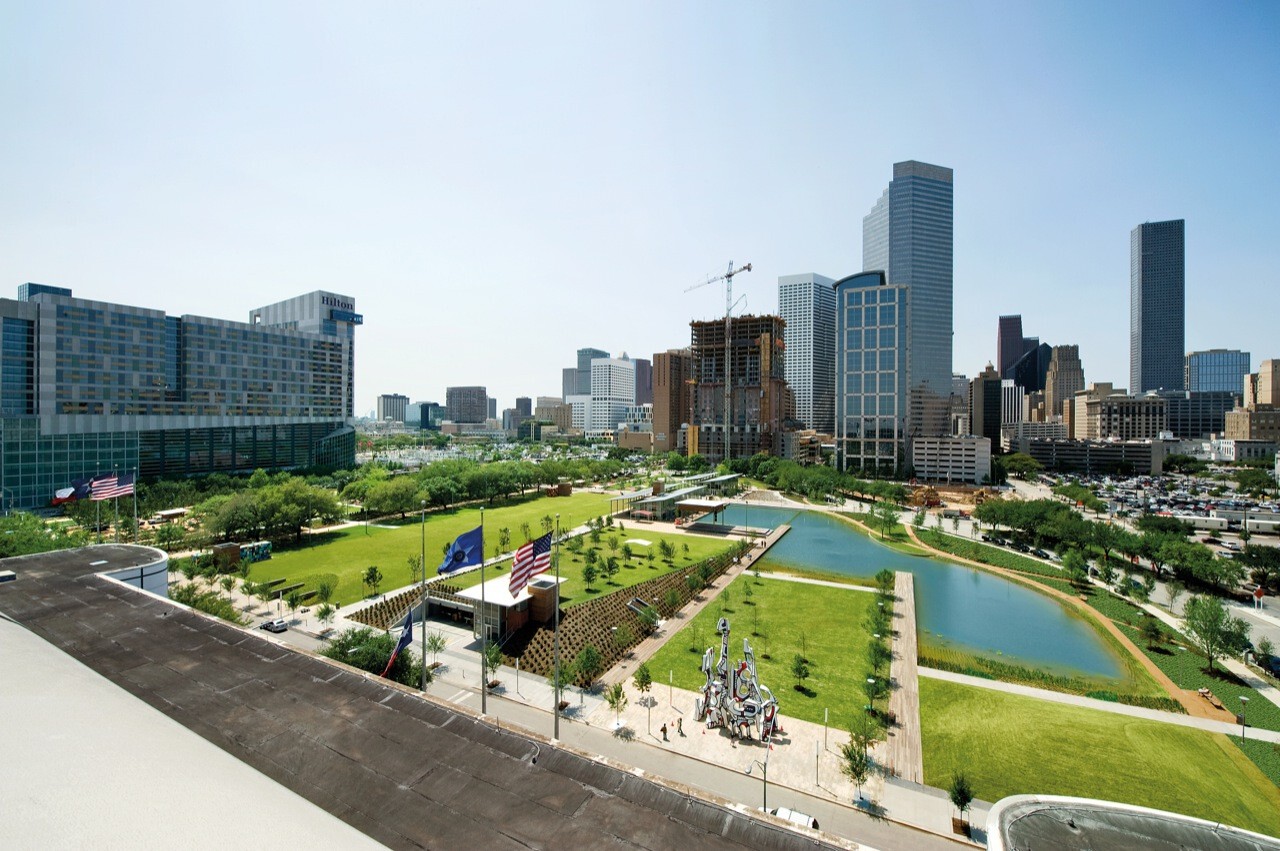
This article investigates the complex intersections of urban ecology, real estate economics, and social equity on the US West Coast. By examining how historic preservation, environmental protection, and zoning laws collide with the desperate demand for affordable shelter, we explore the high stakes of balancing the concrete jungle with the urban canopy.
Detailed Chronology: The Evolution of West Coast Land-Use Policy
To understand how West Coast cities arrived at this ideological crossroads, one must trace the region’s unique trajectory of environmental consciousness and real estate development over the past century.
The Mid-20th Century: Expansion and Conservation
In the post-World War II era, West Coast cities experienced unprecedented population booms. Los Angeles sprawled outward, fueled by the automobile and cheap land, while Seattle and San Francisco established strong regulatory boundaries to protect their surrounding natural assets—mountains, bays, and agricultural valleys. During this period, urban planning was largely bifurcated: suburban housing developments sprawled across the landscape, while inner-city parks were designated as permanent, untouchable civic lungs.
The Late 1990s to 2010s: The Birth of the Urban Growth Boundary
As traffic congestion mounted and environmental movements gained unprecedented political leverage, states like Oregon pioneered Urban Growth Boundaries (UGBs)—most notably around Portland in 1979, a philosophy that deeply influenced Washington and California municipal planning. While these boundaries successfully prevented uncontrolled suburban sprawl and protected vast swaths of pristine forests and farmlands, they inadvertently trapped housing supply within fixed municipal rings. As job growth outpaced residential construction by orders of magnitude, land values skyrocketed.
The 2020s: The Collision of Climate Policy and Housing Demands
By the early 2020s, the contradictions inherent in West Coast zoning reached a breaking point. State legislatures began overriding local zoning codes to force cities to build more housing (such as California’s Senate Bills 9 and 10). However, municipalities fighting to retain their neighborhood character quickly weaponized environmental protection laws—such as the California Environmental Quality Act (CEQA)—to block high-density housing developments.
Paradoxically, open space advocates and neighborhood coalitions began arguing that preserving local parks and community gardens was essential for climate resilience, urban cooling, and mental health. Consequently, city planners found themselves trapped in a zero-sum game: every acre of green space designated for protection meant higher density pressures elsewhere, often displacing lower-income communities through eco-gentrification, while every park eyed for development sparked fierce civic backlash.
Supporting Context & Metrics: The Economics of Green Space and Density
The tension between green space and housing affordability is not merely emotional; it is deeply rooted in urban real estate economics and environmental science.
The "Green Amenity" Premium
In real estate markets across Seattle, Portland, San Francisco, and Los Angeles, proximity to parks and greenways acts as a major driver of property values. Economists refer to this as the "green premium." Homes located within a quarter-mile of a major park, restored waterfront, or protected greenbelt command significantly higher purchase prices and monthly rents than identical properties located just a few blocks further away.
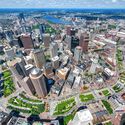
When cities invest in high-profile green infrastructure—such as the Rose Kennedy Greenway in Boston (which served as a national case study for post-industrial greening) or urban pocket parks along West Coast waterfronts—they inadvertently trigger hyper-gentrification. Land values spike, pricing out the very working-class residents who stand to benefit most from environmental amenities.
The Cost of Scarcity
Conversely, strict limitations on land conversion maintain an artificial scarcity of buildable parcels. On the densely developed West Coast, where mountains to the east and the Pacific Ocean to the west constrain geographic expansion, land is already extraordinarily expensive. When regional policies place absolute moratoriums on converting underutilized golf courses, public buffers, or semi-wild urban canyons into residential zones, the remaining private residential land absorbs the full brunt of market demand, driving housing prices to record highs.
Environmental Justice and the Distribution of Greenery
A critical dimension of the debate is environmental equity. Decades of redlining and discriminatory urban planning have left lower-income neighborhoods—often populated by communities of color—with significantly less tree canopy, fewer parks, and higher urban heat island effects compared to affluent suburbs.
When municipalities contemplate developing green spaces, the proposed sites are frequently located in or adjacent to these historically under-resourced neighborhoods. Community advocates rightly question why marginalized populations must forfeit their meager access to nature to solve a region-wide housing shortage, while wealthy, low-density neighborhoods with abundant green lawns and private yards remain shielded from high-density rezoning.
Official Statements & Architectural Perspectives
Urban planners, architects, and municipal leaders across the West Coast are increasingly grappling with these ethical dilemmas, offering diverse perspectives on how to reconcile the built and natural environments.
"Every housing crisis eventually becomes a land question, and every land question eventually becomes a values question… What looks like a zoning decision is a referendum on which form of wellbeing a city is willing to sacrifice for another."
— Ankitha Gattupalli, Architectural Researcher and Writer
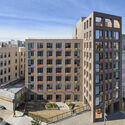
Architects and adaptive reuse experts argue that cities do not necessarily have to choose between concrete and canopy; instead, they must look inward. The adaptive reuse of historic structures—such as the 1928 Castle Argyle in Hollywood, renovated by Relativity Architects for Beacon Development into affordable senior housing, or supportive housing initiatives designed by firms like Alexander Gorlin Architects—demonstrates that density can be achieved through creative revitalization rather than greenfield destruction.
Municipal planning directors in Seattle and Los Angeles have expressed mounting frustration over the weaponization of environmental statutes. In official public hearings, housing advocates frequently point out that preventing high-density infill development near transit hubs—often justified under the guise of "saving trees" or "protecting neighborhood character"—forces working-class commuters to move further into the exurbs. This results in longer commutes, greater highway congestion, and ultimately higher carbon emissions, undermining the very environmental goals that green space preservationists seek to champion.
Future Outlook: Finding the Third Way
As the West Coast looks toward the latter half of the 2020s and beyond, resolving the conflict between green space preservation and housing affordability requires moving past false dichotomies. Urban theorists and forward-thinking municipal agencies are beginning to pioneer innovative frameworks that merge ecological health with residential expansion:
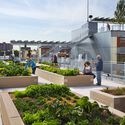
- Hybrid Urbanism and Multifunctional Landscapes: Rather than viewing parks as static, untouchable zones, modern landscape architecture is embracing multifunctional design. Innovations like integrated stormwater management parks that double as high-density housing foundations, or vertical green spaces integrated directly into mixed-use residential towers, prove that nature and shelter can coexist on the same footprint.
- Equitable Density Distribution: Cities are shifting away from protecting wealthy, low-density single-family enclaves at all costs while burdening urban cores and working-class neighborhoods with all new construction. Spreading moderate density (such as "missing middle" housing like duplexes and triplexes) evenly across all neighborhoods prevents the unfair targeting of local parks and community green spaces.
- Reimagining Gray Infrastructure: Before eyeing natural parks and greenbelts, West Coast cities still possess vast expanses of underutilized gray infrastructure—surface parking lots, abandoned big-box retail plazas, and obsolete industrial yards. Aggressive conversion of these impervious surfaces can yield thousands of new housing units without sacrificing a single blade of natural grass.
Ultimately, the housing crisis on the US West Coast serves as a mirror reflecting society’s deeper priorities. Solving it will require a paradigm shift: recognizing that human wellbeing and ecological health are not mutually exclusive adversaries, but rather interdependent pillars of a truly sustainable city.



