

Executive Overview
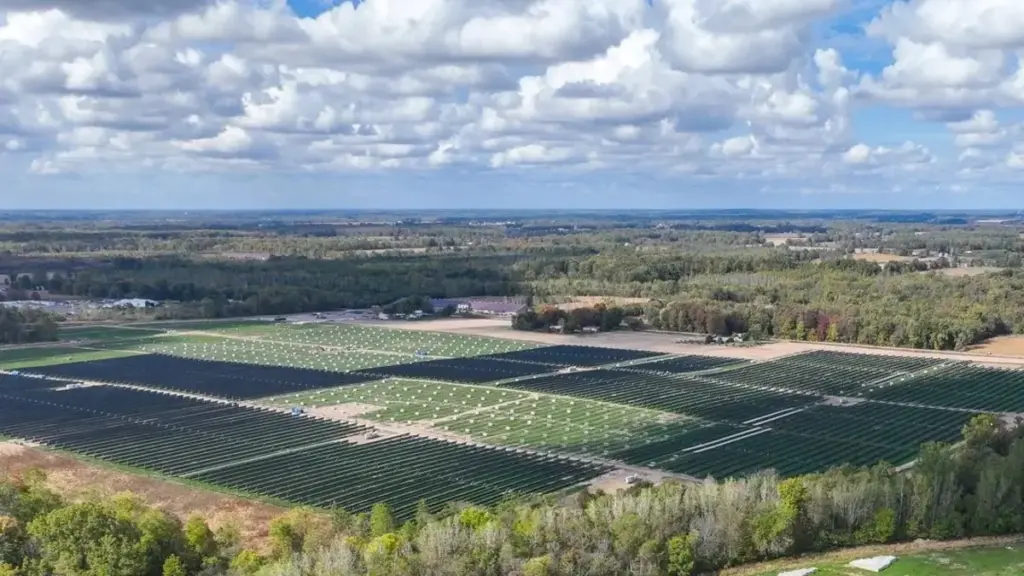
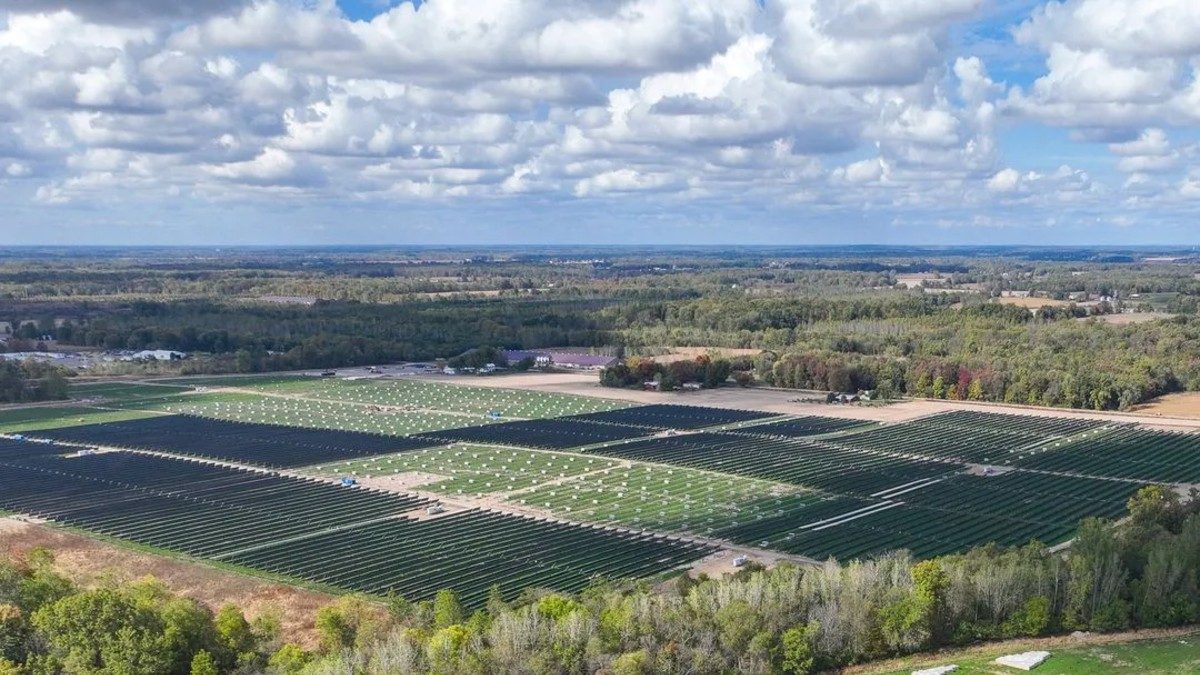
The transition of the American automotive industry toward a sustainable, carbon-neutral future has reached a significant milestone in the heart of the Midwest. Detroit-based energy titan DTE Energy has officially announced the completion and commercial readiness of the Cold Creek Solar Park—a massive, 100-megawatt (MW) photovoltaic installation situated near Coldwater, Michigan. Sprawling across acres of rural Michigan landscape, this $194 million renewable energy infrastructure project was funded directly by the Ford Motor Company through its strategic enrollment in DTE’s flagship voluntary green energy program, CleanVision MIGreenPower.
The Cold Creek facility is not merely an isolated renewable energy installation; it represents the vanguard of a sweeping industrial transformation. Generating enough electricity to power the equivalent of roughly 23,000 to 25,000 typical Michigan households annually, the solar park serves a singular, high-stakes purpose: feeding clean, carbon-free electrons directly into the grid to support Ford’s home-state manufacturing footprint.
For the Blue Oval, this installation marks the literal ground-level execution of a multi-year commitment to revolutionize how its iconic vehicles are built. However, the path to industrial sustainability is rarely without friction. While the completion of Cold Creek Solar Park showcases tangible progress—bringing Ford closer to powering every vehicle assembled in Michigan with 100% carbon-free electricity—the initiative has also encountered timeline adjustments. Originally slated to hit this milestone by the end of 2025, Ford’s targeted deadline has been quietly extended to late 2027.
As regulatory bodies, investors, and climate advocates scrutinize corporate sustainability pledges, projects like Cold Creek offer a clear window into the logistical complexities, economic benefits, and structural hurdles of decarbonizing heavy American manufacturing. This comprehensive report examines the anatomy of the Cold Creek project, the evolution of the broader DTE-Ford partnership, the localized economic impacts, and the road ahead for automotive sustainability.
Detailed Chronology: From Blueprint to Operational Reality
The realization of the Cold Creek Solar Park is the culmination of years of strategic planning, corporate negotiations, and heavy civil engineering. To understand the scale of the achievement, it is necessary to trace the timeline of commitments and construction phases that brought the project to life.
The 2022 Genesis: Laying the Groundwork
The foundational partnership between DTE Energy and Ford Motor Company was formally unveiled in August 2022. At the time, the collaboration made national headlines as one of the largest corporate renewable energy purchases in the history of the state of Michigan. Under the terms of the landmark agreement, Ford agreed to purchase an unprecedented 650 megawatts of renewable energy through DTE’s MIGreenPower program.
This program functions as a critical market mechanism, allowing residential, commercial, and industrial customers to match their electricity consumption with wind and solar assets physically located within Michigan. Crucially, corporate participation in MIGreenPower does not merely siphon existing green energy off the grid; it actively underwrites and finances the construction of new renewable assets, driving net-new capacity onto the regional transmission network.
When the agreement was inked in the late summer of 2022, executives from both companies set an aggressive target: Ford committed to assembling every vehicle manufactured in Michigan using the equivalent of 100% carbon-free electricity by the close of 2025.
The Groundbreaking: April 2025
Following years of site acquisition, environmental impact assessments, local zoning approvals, and engineering designs, physical work on the Cold Creek installation officially commenced in April 2025. Partnering with specialized engineering and construction firms—including prominent regional builders like Roncelli—DTE mobilized heavy machinery and specialized labor forces to the Coldwater site.
Over the span of roughly a year and a half, the flat terrain outside Coldwater was transformed into a modern technological ecosystem. Thousands of high-efficiency photovoltaic panels, mounted on advanced single-axis trackers designed to follow the sun from east to west, were bolted into place. Inverters, transformers, and high-voltage interconnection substations were installed to tie the massive solar array directly into the Midcontinent Independent System Operator (MISO) grid, ensuring the generated power could be seamlessly transmitted to Ford’s production facilities across the state.
October 2026: Commercial Completion
With construction finalized ahead of the late-autumn schedule, DTE Energy officially declared the Cold Creek Solar Park operational in October 2026. As the first major project to come online under the massive 650 MW procurement agreement, Cold Creek stands as the proof-of-concept for Ford’s broader state-level decarbonization strategy. It validates the utility’s capacity to deliver utility-scale renewable assets on schedule and proves that voluntary green energy tariffs can successfully mobilize private capital for public grid enhancement.
Supporting Context & Metrics: Unpacking the Numbers
A project of this magnitude requires a granular look at the metrics, economics, and technical specifications that define its footprint on Michigan’s energy landscape.

Financial and Technical Specifications
- Total Capital Investment: $194 million, funded entirely via Ford’s corporate enrollment in CleanVision MIGreenPower.
- Nameplate Capacity: 100 megawatts (MW) of clean, renewable solar generation.
- Household Equivalency: Generates enough annual electricity to power between 23,000 and 25,000 average Michigan homes.
- Broader Procurement Scope: Cold Creek is part of Ford’s wider commitment to purchase up to 650 MW of renewable energy from DTE.
- Target Milestone: Powering 100% of Michigan-assembled vehicles with carbon-free electricity by the end of 2027.
The Shift in Ford’s Timeline
A notable detail emerging from DTE Energy’s October 2026 announcement is the modification of Ford’s target deadline. When the partnership was initially publicized in August 2022, leadership established a 2025 deadline to achieve 100% carbon-free electricity across all Michigan manufacturing plants. However, the latest corporate communications reflect a revised target date of late 2027.
Neither DTE nor Ford has issued an explicit, detailed rationale for the two-year timeline extension. Energy analysts and industry observers point to several systemic factors that frequently impact large-scale industrial decarbonization timelines:
- Supply Chain Bottlenecks: Global procurement challenges for specialized high-voltage transformers, inverters, and high-purity solar-grade polysilicon have experienced periodic wave disruptions.
- Interconnection Queue Delays: Integrating massive utility-scale generation assets into regional transmission organizations often involves complex, time-consuming grid-stability studies and infrastructure upgrades managed by MISO.
- Manufacturing Scaling: As Ford retools various Michigan facilities for next-generation electric vehicle (EV) production and advanced internal combustion platforms, the localized energy demand curves fluctuate, requiring precise, synchronized phase-ins of renewable assets.
Local Economic Impacts and Community Benefits
Beyond corporate boardrooms and sustainability reports, the buildout of utility-scale solar infrastructure introduces direct economic ripples into rural host communities. While DTE’s specific localized employment figures for Cold Creek alone remain generalized, projections associated with the broader MIGreenPower infrastructure rollouts illustrate significant community value.
- Job Creation: Construction phases for these massive solar parks historically generate approximately 250 temporary, high-paying skilled labor and construction jobs, alongside an estimated 10 permanent, specialized operational and maintenance positions per site.
- Tax Base Enhancement: Host municipalities in rural Michigan receive substantial, predictable property tax revenues from commercial solar installations. Unlike agricultural land, which is taxed at lower agrarian rates, utility-scale solar infrastructure provides a reliable, multi-million-dollar tax stream. Local governments frequently earmark these funds to upgrade deteriorating county roads, support public school districts, bolster local library systems, and equip first responders with advanced emergency gear.
- Land Stewardship: Modern solar parks are increasingly designed with dual-use capabilities. Many projects incorporate native, pollinator-friendly vegetation beneath and between the solar arrays, which improves local soil health, supports regional bee and butterfly populations, and minimizes agricultural runoff.
Official Statements and Industry Perspective
The partnership between a legacy automotive manufacturer and a regional utility giant highlights a shifting paradigm in American corporate strategy. Large enterprises are no longer content to wait for state or federal mandates to green the grid; they are actively using their balance sheets to shape local energy markets.
In previous statements regarding the collaboration, Ford executives emphasized that sustainability is inextricably linked to corporate competitiveness. By integrating renewable energy directly into the manufacturing process of legendary Michigan-built nameplates—such as the F-150 Lightning, Ranger, and Mustang—Ford is appealing to an increasingly eco-conscious consumer base and satisfying stringent global supply-chain carbon regulations, particularly in European export markets.
DTE Energy leadership has consistently praised the MIGreenPower program as a national model for utility-customer cooperation. By pooling the demand of major corporate titans like Ford alongside smaller commercial businesses and residential subscribers, DTE can secure long-term financing for gigawatt-scale clean energy portfolios. This model mitigates financial risk for the utility while accelerating the retirement of aging fossil-fuel-fired generation assets, ultimately modernizing Michigan’s entire electrical grid.

Future Outlook: The Road to 2035 and Beyond
The completion of the Cold Creek Solar Park is a major milestone, but it represents merely one step in a much longer, highly ambitious corporate roadmap.
Ford’s Global Decarbonization Roadmap
Ford Motor Company’s environmental strategy extends far beyond the borders of Michigan:
- Global Manufacturing (2035): The company maintains a firm global commitment to achieve 100% carbon-free electricity across all of its manufacturing facilities worldwide by the year 2035. This will require replicating the DTE partnership model in every international and domestic region where Ford operates major industrial plants.
- Net-Zero Enterprise (2050): Looking toward the ultimate horizon, Ford has pledged to achieve total carbon neutrality across its entire global footprint—encompassing vehicle use, manufacturing operations, and its sprawling upstream supply chain—no later than 2050.
The Evolution of Michigan’s Energy Grid
For DTE Energy, projects like Cold Creek are essential components of the utility’s broader CleanVision plan. As Michigan transitions away from coal-fired generation toward a diversified portfolio dominated by wind, utility-scale solar, and advanced energy storage systems, the grid must evolve to handle distributed, intermittent power generation.
The successful integration of Cold Creek proves that corporate-backed renewables can scale rapidly. However, as more gigawatts of solar and wind flood the Midwest transmission lines, future phases of the DTE-Ford partnership—and the broader energy market—will increasingly depend on the deployment of grid-scale battery energy storage systems (BESS). These storage solutions will be vital to capture excess midday solar generation and dispatch it during peak evening demand hours, ensuring absolute grid reliability for industrial manufacturing lines that operate around the clock.
Ultimately, the Cold Creek Solar Park stands as a testament to the power of public-private utility collaboration. While hurdles remain and deadlines require careful navigation, the sight of a 100-megawatt sea of photovoltaic panels shimmering near Coldwater offers tangible proof that the industrial heartland is actively engineering its own sustainable future.



