


Executive Overview
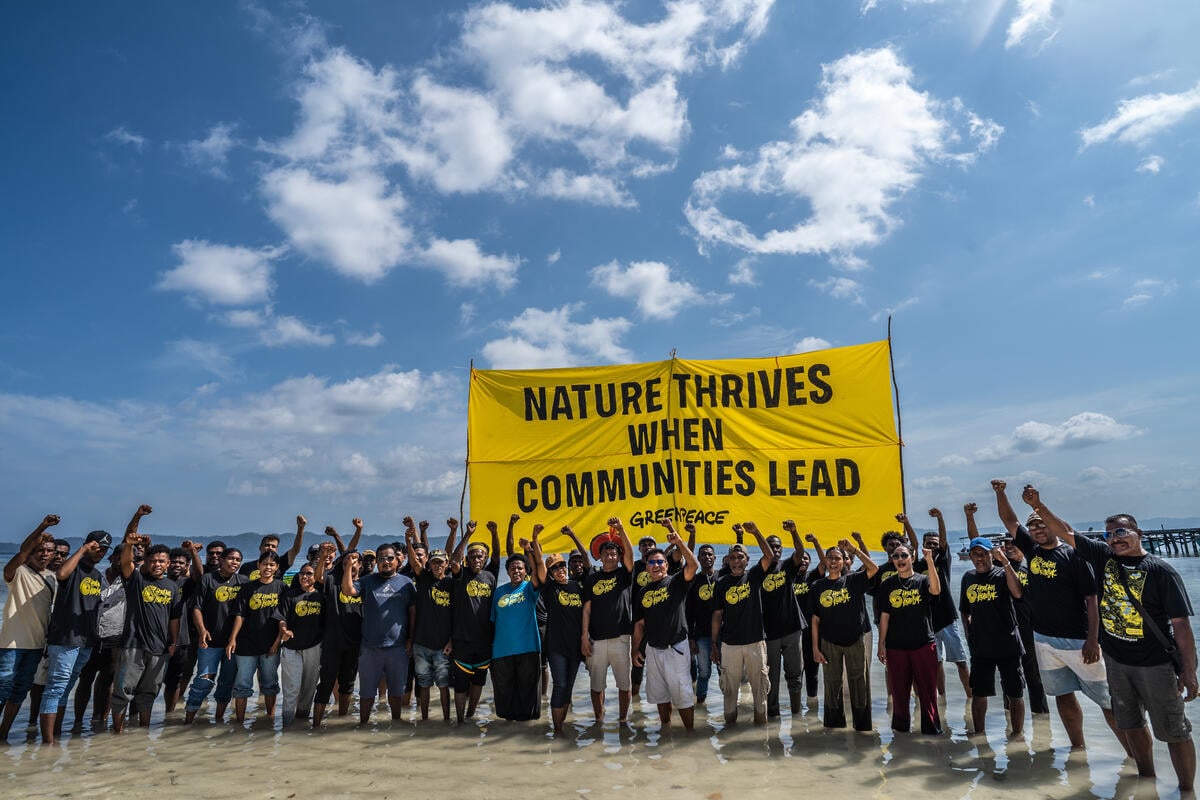
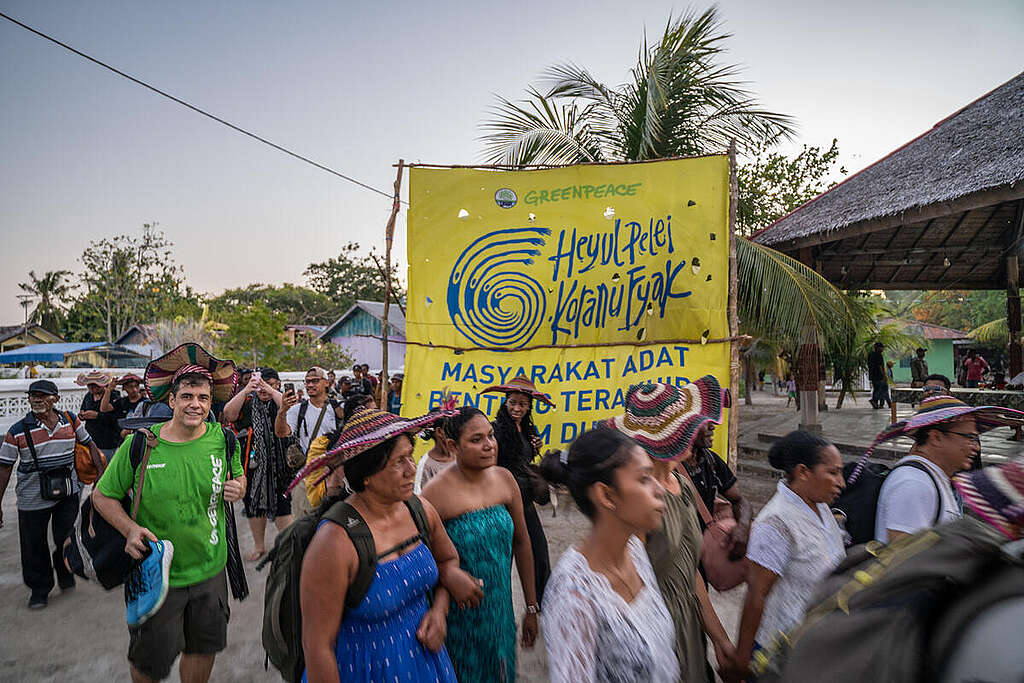
Amid the rhythmic percussion of crashing ocean waves, traditional birdsong, and ocean breezes, a historic convergence of ancestral wisdom and modern environmental activism took root in the remote Raja Ampat archipelago of West Papua, Indonesia. From August 20 to 22, 2026, dozens of Indigenous leaders, environmental advocates, and local community members gathered upon senats—traditional, intricately woven mats unique to the region—to inaugurate the Heyul Pelei Koranu Fyak (The Grand Assembly of Raja Ampat Indigenous Communities).
This three-day international summit transcended local boundaries. While serving as a rallying cry for the protection of Southwest Papua’s fragile marine ecosystems, the assembly welcomed high-profile Indigenous delegations from the Amazon rainforest, Africa, and Malaysia. Supported by Greenpeace Indonesia and the local NGO Institut USBA, the gathering was designed to solidify a transnational front against the escalating onslaught of extractivist capitalism.
The apex of the summit—the historic signing of the Arborek Declaration—crystallizes a growing global consensus: that biodiversity loss and the climate crisis cannot be resolved by top-down, technocratic conservation models. Instead, governments preparing for the upcoming UN Convention on Biological Diversity (CBD) COP17 in Armenia must recognize Indigenous territories, ancestral land-management practices, and rights-based stewardship as the primary catalysts for ecological resilience.
Detailed Chronology & Summit Proceedings
Day 1: Welcoming Rituals and the Assertion of Customary Sovereignty
The assembly commenced with traditional dances and musical welcomes on Arborek Island, setting a tone of deep cultural reverence. Delegates from Cameroon, the Brazilian Amazon, Malaysia, and various regions of Indonesia were received according to ancient Papuan protocols.
The opening sessions immediately pivoted to the severe pressures facing host communities. Despite fierce public pushback during the high-profile #SaveRajaAmpat campaign, the region—internationally celebrated as "the last paradise on Earth"—remains under constant threat from aggressive nickel mining operations. Situated squarely within the Coral Triangle, Raja Ampat harbors approximately 75% of the world’s coral species. The introductory dialogues laid bare the alarming parallel between nickel extraction destroying Papuan coral reefs and illegal gold mining decimating thousands of hectares of Indigenous Amazonian rainforest.
Day 2: Intergenerational Knowledge Exchange and the Wisdom of Sasi
The second day focused on the mechanics of Indigenous land management and the philosophical underpinnings of traditional conservation. Papuan anthropologist George Mentasan took the stage to elucidate how cultural diversity underpins biological diversity.
"There is the tradition of creating an ecological calendar; there is a taboo that requires us to speak in local language upon visiting certain places; also there is a myth for not catching big fish," Mentasan explained to the assembly. "They are all our ancestors’ way to preserve nature. We have to protect our cultural diversity as it also safeguards Raja Ampat biodiversity."
Central to these discussions was sasi, a customary governance practice deeply embedded in Raja Ampat’s marine and terrestrial communities. Sasi enforces a temporary, legally and culturally binding prohibition on harvesting specific natural resources within designated zones of land or sea. This rotational rest period allows ecosystems to regenerate organically without external scientific intervention, proving that traditional management systems far outpace modern regulatory frameworks in maintaining ecological balance.
Amplifying the gendered dimensions of environmental defense, Panh O Kayapo, an Indigenous Kayapo woman from the Amazon, delivered a passionate address regarding the frontline role of women in safeguarding global biomes. "We are the Indigenous women who protect not only our children, but also our biome," Kayapo asserted. "I speak up about women’s role not only for our generation, but also for generations to come, for them to have a better future." Her testimony bridged the struggles of South American and Southeast Asian women facing identical corporate predators.
Day 3: Drafting and Ratification of the Arborek Declaration
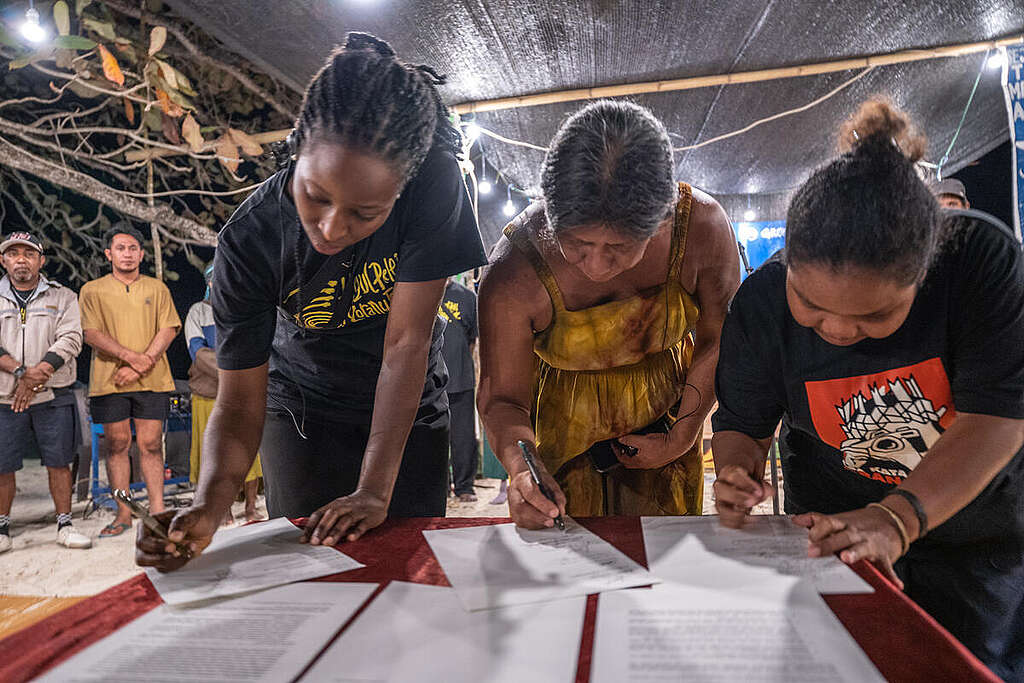
The summit culminated on its third day with the formal release and signing of the Arborek Declaration. Indigenous representatives from every participating continent put pen to paper, solidifying a binding political and moral pact.
The declaration issues an uncompromising call to global governments: acknowledge that Indigenous knowledge systems, cultural practices, and territorial rights are not incidental to environmental conservation, but are its absolute cornerstone. The document serves as a direct policy intervention ahead of CBD COP17, demanding that political leaders discard paternalistic conservation paradigms in favor of community-led stewardship.
Supporting Context & Metrics: The Global Extinction Crisis vs. Indigenous Guardianship
To understand the urgency of the Arborek Declaration, one must examine the macro-level statistics governing global conservation policy. Under the Kunming-Montreal Global Biodiversity Framework, the international community has committed to protecting at least 30% of the Earth’s terrestrial and marine areas by 2030 (frequently termed the "30×30" target).
However, conservation scientists and human rights organizations have repeatedly warned that the 30×30 target risks turning into a mechanism for "fortress conservation"—a process whereby Indigenous peoples are forcibly displaced from their ancestral lands under the guise of ecological protection. Such approaches are not only morally indefensible; they are empirically flawed.
- The Biodiversity Barrier: According to multiple environmental science assessments, Indigenous territories—which cover roughly 25% of the world’s land surface—safeguard an estimated 80% of the planet’s remaining biodiversity.
- Deforestation Disparities: Rates of deforestation are significantly lower within recognized Indigenous territories compared to adjacent state-run or commercially managed lands, even within the same ecological zones.
- The Raja Ampat Vulnerability: Raja Ampat’s status as the heart of the Coral Triangle makes it a prime target for mineral extraction. Nickel, a critical component in electric vehicle batteries, has transformed the geopolitics of Southwest Papua into a resource extraction frontier, pitting multinational mining conglomerates against subsistence fishing and indigenous farming communities.
- The Amazonian Crisis: Simultaneously, illegal gold mining (garimpo) in the Amazon continues to release millions of tons of mercury into river systems, destroying Indigenous fisheries and poisoning communities while eradicating virgin rainforest at an unprecedented pace.
Official Statements and Expert Perspectives
The rhetoric emerging from the Raja Ampat assembly reflects a profound frustration with international bureaucratic inertia, paired with a clear, unwavering vision for reform.
Syahrul Fitra, Co-lead of Greenpeace’s Global Forest Solutions project, underscored the systemic flaws in contemporary conservation funding and governance models during his address to the press:
"Indigenous and Traditional Territories must be recognised on their own terms, rather than communities being forced into conservation models that do not reflect their rights, governance systems, or choices. Governments must also ensure direct access to biodiversity finance, so Indigenous Peoples and local communities have the resources to strengthen their own systems of protection and governance."
Fitra’s comments strike at the heart of systemic inequities in climate finance. Historically, less than 1% of global climate and biodiversity funding reaches Indigenous-led organizations directly, with the vast majority swallowed up by international conservation NGOs, multilateral banks, and bureaucratic intermediaries. The Arborek Declaration aggressively challenges this architecture, demanding direct financial pipelines to the stewards who actually protect the land.
Future Outlook: The Road to CBD COP17 and Beyond
As the echoes of the Heyul Pelei Koranu Fyak fade from the shores of Arborek Island, the real work of implementation begins. The ratification of the Arborek Declaration marks the opening salvo in a coordinated global campaign leading directly to the upcoming UN Biodiversity Conference (CBD COP17) in Armenia.
The primary objectives for Indigenous coalitions and supporting environmental organizations over the coming months include:
- Full Territorial Recognition: Pressuring national governments—particularly in Indonesia, Brazil, and Malaysia—to legally demarcate and titling Indigenous and traditional lands, granting them absolute autonomy against corporate incursions.
- Enforcement of FPIC: Mandating the strict adherence to the principle of Free, Prior and Informed Consent (FPIC) for any industrial or conservation projects proposed within customary territories.
- Restructuring Conservation Finance: Lobbying international bodies attending CBD COP17 to establish direct, unmediated funding mechanisms for Indigenous land defenders and community-based resource management systems.
- Amplifying Earth Defenders: Bolstering transnational networks of solidarity between Papuan, Amazonian, African, and Asian communities to protect grassroots activists from state and corporate intimidation.
The gathering in Raja Ampat has demonstrated that the defense of our planet’s remaining life-support systems cannot be achieved in corporate boardrooms or diplomatic convention halls alone. It requires listening to those who read the ecological calendar, respect the taboo of the seas, and practice sasi—ensuring that the guardians of the earth are empowered to chart humanity’s collective ecological future.



