

Executive Overview
Along the winding, silt-laden banks of the Aguarico River deep within the Ecuadorian Amazon, an extraordinary conservation crusade is quietly unfolding. Here, a dedicated collective of Indigenous Siekopai women is bridging the chasm between ancient ecological wisdom and cutting-edge 21st-century technology. Their mission is as urgent as it is profound: to rescue the vulnerable yellow-spotted Amazon River turtle (Podocnemis unifilis), locally known as the charapa, from the escalating threats of extinction.
Listed as vulnerable by the International Union for Conservation of Nature (IUCN), charapa turtle populations have plummeted across their South American range. Decimated by rampant adult hunting, the commercial harvesting of their fragile eggs, toxic pollution from oil and gasoline, and rampant riverbank erosion caused by heavy boat traffic, these reptiles face an existential crisis. Compounding these man-made pressures, the erratic impacts of global climate change have triggered severe seasonal water-level fluctuations, systematically flooding the pristine sand flats where the turtles lay their nests.
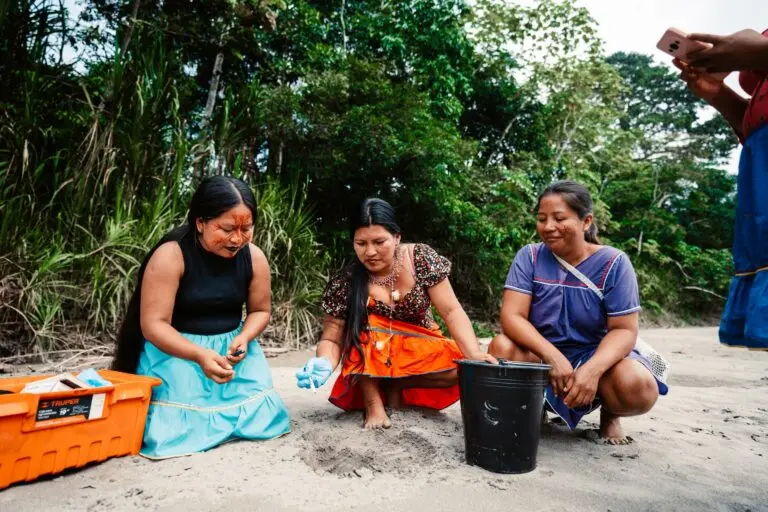
Enter the Tari Nomiowa’i—translated from the Siekopai language as the "turtle women." Comprising a fierce, seven-member cadre of Indigenous guardians, this collective patrols the treacherous riverbanks with a dual toolkit: the generational ecological knowledge passed down by their fathers and elders, and the modern Epicollect5 mobile application for precise field data collection.
By marrying indigenous stewardship with digital tracking, safe incubation practices, and community-wide educational outreach, the Tari Nomiowa’i achieved a monumental milestone during the 2025-26 nesting season. They successfully rescued, incubated, hatched, and released 208 healthy charapa hatchlings into the wild waters of the Aguarico River. Beyond mere species preservation, this initiative represents a deeply spiritual revitalization—a modern fulfillment of an ancestral pact with Koouwajẽo, the spiritual chief and divine guardian of the turtles. In protecting these freshwater sentinels, the Siekopai women are reinforcing the fragile equilibrium between their community, their culture, and the rainforest they call home.
Detailed Chronology: From Ancestral Rivers to Modern Digital Conservation
The survival strategy executed by the Tari Nomiowa’i does not happen by accident; it is a meticulously planned, cyclical operation that aligns seamlessly with the seasonal rhythms of the Ecuadorian Amazon.
Phase One: The Season of Tracking and Patrols
As the dry season recedes and the riverbanks of the Aguarico begin to expose patches of warm, fine sand, the charapa turtles emerge from the murky depths to nest. This delicate window marks the beginning of the field season for the seven Siekopai women. Navigating the river by motorized canoe and on foot, the team scans the banks for the subtle, telltale tracks left behind by nesting females.
The women rely heavily on intuition, observation, and inherited lore. Janeth Piaguaje, a prominent Siekopai community leader and driving force behind the project, fondly recalls the days spent alongside her father, learning the intricate nuances of river ecology.
"He taught me how to handle the eggs, how to see on what dates and in what months the turtles lay their nests," Piaguaje reflects.
However, the modern landscape presents challenges her father never had to navigate. As the women comb the beaches, they are frequently confronted with the devastating detritus of modern consumerism. Plastic bottles, discarded food wrappers, and shimmering slicks of gasoline and oil coat the shoreline.
"Sometimes we see plastic, garbage bags," Piaguaje notes, describing the sobering reality of their daily patrols. "We also see dead animals floating down the river. We can’t control all of that, but we do make a significant effort to clean the beaches where we work."
Phase Two: Digital Documentation and Safe Extraction
Once a nest is located, the conservation process shifts from analog tracking to high-tech recording. Eschewing traditional paper notebooks—which are vulnerable to sudden Amazonian downpours, humidity, and wear—the Tari Nomiowa’i utilize the Epicollect5 app on mobile devices.
With a few taps on a screen, the women capture crucial empirical data: exact geographic coordinates, timestamps, environmental conditions, and the precise count of eggs within the clutch. This meticulous digitization allows conservationists to map nesting trends year-over-year, monitor micro-habitat shifts caused by climate change, and share verifiable data with partner organizations like Conservation International (CI) Ecuador.
Recognizing the fragility of the eggs—which can easily be compromised if rotated improperly or exposed to extreme heat—the women extract the leathery-shelled treasures with surgical care. Every movement is calculated to replicate the natural nest environment while shielding the embryos from the immediate threats of rising floodwaters, predatory birds, and human poachers.
Phase Three: Incubation, Rearing, and the Vital Release
The collected eggs are transported to a secure, community-managed incubation facility. Here, away from the dangers of the open beach, the eggs complete their incubation cycle under the watchful eyes of the turtle women.
Once the hatchlings break through their shells, the stewardship does not end. The Tari Nomiowa’i take on the responsibility of nurturing the vulnerable newborns for an additional month. During this crucial developmental phase, the baby turtles are fed a specialized diet of chopped cassava, sweet potato, and taro leaves, strengthening their carapaces and building the physical stamina required to survive in the wild.

The culmination of this months-long labor of love is the annual release event. During March and April, the community transforms the riverbank into a classroom and a celebration. Local families, elders, and—most importantly—schoolchildren are invited to witness the hatchlings scuttling down the sandy banks into the rushing currents of the Aguarico River.
These events serve a dual purpose: repopulating the depleted river ecosystem while instilling a deep sense of environmental stewardship in the next generation of Siekopai children. Piaguaje remembers the unvarnished enthusiasm of a young girl who attended the recent release, capturing the profound shift in local attitudes:
"A little girl said, ‘I’m going to take care of them, I’m going to tell them not to touch the eggs.’"
Supporting Context & Metrics: The Plight of the Yellow-Spotted Amazon River Turtle
To fully understand the magnitude of the Tari Nomiowa’i’s achievement, one must examine the ecological pressures facing the yellow-spotted Amazon River turtle (Podocnemis unifilis) across its natural distribution in South America’s major river basins.
Taxonomic Profile and Vulnerability Status
- Common Names: Yellow-spotted Amazon River turtle, charapa, tracajá.
- Scientific Name: Podocnemis unifilis
- IUCN Status: Vulnerable (Population Trend: Decreasing)
- Key Identification Features: Dark brown or black carapace with distinct yellow spots on the head and sides of the face, which tend to fade as the animal matures. Females are significantly larger than males, capable of reaching lengths of up to 50 centimeters (20 inches) and weighing over 8 kilograms.
Anthropogenic and Environmental Stressors
- Over-harvesting for Consumption: For centuries, Indigenous and rural communities relied on charapa turtles and their protein-rich eggs as a sustainable dietary staple. However, commercialized poaching, driven by expanding local markets and illegal trade networks, has transformed traditional subsistence hunting into an unsustainable extraction crisis. Adult females caught on nesting beaches are frequently slaughtered, permanently depleting the breeding demographic.
- Industrial Pollution and Contamination: The Ecuadorian Amazon has endured decades of heavy industrial activity, particularly oil extraction and gold mining. Toxic runoff, petroleum hydrocarbons, and heavy metals infiltrate the river systems. Furthermore, municipal solid waste—predominantly non-biodegradable plastics—drifts down the Aguarico River, choking aquatic wildlife and contaminating nesting sites.
- Riverbank Erosion and Anthropogenic Traffic: The intensification of commercial boat traffic along Amazonian tributaries generates large wakes. These artificial waves pound against the earthen banks, accelerating erosion and washing away vital nesting beaches before incubation can occur.
- Climate Change and Hydrological Volatility: Global climate disruptions have manifested in the Amazon basin through erratic rainfall patterns. Unpredictable, torrential storms cause sudden, catastrophic spikes in river water levels. These unseasonal floods inundate low-lying sand flats, drowning underground nests before the embryos have time to develop.
Quantitative Success Metrics (2025-26 Season)
Despite these compounding crises, the targeted, localized interventions led by the seven women of Tari Nomiowa’i have yielded remarkable empirical results:
- Total Eggs Salvaged: 235
- Successful Hatchlings Produced: 208
- Hatchery Survival Rate: Approximately 88.5%
- Release Period: March – April (Timed to coincide with optimal river conditions)
- Ecosystem Impact: Direct reinforcement of the Aguarico River’s juvenile Podocnemis unifilis demographic, creating a buffer against local extinction.
Official Statements and Cultural Philosophy
While the technical metrics and ecological data tell a compelling story of conservation success, the beating heart of the Tari Nomiowa’i initiative lies within the cultural and spiritual framework of the Siekopai people. In Western conservation models, species management is often viewed strictly through a secular, biological lens. For the Siekopai, however, conservation is an act of sacred reciprocity.
The Legend of Koouwajẽo
Central to the Siekopai worldview is the belief that the natural world is imbued with spiritual consciousness. The charapa turtle is not merely a biological organism; it is understood as a metaphysical bridge connecting the visible, physical realm with the unseen spiritual dimensions of the universe.
Every charapa swimming through the dark, tannin-rich waters of the Aguarico is believed to be protected by Koouwajẽo—the spiritual chief, mother, and ultimate ancestral guardian of all turtles. To harm a turtle or its nest is to rupture a cosmic covenant; conversely, to protect them is to honor the ancient keepers of the forest.
Janeth Piaguaje encapsulates this profound philosophy, tying modern ecological action directly to ancestral devotion:
"I want Koouwajẽo to be proud," Piaguaje states with quiet conviction. "When we protect turtles, we don’t just care for a species; we honor the spirits of the river, strengthen our culture, and maintain the sacred pact between our community and nature."
This perspective shifts the narrative of conservation from one of paternalistic management to one of humble stewardship. The women do not view themselves as owners or masters of the ecosystem; rather, they act as instruments of the river’s own healing mechanisms. By merging the analytical precision of the Epicollect5 app with the spiritual reverence owed to Koouwajẽo, they demonstrate that modern scientific tools and indigenous cosmology are not mutually exclusive—rather, they are mutually reinforcing.
Future Outlook: Scaling Indigenous-Led Conservation in the Amazon
As the success of the Tari Nomiowa’i reverberates beyond the borders of the Siekopai territory, conservationists and policymakers are taking notice. The model pioneered along the banks of the Aguarico River offers a blueprint for grassroots biodiversity preservation across the broader Amazon basin.
Key Priorities for the Future
- Expanding Territorial Coverage: Conservation International (CI) Ecuador and supporting partners are exploring ways to provide additional logistical and financial resources to the Tari Nomiowa’i. Scaling up operations could allow the seven women to recruit and train a larger cohort of community wardens, extending patrols to neighboring, unprotected river stretches.
- Enhanced Educational Integration: Building upon the enthusiasm of local schoolchildren, plans are underway to formalize environmental education modules within regional indigenous schools. By embedding turtle conservation into the core curriculum, the Siekopai ensure that future generations will inherit both the biological knowledge and the cultural reverence necessary to sustain the project.
- Mitigating Upstream Threats: While local beach cleanups and hatchery management mitigate immediate dangers, the long-term survival of the charapa turtle depends on systemic policy changes. Addressing upstream industrial pollution, regulating commercial river traffic speeds to curb bank erosion, and enforcing stricter anti-poaching laws remain critical political battles that require coordination between indigenous federations and the Ecuadorian government.
- Climate Resilience Planning: As climate change continues to destabilize Amazonian weather patterns, the project team must innovate more resilient incubation strategies. This may include establishing mobile or elevated hatcheries capable of withstanding unprecedented flood events.
A Beacon of Hope
In an era dominated by disheartening headlines regarding global biodiversity loss and climate degradation, the work of the Siekopai women stands as a brilliant counter-narrative. It proves that local communities—particularly Indigenous women equipped with traditional wisdom and modern technology—are not passive victims of environmental crisis, but rather powerful agents of restoration.
As the sun sets over the Aguarico River, casting golden hues across the water where hundreds of young charapa turtles recently took their first strokes, the legacy of the Tari Nomiowa’i continues to grow. Through their unyielding dedication, the Siekopai are ensuring that the ancient heartbeat of the river—pulsing through the shell of the yellow-spotted Amazon River turtle—will endure for generations to come, making Koouwajẽo and their ancestors proud.



