

Executive Overview
For decades, the silent, mist-shrouded wetlands of Southeast Asia’s Cardamom Mountains held a bittersweet secret. In the 1990s, international conservationists widely believed that the Siamese crocodile (Crocodylus siamensis)—once a majestic apex predator inhabiting river networks from Thailand to Borneo—had been completely eradicated from the wild. Decades of unmitigated hunting, rampant poaching for the skin trade, widespread habitat fragmentation, and indiscriminate fishing practices had pushed the species to the absolute precipice of biological extinction.
Yet, deep within the remote forested valleys of Cambodia, an ancient coexistence persevered. Members of the Indigenous Chorng community, whose ancestral roots are inextricably tied to the health of the rivers and the canopy, knew otherwise. To the Chorng, the Siamese crocodile was never merely a wild beast to be feared or exploited; it was a sacred guardian, a spiritual anchor binding humanity to the natural world. Their quiet assertions that the freshwater reptiles still prowled the secluded marshes eventually sparked one of the most remarkable wildlife resurgences of the 21st century.
More than a quarter of a century after that initial rediscovery, this conservation saga has reached a historic milestone. Cambodia’s Ministry of Environment formally designated a 315-hectare (778-acre) wetland in Pursat province—situated at the northern frontier of the Cardamom range—as a protected genetic conservation area. This vital sanctuary provides a legally protected home for an estimated 40 wild Siamese crocodiles, establishing a crucial anchor point for a species that remains classified as "Critically Endangered" on the International Union for Conservation of Nature (IUCN) Red List.
Operating as both a refuge and a biological "genetic bank," the newly minted reserve is the fruit of an extraordinary, multi-decade collaboration between international conservation charities, government bodies, and Indigenous stewardship. As conservationists look toward the future, this Cambodian stronghold offers a blueprint for species recovery across the globe, proving that saving endangered wildlife requires a harmonious blend of cutting-edge science and deeply rooted traditional ecological knowledge.
Detailed Chronology: From Erasure to Rediscovery
The history of the Siamese crocodile over the past century reads as a slow-motion environmental tragedy. Known for their relatively modest size—typically growing up to three meters in length—and broad, smooth snouts, Crocodylus siamensis once thrived across the low-lying wetlands, slow-moving rivers, and seasonal floodplains of Southeast Asia. However, the expansion of commercial agriculture, the construction of massive hydroelectric dams, and relentless hunting throughout the 20th century decimated their native range. By the 1990s, zoologists feared the species was functionally extinct in the wild, surviving only in captivity or hybridized on commercial crocodile farms.
The narrative shifted radically in the year 2000. During exploratory biodiversity surveys in the rugged terrain of the Cardamom Mountains, researchers encountered members of the Indigenous Chorng community. For generations, Chorng villagers had quietly observed the freshwater reptiles slipping beneath the surface of remote marshlands. When questioned by researchers, the community did not just report sightings; they actively guided scientists through treacherous, swampy terrain to pinpoint active habitats. This crucial transfer of localized, generational knowledge led to the official rediscovery of the species in Cambodia, validating the Chorng’s claims and laying the groundwork for an ambitious rescue mission.

[1990s] Species feared extinct globally due to hunting, habitat loss, and the skin trade.
  │
[2000] Indigenous Chorng community guides researchers to wild Siamese crocodile populations in the Cardamom Mountains.
  │
[2011] Fauna & Flora International establishes a specialized captive-breeding facility to produce genetically pure specimens.
  │
[2012–Present] Continuous release programs introduce 246 captive-bred crocodiles into protected Cambodian rivers.
  │
[2024] Record-breaking wild breeding season: 5 nests, 106 eggs, and 60 hatchlings documented in the wild.
  │
[July 2025] Environment ministry officially designates a 315-hectare wetland in Pursat province as a genetic conservation area.
Following the rediscovery, conservation organizations—notably Fauna & Flora International (FFI) and Conservation International—recognized that protecting adult crocodiles alone would not suffice. In 2011, FFI took a monumental step by establishing a specialized Siamese crocodile captive-breeding facility in Cambodia. The primary objective was twofold: safeguard genetically pure bloodlines uncontaminated by cross-breeding with saltwater crocodiles (Crocodylus porosus) or other farmed species, and produce a healthy cohort of sub-adults capable of reinforcing wild populations.
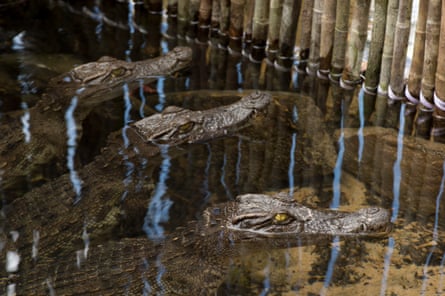
Over the ensuing decade and a half, the breeding and release initiative expanded exponentially. By mid-2024, the conservation collective had released a staggering 246 captive-bred Siamese crocodiles back into the wild waterways of Cambodia. The momentum culminated on July 22, when the Cambodian government formally signed off on the establishment of the Pursat province genetic sanctuary, cementing institutional backing for the reptiles’ long-term survival.
Supporting Context & Metrics: The Science of Genetic Rescue
Saving an endangered species from the brink of extinction requires navigating complex biological hurdles. For the Siamese crocodile, habitat destruction and poaching represent only part of the threat landscape. A more insidious danger lies within the realm of genetics: inbreeding depression and genetic pollution.
Over the decades, as wild populations fragmented into isolated pockets, the gene pool shrank dangerously. Furthermore, the proliferation of commercial crocodile farms across Southeast Asia led to rampant hybridization, as Siamese crocodiles were frequently cross-bred with larger, more aggressive crocodile species to maximize leather production. Consequently, finding individuals that possess pure Crocodylus siamensis genetics has become an arduous task for modern conservation biologists.
+--------------------------------------------------------------------------+
|                       SIAMESE CROCODILE METRICS                          |
+------------------------------------+-------------------------------------+
| Metric Description                 | Data Point                          |
+------------------------------------+-------------------------------------+
| IUCN Red List Status               | Critically Endangered               |
| Protected Wetland Area             | 315 hectares (778 acres)            |
| Estimated Native Population        | ~40 individuals (Pursat site)       |
| Total Captive Breeding Population  | 648 individuals                     |
| Active Breeding Parents            | 71 (54 females, 17 males)           |
| Total Wild Releases (2012-Present) | 246 crocodiles                      |
| Recent Releases (Since 2024)       | 100 crocodiles                      |
| Record Wild Hatchlings (2024)      | 60 hatchlings from 106 eggs         |
+------------------------------------+-------------------------------------+
The newly established 315-hectare wetland sanctuary functions effectively as a "genetic bank." According to conservation experts, preserving high genetic diversity within this protected population is paramount. Genetic variability improves the animals’ immune systems, increases resistance to emerging diseases, and enhances overall reproductive fitness, giving the species a fighting chance against environmental shifts caused by climate change.
The scale of the captive-breeding infrastructure required to support this endeavor is immense. Vanny Lou, who manages the Siamese crocodile program in Cambodia for Fauna & Flora, notes that the breeding center currently houses 648 individuals, including foundational breeding stock. Among them are 71 actively breeding parents—54 females and 17 males.
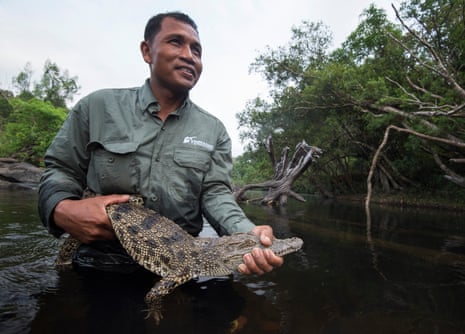
"Natural recovery of this species takes a long time," Lou explains. Rearing a baby crocodile from hatchling to a robust sub-adult capable of fending for itself in the wild requires meticulous care over a span of three to four years. Once the animals reach the appropriate age and size, they are prepared for release. Before being introduced into protected river systems, select individuals are fitted with advanced acoustic telemetry tags. These tracking devices allow conservationists to monitor their dispersal patterns, identify favored feeding zones, and dynamically adjust patrolling and anti-poaching measures in real-time.
Official Statements and Indigenous Stewardship
The remarkable turnaround of the Siamese crocodile is as much a triumph of human sociology as it is of wildlife biology. Modern conservation science often struggles when local human populations view wildlife as a threat to livelihoods or personal safety. In the Cardamom Mountains, however, the dynamic is entirely reversed, anchored by the worldview of the Indigenous Chorng community.
Sony Oum, the country director for Conservation International in Cambodia, emphasizes the profound philosophical alignment between the Chorng people and their forested environment.
"[The Chorng] share a spiritual relation between nature, sacred species, and the forest," Oum says. "They believed that [the crocodiles] were there, and they helped the scientists and researchers to spot the sites."
Unlike Western models of conservation that frequently seek to establish strict boundaries excluding human presence, the Cambodian model embraces Indigenous communities as active guardians of the ecosystem. The Chorng have lived alongside Siamese crocodiles for centuries, viewing them not as monsters of the deep, but as sacred wardens of the rivers and custodians of the sacred groves.
This deep-seated reverence fosters a remarkable level of tolerance. Oum recalls instances where crocodiles venture close to riverbank agricultural plots, occasionally disturbing subsistence crops. Rather than reacting with hostility or retaliation, local farmers often respond with quiet acceptance.
"They do some cropping and farming alongside the river, and when the Siamese crocodiles come to destroy the crops, [the Chorng] smile happily and feel blown away," Oum notes. "They’ve been coexistent for a long time."
This harmonious relationship translates into practical, boots-on-the-ground protection. Trained community wardens drawn from Chorng villages patrol river networks, identify vulnerable nesting sites, monitor water quality, and intercept illegal poachers and fishers. Their intimate familiarity with the terrain makes them far more effective than any externally deployed enforcement agency.
Sim Khmao, a head community warden from the Chorng community who has played a central role in releasing crocodiles back into the wetlands, articulates this fearlessness simply:
"They are not afraid of the crocodiles. They understand them—because they have been here since our ancestors’ period."
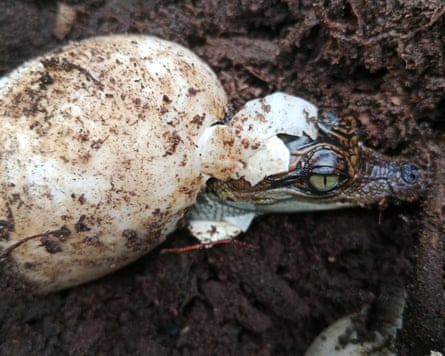
The tangible payoff of this community-led model materialized vividly in 2024, when wardens discovered five wild Siamese crocodile nests containing a total of 106 eggs in the Cardamom Mountains. Diligent monitoring by local wardens resulted in the successful hatching of 60 live young—marking the single largest recorded wild breeding event for the species anywhere in the world this century.
"Without active involvement from the community as the frontline, our programme would not be successful," Vanny Lou stresses.
Future Outlook: A Blueprint for Regional Restoration
As the ink dries on the official government decree establishing the Pursat genetic sanctuary, conservationists are already casting their gaze toward a broader horizon. The immediate goal is to stabilize and expand the local Cambodian population, ensuring that genetic drift is halted and natural recruitment rates continue to climb.
However, the vision extending from the Cardamom Mountains transcends national borders. Conservationists view the Cambodian population as a regional reservoir—a genetic seedbank that could one day supply healthy, genetically pure Siamese crocodiles to neighboring nations where the reptile has been pushed past the point of no return. Malaysia, Myanmar, and Indonesia are all believed to host populations that are now entirely extinct in the wild. If the Cambodian sanctuary continues to thrive and produce surplus individuals, reintroduction initiatives could eventually be exported across Southeast Asia, restoring the predator to its historical haunts from the Malay Peninsula to the Indonesian archipelago.
Furthermore, the integration of traditional ecological knowledge with contemporary conservation biology offers a powerful template for biodiversity preservation globally. As governments grapple with the compounding crises of habitat loss and mass extinction, the Cambodian model demonstrates that Indigenous communities are not obstacles to conservation, but its most reliable architects.
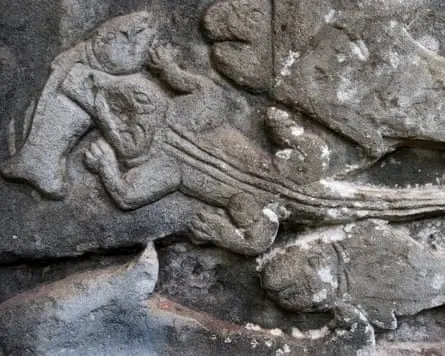
By respecting cultural heritage, empowering local wardens, and deploying rigorous genetic science, Cambodia has snatched the Siamese crocodile from the jaws of oblivion. The ancient reptiles that once drifted silently past the stone bas-reliefs of Angkor Wat—where they have been immortalized for centuries on temple walls—now have a fighting chance to endure into the next millennium, sustained by the twin pillars of scientific innovation and indigenous reverence.



