Executive Overview
In an era defined by rapid technological innovation and data-driven scientific discovery, the bedrock of modern bioscience remains deeply rooted in historical literature. Centuries-old publications, hand-colored illustrations, and meticulous taxonomic descriptions are not mere relics of the past; they are the foundational reference points against which contemporary biodiversity is measured, understood, and protected.
A monumental step toward safeguarding and operationalizing this intellectual heritage was marked in 2026, when the esteemed Senckenberg Gesellschaft für Naturforschung officially joined the Biodiversity Heritage Library (BHL). By integrating selected holdings from its globally renowned decentralized research libraries into the world’s largest open-access digital archive for biodiversity literature, Senckenberg is actively bridging centuries of natural history with cutting-edge artificial intelligence, text mining, and global research infrastructures.
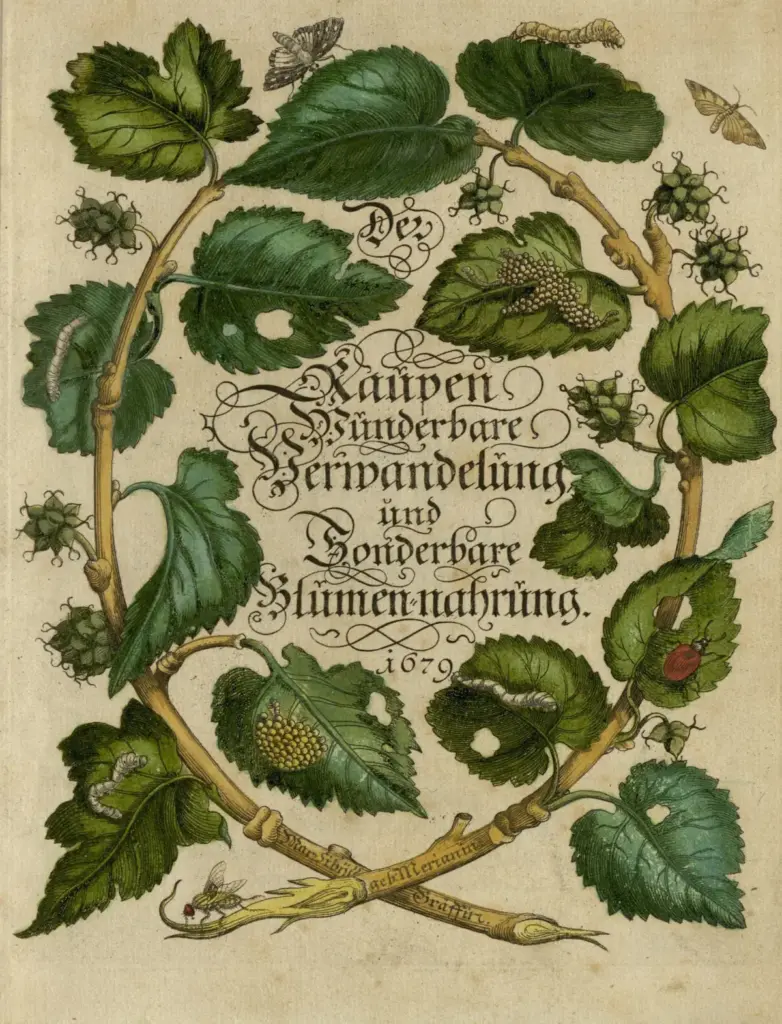
This strategic partnership highlights a critical evolution in how science interacts with its own history. Historically, rare natural history volumes—such as Maria Sibylla Merian’s landmark 1679 study on insect metamorphosis—were locked behind the physical doors of specialized research libraries. Today, through collaborative digital networks, these historical texts are being transformed into structured, searchable, and interconnected data nodes. By weaving legacy literature into global knowledge graphs alongside physical specimen data, taxonomic names, and modern geospatial information, institutions like Senckenberg and the BHL are creating a robust, future-proof ecosystem designed to tackle the unprecedented challenges of global biodiversity loss and environmental change.
Detailed Chronology: From Hand-Colored Plates to Global Digital Networks
To understand the magnitude of Senckenberg’s integration into the Biodiversity Heritage Library, one must trace a timeline spanning nearly 350 years of scientific progression—a trajectory moving from solitary scholarly observation to massive international collaboration.
1679: The Dawn of Comprehensive Entomology
The historical narrative finds a powerful anchor in the year 1679, when pioneering naturalist and illustrator Maria Sibylla Merian published Der Raupen wunderbare Verwandelung, und sonderbare Blumennahrung ("The Wonderful Metamorphosis of Caterpillars and Their Strange Plant Food"). Published in Frankfurt—the very city that would later become the headquarters of the Senckenberg Gesellschaft für Naturforschung—Merian’s work shattered contemporary scientific norms.

Instead of studying preserved specimens in isolation, Merian meticulously observed living insects through every stage of their life cycle, documenting caterpillars, pupae, and butterflies alongside their specific host plants. Her work combined high artistic precision with rigorous empirical science, producing one of the earliest comprehensive studies of insect metamorphosis. Nearly three and a half centuries later, original editions of Merian’s masterwork—such as the pristine copy preserved in the Library of the Senckenberg German Entomological Institute in Müncheberg (call number B 877:1)—continue to serve as vital baseline documentation against which modern species descriptions and classifications are traced.
The 19th and 20th Centuries: Building Decentralized Repositories
As the natural sciences matured through the Enlightenment and the industrial era, scientific institutions across Germany began amassing vast collections of literature and specimens. Senckenberg evolved into one of the nation’s premier natural history research organizations. Over decades, it established a decentralized library network spanning Dresden, Görlitz, Müncheberg, and Weimar. Each site cultivated deep regional and specialized focuses—encompassing zoology, entomology, botany, geology, and paleontology. In Müncheberg, the library developed into one of Europe’s largest specialized entomological research libraries, housing irreplaceable historical corpora crucial for taxonomic research.
2009–2026: The Rise of the Biodiversity Heritage Library and Senckenberg’s Integration
Founded in 2006 to overcome the geographical and financial barriers of accessing taxonomic literature, the Biodiversity Heritage Library (BHL) evolved over the next two decades from a pioneering digitization initiative into an indispensable pillar of the global biodiversity infrastructure.
For many researchers, including leaders within the Consortium of European Taxonomic Facilities (CETAF), BHL became the ultimate equalizer, democratizing access to rare texts. However, gaps remained. Many highly specialized, historically rich regional collections—particularly those embedded within eastern German research institutions under the Senckenberg umbrella—remained relatively siloed.
The formal accession of Senckenberg into the BHL network in 2026 resolved this fragmentation. By strategically selecting and digitizing rare, highly specialized resources that complement existing global holdings, Senckenberg ensured that its centuries-old collections transitioned from localized physical archives into dynamic components of an international, interconnected knowledge network.

Supporting Context & Metrics: The Anatomy of Biodiversity Knowledge
The integration of Senckenberg’s libraries into the BHL is not merely an archival exercise; it is a calculated response to the technical demands of modern data-driven science.
Decentralized Excellence: Senckenberg’s Library Landscape
Senckenberg’s institutional strength lies in its distributed infrastructure. The organization’s specialized libraries support multidisciplinary research through targeted collection management:
- Müncheberg (Senckenberg German Entomological Institute): Houses an elite entomological library that underpins global insect taxonomy and evolutionary biology.
- Dresden, Görlitz, and Weimar: Preserve critical regional and thematic archives covering everything from paleontology and geology to diverse zoological and botanical disciplines.
When combined, these libraries represent a formidable corpus of scientific literature. However, the true value emerges when these isolated literary assets are mapped onto modern data standards.
From Static Text to Structured Data
For generations, historical literature was consumed in a linear fashion: researchers physically opened a book, read the text, and manually cross-referenced it with physical specimens in a museum drawer. Today, this paradigm is obsolete.
When historical publications are ingested into the BHL and enriched with metadata, they undergo a metamorphosis of their own. They transform into structured data. Through advanced technologies such as Linked Open Data (LOD), text mining, and semantic enrichment, historical texts can now be queried, linked, and analyzed programmatically.

For instance, an entomologist studying a specific butterfly species (such as Papilio parnassius documented in Georg Wolfgang Franz Panzer’s historic Deutschlands Insecten) can now use artificial intelligence and automated knowledge graphs to instantly link historical taxonomic descriptions directly to genetic databases, digital specimen records, geographical distribution models, and contemporary field observations. This seamless synthesis breaks down traditional disciplinary walls, allowing researchers to track ecological shifts, historical population baselines, and morphological variations across centuries with unprecedented speed and accuracy.
Official Statements
The partnership between Senckenberg and the Biodiversity Heritage Library has drawn high praise from institutional leaders, emphasizing both the local heritage and the global scope of the initiative.
"Our libraries contain numerous specialized and historically developed collections of great relevance to international research. Their digitization and integration into BHL anchor them within a global research infrastructure and increase their visibility. At the same time, membership provides an important impulse for the strategic development of Senckenberg in the areas of digitization, networking, and international collaboration."
— Dr. Lutz Kunzmann, Member of the Board of Directors, Senckenberg Gesellschaft für Naturforschung
Reflecting on the broader epistemological shift and her long-standing personal and professional connection to the initiative, Dr. Jana Hoffmann—Vice President of CETAF, head of Senckenberg’s Entomology Information Center, and Co-Editor-in-Chief of Contributions to Entomology—notes:

"Whether supporting integrative taxonomy, biodiversity knowledge systems, or emerging biodiversity and geobiodiversity data infrastructures, literature continues to provide the evidence base on which this work depends… The real transformation begins when literature is no longer only read, but can also be connected, queried, and analyzed alongside collections, taxonomic names, and other biodiversity data."
Future Outlook: Artificial Intelligence, Data Infrastructure, and Tomorrow’s Science
As the global scientific community confronts the dual crises of accelerating biodiversity loss and profound environmental transformation, the demand for holistic, cross-disciplinary data has never been higher. Researchers can no longer afford to let historical baseline data remain locked away in dusty folios or isolated institutional silos.
AI and the Validation of Historical Baselines
Looking forward, reliable, peer-reviewed, and curated historical literature serves as an indispensable training and verification ground for emerging Artificial Intelligence applications. As machine-learning models are deployed to assist in species identification, ecological modeling, and automated literature synthesis, they require trustworthy, scientifically validated ground-truth data. By feeding structured historical literature from BHL and Senckenberg into AI systems, researchers can construct sophisticated knowledge graphs that reduce hallucinations, ensure taxonomic accuracy, and provide verifiable citations for every data point.
The Information Center for Entomology: A Blueprint for the Future
At Senckenberg’s Information Center for Entomology in Müncheberg, this future is already taking shape. By intentionally breaking down the historical barriers between libraries, physical archives, and biological collections, Senckenberg is pioneering integrated workflows. Legacy literature is being merged with modern specimen databases using Linked Open Data standards.
This holistic approach ensures that Senckenberg’s participation in the Biodiversity Heritage Library goes far beyond mere preservation. It represents a profound commitment to future-proofing biodiversity science. By ensuring that historical wisdom remains fully accessible, discoverable, and machine-readable, Senckenberg and the BHL are equipping today’s researchers—and the automated analytical tools of tomorrow—with the precise knowledge infrastructure needed to understand, protect, and manage our planet’s natural heritage for centuries to come.