

Executive Overview
Despite shifting federal policies and an ongoing political pushback against electric vehicles (EVs) in Washington, the commercial freight sector is accelerating its transition toward zero-emission transportation. Propelled by surging fossil fuel prices—compounded by geopolitical conflict in the Middle East—and a wave of strategic regional infrastructure investments, the economics of electric trucking have never been more compelling.
From the East Coast ports of New York and New Jersey to an ambitious cross-border freight corridor spanning from British Columbia to Baja California, regional authorities are stepping into the federal vacuum. Backed by substantial funding, including legacy federal grants and cross-border cooperation, logistics operators are discovering that electric trucks offer significant long-term operational savings. With diesel prices reaching record highs, the total cost of ownership (TCO) for commercial electric vehicles is rapidly outpacing their internal combustion engine (ICE) counterparts, positioning electrification not merely as an environmental imperative, but as a critical financial survival strategy for commercial fleets.
Detailed Chronology of Regional Electrification Initiatives
The momentum behind North American commercial fleet electrification is rooted in a series of key policy milestones, federal funding allocations, and international agreements that have materialized over recent years.
The Foundation: 2021 Infrastructure Commitments and UC Berkeley Findings
The groundwork for modern commercial EV deployment was laid during the post-pandemic supply chain crunches. In 2021, as diesel prices spiked during the COVID-19 recovery, a comprehensive study by the University of California-Berkeley demonstrated that long-haul electric trucks were already 13% cheaper to own and operate than diesel equivalents. The study projected that battery cost reductions would push lifetime savings to as much as $200,000 per vehicle, setting the stage for aggressive fleet planning across the logistics sector.
The EPA Clean Ports Program and East Coast Action
A major financial catalyst arrived via the U.S. Environmental Protection Agency’s (EPA) Clean Ports program, established through the 2021 Bipartisan Infrastructure Law. This initiative distributed $451 million to the Port Authority of New York and New Jersey to accelerate the transition to zero-emission cargo handling equipment, harbor craft, and drayage trucks.
Despite subsequent changes in federal administrations, this critical funding remained intact. On September 3, 2026, the Port Authority announced a landmark partnership with the non-profit electrification organization CALSTART, dedicating $45 million of the Clean Ports grant specifically toward electric truck adoption. The initiative allocates $39 million for zero-emission trucks, yard tractors, and on-site infrastructure, while reserving $5 million to establish up to five off-site heavy-duty charging hubs within a 10-mile radius of key marine terminals.
The Cross-Border "BC2BC" Corridor Launch
On August 26, 2026, state and provincial leaders from the U.S. West Coast and international neighbors formalized a transnational freight agreement. Officials from California, Oregon, Washington, British Columbia (Canada), and Baja California (Mexico) officially launched the "BC2BC" (British Columbia to Baja California) ZEV corridor along Interstate 5.
Designed to accommodate the roughly 10,000 commercial trucks traversing the I-5 corridor daily, the initial buildout of the BC2BC initiative includes 20 high-power electric charging stations and three hydrogen refueling stations. This transnational collaboration directly bypasses federal isolationist tendencies, creating a unified regulatory and infrastructure framework that enables seamless cross-border freight movement for zero-emission commercial vehicles.
Supporting Context & Metrics: Economics and Infrastructure
The pivot toward commercial vehicle electrification is heavily driven by macroeconomic pressures and precise financial modeling tools developed by independent research organizations.
Surging Diesel Prices and Total Cost of Ownership (TCO)
The economic urgency for fleet managers was underscored on September 4, 2026, when the AAA gas price tracker recorded a historic high for diesel at $5.85 per gallon. This spike, exacerbated by ongoing military conflicts in Iran, severely squeezed profit margins for trucking companies reliant on fossil fuels.
To help fleet operators navigate these volatile fuel markets, the International Council on Clean Transportation (ICCT) developed a meticulously calibrated Total Cost of Ownership (TCO) calculator. The ICCT tool models expenses from Class 2b–3 medium-duty delivery vans up to Class 8 heavy-duty long-haul tractors.
While UC Berkeley’s earlier models pointed to a 13% savings margin in the early 2020s, current projections suggest that fleet operators transitioning to electric alternatives are on track to realize even steeper cost reductions as battery density improves and maintenance requirements drop significantly compared to complex diesel engines.

Regional Infrastructure Deployments
The expansion of dedicated charging infrastructure is addressing the primary operational concern of fleet managers: range anxiety. The East Coast initiative targets drayage operations—short-haul trucking moving containers between ports, rail yards, and distribution centers—where predictable routes and return-to-base operations simplify charging logistics.
Conversely, the West Coast’s I-5 corridor initiative focuses on long-haul and regional distribution. By deploying ultra-fast megawatt-level chargers capable of replenishing massive commercial battery packs during mandatory driver rest breaks, the BC2BC network effectively solves the long-distance freight electrification puzzle.
Official Statements and Industry Perspectives
Key stakeholders, regional agencies, and industry groups have emphasized the collaborative nature of these initiatives and their vital role in modernizing North American supply chains.
- The Port Authority of New York and New Jersey: In detailing the rollout of the $45 million CALSTART partnership, port officials emphasized accountability and workforce development. The agency noted that CALSTART will develop advanced dashboards to "monitor deployment, vehicle performance, and charger utilization across port operations before being fully transferred to the Port Authority in 2028." Additionally, a dedicated $3 million EPA planning grant will fund a Port Community Advisory Council to foster clean energy workforce training and local job creation.
- The BC2BC Corridor Coalition: Representatives from the multi-jurisdictional West Coast coalition highlighted the international scope of the project. "Once completed, freight shippers and operators will be able to charge their zero-emissions fleets along the entire West Coast with the initial buildout including 20 electric charging stations and 3 hydrogen stations," leadership stated during the official launch event at the Port of Long Beach.
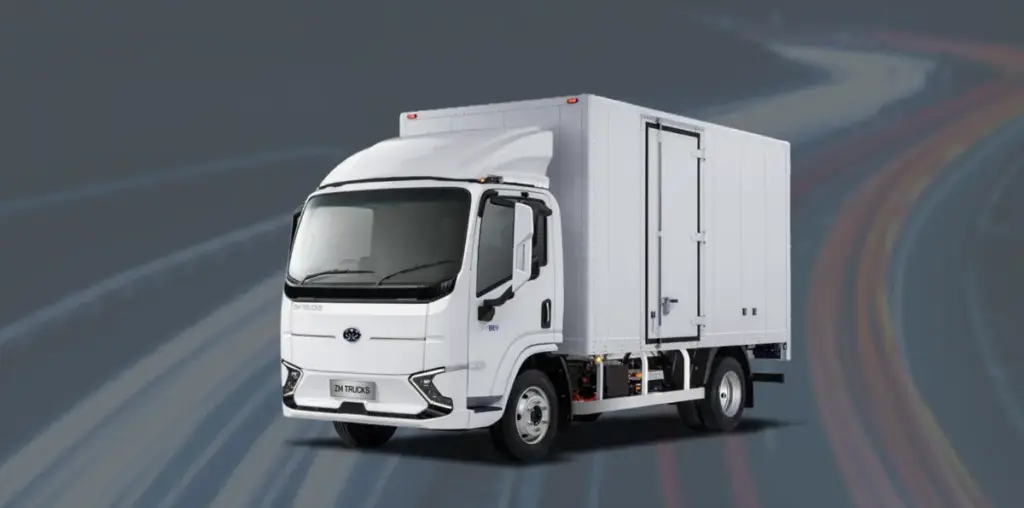
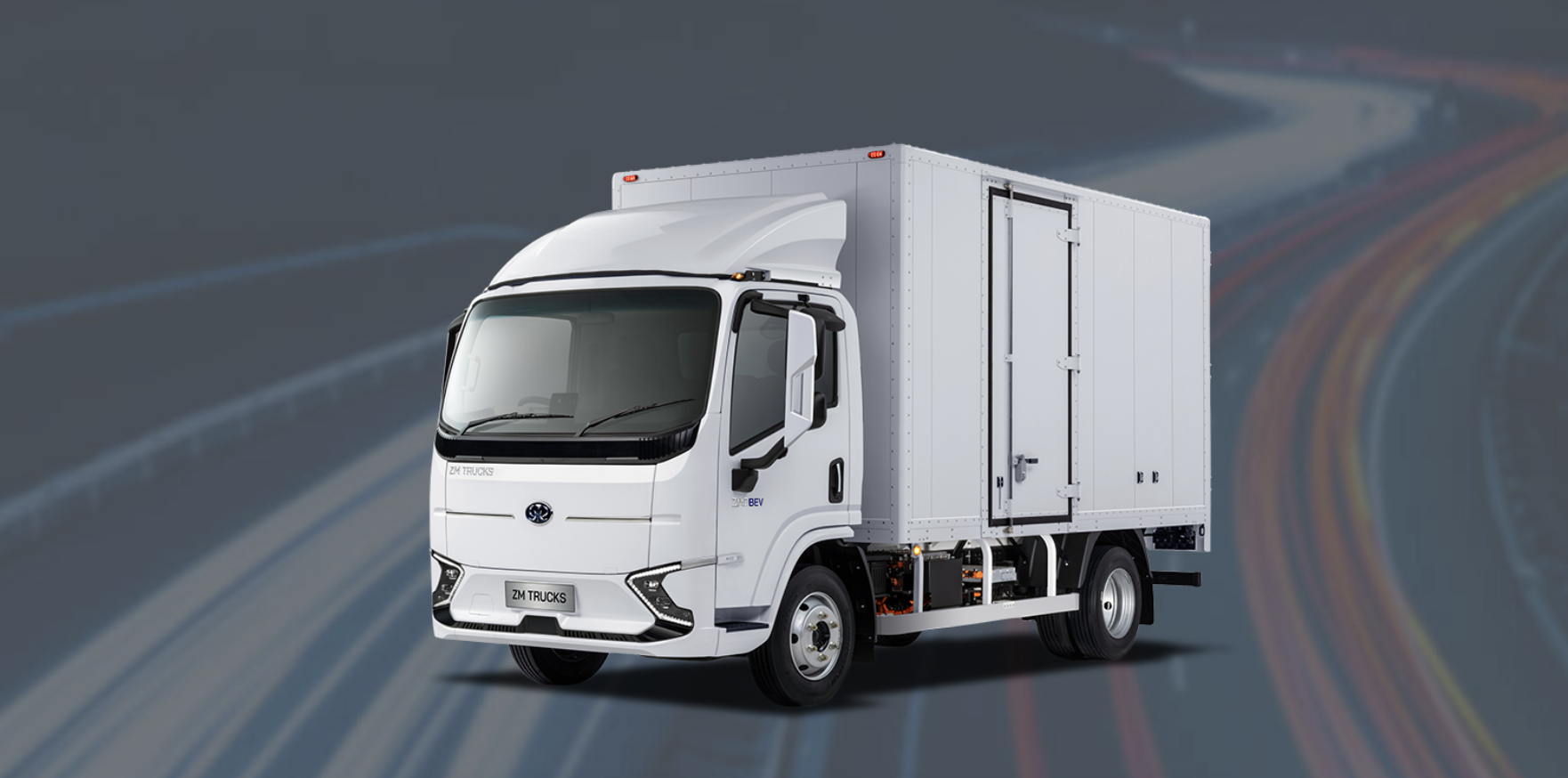
- Commercial Vehicle Manufacturers: Major truck manufacturers are actively positioning themselves to capture the surging demand. Tesla’s Class 8 Semi is seeing expanded volume production, offering the company commercial stability alongside its broader automotive portfolio. Meanwhile, emerging market entrants like ZM Trucks—the U.S. branch of Japan’s ZO Motors—showcased their expanding lineup of battery-electric and fuel-cell commercial vehicles at the Port of Long Beach launch event, signaling robust manufacturing commitment despite shifts in federal incentive structures.
Future Outlook
The trajectory of North American commercial transportation is increasingly defined by regional pragmatism rather than federal gridlock. While political debates surrounding national energy policy and tax credits continue in Washington, market forces have rendered the financial argument for electric trucks nearly unassailable.
Looking toward 2030, several key trends will dictate the pace of commercial fleet electrification:
- Corridor Expansion: Following the initial deployment of the BC2BC and East Coast drayage hubs, similar multi-state coalitions are expected to emerge across the Midwest and the Texas freight triangles, driven by state-level zero-emission vehicle (ZEV) mandates and corporate sustainability goals.
- Technological Maturation: Advances in battery chemistry—specifically the commercialization of solid-state cells and lithium-iron-phosphate (LFP) improvements—will continue to drive down upfront vehicle acquisition costs while expanding operational ranges, bringing the industry closer to UC Berkeley’s projected 50% TCO savings by the end of the decade.
- Grid Integration and Megawatt Charging: As thousands of Class 8 electric trucks hit major corridors like Interstate 5 and East Coast arteries, utility providers and port authorities will need to fast-track grid upgrades, incorporating localized microgrids and energy storage systems to support ultra-fast megawatt charging demands without destabilizing local electrical grids.
Ultimately, the combination of record-high diesel prices, stringent regional emissions regulations, and coordinated interstate infrastructure planning ensures that the electric truck revolution will continue to gather momentum, fundamentally reshaping the logistics landscape across the continent.



