As global weather patterns grow increasingly volatile and destructive, a novel financial frontier has emerged: online prediction markets allowing users to place monetary bets on the earth’s future. Platforms such as Kalshi and Polymarket—traditionally used for speculating on political elections, cryptocurrency milestones, and sporting events—have aggressively expanded into the realms of meteorology and climatology. Over the past year alone, Kalshi reported a staggering 500% growth in weather and climate-related wagers, pushing the market size past the $1.1 billion threshold. To bolster its credibility, the platform has even partnered with the Weather Company, parent of the Weather Channel.
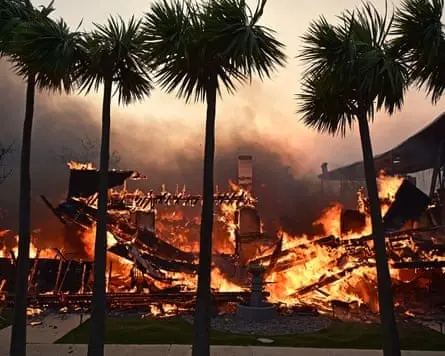
While proponents view these prediction markets as sophisticated crowdsourced data instruments that leverage the "wisdom of the crowd" to forecast environmental outcomes, critics, including climate scientists and affected families, view them with profound alarm. The trend has ignited a fierce ethical debate. Critics argue that financializing the climate crisis trivializes raw human suffering, gamifies ecological breakdown, and dangerously distances the public from the urgent need for structural climate action. This friction was brought into sharp, distressing focus when heavy financial wagers were placed on destructive disasters like the Los Angeles wildfires, prompting platforms to hastily implement bans on localized disaster betting.
At the same time, the scientific community is grappling with profound uncertainties regarding the actual trajectory of the earth’s climate. Recent admissions from the United Nations confirm that the foundational international goal of limiting global heating to 1.5°C above pre-industrial levels is now effectively out of reach. Conversely, rapid advancements in clean energy have helped push worst-case industrial emissions scenarios off the table. Yet, compounding this precarious balance are newly understood natural "feedback loops"—such as thawing permafrost and overheating wetlands—which studies show could accelerate global heating by up to 30%, adding as much as 0.4°C to global temperatures independently of human industrial emissions. Within this climate of unprecedented unpredictability, the commodification of the crisis raises an unsettling question: Can humanity truly place odds on its own survival?
Detailed Chronology: The Evolution of Climate Betting and Escalating Crises
The convergence of predictive financial engineering and climatological disaster did not happen overnight. It is the product of parallel trajectories: the explosive, largely unregulated growth of online prediction markets in the United States, and the accelerating, catastrophic breakdown of global climate stability.
Early 2020s: Prediction markets transition from fringe internet curiosities to mainstream financial ecosystems, heavily fueled by retail investors engaging in political and macroeconomic forecasting.
2024–2025: As extreme weather events—including historic heatwaves, mega-droughts, and out-of-control wildfires—dominate global news cycles, platforms like Kalshi and Polymarket identify a lucrative new asset class: the weather. Markets are opened not just for tomorrow’s temperature in major cities, but for seasonal hurricane frequencies, annual disaster counts, and coral bleaching thresholds.
August 2025: The ethical fault lines of disaster betting are violently exposed during the devastating Los Angeles wildfires. Public outrage erupts as investigators and observers discover that substantial financial wagers had been placed on the progression and destruction of the fires. In response to intense backlash and the undeniable moral hazard—specifically, the incentive structure it could create for would-be arsonists—Kalshi and Polymarket institute sudden bans on localized wildfire betting.
Late 2025 to Early 2026: Kalshi announces a 500% year-over-year surge in weather-related trading volume, cementing a $1.1 billion market segment. To legitimize its expanding meteorological footprint, the platform forms a strategic partnership with the Weather Company.
September 2026: Scientific reality catches up with policy as the United Nations Environment Programme officially concedes that the 1.5°C global heating limit has been surpassed. Simultaneously, breakthrough studies on climate feedback loops reveal that natural systems could independently amplify global temperatures by 0.4°C, complicating both long-term climate modeling and short-term financial forecasting.
Supporting Context & Metrics: The Numbers Behind the Market and the Science
To understand the tension between prediction markets and climate science, one must examine the metrics driving both industries.
The Financial Footprint
$1.1 Billion: The estimated valuation and transactional volume of the weather and climate-related betting sector on platforms like Kalshi.
500% Growth: The exponential year-over-year expansion reported by Kalshi for weather and climate wagers, signaling robust retail and institutional appetite for environmental speculation.
Zero Local Disaster Markets: Following the public outcry over the Los Angeles fires, major prediction platforms officially restricted trading on active natural disasters like specific wildfires, floods, and active storms to prevent perverse incentives and reputational damage.
The Climatological Baseline
1.5°C Threshold: The benchmark established by the Paris Agreement a decade ago to stave off the most catastrophic impacts of climate change. UN reports now acknowledge this ceiling has effectively been breached due to unrestrained global emissions.
30% Acceleration: The potential increase in global heating driven by natural climate feedback loops—including thawing permafrost, degraded wetlands, and massive forest fires—identified in recent landmark studies.
+0.4°C Addition: The projected incremental temperature rise contributed solely by these natural feedback loops, throwing off legacy models that accounted only for direct anthropogenic (human-caused) carbon emissions.
RCP8.5 Phased Out: On the positive side of the ledger, the widespread deployment of renewable energy has rendered the historic "worst-case" industrial emissions scenario (known as RCP8.5, characterized by unmitigated global coal burning) largely obsolete.
Official Statements and Stakeholder Perspectives
The debate over climate prediction markets has divided economists, technologists, and scientists, highlighting a deep philosophical rift over how humanity interacts with environmental data.
The Market Perspective: Leveraging Collective Intelligence
Proponents of prediction markets argue that they serve a functional, utilitarian purpose by aggregating decentralized information into accurate probabilistic forecasts.
A spokesperson for Kalshi defended the company’s expansion into meteorology, emphasizing its role in generating robust analytics:
"We see our platform as part of well-calibrated forecasting data. By harnessing the wisdom of the market, we can help anticipate how hot it will get, how severe floods will become, and track other critical environmental outcomes with high precision."
From this viewpoint, financial markets act as stress-tested reality checks against political complacency or bureaucratic delays, offering an unfiltered view of what financial actors truly expect to happen based on available meteorological data.
The Scientific Perspective: Trivializing Suffering
Conversely, researchers and scientists intimately familiar with the human toll of the climate crisis view the gamification of environmental collapse with deep distress.
Kaitlyn Trudeau, a scientist at the non-profit research organization Climate Central, articulated the emotional and professional dismay rippling through the scientific community. Trudeau’s own grandfather lost his home in the catastrophic Los Angeles fires, making the presence of bets on that specific disaster deeply personal and traumatic.
"I find it depressing because it’s distracting us from what we should be focusing on," Trudeau noted. Reflecting on the existence of wildfire gambling, she added: "I’m not against prediction markets in general, but we need to be clear about the downsides. They aren’t going to reduce the risks of climate change or solve climate change."
Critics argue that treating ecosystem collapse, glacial melt, and extreme heatwaves as trading vehicles creates a dangerous psychological detachment. Instead of mobilizing populations to demand systemic decarbonization and climate adaptation policies, prediction markets transform human tragedy into a spectator sport where passive observers profit off planetary misery.
Future Outlook: Navigating an Unpredictable Horizon
As the twenty-first century progresses, the intersection of financial forecasting and climatological reality will face profound tests. The fundamental problem facing both climate scientists and financial speculators is the sheer velocity and complexity of earth systems.
While artificial intelligence and big data analytics are continuously improving short-term weather forecasting and modeling, the broader trajectory of the planet remains fraught with deep uncertainty. The dismantling of the 1.5°C target demonstrates that humanity’s historical models have consistently underestimated the speed of global heating. Meanwhile, the discovery that natural feedback loops can autonomously drive up planetary temperatures introduces a terrifying wild card into all forecasting models—financial or scientific.
If the planet’s chemistry continues to be disrupted by human activity, earth systems may trigger abrupt, nonlinear tipping points that defy linear mathematical modeling. In such an environment, prediction markets may find themselves wildly miscalculating risks, transforming high-stakes financial speculation into an exercise in blind gambling against nature itself.
Ultimately, the debate over weather and climate betting underscores a sobering truth: while financial markets can attempt to price, hedge, and monetize the consequences of ecological breakdown, they possess no capacity to halt it. As Kaitlyn Trudeau and her scientific peers remind the public, the primary challenge of our era is not accurately guessing how hot tomorrow will be, but mustering the collective political and social will to ensure there is a habitable world left to wager on.