

Executive Overview
As artificial intelligence surges, demanding unprecedented footprints of land, water, and electricity, tech moguls are looking up. From Elon Musk’s SpaceX to Jeff Bezos’s Blue Origin, and a sprawling ecosystem of venture-backed startups, private enterprise has officially inaugurated a high-stakes "new space race." Today, commercial operators launch more rockets into orbit than sovereign nations.
Yet, this cosmic pivot is framed through an intoxicating lens of utopian optimism. If terrestrial data centers strain our power grids, why not place server farms hundreds of miles above the planet? If solar farms flag after sunset, why not deploy tens of thousands of orbital mirrors to bounce sunlight back to Earth on demand?
Beneath these grand technological visions, however, lies a contentious reality. Critics, researchers, and environmental scientists warn that the commercial space sector is actively downplaying severe ecological side effects—from stratospheric pollution and ozone depletion to light pollution and orbital debris. To describe this phenomenon, researchers have coined a new term: "starwashing."
Adapting the playbook of corporate "greenwashing," starwashing leverages public wonder and vague promises of cosmic salvation to distract from the tangible environmental degradation occurring both in our skies and on our soil. While space-based assets undoubtedly offer crucial monitoring tools for Earth, experts argue that the prevailing narrative of cosmic escapism threatens to derail humanity’s most urgent mission: establishing a sustainable civilization within planetary boundaries right here at home.
Detailed Chronology: From Cold War Cosmos to the Commercial Frontier
To understand how we arrived at the era of starwashing, it is necessary to examine the trajectory of space exploration over the past century.
1. The Geopolitical Genesis (1950s–1980s)
Space exploration began as a state-sponsored ideological and military chess match during the Cold War. Dominated by NASA and the Soviet space program, missions were characterized by immense national budgets, heavily audited safety protocols, and a primary focus on national prestige and scientific discovery. Environmental concerns regarding rocket emissions were largely an afterthought, but because launch frequencies were low—numbering in the dozens per year globally—the cumulative atmospheric impact remained limited.
2. The Commercialization Pivot (1990s–2010s)
Following the collapse of the Soviet Union and the retirement of the Space Shuttle program, governments began outsourcing routine orbital logistics to private contractors. Concurrently, breakthroughs in reusable rocket technology spearheaded by SpaceX dramatically lowered the cost-per-kilogram to orbit. Space transformed from a government-funded scientific frontier into a viable commercial market, attracting billionaires enriched by the digital revolution.
3. The Megaconstellation Era and the New Space Race (2020s–Present)
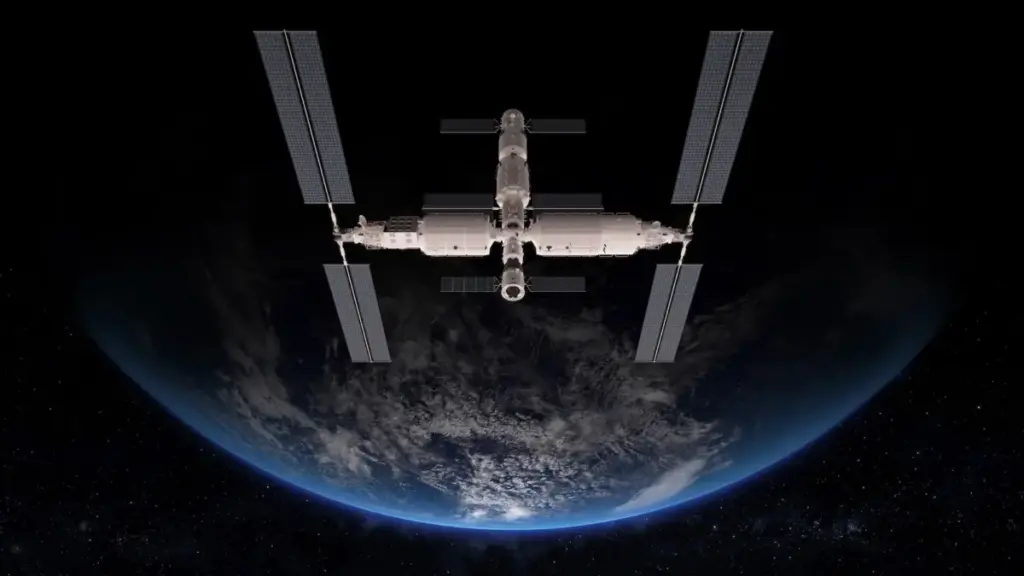
Today, we live in the era of megaconstellations and private lunar ambitions. Thousands of active satellites now weave an artificial web around Earth, providing global internet, Earth observation, and telecommunications. Concurrently, proposals for space-based manufacturing, orbital server farms, and solar reflection arrays have moved from science fiction to venture capital pitch decks.
This acceleration has brought negative externalities into sharp focus. Incidents like the uncontrolled re-entry of discarded rocket bodies—such as a SpaceX Falcon 9 fragment slamming into the moon at 5,400 miles per hour, carving out a fresh crater—highlight the physical toll of our new orbital footprint. As the cosmos grows increasingly congested, the friction between corporate ambition and planetary preservation has reached a boiling point.
Supporting Context & Metrics: The Anatomy of Starwashing
The term "starwashing," popularized by space researcher Melissa E. Yingling, bridges the conceptual gap between traditional corporate marketing spin and the unprecedented ecological frontiers of aerospace.
Deconstructing the Playbook
Greenwashing has long been used by carbon-intensive industries to highlight marginal investments in renewables while expanding core fossil fuel operations. Starwashing operates similarly, substituting green energy investments with the boundless, emotionally resonant concept of "cosmic wonder."
When space companies market their missions, they frequently invoke grand stewardship narratives. Blue Origin explicitly states its corporate mission is "to restore and sustain Earth," heavily promoting reusable rockets, cleaner-burning liquid hydrogen and oxygen propellants, and carbon-neutral infrastructure development. Similarly, California-based startup Reflect Orbital promises "abundant energy" and "a healthier planet" via a constellation of 50,000 space mirrors designed to illuminate terrestrial solar farms long after dusk.
While these visions captivate investors and media outlets, management and environmental scholars argue they systematically obscure a mounting ledger of ecological damages.
Atmospheric and Environmental Impacts
The expansion of commercial space operations introduces stressors to Earth’s atmosphere that scientists are only beginning to quantify:
- Stratospheric Soot and Ozone Depletion: Rocket engines burning kerosene or solid propellants emit black carbon (soot) directly into the stratosphere. In this delicate layer, soot absorbs incoming solar radiation, altering atmospheric circulation and degrading the ozone shield that protects life from lethal ultraviolet radiation.
- Water Vapor Amplification: Hydrogen-fueled engines release massive plumes of water vapor into the middle and upper atmospheres. Because water vapor acts as a potent greenhouse gas at high altitudes, it absorbs Earth’s thermal radiation, amplifying global warming far more effectively than ground-based emissions.
- Aluminum Oxide and Satellite Disintegration: As thousands of retired satellites de-orbit and burn up upon re-entry, they vaporize into the upper atmosphere. This process releases toxic particulate matter, notably aluminum oxide dust, which scatters sunlight, alters polar stratospheric chemistry, and contributes to unintended climatic warming.
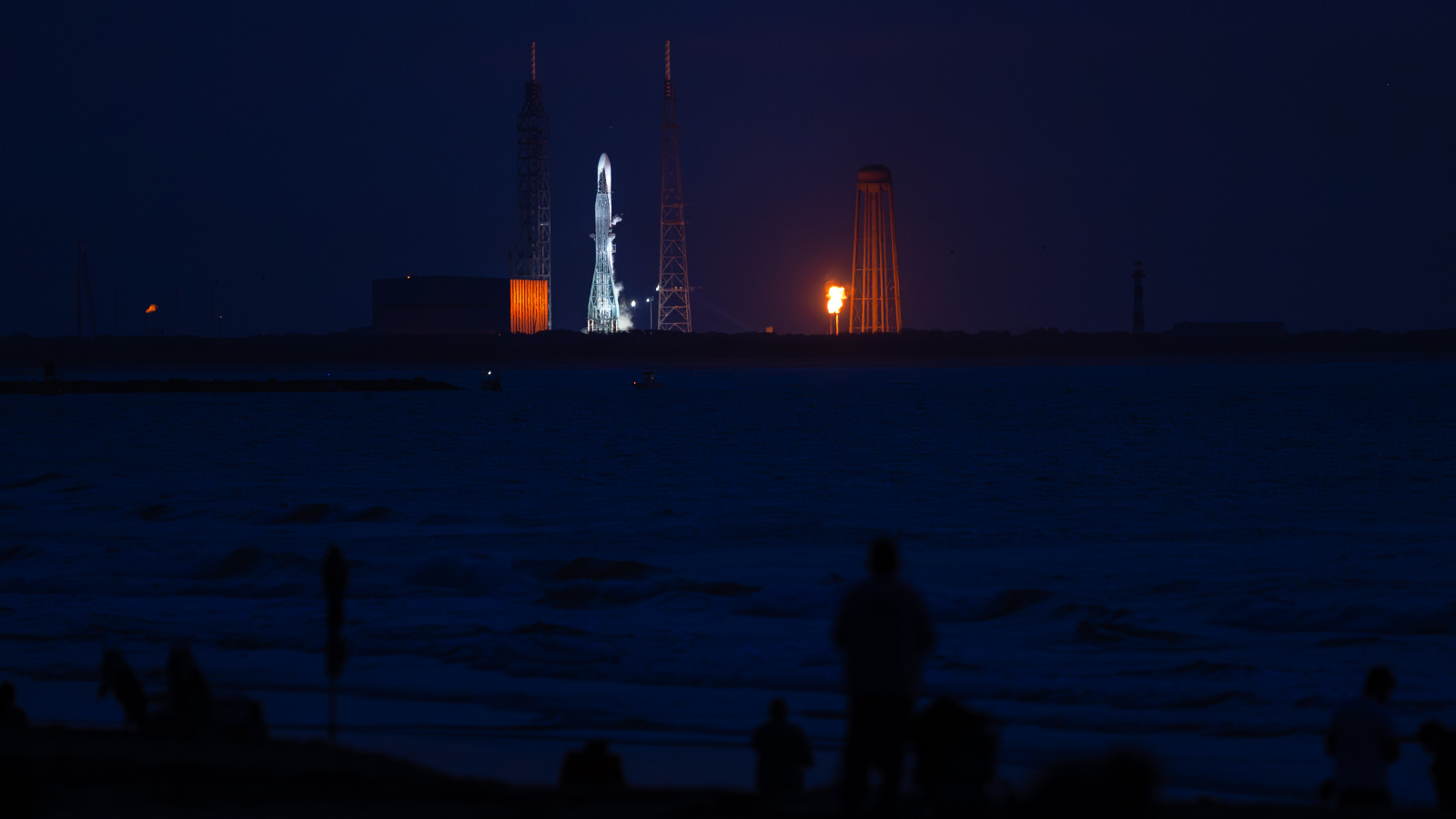
- Light Pollution and Habitat Degradation: The proliferation of reflective satellites has permanently altered the night sky, threatening professional and amateur astronomy alike. Concurrently, rocket launch sites—frequently located in ecologically sensitive coastal ecosystems—disrupt local wildlife habitats through deafening acoustic waves, toxic runoff, and intensive land clearing.
Official Statements and Expert Perspectives
The debate over commercial space expansion exposes a deep ideological rift between techno-optimists and Earth-bound climate scientists.
The Techno-Optimist Defense
Proponents of commercial space expansion argue that viewing space exploration as inherently antagonistic to Earth is short-sighted. Magali Delmas, a professor of management at UCLA’s Institute of the Environment and Sustainability, notes that the rush into space mirrors historical episodes like the California Gold Rush, where operators were blinded by immediate economic gains while ignoring environmental costs.
However, Delmas emphasizes that not all space-based claims are fraudulent. "Some of it’s actually true—there are these new technologies that are developed that can be just amazing," she notes.
Indeed, space-based assets have revolutionized planetary monitoring. Methane-detecting satellites, such as MethaneSAT, have uncovered massive, previously undetected leaks from global oil and gas infrastructure, providing regulators with actionable data to curb potent greenhouse gas emissions. Furthermore, astronauts frequently experience the "overview effect"—a profound cognitive shift upon viewing Earth’s fragile, finite biosphere against the black void of space, which has converted numerous spacefarers into vocal climate advocates.
The Skeptic’s Warning
Conversely, critics like Gregers Andersen, a postdoctoral researcher at the University of Southern Denmark and author of forthcoming work on Silicon Valley’s climate tech narratives, argue that the systemic harms far outweigh these localized monitoring benefits.
"The problem is, of course, that it takes attention away from actually solving the problems that are here on Earth," Andersen warns. "And I think that’s also what’s meant by the term of ‘starwashing.’"
Andersen contends that tech moguls use narratives of infinite technological progress to manufacture public optimism, pacifying populations even as scientific consensus points toward an increasingly volatile, warming world. Rather than fixating on extraterrestrial colonies or orbital engineering feats that offer limited survival for privileged elites, Andersen advocates for a radically different definition of human progress.
"I think the common human project should be to create a sustainable civilization within the planetary boundaries," Andersen asserts. "And I think the narratives that they are presenting are just basically derailing us from that mission."
Future Outlook: Navigating the Cosmic Crossroads
As we look toward the middle of the 21st century, humanity stands at a definitive crossroads. The trajectory of the new space race will profoundly shape the environmental destiny of Earth.
To move beyond starwashing and ensure that the expansion of space technology truly serves humankind, several structural shifts must occur:
- Rigorous Environmental Regulation: International governing bodies and national space agencies must subject commercial rocket launches and megaconstellation deployments to comprehensive environmental impact assessments, holding companies accountable for stratospheric pollution and orbital debris.
- Transparent Corporate Accountability: Venture-backed aerospace firms must adopt transparent carbon-accounting methodologies that incorporate the full life-cycle emissions of manufacturing, launching, and de-orbiting space hardware.
- Prioritizing Terrestrial Solutions: Financial capital and intellectual talent must remain firmly anchored to solving foundational climate crises on Earth—such as grid decarbonization, regenerative agriculture, and ecosystem restoration—rather than chasing speculative technological escapes in the cosmos.
Ultimately, the view of Earth from space should serve as a humbling reminder of our planet’s singular fragility, not an invitation to treat our home atmosphere as an expendable highway to the stars.



