Executive Overview
Outside the small, historic town of Paducah, Kentucky, millions of pounds of radioactive potential sit locked away in thousands of weathering metal cylinders. These heavy-duty containers are packed tight with depleted uranium tails—waste byproducts left behind by decades of Cold War-era and late-20th-century nuclear enrichment. For a long time, this material was written off as industrial detritus, a permanent radioactive footprint requiring expensive, long-term subterranean burial.
Today, however, an emerging technological vanguard is eyeing these sprawling cylinders not as a waste management burden, but as an above-ground mine of staggering proportions.
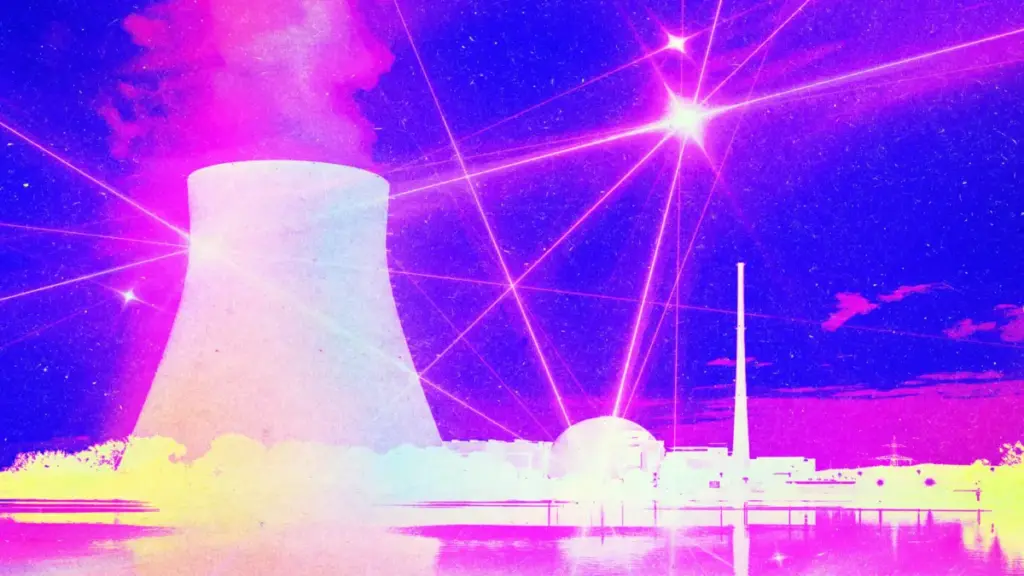
A private enterprise known as Global Laser Enrichment (GLE) is leading the charge to reprocess this neglected material using a revolutionary, high-precision technique: laser enrichment. By harnessing the precise frequencies of laser beams to selectively excite and separate specific atomic isotopes, GLE and similar startups believe they can bypass the brute-force mechanics of legacy machinery. This approach promises to extract valuable fissile material more efficiently than conventional methods, transforming low-concentration waste back into standard reactor-grade feedstock.
This technological pivot comes at a critical juncture for the global energy landscape. Nuclear power currently accounts for roughly 9% of worldwide electricity generation, a baseline contribution that major global powers—including the United States, China, and various European nations—are actively looking to expand. As governments commit to aggressive decarbonization targets while simultaneously pursuing next-generation advanced nuclear reactors, the demand for reliable, affordable nuclear fuel is skyrocketing.
Compounding this industrial push is a massive geopolitical realignment. For decades, the global nuclear fuel supply chain was dominated by Russia, which maintained a near-monopoly on uranium enrichment ecosystems. The outbreak of war in Ukraine and subsequent Western sanctions on Russian imports cracked that monopoly wide open, creating a severe supply gap. Western nations are now scrambling to secure independent domestic fuel cycles, providing fertile ground for disruptive, next-generation technologies like laser enrichment to transition from academic theory into commercial reality.
Detailed Chronology: From Cold War Waste to Laser-Powered Innovation
To understand the magnitude of the current laser enrichment renaissance, it is necessary to retrace the history of how these materials were created, why they were abandoned, and how modern engineering caught up to a decades-old scientific dream.
The Legacy of the Gaseous Diffusion Era
During the height of the Cold War and the decades that followed, the United States enriched uranium primarily through massive gaseous diffusion plants, such as the one formerly operated in Paducah. This process forced uranium hexafluoride gas through porous membranes to separate lighter isotopes from heavier ones—a notoriously energy-intensive process that required vast amounts of electricity.
In the process, these facilities generated enormous quantities of depleted uranium tails. Naturally occurring uranium is composed primarily of two isotopes: Uranium-238 (making up over 99% of natural ore) and Uranium-235 (accounting for roughly 0.7%). Uranium-235 is the fissile workhorse; when struck by slow, low-energy neutrons, it sustains the nuclear chain reaction needed to generate power. Gaseous diffusion and subsequent centrifuge facilities stripped out a portion of the U-235, leaving behind "tails" with a U-235 concentration typically dropping down to 0.25% or 0.3%. Because standard extraction economics dictated that chasing these lower concentrations was inefficient, millions of tons of tails were sealed into cylinders and stacked in yards across Paducah, Portsmouth, Ohio, and Oak Ridge, Tennessee.
The Birth and Stall of Laser Concepts
The concept of using lasers to separate isotopes is not new. Scientists recognized as early as the 1970s and 1980s that lasers could theoretically target specific atomic configurations with pinpoint accuracy. However, early-generation lasers were notoriously fragile, highly unstable, and astronomically expensive to maintain. They demanded constant calibration and suffered from reliability issues that made commercial-scale deployment an economic impossibility. Consequently, the nuclear industry defaulted to mechanical centrifuges, which, while mechanically complex, offered proven, reliable scaling.
The Modern Resurgence (2020–Present)
As laser technology matured in the 21st century—bolstered by advancements in telecommunications, optics, and solid-state physics—the foundational hurdles of laser enrichment began to dissolve.
- 2023: A new market entrant, LIS Technologies, was founded with the explicit goal of establishing domestic laser isotope separation capabilities in the United States. The company quickly acquired a 200-acre site in Oak Ridge, Tennessee, positioning itself at the historic heart of American nuclear development.
- Fall 2025: GLE achieved a major operational milestone at its testing facility in Wilmington, North Carolina, successfully concluding a demonstration pilot that processed several hundred kilograms of uranium. Having proven the system at this scale, the company promptly decommissioned the pilot unit to construct an advanced, commercial-scale demonstration system.
- November 2027 (Projected): GLE anticipates the final safety evaluation from the US Nuclear Regulatory Commission (NRC) for its proposed Paducah commercial facility, clearing the runway for formal licensing approvals.
- 2030 (Target): Both GLE and its competitors project that their laser enrichment facilities will achieve commercial operations, injecting fresh, independently produced fuel into a starved Western market.
Supporting Context & Metrics: The Physics and Economics of Enrichment
To appreciate why laser enrichment is generating such intense excitement among nuclear engineers and market analysts, one must examine the underlying chemistry, physics, and economic metrics that govern the nuclear fuel cycle.
The Physics of Fission and Isotope Separation
Not all uranium is created equal. Commercial nuclear reactors typically operate on low-enriched uranium (LEU), which contains roughly 5% U-235. Meanwhile, many next-generation advanced reactor designs—which promise higher thermal efficiency, smaller footprints, and passive safety features—require High-Assay Low-Enriched Uranium (HALEU), enriched anywhere from 5% up to 20% U-235.
For decades, the dominant technology for achieving these concentrations has been the gas centrifuge. Centrifuges rely on centrifugal force: uranium hexafluoride gas is spun at blistering speeds inside carbon-fiber rotors. The heavier molecules containing U-238 are hurled outward toward the periphery, while the lighter U-235 molecules concentrate closer to the central axis. (As nuclear engineers often joke, the principle is identical to swinging a nearly empty mustard bottle to force the remaining condiment to the tip.) While effective, a commercial centrifuge facility requires tens of thousands of these spinning cylinders operating in interconnected cascades, representing a massive capital expenditure and a complex logistical footprint.
Laser enrichment, formally known as Laser Isotope Separation (LIS), operates on an entirely different scientific premise: atomic-scale resonance.
- Atomic Fingerprints: All molecules vibrate and rotate at the atomic scale in frequencies dictated by their exact mass and molecular structure. Even microscopic mass differences between U-235 and U-238 isotopes give them distinct spectroscopic fingerprints.
- Targeted Excitation: Laser systems can be tuned to emit light at wavelengths so precise that they interact exclusively with molecules containing U-235. When the laser beam strikes the gas mixture, it selectively pumps energy into the U-235 molecules without disturbing the U-238.
- Separation: This targeted energy boost alters the chemical or physical behavior of the U-235 molecules, allowing them to be separated via chemical reactions or electrostatic and magnetic deflection fields.
Economic Advantages and Metrics
According to GLE Chief Executive Officer Stephen Long, while individual laser enrichment units are inherently more complex and costly to manufacture than a single centrifuge, the sheer volume reduction is game-changing.
- Footprint Reduction: Where a traditional centrifuge plant requires tens of thousands of spinning units working in tandem, a full-scale commercial laser enrichment facility can perform the same volumetric throughput with fewer than one thousand laser separation units.
- Capital and Operating Expenditures: Because the equipment count is drastically reduced, up-front capital investment is lower. Furthermore, laser systems consume significantly less electrical power than massive mechanical centrifuge halls, resulting in lower baseline operating costs.
- The Paducah Scale: GLE’s contracted project with the Department of Energy in Paducah targets up to 200,000 metric tons of depleted uranium tails. By re-enriching material that sits at a baseline of roughly 0.25% U-235 back up to natural-grade concentrations (0.7%), GLE creates an above-ground reserve equivalent to a massive, multi-decade uranium mine.
Official Statements and Industry Perspectives
The convergence of geopolitical disruption, technological maturation, and surging clean-energy demand has drawn commentary from leading figures across the nuclear science and regulatory ecosystems.
Dr. Charles Forsberg, a principal research scientist in nuclear science and engineering at the Massachusetts Institute of Technology (MIT), points directly to the historical market distortions that suppressed innovation for decades.
"Nobody in the West was going to build a new enrichment plant while the Russians flooded the world with enriched uranium," Forsberg notes.
For years, Russia’s state-backed Rosatom controlled a massive share of the global enrichment market, offering below-market pricing that effectively priced Western competitors out of building new domestic infrastructure. However, the geopolitical rupture triggered by the war in Ukraine completely altered this calculus. With the US, UK, and European allies moving aggressively to sever their dependence on Russian nuclear fuel, a massive supply void has opened up.
Christo Liebenberg, president of LIS Technologies, emphasizes the acute urgency facing the market:
"The gap is just becoming bigger and bigger, and this technology is right in the middle."
With LIS Technologies actively advancing its pre-application process with the NRC for its 200-acre site in Oak Ridge, the company is betting that utilities will line up for domestic, agile, and cost-effective fuel supplies.
Meanwhile, GLE’s vice president of government relations and communications, Nima Ashkeboussi, highlights the unique strategic value of their depleted uranium strategy:
"It’s kind of like a large aboveground uranium mine for us."
By transforming industrial waste into viable feedstock, GLE bypasses the permitting delays, ecological controversies, and heavy capital outlays associated with opening new open-pit or underground uranium mines.
Despite the enthusiasm, industry veterans urge a healthy degree of industrial pragmatism. Stephen Greene, a senior fellow at the Nuclear Innovation Alliance, acknowledges the profound cost-saving potential of laser separation but offers a classic engineering caveat:
"Laser enrichment plants could turn out to be cheaper than existing technologies, but as with most new technologies, you don’t really know until you try to build one."
Future Outlook: Navigating the Road to 2030
As the nuclear industry prepares for a potential renaissance driven by climate goals, artificial intelligence data center power demands, and next-generation reactor deployments, the stakes for uranium enrichment have never been higher.
The path forward, however, is not without hurdles. Regulatory approval processes through the Nuclear Regulatory Commission are rigorous, multi-year endeavors designed to ensure absolute safety, non-proliferation, and environmental compliance. While GLE anticipates its final safety evaluation for the Paducah plant in late 2027 with an operational target of 2030, and LIS Technologies works methodically through its Oak Ridge facility pre-application, any complex nuclear infrastructure project remains vulnerable to regulatory delays, supply chain bottlenecks, and engineering scaling challenges.
Furthermore, because the specific physics and engineering details of modern laser isotope separation remain heavily classified to prevent nuclear proliferation risks, independent verification of commercial claims remains limited to pilot-scale demonstrations. The ultimate test will occur when these companies break ground on full-scale commercial facilities, transition from pilot kilograms to industrial-scale metric tons, and deliver fuel directly to commercial nuclear reactors.
If successful, laser enrichment could fundamentally rewrite the economics of the nuclear fuel cycle. By turning radioactive waste into valuable fuel, slashing capital and energy costs, and providing an independent, Western-controlled supply chain, lasers may well prove to be the spark that illuminates the future of global clean energy.