

Executive Overview
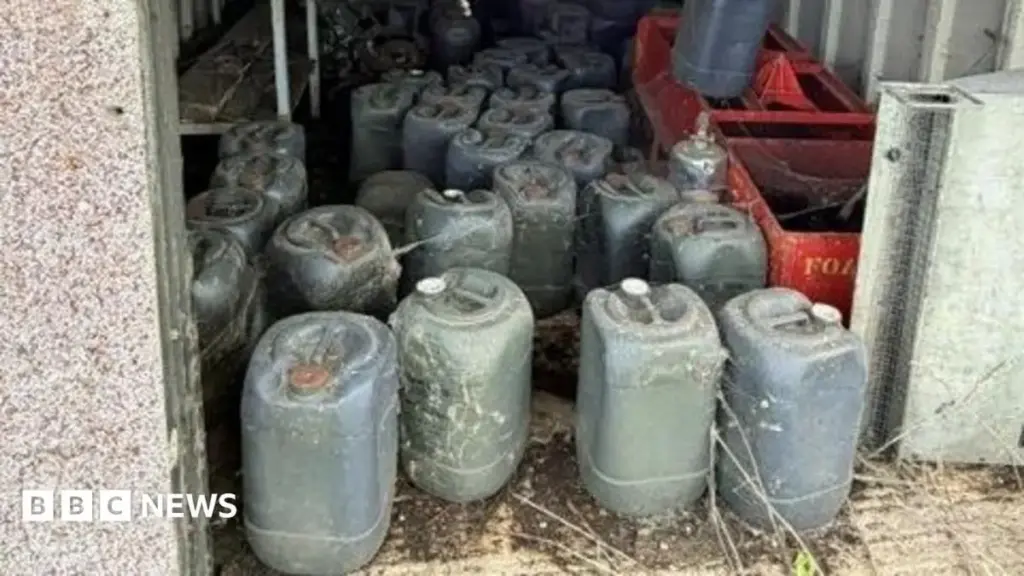
The ghosts of Britain’s military-industrial past have resurfaced in rural Oxfordshire, casting a spotlight on the hidden environmental liabilities lingering beneath approved housing developments. At the sprawling former Islip Fuel Depot—a relic of the Cold War era previously utilized by the Royal Air Force (RAF) and energy giant Esso—approximately 40 industrial-grade barrels containing legacy firefighting foam have been hastily removed following a public outcry. These drums, which campaign groups allege have languished on the site for decades, contain per- and polyfluoroalkyl substances (PFAS), a notoriously persistent family of synthetic compounds colloquially dubbed "forever chemicals" due to their stubborn resistance to natural degradation.
The discovery of the barrels at the brownfield site, which holds outline planning permission for residential and affordable housing, has ignited a fierce debate over brownfield remediation, corporate accountability, and the transparency of environmental assessments. While the site’s current developer, Newcore Capital, insists that the risks have been comprehensively managed, professional protocols followed, and contamination pathways effectively blocked, local activists and environmental watchdogs argue that the incident exposes glaring vulnerabilities in how legacy toxic hazards are identified, secured, and communicated to the public prior to residential construction.
This unfolding controversy is not happening in a vacuum. It arrives amid heightened national scrutiny over PFAS contamination across the United Kingdom, drawing uncomfortable parallels to ongoing pollution probes at nearby military installations and high-profile legal battles involving major chemical manufacturers. As regulatory bodies step in to review soil and groundwater integrity, the Islip Fuel Depot case serves as a cautionary tale for a nation increasingly reliant on redeveloping industrial brownfields to meet ambitious housing targets while grappling with the toxic legacies of the twentieth century.
Detailed Chronology
To understand how dozens of sealed drums of hazardous foam liquid came to rest on a prospective residential development site, it is necessary to retrace the timeline of the Islip Fuel Depot, from its strategic military origins to its modern-day transformation into a contested housing project.
The Cold War Foundation and Military Operations
Constructed during the height of twentieth-century military expansion, the Islip Fuel Depot was designed as a vital logistical hub. Situated in Oxfordshire, the facility operated as an integrated fuel storage and transfer facility, serving both commercial interests through Esso and vital strategic functions for the Ministry of Defence (MOD). Most notably, the depot functioned as a key supply link for the nearby RAF Upper Heyford, located approximately five miles north. During the Cold War, RAF Upper Heyford housed nuclear-capable bombers and a massive complement of United States Air Force personnel, requiring vast stores of aviation fuel and specialized fire suppression supplies, including aqueous film-forming foams (AFFFs) rich in PFAS compounds.
Transition of Ownership and Commercial Stagnation
Following the contraction of military operations and changing geopolitical landscapes, the strategic necessity of the Islip depot waned. The facility was eventually decommissioned as an active fuel depot, transitioning into private hands over the decades. In 2012, specialist real estate investment firm Newcore Capital assumed ownership of the site, recognizing its long-term potential for urban regeneration and residential development. For years, the site remained largely dormant, subject to standard planning evaluations while industrial remnants from its military past quietly endured within its secure boundaries.
The Planning Horizon and Housing Proposals
As the UK government intensified pressure on local authorities to unlock brownfield land for residential construction, Newcore pursued development rights for the Islip Fuel Depot. Outline planning permission was successfully secured to transform the former fuel storage facility into a modern residential neighborhood. Crucially, the master plan committed to designating 50 percent of the future housing stock as affordable homes—a vital pledge in a county struggling with acute housing affordability pressures. However, beneath the promise of much-needed regeneration lay unaddressed industrial residues dating back to the MOD’s operational heyday.
The Activist Intervention and Discovery
The status quo was shattered "in recent weeks" when local campaigners and environmental activists accessed the site, conducting what the developer has characterized as unlawful trespassing. Operating outside official channels, the pressure group located approximately 40 industrial barrels stored within a dedicated, secured area of the depot. Photographic evidence captured during this incursion revealed that the containers—brimming with firefighting foam liquid—bore the manufacturing insignia of Angus Fire Armour, a company previously embroiled in high-profile legal actions regarding PFAS exposure. The activists extracted samples from the drums and alerted environmental regulators, thrusting the quiet Oxfordshire village into the national media spotlight.
Rapid Removal and Remediation Response
Confronted with the public exposure of the barrels, Newcore Capital moved swiftly. Chief Executive Officer Hugo Llewelyn confirmed that the company was made aware of the cache by the recent whistleblower activity and immediately coordinated a professional extraction operation. Within days, the drums were removed from the Islip Fuel Depot. Simultaneously, Newcore engaged environmental consultants to review soil and groundwater testing protocols, attempting to reassure stakeholders that the removal marks the decisive neutralization of a legacy risk rather than the exposure of an active pollution event.
Supporting Context & Metrics
The controversy at Islip Fuel Depot cannot be understood in isolation; it is deeply intertwined with the broader scientific, regulatory, and industrial landscape surrounding PFAS chemicals in the United Kingdom.
The Science of "Forever Chemicals" (PFAS)
PFAS represents a vast family of synthetic chemicals manufactured since the 1940s for use in non-stick cookware, stain-resistant fabrics, waterproof clothing, and crucially, high-performance firefighting foams. Characterized by exceptionally strong carbon-fluorine bonds, these compounds do not break down easily under environmental conditions. Instead, they accumulate in soil, water systems, and living organisms—including human bloodstreams—leading to bioaccumulation over time. Scientific studies increasingly link long-term exposure to certain PFAS compounds to adverse health outcomes, including elevated cholesterol levels, liver damage, weakened immune response, and increased risks of specific cancers.
The Angus Fire Armour Connection
The discovery that the Islip barrels were manufactured by Angus Fire Armour adds a significant legal and historical dimension to the case. Angus Fire Armour has previously faced intense scrutiny over its manufacturing practices and product lines. Notably, the company settled a major legal battle out of court with residents in Yorkshire who claimed they had suffered chronic exposure to PFAS and environmental degradation originating from the company’s dedicated foam manufacturing plant. The presence of Angus Fire Armour drums at Islip links the Oxfordshire site directly to the industrial supply chains that fueled decades of fire safety protocols across British military and civilian installations.
Regional Contamination and the RAF Upper Heyford Link
The Islip depot’s historical operational dependency on RAF Upper Heyford highlights a broader regional contamination footprint. RAF Upper Heyford itself is currently suspected by environmental investigators and local action groups to be a primary source of widespread PFAS contamination in northern Oxfordshire’s water table, stemming from decades of routine testing and deployment of firefighting foams on the active airfield. While Newcore insists that the foam containers at Islip remained sealed and were never deployed, the geographic and operational proximity to Upper Heyford underscores the cumulative environmental burden carried by former defense lands in the region.
Brownfield Redevelopment Metrics
The challenges faced at Islip reflect a national dilemma regarding brownfield regeneration. According to recent urban planning data, the UK government aims to deliver a significant percentage of new homes on previously developed land to protect the Green Belt. However, historical industrial usage means that a high percentage of brownfield sites harbor legacy contaminants, ranging from heavy metals and hydrocarbons to persistent organic pollutants like PFAS. Remediating these sites safely requires rigorous multi-phase environmental site assessments (ESAs):
- Phase 1 Environmental Site Assessment: Involves historical records reviews, site reconnaissance, and interviews to identify potential contamination sources (a step Newcore completed last year).
- Phase 2 Environmental Site Assessment: Involves intrusive physical investigation, including soil boring, groundwater sampling, and laboratory analysis to quantify actual contamination levels and define cleanup parameters.
Official Statements & Perspectives
The Islip Fuel Depot dispute has exposed a sharp divide in narratives between corporate developers, environmental campaigners, and regulatory oversight bodies.
Developer Defense: Newcore Capital CEO Hugo Llewelyn
Addressing the controversy head-on, Newcore Capital CEO Hugo Llewelyn mounted a robust defense of his firm’s handling of the site, while sharply criticizing the methods employed by the activist group.
"Whilst firefighting foam containers were present on site from the MOD’s operation back in the 20th Century, we do not believe it was ever deployed; the containers were sealed; and successive surveys have confirmed that there is no ‘pathway’ for it to cause pollution," Mr Llewelyn stated.
Llewelyn vigorously disputed both the validity and the legality of the campaigners’ actions, characterizing their intervention as an opportunistic stunt:
"A ‘pressure group’ has trespassed unlawfully to obtain a questionable sample from this site to demonstrate that in the secured area of the site that was purposefully designed to accommodate foam for firefighting purposes, which is likely to contain PFAS, does, according to their findings, contain PFAS. I’m not sure there is anything to be surprised about here."
Furthermore, Llewelyn emphasized that Newcore had already factored historical industrial risks into its long-term development roadmap. He noted that a Phase 1 assessment conducted last year successfully flagged potential contamination vectors, paving the way for a targeted Phase 2 investigation.
"The specification for the Phase 2 investigation has therefore been designed to specifically address this potential risk and any contamination identified will be cleaned up immediately," he assured stakeholders.
Environmental Campaigner Concerns
Conversely, the activist coalition that exposed the barrels argues that developers and landowners have historically understated the risks posed by legacy chemical caches. Campaigners maintain that leaving dozens of industrial drums containing concentrated PFAS compounds unattended on an unmonitored site for decades—regardless of whether they were technically "sealed"—represents an unacceptable environmental hazard. They argue that weathering, container degradation, or accidental breaches could easily lead to localized soil and aquifer contamination, threatening local ecosystems and future residents alike.
Regulatory Intervention: The Environment Agency
Amid the escalating public war of words, institutional regulators have stepped in to assert control over the situation. The Environment Agency’s Chemical Compliance team formally contacted the site owners following the discovery. The regulatory body’s primary objective is to verify that the drum extraction was executed in compliance with hazardous waste disposal regulations and to ensure that comprehensive soil and groundwater testing protocols are rigorously implemented before any construction machinery breaks ground on the residential development.
Future Outlook
As the dust settles over the immediate removal of the 40 chemical barrels from the Islip Fuel Depot, the site stands at a critical crossroads. The coming months will dictate whether this incident remains a localized remediation footnote or evolves into a broader precedent for brownfield development governance across the United Kingdom.
Immediate Next Steps for Remediation
The immediate priority for Newcore Capital and its environmental consultants is the execution of a comprehensive Phase 2 environmental site investigation. Unlike the preliminary records review of Phase 1, this phase will require deep soil core sampling and extensive hydrological testing across the Islip depot footprint. Regulators from the Environment Agency will scrutinize the resulting data to confirm whether any micro-seepage occurred during the decades the barrels rested on the property. If residual contamination is detected in the soil or underlying aquifer, mandated remediation—such as soil washing, stabilization, or excavation—must be completed and certified before construction permits can transition from outline to full execution.
Implications for UK Brownfield Policy
The Islip controversy casts a long shadow over national housing strategy. As the government presses forward with targets to accelerate homebuilding on brownfield land, local planning authorities may face mounting pressure to mandate more aggressive, transparent pre-acquisition environmental audits. Communities living adjacent to former military and industrial sites are increasingly anxious about the invisible hazards buried in their backyards. Consequently, developers may find themselves subjected to stricter scrutiny, requiring independent, third-party environmental verification before outline planning permissions are granted.
Balancing Housing Needs and Environmental Safety
Ultimately, the Islip Fuel Depot project encapsulates the delicate balancing act defining modern British urban planning: the urgent socioeconomic necessity of delivering affordable housing versus the non-negotiable imperative of environmental protection and public health safety. With 50 percent of the planned Islip development earmarked for affordable homes, local families desperately need the housing project to succeed. However, that success cannot be built on a foundation of unaddressed toxic legacy.
As the Environment Agency oversees the final compliance checks and Newcore presses ahead with its regeneration blueprint, the Islip case will be closely watched by developers, regulators, and environmentalists alike. It serves as a stark reminder that while the Cold War may be history, its toxic footnotes continue to demand vigilant stewardship, transparency, and uncompromising environmental accountability in the twenty-first century.



