In the sprawling urban matrix of Greater London, an invisible and persistent environmental crisis continues to quietly degrade the capital’s waterways. While headline-grabbing sewage spills from major water treatment facilities frequently dominate public discourse, a subtler, pervasive form of pollution remains rampant: plumbing misconnections. Across north and west London, thousands of residential properties, commercial sites, and multi-occupancy blocks of flats feature faulty or improperly installed drainage systems. Instead of routing wastewater directly to sewage treatment plants, these misconfigured pipes discharge raw domestic waste—ranging from laundry and kitchen runoff to untreated human sewage—directly into surface water drains. This effluent flows unchecked into local ecosystems, ravaging urban rivers such as the River Brent and the River Crane.
To counter this insidious threat, a pioneering pilot scheme is set to launch in west London, funded directly by the Mayor of London’s office. The initiative introduces a dedicated, specialized enforcement officer tasked with tracking down the root causes of illegal plumbing misconnections, cutting through bureaucratic red tape, and holding negligent property owners and landlords accountable. This targeted trial represents a critical test case. If successful, the framework is expected to be expanded city-wide, serving as the enforcement backbone of Mayor Sadiq Khan’s ambitious 10-year strategy to cleanse and restore London’s beleaguered blue corridors. With local councils historically under-resourced to tackle the complex, multi-layered investigations required to prove and rectify drainage faults, this infusion of capital and dedicated manpower signals a potential turning point in the battle for urban water purity.
Detailed Chronology & Investigative Findings
The scale of the misconnection crisis only becomes fully apparent when examining the paper trail unearthed by environmental charities and freedom of information requests. In October 2024, a Freedom of Information (FOI) request submitted to Thames Water by the prominent conservation charity Friends of the River Crane Environment (FORCE) brought a startling reality to light. The utility provider’s data revealed that seven distinct blocks of flats across north and west London were actively operating with major plumbing misconnections.
According to analyses by FORCE, these seven compromised residential sites encompassed at least 100 individual homes. Rather than safely transporting household waste to proper treatment facilities, these properties were continuously flushing raw sewage and greywater directly into the delicate habitats of the Rivers Crane and Brent. The ecological toll was immediate and severe, compounding the already high stress levels experienced by these urban waterways.
In the months following the initial discovery, remediation efforts have proven agonizingly slow. According to updated figures from Thames Water, only three of the original seven flagged housing developments have successfully corrected their plumbing infrastructure. Notably, all three resolved sites were located within the London Borough of Ealing.
However, the remaining four properties continue to pump untreated waste into the local environment. Thames Water confirmed that two of the unrectified blocks of flats are situated within the London Borough of Barnet, while the other two remain operational within the London Borough of Harrow. Crucially, neither the water utility nor the local authorities have publicly disclosed the precise addresses of these offending properties, citing ongoing legal and investigative sensitivities.
When approached for comment, Harrow Council’s press office failed to respond to media inquiries regarding the lingering misconnections within its jurisdiction. Conversely, a spokesperson for Barnet Council defended the local authority’s record, emphasizing that investigations of this nature are inherently complex, often involving intricate property law, multiple stakeholders, and labyrinthine building layouts. Despite these hurdles, Barnet Council maintained that it remains fully committed to resolving the violations "as quickly and effectively as possible."
Supporting Context & Metrics: The Scale of Urban Pollution
To understand why the new west London pilot is so desperately needed, one must examine the unique mechanics of urban drainage systems. In the United Kingdom, properties are served by two entirely separate networks:
Foul Water Sewers: These pipes carry wastewater from toilets, bathrooms, and kitchens directly to treatment plants before releasing it back into the environment safely.
Surface Water Drains: These systems are engineered exclusively to collect rainwater from roofs, driveways, and street runoffs, routing it directly—and without any treatment—into local rivers, streams, and canals.
A misconnection occurs during construction, remodeling, or routine maintenance when domestic appliances—such as washing machines, dishwashers, sinks, or toilets—are plumbed directly into the surface water system instead of the foul water network. While large-scale industrial dumping is heavily monitored, residential and commercial misconnections are notoriously difficult to spot. They often escape detection for years, functioning as hidden, continuous environmental disasters.
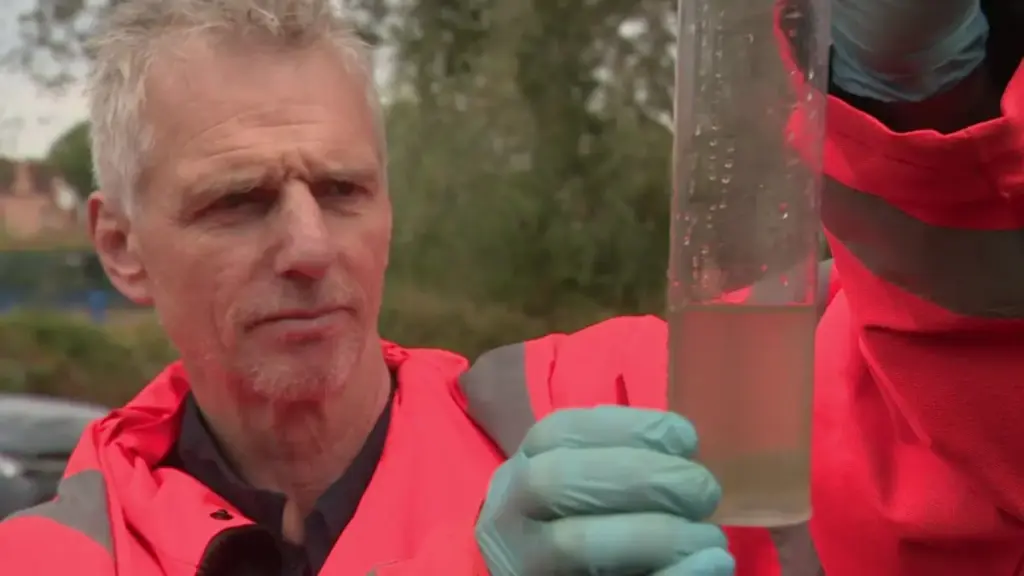
Ben Morris, the founder of the prominent volunteer clean-up group Clean Up the River Brent (CURB), has spent years monitoring the health of west London’s aquatic ecosystems. Equipped with water testing kits, monitoring devices, and high-visibility safety gear, Morris and his fellow volunteers routinely document the chemical degradation of the River Brent.
According to Morris, there is "good reason" to believe that plumbing misconnections represent the single largest source of pollution impacting London’s rivers today. The cumulative effect of hundreds of hidden pipes discharging organic waste, detergents, and pathogens creates chronic oxygen depletion in the water, suffocating fish populations, eradicating macroinvertebrates, and transforming urban green spaces into hazardous environmental zones.
"We need to see stronger action from the councils to get this done," Morris stated emphatically, pointing to the legislative gap that has allowed the problem to fester. "They have the power of enforcement, and they need to be using those powers to get those property owners to sort out the misconnections."
Official Statements and Stakeholder Perspectives
The launch of the west London pilot is designed to bridge the gap between regulatory authority and practical execution, providing local councils with the operational muscle they have long lacked.
Mete Coban, the Deputy Mayor of London for Environment and Energy, outlined the strategic intent behind the funding during a recent policy briefing. Coban stressed that the initiative is specifically engineered to "beef up" local borough councils by supplying them with the specialized personnel required to untangle complex property ownership webs and enforce compliance.
"City Hall has funded a dedicated officer to operate within the council, to get to the root cause of misconnections, working with the landlords and others to make sure that we’re actually dealing with this issue,"explained Deputy Mayor Mete Coban."This trial is about testing an intensive, localized model that, if successful, can be scaled up and rolled out across the entire capital."
Water companies, while legally absolved of direct responsibility for third-party private property plumbing, find themselves at the center of the fallout. A spokesperson for Thames Water reiterated the multi-faceted nature of the challenge:
"A spokesperson for Thames Water stated: ‘Households and buildings which have connected wastewater appliances to the wrong drainage system can have a serious impact on the environment. While we are not responsible for third-party drainage, we work closely with partners to tackle this significant issue across our catchment. Most misconnections are done entirely by accident, but the responsibility remains with the property owner, which is why we would urge freeholders or developers fitting new connections to make sure they’re plumbed in properly.’"
While ignorance or accidental installation during rushed building projects accounts for the vast majority of cases, the legal reality remains absolute: under UK law, misconnections are strictly illegal, and the financial and operational burden of rectifying faulty plumbing rests entirely upon the shoulders of the property owner, freeholder, or developer.
Future Outlook: A £1.8 Billion Blueprint for London’s Waterways
The deployment of the west London enforcement officer does not exist in a vacuum; it forms a critical tactical component of a much broader, long-term environmental offensive. In July, Mayor Sadiq Khan unveiled an ambitious, comprehensive 10-year blueprint aimed at restoring and revitalizing London’s degraded rivers, canals, and wetlands.
The overarching strategy has unlocked a massive financial commitment. A staggering £1.8 billion has been collectively pledged by a coalition of water utility companies, London borough councils, and environmental charities. To accelerate this progress, the Mayor of London has personally injected an additional £2.7 million across a three-year funding cycle, building upon a previously committed £13.6 million urban greening and waterway rescue package.
The multi-year cleaning initiative has earmarked ten high-priority geographical zones across the capital for immediate remediation and ecological enhancement. Among the primary beneficiaries of this funding wave are:
The Grand Union Canal
The River Brent Catchment Area
The Lower Crane Valley
As the new west London trial officer takes up their post, environmental watchdogs, local authorities, and community groups like CURB and FORCE will be watching closely. If the pilot successfully forces negligent landlords and freeholders in Barnet, Harrow, and beyond to correct their illicit plumbing, it could establish a repeatable, high-efficiency enforcement template for metropolitan areas across the United Kingdom. For London’s urban rivers, long choked by invisible human waste, this targeted intervention offers a renewed, desperately needed breath of clean water.