Executive Overview
The waste and recycling management sector stands at a critical operational crossroads. Across the globe, private haulers and municipal sanitation departments alike are grappling with a dual-pronged crisis: persistent labor shortages and skyrocketing operational expenditures. For years, the industry has relied on institutional knowledge, legacy mapping tools, and manual scheduling to manage complex collection networks. Today, however, these traditional methods are proving inadequate against the backdrop of rapid urban expansion, shifting environmental regulations, and heightened consumer expectations.
At the heart of this operational friction lies an imbalance in daily route planning. When collection routes are designed haphazardly or based purely on historical precedent, inefficiencies multiply. Drivers frequently encounter erratic workloads, with some completing shifts hours ahead of schedule while others routinely face exhausting overtime just to finish assigned streets. This disparity is not merely an administrative inconvenience; it is a primary driver of frontline burnout, high turnover rates, and escalating recruitment costs. Compounding the human toll is the financial drain of sub-optimal routing—unnecessary mileage burns excess fuel, accelerates vehicle wear and tear, and compresses profit margins in an intensely competitive marketplace.
Addressing these foundational challenges requires a paradigm shift away from reactive adjustments toward a data-driven, intelligent approach to fleet management. Advanced technological solutions, such as RouteSmart Optimize, are transforming how organizations approach logistical planning by leveraging sophisticated algorithms to balance workloads, maximize asset utilization, and stabilize work environments. By analyzing a multitude of real-world variables—ranging from vehicle capacities and specific neighborhood constraints to historic traffic patterns—modern routing platforms offer a sophisticated path forward. This article explores the root causes of the current waste-hauling crisis, examines the mechanics of intelligent route optimization, and outlines how forward-thinking fleets are future-proofing their operations through strategic technology investments.
Detailed Chronology: The Evolution of Waste Collection and Modern Logistics
To understand the urgency of today’s logistical challenges, it is helpful to examine how waste and recycling collection has evolved from a localized, manual service into a data-intensive, highly regulated industry.
The Era of Institutional Knowledge (Pre-2000s)
For decades, waste management was fundamentally an analog enterprise. Route planning was largely decentralized and dependent on the personal expertise of veteran drivers and dispatchers. Planners drew routes on physical paper maps, dividing territories based on rough estimates of household density and truck capacity.
While this localized approach worked reasonably well in stable, slow-growing communities, it suffered from a major vulnerability: fragility. When a veteran driver retired or fell ill, the institutional knowledge of that route often vanished with them. New drivers faced steep learning curves, leading to missed pickups, prolonged service hours, and frustrated residents. Furthermore, because these routes were rarely re-evaluated systematically, populations shifted, new housing developments sprouted, and collection demands grew organically, resulting in severely unbalanced workloads across municipal sectors.
The Digital Shift and Early Static Software (2000s–2010s)
As geographic information systems (GIS) and desktop mapping software matured in the late 1990s and 2000s, the industry took its first steps toward digitalization. Haulers transitioned from paper maps to computer-aided dispatching. This era allowed companies to visualize their service territories digitally and establish static, recurring routes.
However, these early software iterations had distinct limitations. They typically functioned on historical averages rather than real-time or predictive data. Routes were calculated once and left unchanged for months—or even years. As urban centers experienced traffic congestion, infrastructure changes, and fluctuating recycling volumes, these static routes quickly grew obsolete. Dispatchers found themselves constantly firefighting, making ad-hoc manual adjustments to accommodate daily disruptions, which frequently disrupted the entire collection schedule.
The Crisis of Retention and the Rise of Big Data (2020s–Present)
Entering the 2020s, the waste and recycling sector collided with broader macroeconomic trends: a nationwide labor shortage, soaring fuel prices, and supply chain bottlenecks affecting vehicle maintenance and replacement parts. The cost of inefficiency skyrocketed. At the same time, workforce expectations shifted dramatically; frontline workers demanded greater predictability, fairness, and work-life balance.
Static routing and manual schedule adjustments were no longer viable. The industry realized that solving the driver retention crisis could not be achieved through recruitment bonuses alone. It required addressing the root cause of daily workplace stress: unpredictable, exhausting, and inequitable routes. This realization accelerated the adoption of next-generation, cloud-based, and algorithmic route optimization platforms. Today, advanced tools do not just draw lines on a map; they balance multi-variable operational equations in seconds, transforming raw data into predictable, sustainable, and profitable daily schedules.
Supporting Context & Metrics: The Real Cost of Inefficient Routing
The financial and human costs of outdated route planning extend far beyond simple inconvenience. Industry metrics consistently highlight the compounding impact of unoptimized fleet operations across three key pillars: workforce stability, fuel consumption, and asset longevity.
1. Workforce Burnout and Turnover
Driver retention remains one of the most persistent hurdles for waste and recycling haulers. According to industry analyses, the cost of recruiting, vetting, and training a single commercial driver can easily run into thousands of dollars, factoring in lost productivity during the onboarding phase.
Frontline dissatisfaction is heavily correlated with schedule volatility. When routes are unbalanced:
- Driver A may finish a light route by early afternoon, experiencing idle time or underutilization.
- Driver B may be assigned a heavy, geographically dispersed route with high stop counts, forcing them into mandatory overtime, dark driving conditions, and increased physical strain.
Over time, this disparity breeds resentment and burnout. Drivers who cannot rely on a consistent end-time are far more likely to seek employment in alternative sectors, such as long-haul freight or local delivery services, which may offer more predictable schedules. Intelligent routing directly targets this attrition by ensuring equitable stop counts and balanced workloads, fostering a healthier, more reliable work environment that encourages long-term retention.
2. Fuel Consumption and Environmental Impact
Fuel represents one of the largest controllable expenses for any waste-hauling fleet. Inefficient routing leads to excessive mileage, unnecessary idling, and circuitous travel patterns through residential and commercial zones.
- Every extra mile driven consumes valuable diesel or compressed natural gas (CNG).
- Unnecessary backtracking or poorly sequenced left-hand turns across busy intersections increase fuel burn and carbon emissions.
By deploying intelligent optimization algorithms that minimize total distance, optimize turn sequences, and respect local traffic constraints, fleets routinely report significant reductions in fuel consumption. This not only protects profit margins against volatile energy markets but also aligns with corporate sustainability goals and municipal carbon-reduction mandates.
3. Vehicle Wear and Maintenance
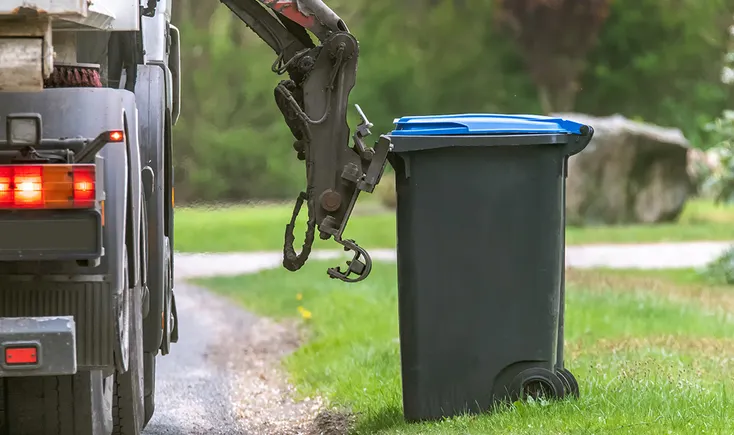
Heavy-duty refuse collection vehicles (RCVs) are subjected to severe operating conditions characterized by frequent stop-and-go driving, heavy payloads, and demanding terrain.
- Unoptimized routes place undue stress on transmissions, braking systems, and hydraulic lifts due to erratic stop frequencies and poor weight distribution.
- Increased vehicle downtime directly compromises service level agreements (SLAs) and forces operations to maintain costly backup fleets.
Mathematically optimized routing smoothes out operational stress, distributing wear more evenly across the fleet and extending the lifecycle of expensive capital assets.
Official Industry Insights and Strategic Solutions
Modern logistics platforms are designed to address these multifaceted challenges by acting as a bridge between high-level executive strategy and daily dispatch execution. Industry experts emphasize that successful route optimization must be proactive, flexible, and deeply integrated into existing enterprise workflows.
The Mechanics of Intelligent Optimization
Advanced software solutions, such as RouteSmart Optimize, utilize sophisticated mathematical algorithms to solve complex routing puzzles that human planners simply cannot compute manually. While a human dispatcher might consider three or four variables when building a route, an optimization engine evaluates dozens of parameters simultaneously, including:
- Vehicle Specifications: Gross vehicle weight ratings, compaction capacities, and fuel types.
- Service Frequencies: Residential versus commercial schedules, recycling versus organic waste separation requirements, and seasonal volume fluctuations.
- Geographic and Neighborhood Constraints: Low-hanging branches, weight-restricted bridges, narrow alleyways, one-way streets, and school zone time restrictions.
By processing these variables at a granular level, the software builds highly precise route plans that ensure every asset is utilized to its maximum potential without overloading the frontline crew.
Scenario Modeling and Business Growth
Beyond day-to-day dispatching, intelligent routing software provides haulers with powerful strategic modeling capabilities. As service territories expand and companies bid on new municipal contracts, maintaining operational efficiency becomes exponentially more complex.
Relying on guesswork or historical averages when bidding on a multi-million-dollar municipal contract is a high-stakes gamble. Advanced route optimization technology allows operations teams to run "what-if" simulations before submitting a bid. Planners can model hypothetical scenarios—such as adding 5,000 new households to a specific sector or restructuring collection days from a five-day to a four-day workweek—to test feasibility and cost-effectiveness.
This proactive approach ensures that haulers possess verified operational capacity before a single truck leaves the yard. It eliminates the fear of overcommitting resources and empowers sales and business development teams to secure new business with absolute confidence.
Future Outlook: The Next Frontier in Waste Collection Technology
Looking ahead, the waste and recycling industry is poised for even deeper technological integration. As smart cities evolve and environmental regulations tighten, the demand for hyper-efficient, sustainable operations will only intensify.
Real-Time Adaptability and IoT Integration
The next evolution of route optimization lies in real-time responsiveness. While historical and predictive data remain foundational, upcoming advancements leverage the Internet of Things (IoT) and connected vehicle telemetry to adapt routes on the fly. If a collection vehicle encounters an unexpected road closure, a severe traffic accident, or a weather event, intelligent systems will dynamically recalculate and reroute fleets in real time. Similarly, integration with smart bins equipped with fill-level sensors will transition the industry from static scheduling to demand-driven, dynamic collection, ensuring trucks only visit locations that actually require service.
Investing in the Workforce of Tomorrow
Ultimately, the future of waste management is inextricably linked to workforce empowerment. Technology is not replacing the human element of fleet operations; rather, it is protecting and elevating it. By eliminating the friction of chaotic schedules and burdensome workloads, companies are creating sustainable, desirable careers for drivers and loaders.
As the industry continues to evolve, haulers that embrace intelligent technology will clearly separate themselves from the competition. Investing in advanced routing software is no longer merely a tactical measure to save on fuel—it is a strategic imperative for securing long-term operational resilience, environmental stewardship, and workforce stability.
Conclusion and Contact Information
The complexities of modern waste and recycling collection demand tools that go far beyond traditional mapping software. By prioritizing balanced workloads, predictable schedules, and data-driven efficiency, fleet operators can overcome the persistent crises of driver retention and rising operational costs. Transforming fleet performance today lays the groundwork for sustainable growth, profitability, and an empowered workforce tomorrow.
For organizations looking to explore how advanced route optimization solutions can be tailored to their specific fleet operations, further information and personalized consultations are available.
- Contact: Jessica Cearfoss, Business Development Executive
- Email: [email protected]
- Website: RouteSmart Technologies