

Executive Overview
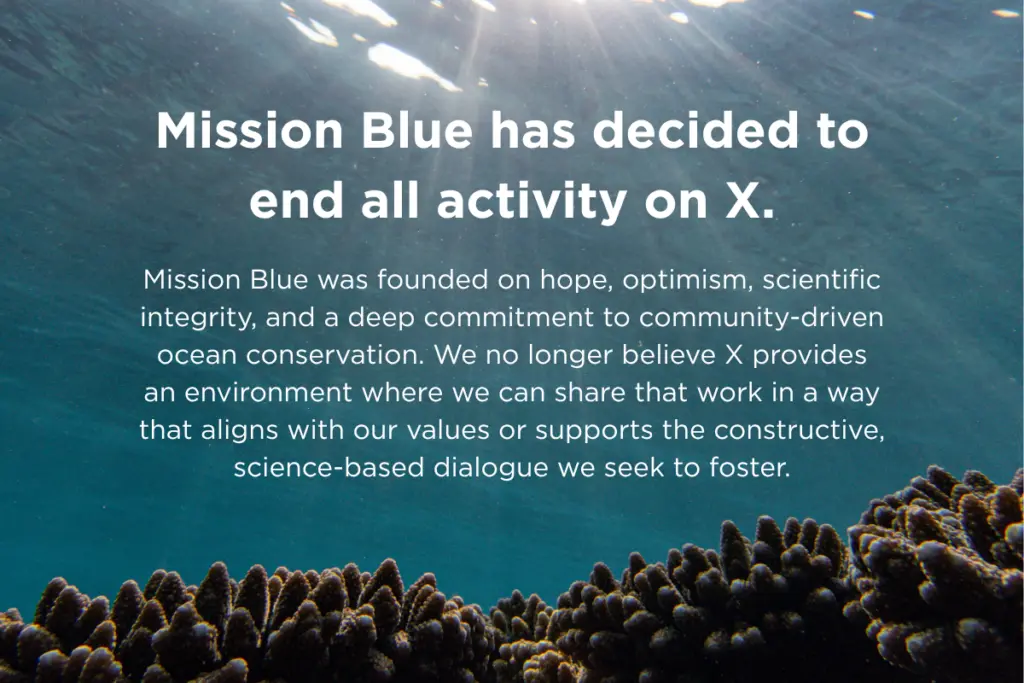
In a significant strategic shift within the global environmental non-profit sector, Mission Blue—the marine conservation foundation founded by legendary oceanographer Dr. Sylvia Earle—has officially announced the cessation of its active operations on the social media platform X (formerly Twitter). Moving forward, the organization will redirect its digital outreach, advocacy, and community-building efforts toward alternative channels, specifically Instagram, Facebook, LinkedIn, and YouTube, alongside its direct-to-subscriber newsletter ecosystem.
This move marks a growing trend among science-based institutions, conservation groups, and public health organizations that are increasingly questioning the viability of maintaining a presence on platforms where constructive dialogue is routinely overshadowed by polarization and misinformation. Founded on principles of hope, optimism, and community-driven action, Mission Blue’s leadership concluded that the evolving digital culture of X no longer aligns with its core mission. Specifically, the foundation cited a rising tide of unmitigated hostility, the proliferation of science-denial content, and an overarching environment that actively undermines fact-based environmental discourse.
While the organization’s historical archive will remain visible on X as a static repository of past achievements and educational resources, no new content will be published. This decision underscores a broader, critical inflection point for the digital age: How can environmental movements mobilize global support when the public digital square becomes increasingly hostile to empirical science? This report provides an in-depth examination of Mission Blue’s departure from X, analyzing the institutional motivations behind the pivot, the broader context of scientific communication in the digital era, and the future outlook for online conservation advocacy.
Detailed Chronology: The Evolution and Exit of Mission Blue on X
To understand the weight of Mission Blue’s departure, it is necessary to examine the historical arc of the organization’s digital engagement strategy and the systemic shifts that prompted this pivot.
Phase 1: The Era of Optimism and Connection (Early Adoption)
When Mission Blue first established its presence on Twitter years ago, the platform was heralded as a revolutionary tool for real-time communication. For an organization dedicated to global ocean conservation—operating across remote marine protected areas known as "Hope Spots"—Twitter offered an unprecedented lifeline.
- Field scientists could broadcast discoveries from remote research vessels.
- Marine conservationists could coordinate international campaigns within minutes.
- Ocean enthusiasts, policymakers, and donors could interact directly with leaders in the marine biology space.
During this formative period, the platform served as a vibrant digital town square. It fostered a community united by a shared passion for protecting the blue heart of our planet. Mission Blue leveraged this space to amplify grassroots campaigns, share real-time updates from expeditions, and cultivate a dedicated network of global ocean champions.
Phase 2: The Cultural and Algorithmic Shift
Over the ensuing years, however, structural changes at the platform—following its corporate restructuring and rebranding to X—began to alter the user experience fundamentally. For organizations grounded in empirical science, the shifting landscape presented acute challenges.
According to internal evaluations shared by institutional communications teams, the platform’s changing moderation policies, alterations to content promotion algorithms, and shifts in user demographics fostered an increasingly toxic online culture. Constructive debates regarding climate change, biodiversity loss, and marine protection policies were frequently derailed by coordinated campaigns of misinformation, personal attacks, and hostility toward scientific consensus.
Phase 3: The Tipping Point and Final Decision
The breaking point for Mission Blue arrived when the institutional cost of maintaining a presence on X began to outweigh the networking benefits. The proliferation of content explicitly undermining established environmental science created a cognitive dissonance for a brand built entirely on hope, education, and actionable solutions.
After careful deliberation, leadership determined that continuing to invest resources into an environment characterized by division and anti-science rhetoric violated the organization’s core values. In a definitive statement, the foundation announced that it could not, in good faith, continue to utilize the X platform. The account was frozen into an archived state, closing a chapter that once symbolized digital connectivity, and pivoting the organization toward healthier digital ecosystems.
Supporting Context & Metrics: The Science Communication Crisis on Modern Social Media
Mission Blue’s departure from X does not occur in a vacuum. It reflects a wider, systemic retreat of academic, scientific, and environmental institutions from digital spaces where constructive engagement has been systematically degraded.
The Rise of Eco-Misinformation and Anti-Science Rhetoric
In recent years, researchers studying digital information ecosystems have documented a sharp rise in climate and environmental misinformation. Studies by digital media watchdogs indicate that content disputing anthropogenic climate change, minimizing ecological collapse, or attacking individual marine scientists receives disproportionate algorithmic amplification on several major social networks, most notably X.
For organizations like Mission Blue, whose primary currency is trust and scientific accuracy, engaging in an environment where peer-reviewed data is routinely equated with partisan opinion is a losing battle. When institutional energy is diverted toward moderating hostile replies or correcting bad-faith arguments rather than inspiring ocean stewardship, the core mission of public education is compromised.
The Exodus of Scientific Institutions
Mission Blue joins a growing roster of high-profile NGOs, academic journals, public health agencies, and municipal governments that have either scaled back or entirely abandoned their presence on X. Notable examples include:
- Major public health organizations citing the spread of medical misinformation.
- Environmental research universities redirecting their outreach to institutional repositories, newsletters, and curated video platforms.
- Global conservation alliances prioritizing closed or heavily moderated communities where civil, solutions-oriented dialogue can take place without malicious interference.
Platform Metrics and Audience Fragmentation
While X retains massive global reach, organizations are increasingly looking beyond raw impression counts to evaluate engagement quality. Mission Blue’s strategic pivot highlights a shift from breadth of audience to depth of community.
Engagement metrics on platforms like Instagram and YouTube—where visual storytelling reigns supreme—often yield higher retention rates, more meaningful donor conversions, and healthier community interactions. By leaving X, Mission Blue is trading volatile, high-friction visibility for stable, high-trust community cultivation across platforms better suited for immersive visual narratives about marine biodiversity.
Official Statements and Institutional Perspective
The decision to abandon a major social media channel is never taken lightly by a global non-profit. It requires a recalibration of communications strategy and a reaffirmation of organizational values.
In its official announcements, Mission Blue articulated its rationale with absolute clarity, emphasizing that the integrity of its message must take precedence over digital metrics:
"Mission Blue was founded with a spirit of hope, optimism, and dedication to community-driven ocean conservation… Over time, however, the environment on X has changed significantly. We have become increasingly concerned about the prevalence of misinformation, hostility, and divisive content on the platform, including content that undermines science and constructive dialogue around environmental issues."
The foundation emphasized that its digital strategy is inextricably linked to its conservation ethos. Because the ocean connects all living things on Earth, the digital spaces cultivated by the organization must mirror that interconnectedness—fostering curiosity, empathy, and welcoming dialogue.
"We are all connected to the same ocean. Through our digital strategy, we seek to build a curious, welcoming online community. We cannot, in good faith, continue to use the X platform."
Rather than dwelling on the departure, leadership quickly pivoted the narrative toward empowerment and community migration. Supporters were warmly invited to follow the foundation across its remaining active channels:
- Instagram: Serving as the primary visual showcase for Hope Spot expeditions, stunning underwater photography, and bite-sized educational reels.
- Facebook: Functioning as a broad community hub for grassroots mobilization, event hosting, and deep-dive discussions among global ocean advocates.
- LinkedIn: Connecting marine scientists, sustainable blue economy entrepreneurs, corporate partners, and policy advocates.
- YouTube: Hosting long-form documentaries, expert panel discussions, and immersive video tours of marine protected areas.
- Direct Newsletters: Providing a secure, algorithm-free communication channel delivered straight to the inboxes of dedicated supporters.
Future Outlook: The Next Chapter of Digital Conservation Advocacy
As Mission Blue charts its path forward in a post-X landscape, the organization’s strategic pivot offers a fascinating case study for the future of environmental communication.
1. The Death of the Monolithic Digital Square
For over a decade, social media strategists preached a "presence everywhere" doctrine, urging brands to maintain active accounts on every emerging platform. Mission Blue’s decision signals the definitive end of that era for non-profits. Organizations are realizing that brand safety, mental health of digital teams, and alignment of institutional values matter far more than unchecked multi-platform presence. The future belongs to curated, multi-channel ecosystems where organizations maintain direct ownership of their audience relationships—exemplified by Mission Blue’s renewed emphasis on its proprietary email newsletters.
2. Doubling Down on Visual and Immersive Storytelling
Ocean conservation is inherently visual. The breathtaking beauty of coral reefs, the majesty of migratory cetaceans, and the fragile ecosystems of remote Hope Spots cannot be effectively communicated through text-heavy, polarized micro-blogging formats. By focusing resources on Instagram and YouTube, Mission Blue is doubling down on high-impact visual media. This approach invites audiences to experience the wonder of the ocean firsthand, fostering emotional connections that drive tangible conservation action.
3. Fostering High-Trust Communities
In an age plagued by digital noise and synthetic media, trust is the ultimate currency for scientific organizations. By stepping away from a platform prone to hostile polarization, Mission Blue is actively protecting its brand equity. The foundation is signaling to its donors, scientific partners, and global Champions that their community is a safe harbor for science, optimism, and collaborative problem-solving.
Conclusion
Mission Blue’s departure from X is more than just a routine corporate social media update; it is a principled stand for the integrity of science communication. By choosing constructive dialogue over toxic reach, the foundation has reaffirmed its commitment to Dr. Sylvia Earle’s founding vision: uniting humanity in a spirit of hope and action to protect the blue heart of our planet. As other scientific and environmental institutions evaluate their own digital footprints in the years to come, Mission Blue’s decisive pivot will undoubtedly serve as a guiding beacon for navigating the stormy seas of modern digital communication.



