

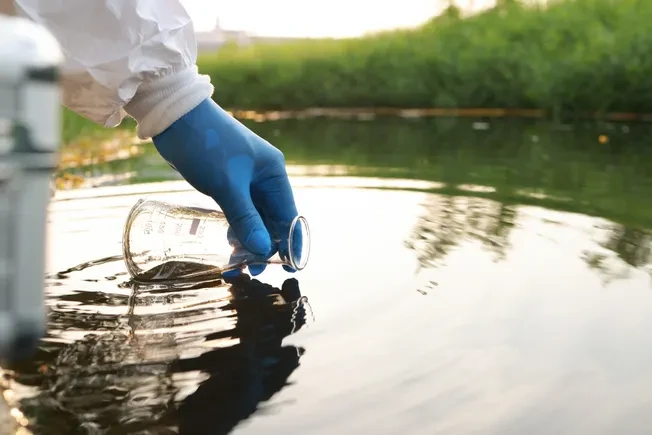
In a quiet yet consequential regulatory maneuver, the U.S. Environmental Protection Agency (EPA) has officially rescinded a pivotal 2022 guidance document that provided state environmental authorities with standardized frameworks to monitor, limit, and reduce per- and polyfluoroalkyl substances (PFAS)—commonly referred to as "forever chemicals"—in industrial wastewater streams.
The now-revoked guidance, originally issued during the Biden administration as part of its expansive PFAS Strategic Roadmap, served as a nonbinding yet critical compass for state-level regulators. It supplied standard language and operational blueprints for the National Pollutant Discharge Elimination System (NPDES) permits, empowering state agencies to crack down on upstream industrial dischargers. Facilities targeted under this framework included commercial landfills, pulp and paper mills, and heavy manufacturing plants whose effluent drains directly into public drinking water sources.
The EPA executed the revocation in August, burying the decision within a broader, systematic rollback of five distinct guidance documents. This batch also included administrative memoranda addressing climate change considerations and environmental justice mandates within federal water permitting. According to a three-page internal memo signed on August 11 by Office of Water Assistant Administrator Jessica Kramer, the sweeping revisions stem from an overarching administrative review informed by recommendations tied to the Office of Management and Budget’s (OMB) ongoing deregulation initiative.
While federal officials defend the move as a necessary course correction to prevent administrative overreach and eliminate regulatory confusion, environmental advocates and public health watchdogs view the decision through a sharply contrasting lens. Industry observers and legal experts warn that stripping away the 2022 template will create a regulatory vacuum, potentially stalling proactive state-led initiatives and exposing local waterways to unchecked streams of persistent synthetic toxins. As the federal government pivots toward establishing formal Effluent Limitation Guidelines (ELGs) down the road, the immediate fallout leaves the nation’s foundational clean water permitting apparatus grappling with uncertainty over who holds the authority—and the obligation—to keep forever chemicals out of the public water supply.
Detailed Chronology: From the 2022 Roadmap to the August Rollback
To fully understand the weight of the EPA’s recent decision, it is essential to trace the trajectory of federal wastewater policy regarding synthetic chemicals over the past several years.
The Biden Administration’s PFAS Strategic Roadmap (2021)
In October 2021, the EPA under President Joe Biden unveiled its ambitious PFAS Strategic Roadmap. The comprehensive multi-year strategy laid out aggressive timelines to research, restrict, and remediate thousands of synthetic chemicals that resist degradation in the environment and accumulate in human and animal tissue. A cornerstone of this roadmap was the mobilization of the Clean Water Act’s (CWA) NPDES permitting program. Recognizing that waiting for formal, chemical-specific federal rules could take decades, the roadmap encouraged regulators to use existing permitting mechanisms as an immediate stopgap to gather facility-specific data and throttle industrial discharges at the source.
The 2022 NPDES Guidance Memorandum
Executing a key milestone of the roadmap, the EPA published a landmark guidance document in 2022. Though nonbinding, the document offered state permitting authorities concrete, standardized language to incorporate into industrial NPDES permits. It gave state agencies the administrative reassurance and technical backing they needed to confront PFAS contamination from major upstream contributors, including landfills, textile manufacturers, and metal finishers. By embedding monitoring and reduction requirements directly into facility licenses, the guidance sought to intercept forever chemicals before they reached downstream municipal water intakes.
The Systematic Review and OMB Alignment (Early to Mid-2025)
As political and administrative landscapes shifted, the EPA initiated a comprehensive, systematic review of its existing guidance inventory. This internal audit was heavily informed by broader government-wide deregulation initiatives spearheaded or recommended by the Office of Management and Budget. The agency sought to evaluate whether existing guidance documents aligned with statutory boundaries and to streamline administrative burdens on regulated industries.
The August 11 Revocation Memo
The culmination of this internal audit arrived on August 11, when Office of Water Assistant Administrator Jessica Kramer signed a three-page memo officially pulling the plug on the 2022 PFAS wastewater guidance, alongside four other memoranda touching on environmental justice and climate integration in water permits. News of the quiet rescission first broke via specialized trade publications like Inside EPA, catching state regulators and public interest groups by surprise and igniting a fierce debate over the future of industrial pollution control.
Supporting Context & Metrics: The Mechanics of Clean Water Regulation
Navigating the jurisdictional battlefield of American water law requires untangling a complex web of statutory authorities, administrative tools, and chemical classifications.
NPDES Permitting vs. The Safe Drinking Water Act
It is vital to distinguish how the federal government regulates drinking water versus industrial wastewater. Drinking water standards are governed strictly by the Safe Drinking Water Act (SDWA), which mandates enforceable Maximum Contaminant Levels (MCLs) for public water systems. These standards have also experienced significant administrative adjustments and scrutiny under recent executive transitions.
Wastewater discharges, by contrast, fall under the purview of the Clean Water Act via the NPDES program. Critically, PFAS chemicals are not currently classified as statutory "toxic pollutants" under the formal provisions of the Clean Water Act. Because a comprehensive, nationwide suite of federal effluent standards for specific PFAS compounds does not yet exist, restrictions on industrial releases have historically relied on individual facility permits.
State Discretion and the Patchwork Approach
Under the CWA, primary permitting authority is frequently delegated to state environmental agencies. These state authorities possess wide discretion to set permit limits they deem necessary to protect local water resources, occasionally implementing standards that far outpace federal baselines.
For instance, lawmakers in New York passed a landmark state bill earlier this year explicitly requiring mandatory PFAS monitoring through water permits for a designated class of industrial facilities. At the time of this writing, that legislation is awaiting final action from Governor Kathy Hochul.
However, this decentralized model creates vulnerabilities. While the vast majority of U.S. states have received authorization to administer their own NPDES programs, the federal EPA retains direct permitting authority in several jurisdictions—including Massachusetts, New Hampshire, New Mexico, the District of Columbia, and various U.S. territories. Furthermore, the EPA maintains exclusive permitting authority over federal and military installations, such as military bases that have historically emerged as heavy emitters of PFAS-laden aqueous film-forming foams (AFFF) used in firefighting training. In these federally managed jurisdictions, the removal of the 2022 guidance could mean that local permits omit PFAS provisions entirely.
Official Statements and Stakeholder Perspectives
The philosophical divide over how to regulate industrial pollution is vividly illustrated by the contrasting statements issued by federal regulators and environmental advocates following the August rescission.
The EPA’s Defense: "Cart Before the Horse"
In an official, unattributed statement provided to industry press, the EPA’s press office defended the rescission by arguing that the previous administration had overstepped established statutory procedures. The agency asserted that leveraging the foundational NPDES compliance program to address a broad class of chemicals without first establishing formal, sector-specific wastewater discharge standards created an unstable regulatory environment.
"EPA’s review of existing guidance related to PFAS and NPDES permits found that the Biden Administration put the cart before the horse when it leveraged the nation’s foundational wastewater discharge compliance program—NPDES permitting—to address PFAS without first setting wastewater discharge standards for specific PFAS and specific sectors under the Effluent Limitation Guidelines provision of the Clean Water Act," the agency’s press office stated.
According to the administration, pulling the 2022 guidance will ultimately reduce legal confusion and administrative friction as the agency prepares to roll out formal, legally binding Effluent Limitation Guidelines (ELGs) tailored to specific industrial sectors.
Environmental Advocates: A "Chilling Effect" on State Regulators
Environmental groups have forcefully rejected the EPA’s rationale, arguing that the rollback strips state regulators of an indispensable weapon in the ongoing war against chemical contamination.
Melanie Benesh, Vice President of Government Affairs for the Environmental Working Group (EWG), argued that the rescission achieves the exact opposite of its stated goal, replacing clarity with profound uncertainty.
"State governments have shown again and again and again that they’re leading the fight against PFAS, and this removes one critical tool for state regulators to make us more safe," Benesh remarked in an interview.
Benesh cautioned that the withdrawal of the federal template could exert a powerful "chilling effect" across state environmental agencies. Regulators who were previously emboldened to tackle PFAS through individual facility permits may now hesitate, fearing that their actions could conflict with forthcoming federal policies, invite costly legal challenges from regulated industries, or lack standardized testing methodologies.
"This guidance document, even though it is just a guidance document, was a really important signal to those state regulators that this is something that you should be trying to address in your facility permits, and this is how we think you should do it," Benesh explained. "I think there could be a chilling effect on how state regulators use this guidance or use the advice that was in this guidance that’s now being rescinded."
Future Outlook: The Road Ahead for Effluent Limitation Guidelines
With the nonbinding 2022 guidance officially consigned to the history books, the regulatory spotlight shifts squarely toward the EPA’s timeline for developing enforceable Effluent Limitation Guidelines. ELGs are national, technology-based regulations designed to control industrial wastewater discharges based on the performance of treatment technologies.
Pending Regulatory Milestones
The EPA has signaled that it intends to address PFAS pollution through targeted, sector-specific rulemakings rather than broad, overarching policy memos. Key dates and milestones on the horizon include:
- March Rulemaking Actions: The agency previously published an advanced notice of proposed rulemaking in March, actively soliciting technical data and industry feedback to inform ELG development for organic chemical, plastic, and synthetic manufacturing facilities.
- Electroplating Standards: According to the federal regulatory agenda, the EPA anticipates proposing ELGs designed to curb PFAS discharges from chromium electroplating facility wastewater. While slated for early next year, industry observers note that these target dates are nonbinding and frequently subject to administrative delays.
- Landfill Regulations: Agency communications suggest that comprehensive Effluent Limitation Guidelines targeting commercial landfills—which act as massive repositories for consumer goods containing forever chemicals—may not materialize until 2027.
Unanswered Questions and Long-Term Implications
As the EPA charts this new course, critical questions remain unanswered. When pressed by journalists, federal officials declined to clarify whether the data successfully gathered by state agencies under the now-rescinded 2022 guidance will be salvaged, analyzed, and integrated into the upcoming ELG rulemakings.
For communities living downstream from industrial corridors, municipal wastewater treatment plants, and military installations, the transition period represents a tense limbo. While the promise of binding national effluent guidelines offers a vision of uniform federal oversight, the interim vacuum leaves state regulators without a standardized playbook. Until formal rules take effect later this decade, the defense of America’s waterways against the silent, pervasive threat of forever chemicals will depend heavily on the tenacity of individual state legislatures, local legal battles, and the voluntary vigilance of industrial operators.



